
SEISMOLOGY AND GEOLOGY ›› 2025, Vol. 47 ›› Issue (6): 1526-1545.DOI: 10.3969/j.issn.0253-4967.2025.06.20240055
• Research paper • Previous Articles Next Articles
THE TIDAL TRIGGERING CHARACTERISTICS OF MS≥4.0 AFTERSHOCKS IN JANUARY 23, 2024 WUSHI MS7.1 EARTHQUAKE SEQUENCE, XINJIANG, CHINA
JIANG Hai-kun( ), SONG Jin
- China Earthquake Networks Center, Beijing 100045, China
-
Received:2024-04-22Revised:2024-12-06Online:2025-12-20Published:2025-12-31
2024年1月23日乌什MS7.1地震序列MS≥4.0余震活动的潮汐触发特征
蒋海昆(), 宋金
- 中国地震台网中心, 北京 100045
-
作者简介:蒋海昆, 男, 1964年生, 博士, 研究员, 主要从事余震统计特征、 余震机理及余震预测方法研究, E-mail: jianghaikun@sohu.com。
-
基金资助:地震动力学国家重点实验室开放基金(LED2022B05); 国家科技基础资源调查专项课题(2023FY101503)

Cite this article
JIANG Hai-kun, SONG Jin. THE TIDAL TRIGGERING CHARACTERISTICS OF MS≥4.0 AFTERSHOCKS IN JANUARY 23, 2024 WUSHI MS7.1 EARTHQUAKE SEQUENCE, XINJIANG, CHINA[J]. SEISMOLOGY AND GEOLOGY, 2025, 47(6): 1526-1545.
蒋海昆, 宋金. 2024年1月23日乌什MS7.1地震序列MS≥4.0余震活动的潮汐触发特征[J]. 地震地质, 2025, 47(6): 1526-1545.
share this article
Add to citation manager EndNote|Ris|BibTeX
URL: https://www.dzdz.ac.cn/EN/10.3969/j.issn.0253-4967.2025.06.20240055
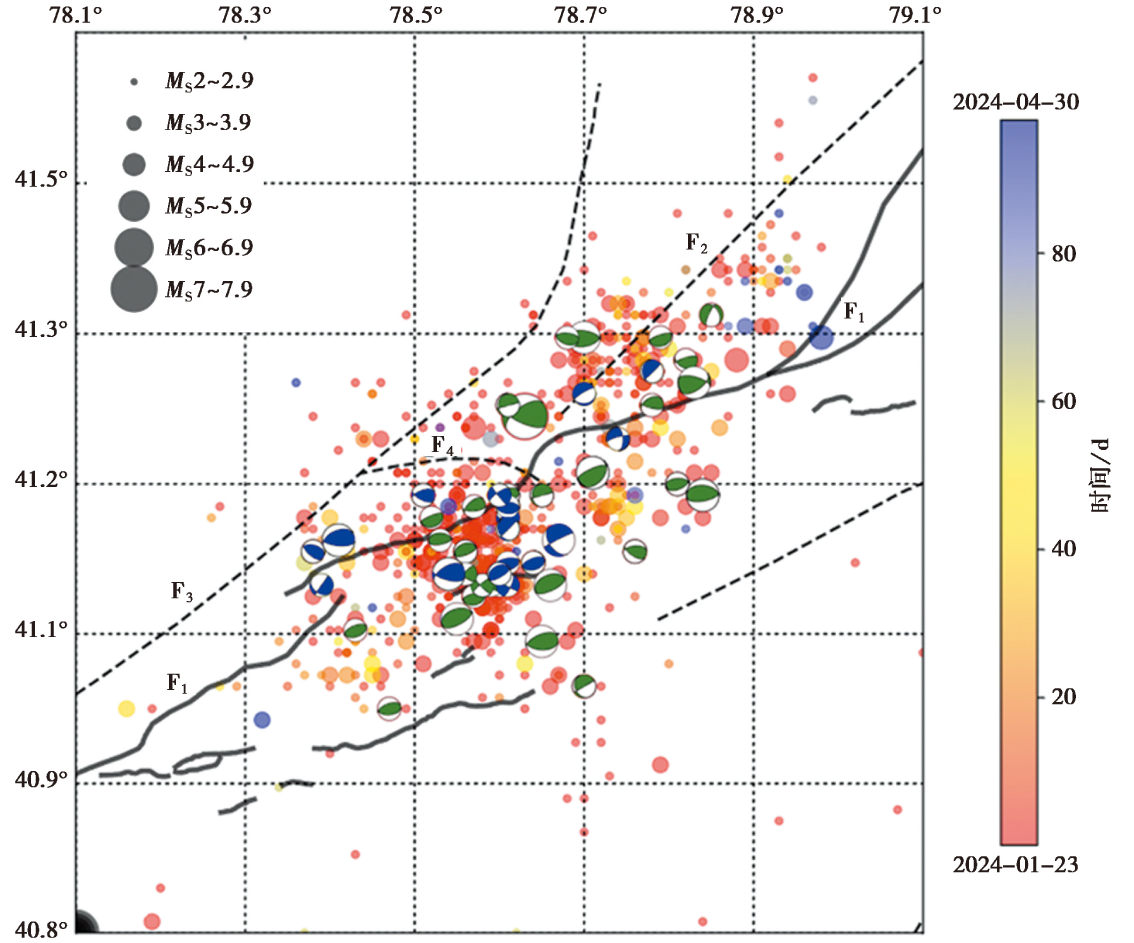
Fig. 1 Distribution of earthquakes with MS≥2.0 and focal mechanisms with MS≥4.0 for Wushi sequence(from January 23, 2024 to March 31, 2024).
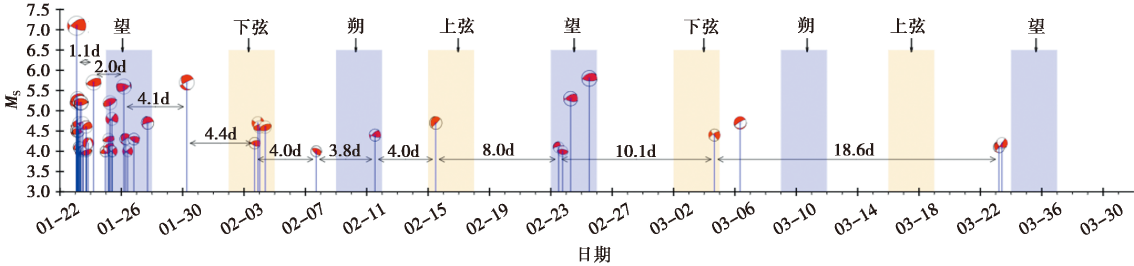
Fig. 2 M-t diagrams and focal mechanisms of the MS≥4.0 earthquakes in Wushi earthquake sequence (from January 23th, 2024 to March 31th, 2024).
| 震级范围 | 时段Ⅰ: 01-23-02-25(34d) | 时段Ⅱ: 02-26-03-28(32d) | ||||
|---|---|---|---|---|---|---|
| 地震数 | 日频次 | 地震数 | 日频次 | |||
| MS2.0~2.9 | 465 | 13.7 | 33 | 1.0 | ||
| MS3.0~3.9 | 191 | 5.6 | 18 | 0.6 | ||
| MS4.0~4.9 | 40 | 1.2 | 4 | 0.1 | ||
| MS5.0~5.9 | 10 | 0.3 | 0 | 0.0 | ||
| 合计 | 706 | 20.8 | 55 | 1.7 | ||
| 最大余震 | MS5.8 | MS4.7 | ||||
Table1 Comparison of seismic frequency between two roughly equal-length stages before and after the largest strong aftershock with MS5.8 in Wushi earthquake sequence on February 25
| 震级范围 | 时段Ⅰ: 01-23-02-25(34d) | 时段Ⅱ: 02-26-03-28(32d) | ||||
|---|---|---|---|---|---|---|
| 地震数 | 日频次 | 地震数 | 日频次 | |||
| MS2.0~2.9 | 465 | 13.7 | 33 | 1.0 | ||
| MS3.0~3.9 | 191 | 5.6 | 18 | 0.6 | ||
| MS4.0~4.9 | 40 | 1.2 | 4 | 0.1 | ||
| MS5.0~5.9 | 10 | 0.3 | 0 | 0.0 | ||
| 合计 | 706 | 20.8 | 55 | 1.7 | ||
| 最大余震 | MS5.8 | MS4.7 | ||||
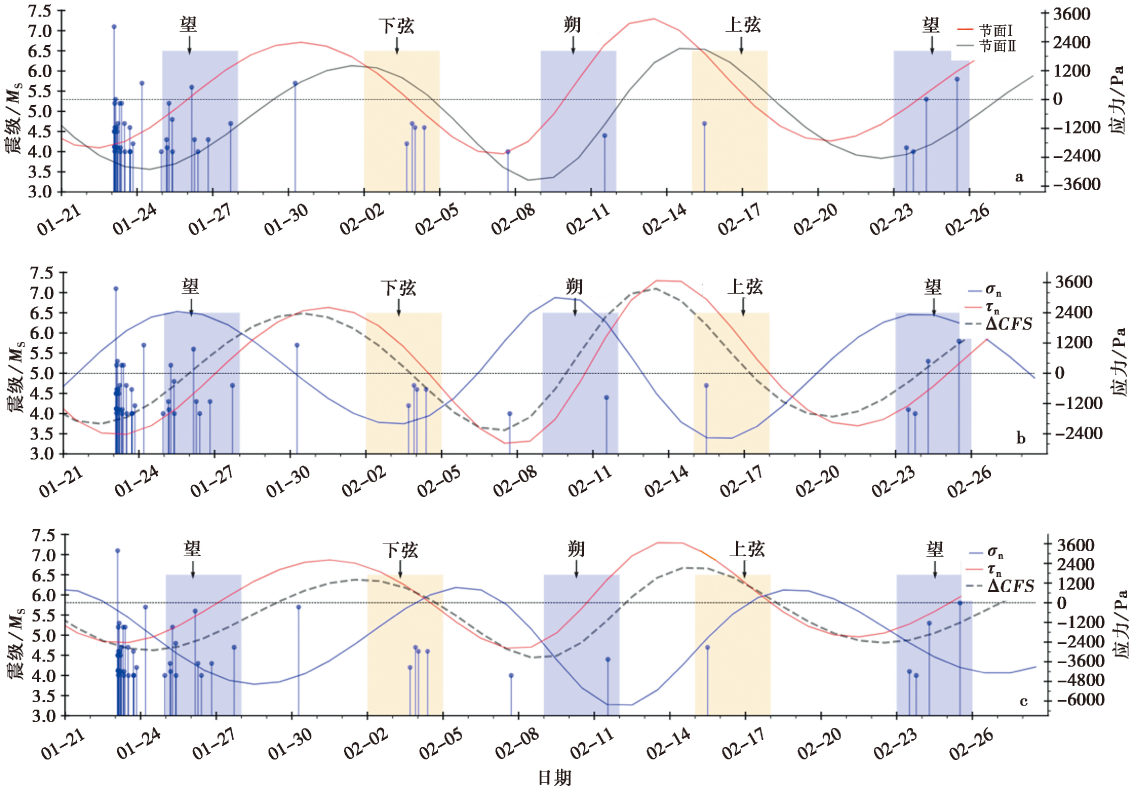
Fig. 3 M-t diagram of earthquakes with MS≥4.0 in Wushi earthquake sequence and stress variations in mechanism nodal planes of the mainshock.
| 序号 | 地震参数 | 节面Ⅰ | 节面Ⅱ | SF | Δt/h | ||||||||||||
|---|---|---|---|---|---|---|---|---|---|---|---|---|---|---|---|---|---|
| 时间 | MS | σn | τn | ΔCFS | σn | τn | ΔCFS | ||||||||||
| 1 | 2024-01-23,02:09 | 7.1 | ▲ | È | ▲ | È | Ⅰ/Ⅱ | -1.1 | a | ||||||||
| 2 | 2024-01-23,02:14 | 4.5 | ▲ | È | Ⅱ | 1.8 | |||||||||||
| 3 | 2024-01-23,02:32 | 4.5 | ▲ | È | ▲ | È | Ⅰ/Ⅱ | 0.3 | |||||||||
| 4 | 2024-01-23,02:42 | 5.2 | ▲ | È | ▲ | È | Ⅰ/Ⅱ | -0.5 | b | ||||||||
| 5 | 2024-01-23,02:50 | 4.6 | ▲ | È | ▲ | È | Ⅰ/Ⅱ | -1.1 | |||||||||
| 6 | 2024-01-23,03:36 | 5.3 | ▲ | È | ▲ | È | Ⅰ/Ⅱ | 1.5 | c | ||||||||
| 7 | 2024-01-23,04:29 | 4.6 | ▲ | È | Ⅱ | -2.0 | |||||||||||
| 8 | 2024-01-23,04:57 | 4.5 | ▲ | È | ▲ | È | Ⅰ/Ⅱ | 2.3 | |||||||||
| 9 | 2024-01-23,05:16 | 4.1 | Ο | 3.1 | |||||||||||||
| 10 | 2024-01-23,05:43 | 4.7 | Ο | 3.5 | |||||||||||||
| 11 | 2024-01-23,07:19 | 5.2 | ▲ | - | Ο | -1.6 | d | ||||||||||
| 12 | 2024-01-23,07:56 | 4.0 | ▲ | È | Ⅰ | -1.1 | |||||||||||
| 13 | 2024-01-23,08:12 | 4.1 | ▲ | È | Ⅰ | -0.8 | |||||||||||
| 14 | 2024-01-23,09:18 | 5.2 | ▲ | - | Ο | 0.1 | e | ||||||||||
| 15 | 2024-01-23,12:01 | 4.7 | ▲ | È | Ⅱ | 2.2 | |||||||||||
| 16 | 2024-01-23,12:25 | 4.0 | ▲ | È | Ⅱ | -2.1 | |||||||||||
| 17 | 2024-01-23,17:07 | 4.6 | ▲ | È | Ⅰ | -1.3 | |||||||||||
| 18 | 2024-01-23,17:23 | 4.0 | ▲ | È | ▲ | È | Ⅰ/Ⅱ | 2.2 | |||||||||
| 19 | 2024-01-23,17:24 | 4.0 | Ο | 2.8 | |||||||||||||
| 20 | 2024-01-23,20:09 | 4.2 | Ο | 4.3 | |||||||||||||
| 21 | 2024-01-24,04:38 | 5.7 | ▲ | È | ▲ | È | Ⅰ/Ⅱ | 1.2 | f | ||||||||
| 22 | 2024-01-24,23:01 | 4.0 | ▲ | - | Ο | 1.6 | |||||||||||
| 23 | 2024-01-25,04:05 | 4.3 | ▲ | È | ▲ | È | Ⅰ/Ⅱ | 0.2 | |||||||||
| 24 | 2024-01-25,04:35 | 4.1 | ▲ | È | ▲ | È | Ⅰ/Ⅱ | 0.5 | |||||||||
| 25 | 2024-01-25,06:21 | 5.2 | Ο | 3.0 | g | ||||||||||||
| 26 | 2024-01-25,09:24 | 4.8 | ▲ | È | ▲ | È | Ⅰ/Ⅱ | 0.5 | |||||||||
| 27 | 2024-01-25,09:43 | 4.0 | ▲ | È | ▲ | È | Ⅰ/Ⅱ | 0.2 | |||||||||
| 28 | 2024-01-26,04:01 | 5.6 | ▲ | È | ▲ | È | Ⅰ/Ⅱ | -0.5 | h | ||||||||
| 29 | 2024-01-26,06:38 | 4.3 | - | - | - | ▲ | - | Ο | 2.1 | ||||||||
| 30 | 2024-01-26,09:55 | 4.0 | ▲ | È | ▲ | È | Ⅰ/Ⅱ | 0.2 | |||||||||
| 31 | 2024-01-26,19:40 | 4.3 | ▲ | È | ▲ | È | Ⅰ/Ⅱ | 1.5 | |||||||||
| 32 | 2024-01-27,17:03 | 4.7 | Ο | 3.4 | |||||||||||||
| 33 | 2024-01-30,06:27 | 5.7 | - | - | - | ▲ | - | Ο | 2.1 | i | |||||||
| 34 | 2024-02-03,16:36 | 4.2 | ▲ | - | Ο | 1.8 | |||||||||||
| 35 | 2024-02-03,21:44 | 4.7 | ▲ | È | ▲ | È | Ⅰ/Ⅱ | -1.3 | |||||||||
| 36 | 2024-02-04,00:34 | 4.6 | ▲ | È | ▲ | È | Ⅰ/Ⅱ | 2.3 | |||||||||
| 37 | 2024-02-04,09:18 | 4.6 | ▲ | È | ▲ | È | Ⅰ/Ⅱ | -0.9 | |||||||||
| 38 | 2024-02-07,16:55 | 4.0 | ▲ | È | ▲ | È | Ⅰ/Ⅱ | 0.6 | |||||||||
| 39 | 2024-02-11,12:57 | 4.4 | ▲ | È | Ⅰ | 0.8 | |||||||||||
| 40 | 2024-02-15,11:52 | 4.7 | ▲ | È | Ⅰ | 0.2 | |||||||||||
| 41 | 2024-02-23,12:08 | 4.1 | ▲ | - | Ο | -2.5 | |||||||||||
| 42 | 2024-02-23,18:33 | 4.0 | ▲ | È | ▲ | È | Ⅰ/Ⅱ | 2.0 | |||||||||
| 43 | 2024-02-24,06:58 | 5.3 | ▲ | È | ▲ | È | Ⅰ/Ⅱ | 2.1 | j | ||||||||
| 44 | 2024-02-25,12:14 | 5.8 | ▲ | È | Ⅰ | 0.9 | k | ||||||||||
| 45 | 2024-03-04,15:54 | 4.4 | Ο | 2.8 | |||||||||||||
| 46 | 2024-03-06,08:09 | 4.7 | ▲ | È | ▲ | È | Ⅰ/Ⅱ | 0.4 | |||||||||
| 47 | 2024-03-23,05:03 | 4.7 | Ο | -2.9 | |||||||||||||
| 48 | 2024-03-23,09:41 | 4.7 | ▲ | È | Ⅰ | 2.3 | |||||||||||
| 49 | 2024-04-12,16:12 | 4.7 | ▲ | È | ▲ | È | Ⅰ/Ⅱ | -1.3 | |||||||||
| 50 | 2024-04-28,19:31 | 4.4 | ▲ | È | ▲ | È | Ⅰ/Ⅱ | 0.1 | |||||||||
Table2 Statistical results on the tidal stress components of two nodal planes for MS≥4.0 earthquakes in the Wushi earthquake sequence
| 序号 | 地震参数 | 节面Ⅰ | 节面Ⅱ | SF | Δt/h | ||||||||||||
|---|---|---|---|---|---|---|---|---|---|---|---|---|---|---|---|---|---|
| 时间 | MS | σn | τn | ΔCFS | σn | τn | ΔCFS | ||||||||||
| 1 | 2024-01-23,02:09 | 7.1 | ▲ | È | ▲ | È | Ⅰ/Ⅱ | -1.1 | a | ||||||||
| 2 | 2024-01-23,02:14 | 4.5 | ▲ | È | Ⅱ | 1.8 | |||||||||||
| 3 | 2024-01-23,02:32 | 4.5 | ▲ | È | ▲ | È | Ⅰ/Ⅱ | 0.3 | |||||||||
| 4 | 2024-01-23,02:42 | 5.2 | ▲ | È | ▲ | È | Ⅰ/Ⅱ | -0.5 | b | ||||||||
| 5 | 2024-01-23,02:50 | 4.6 | ▲ | È | ▲ | È | Ⅰ/Ⅱ | -1.1 | |||||||||
| 6 | 2024-01-23,03:36 | 5.3 | ▲ | È | ▲ | È | Ⅰ/Ⅱ | 1.5 | c | ||||||||
| 7 | 2024-01-23,04:29 | 4.6 | ▲ | È | Ⅱ | -2.0 | |||||||||||
| 8 | 2024-01-23,04:57 | 4.5 | ▲ | È | ▲ | È | Ⅰ/Ⅱ | 2.3 | |||||||||
| 9 | 2024-01-23,05:16 | 4.1 | Ο | 3.1 | |||||||||||||
| 10 | 2024-01-23,05:43 | 4.7 | Ο | 3.5 | |||||||||||||
| 11 | 2024-01-23,07:19 | 5.2 | ▲ | - | Ο | -1.6 | d | ||||||||||
| 12 | 2024-01-23,07:56 | 4.0 | ▲ | È | Ⅰ | -1.1 | |||||||||||
| 13 | 2024-01-23,08:12 | 4.1 | ▲ | È | Ⅰ | -0.8 | |||||||||||
| 14 | 2024-01-23,09:18 | 5.2 | ▲ | - | Ο | 0.1 | e | ||||||||||
| 15 | 2024-01-23,12:01 | 4.7 | ▲ | È | Ⅱ | 2.2 | |||||||||||
| 16 | 2024-01-23,12:25 | 4.0 | ▲ | È | Ⅱ | -2.1 | |||||||||||
| 17 | 2024-01-23,17:07 | 4.6 | ▲ | È | Ⅰ | -1.3 | |||||||||||
| 18 | 2024-01-23,17:23 | 4.0 | ▲ | È | ▲ | È | Ⅰ/Ⅱ | 2.2 | |||||||||
| 19 | 2024-01-23,17:24 | 4.0 | Ο | 2.8 | |||||||||||||
| 20 | 2024-01-23,20:09 | 4.2 | Ο | 4.3 | |||||||||||||
| 21 | 2024-01-24,04:38 | 5.7 | ▲ | È | ▲ | È | Ⅰ/Ⅱ | 1.2 | f | ||||||||
| 22 | 2024-01-24,23:01 | 4.0 | ▲ | - | Ο | 1.6 | |||||||||||
| 23 | 2024-01-25,04:05 | 4.3 | ▲ | È | ▲ | È | Ⅰ/Ⅱ | 0.2 | |||||||||
| 24 | 2024-01-25,04:35 | 4.1 | ▲ | È | ▲ | È | Ⅰ/Ⅱ | 0.5 | |||||||||
| 25 | 2024-01-25,06:21 | 5.2 | Ο | 3.0 | g | ||||||||||||
| 26 | 2024-01-25,09:24 | 4.8 | ▲ | È | ▲ | È | Ⅰ/Ⅱ | 0.5 | |||||||||
| 27 | 2024-01-25,09:43 | 4.0 | ▲ | È | ▲ | È | Ⅰ/Ⅱ | 0.2 | |||||||||
| 28 | 2024-01-26,04:01 | 5.6 | ▲ | È | ▲ | È | Ⅰ/Ⅱ | -0.5 | h | ||||||||
| 29 | 2024-01-26,06:38 | 4.3 | - | - | - | ▲ | - | Ο | 2.1 | ||||||||
| 30 | 2024-01-26,09:55 | 4.0 | ▲ | È | ▲ | È | Ⅰ/Ⅱ | 0.2 | |||||||||
| 31 | 2024-01-26,19:40 | 4.3 | ▲ | È | ▲ | È | Ⅰ/Ⅱ | 1.5 | |||||||||
| 32 | 2024-01-27,17:03 | 4.7 | Ο | 3.4 | |||||||||||||
| 33 | 2024-01-30,06:27 | 5.7 | - | - | - | ▲ | - | Ο | 2.1 | i | |||||||
| 34 | 2024-02-03,16:36 | 4.2 | ▲ | - | Ο | 1.8 | |||||||||||
| 35 | 2024-02-03,21:44 | 4.7 | ▲ | È | ▲ | È | Ⅰ/Ⅱ | -1.3 | |||||||||
| 36 | 2024-02-04,00:34 | 4.6 | ▲ | È | ▲ | È | Ⅰ/Ⅱ | 2.3 | |||||||||
| 37 | 2024-02-04,09:18 | 4.6 | ▲ | È | ▲ | È | Ⅰ/Ⅱ | -0.9 | |||||||||
| 38 | 2024-02-07,16:55 | 4.0 | ▲ | È | ▲ | È | Ⅰ/Ⅱ | 0.6 | |||||||||
| 39 | 2024-02-11,12:57 | 4.4 | ▲ | È | Ⅰ | 0.8 | |||||||||||
| 40 | 2024-02-15,11:52 | 4.7 | ▲ | È | Ⅰ | 0.2 | |||||||||||
| 41 | 2024-02-23,12:08 | 4.1 | ▲ | - | Ο | -2.5 | |||||||||||
| 42 | 2024-02-23,18:33 | 4.0 | ▲ | È | ▲ | È | Ⅰ/Ⅱ | 2.0 | |||||||||
| 43 | 2024-02-24,06:58 | 5.3 | ▲ | È | ▲ | È | Ⅰ/Ⅱ | 2.1 | j | ||||||||
| 44 | 2024-02-25,12:14 | 5.8 | ▲ | È | Ⅰ | 0.9 | k | ||||||||||
| 45 | 2024-03-04,15:54 | 4.4 | Ο | 2.8 | |||||||||||||
| 46 | 2024-03-06,08:09 | 4.7 | ▲ | È | ▲ | È | Ⅰ/Ⅱ | 0.4 | |||||||||
| 47 | 2024-03-23,05:03 | 4.7 | Ο | -2.9 | |||||||||||||
| 48 | 2024-03-23,09:41 | 4.7 | ▲ | È | Ⅰ | 2.3 | |||||||||||
| 49 | 2024-04-12,16:12 | 4.7 | ▲ | È | ▲ | È | Ⅰ/Ⅱ | -1.3 | |||||||||
| 50 | 2024-04-28,19:31 | 4.4 | ▲ | È | ▲ | È | Ⅰ/Ⅱ | 0.1 | |||||||||
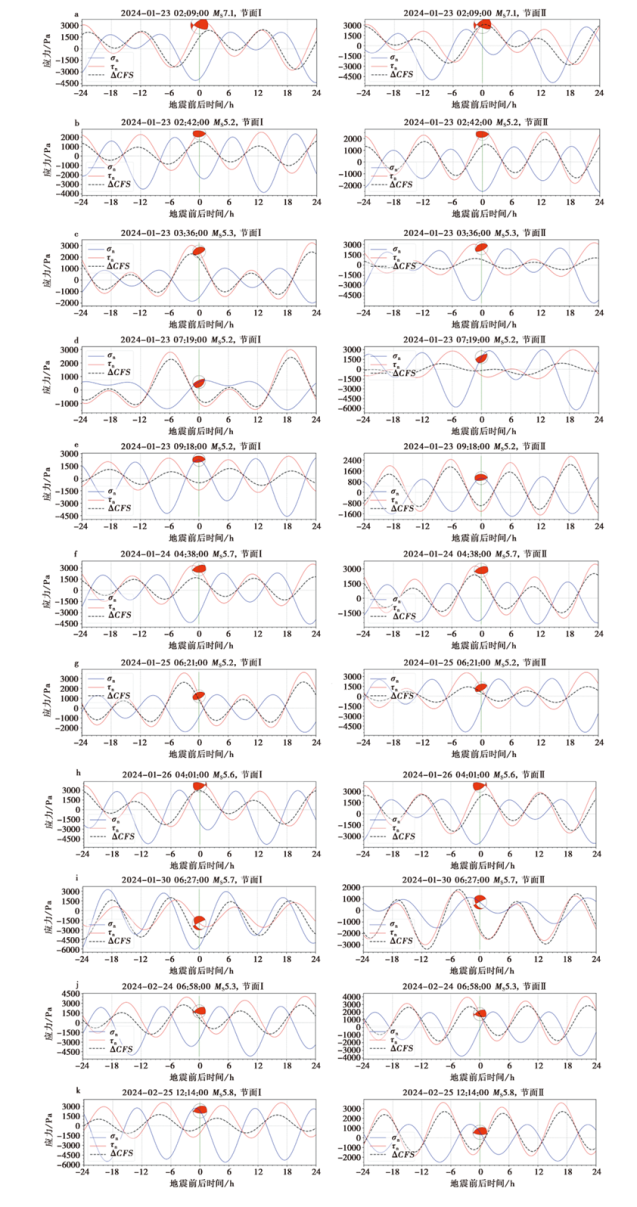
Fig. 4 The tidal normal stress τn, tidal shear stress σn, and tidal ΔCFS on the two nodal planes of the focal mechanism within 24 hours before and after the earthquakes with MS≥5.0 in the Wushi earthquake sequence.
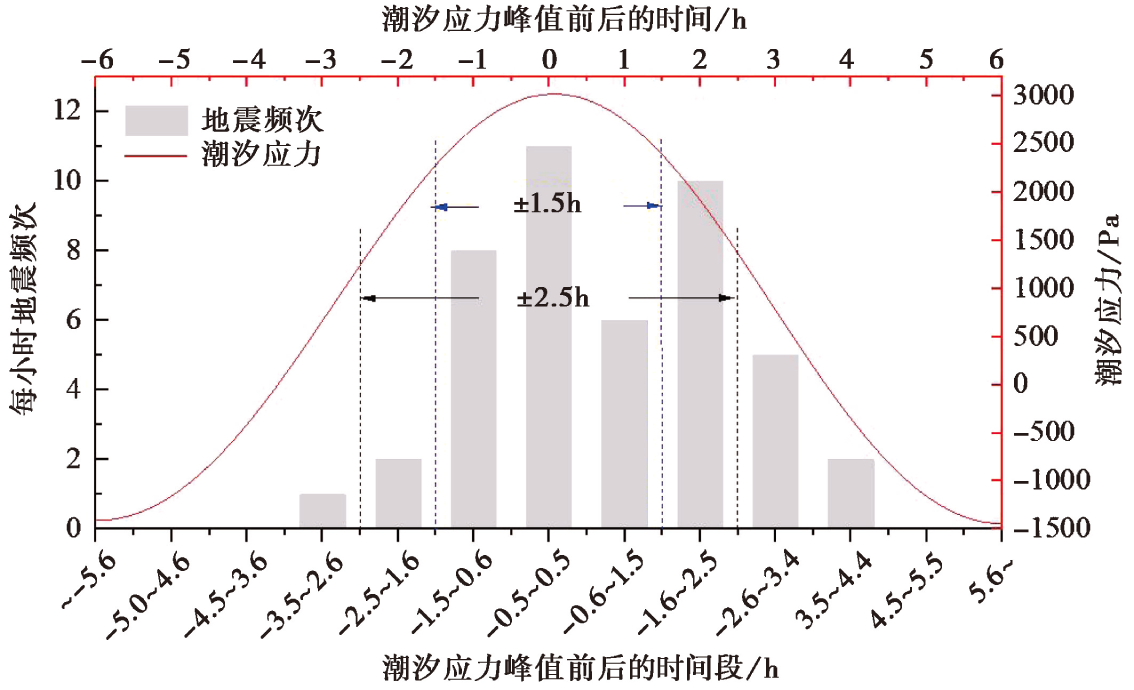
Fig. 5 Statistics on the time interval Δt between the occurrence of the MS≥4.0 earthquakes in the Wushi earthquake sequence and its adjacent peak tidal stress.
| [1] |
陈全, 安张辉, 范莹莹. 2019. 南北地震带潮汐触发地震的统计学证据[J]. 地球物理学进展, 34(5): 1714-1720.
|
|
|
|
| [2] |
关兆萱, 万永革, 周明月, 等. 2024. 2024年新疆乌什 MS7.1 地震发震断层产状及其动力学探讨[J]. 地震, 44(2): 1-11.
|
|
|
|
| [3] |
郭大庆, 刘蒲雄, 袁一凡, 等. 1998. 地震现场工作大纲和技术指南[M]. 北京: 地震出版社:25.
|
|
|
|
| [4] |
郭履灿, 庞明虎. 1981. 面波震级和它的台基校正值[J]. 地震学报, 3(3): 312-320 (in Chinese).
|
|
|
|
| [5] |
郭寅, 李金, 向元. 2024. 乌什 MS7.1 地震序列及应力降特征研究[J]. 内陆地震, 38(2): 105-111.
DOI |
|
|
|
| [6] |
贾启超, 吴传勇, 沈军, 等. 2015. 西南天山迈丹断裂阿合奇段左旋走滑的证据及其最新活动[J]. 地震工程学报, 37(1): 222-227.
|
|
|
|
| [7] |
蒋海昆, 黎明晓, 吴琼, 等. 2008. 汶川8.0级地震序列及相关问题讨论[J]. 地震地质, 30(3): 746-758. doi: 10.3969/j.issn.0253-4967.2008.03.013.
|
|
|
|
| [8] |
蒋海昆, 杨马陵, 孙学军, 等. 2011. 暴雨触发局部地震活动的一个典型例子: 2010年6月广西凌云-凤山交界3级震群活动[J]. 地球物理学报, 54(10): 2606-2619.
|
|
|
|
| [9] |
蒋骏, 张雁滨. 1995. 发震断层面上潮汐有效剪切应力增量的计算与加卸载的确定[J]. 中国地震, 11(1): 72-83.
|
|
|
|
| [10] |
李金, 蒋海昆. 2011. 汶川地震余震活动固体潮调制的统计分析[J]. 中国地震, 27(4): 363-375.
|
|
|
|
| [11] |
李金, 蒋海昆, 黄瑜, 等. 2014. 近期天山地震带地震活动固体潮调制的统计分析[J]. 地震, 34(2): 35-44.
|
|
|
|
| [12] |
李梦圆, 蒋海昆, 宋金, 等. 2022. 西藏波密的地震活动及季节性降雨的触发作用[J]. 地震地质, 44(3): 625-648. doi: 10.3969/j.issn.0253-4967.2022.03.005.
|
|
DOI |
|
| [13] |
刘冠男, 王志. 2020. 鲜水河-安宁河断裂带深部构造特征、 固体潮应力变化与地震触发相关性研究[J]. 地球物理学报, 63(3): 928-943.
DOI |
|
|
|
| [14] |
刘萍, 宋春燕, 牛中华. 2024. 2024年1月23日乌什 MS7.1 地震序列频谱偏移特征分析[J]. 内陆地震, 38(2): 136-142.
|
|
DOI |
|
| [15] |
能懿菡, 韩炳权, 刘振江, 等. 2024. InSAR观测揭示的2024年新疆乌什 MW7.0 地震地表形变及发震断层模型[J]. 武汉大学学报(信息科学版), 50(2): 368-376.
|
|
|
|
| [16] |
孙长青, 阎春恒, 吴小平, 等. 2014. 青藏高原东部及邻区地震断层面上的潮汐应力触发效应[J]. 地球物理学报, 57(7): 2054-2064.
DOI |
|
|
|
| [17] |
万永革, 吴忠良, 周公威, 等. 2000. 几次复杂地震中不同破裂事件之间的“应力触发”问题[J]. 地震学报, 22(6): 568-576.
|
|
|
|
| [18] |
汪素云, 王健, 俞言祥, 等. 2010. 基于中国地震台网观测报告的ML与MS 经验关系[J]. 中国地震, 26(1): 14-22.
|
|
|
|
| [19] |
吴传勇, 阿里木江, 戴训也, 等. 2014. 西南天山迈丹断裂东段晚第四纪活动的发现及构造意义[J]. 地震地质, 36(4): 976-990. doi: 10.3969/j.issn.0253-4967.2014.04.004.
|
|
DOI |
|
| [20] |
徐晶, 邵志刚, 张浪平, 等. 2013. 断层面上库仑破裂应力变化的相关研究进展[J]. 地球物理学进展, 28(1): 132-145.
|
|
|
|
| [21] |
许力生, 张旭, 严川, 等. 2014. 基于勒夫波的鲁甸 MS6.5 地震震源复杂性分析[J]. 地球物理学报, 57(9): 3006-3017.
DOI |
|
|
|
| [22] |
易桂喜, 龙峰, 张致伟. 2012. 汶川 MS8.0 地震余震震源机制时空分布特征[J]. 地球物理学报, 55(4): 1213-1227.
|
|
|
|
| [23] |
张博譞, 钱黎, 李涛, 等. 2024. 2024年1月23日新疆乌什 MS7.1 地震地质灾害和地表破裂[J]. 地震地质, 46(1): 220-234. doi: 10.3969/j.issn.0253-4967.2024.01.013.
|
|
|
|
| [24] |
张国民, 李丽, 黎凯武, 等. 2001. 强震成组活动与潮汐力调制触发[J]. 中国地震, 17(2): 110-120.
|
|
|
|
| [25] |
张涵, 解朝娣, 闫如玉, 等. 2019. 日本地震活动与潮汐相关性统计研究[J]. 大地测量与地球动力学, 39(11): 1122-1126.
|
|
|
|
| [26] |
张晶, 郗钦文, 杨林章, 等. 2007. 引潮力与潮汐应力对强震触发的研究[J]. 地球物理学报, 50(2): 448-454.
|
|
|
|
| [27] |
赵磊, 陈志丹, 谢磊, 等. 2024. 2024年1月23日 MW7.0 乌什地震InSAR同震形变场和断层滑动分布[J]. 地球与行星物理论评, 55(4): 453-460.
|
|
|
|
| [28] |
周江存, 孙和平, 徐建桥, 等. 2013. 地球内部应变与应力固体潮[J]. 地球物理学报, 56(11): 3779-3787.
|
|
|
|
| [29] |
DOI PMID |
| [30] |
DOI URL |
| [31] |
|
| [32] |
|
| [33] |
DOI |
| [34] |
|
| [35] |
|
| [36] |
|
| [37] |
|
| [38] |
DOI URL |
| [39] |
DOI URL |
| [40] |
|
| [41] |
|
| [42] |
DOI URL |
| No related articles found! |
| Viewed | ||||||
|
Full text |
|
|||||
|
Abstract |
|
|||||
Copyright © SEISMOLOGY AND GEOLOGY, All Rights Reserved.
Tel: 010-62009049/9063 E-mail: dzdz@ies.ac.cn
Powered by Beijing Magtech Co., Ltd.