
SEISMOLOGY AND GEOLOGY ›› 2025, Vol. 47 ›› Issue (6): 1495-1525.DOI: 10.3969/j.issn.0253-4967.2025.06.20240050
• Review • Previous Articles Next Articles
INVESTIGATION OF THE SUITABILITY OF (U-TH)/HE DATING MINERALS
YANG Li1,2)( ), YANG Jing1),*(), ZHANG Bin3), YUAN Wan-ming2), LI Xiao4), YE Zhang-huang5)
- 1) Key Laboratory of Active Tectonics and Geological Safety, Ministry of Natural Resources, Beijing 100081, China
2) China University of Geosciences, Beijing 100083, China
3) Key Laboratory of Cenozoic Geology and Environment, Institute of Geology and Geophysics, Chinese Academy of Sciences, Beijing 100029, China
4) Shandong Gold Geology and Mineral Exploration Co. Ltd, Shandong, Yantai 261400, China
5) Jiangxi Science and Technology Normal University, Nanchang 330038, China
-
Received:2024-04-16Revised:2024-08-04Online:2025-12-20Published:2025-12-31
(U-Th)/He定年矿物适宜性探讨
杨莉1,2)(), 杨静1),*(), 张斌3), 袁万明2), 李肖4), 叶张煌5)
- 1) 中国地质科学院地质力学研究所, 自然资源部活动构造与地质安全重点实验室, 北京 100081
2) 中国地质大学(北京), 北京 100083
3) 中国科学院地质与地球物理研究所, 北京 100029
4) 山东黄金地质矿产勘查有限公司, 烟台 261400
5) 江西科技师范大学, 南昌 330038
-
通讯作者:*杨静, 女, 1984年生, 博士, 副研究员, 主要研究方向为中-低温热年代学, E-mail: yangjing_822822@163.com。 -
作者简介:杨莉, 女, 1987年生, 2023年于中国地质大学(北京)获矿物学、 岩石学、 矿床学专业博士学位, 主要从事(U-Th)/He和裂变径迹方法研究、 低温热年代学矿床学应用研究, E-mail: yangli0211luck@126.com。
-
基金资助:国家自然基金(42241161); 国家自然基金(42072242); 国家自然基金(41873063); 中国博士后科学基金(2021M703196); 2021年中国地质大学(北京)研究生创新项目(YB2021YC021)

Cite this article
YANG Li, YANG Jing, ZHANG Bin, YUAN Wan-ming, LI Xiao, YE Zhang-huang. INVESTIGATION OF THE SUITABILITY OF (U-TH)/HE DATING MINERALS[J]. SEISMOLOGY AND GEOLOGY, 2025, 47(6): 1495-1525.
杨莉, 杨静, 张斌, 袁万明, 李肖, 叶张煌. (U-Th)/He定年矿物适宜性探讨[J]. 地震地质, 2025, 47(6): 1495-1525.
share this article
Add to citation manager EndNote|Ris|BibTeX
URL: https://www.dzdz.ac.cn/EN/10.3969/j.issn.0253-4967.2025.06.20240050
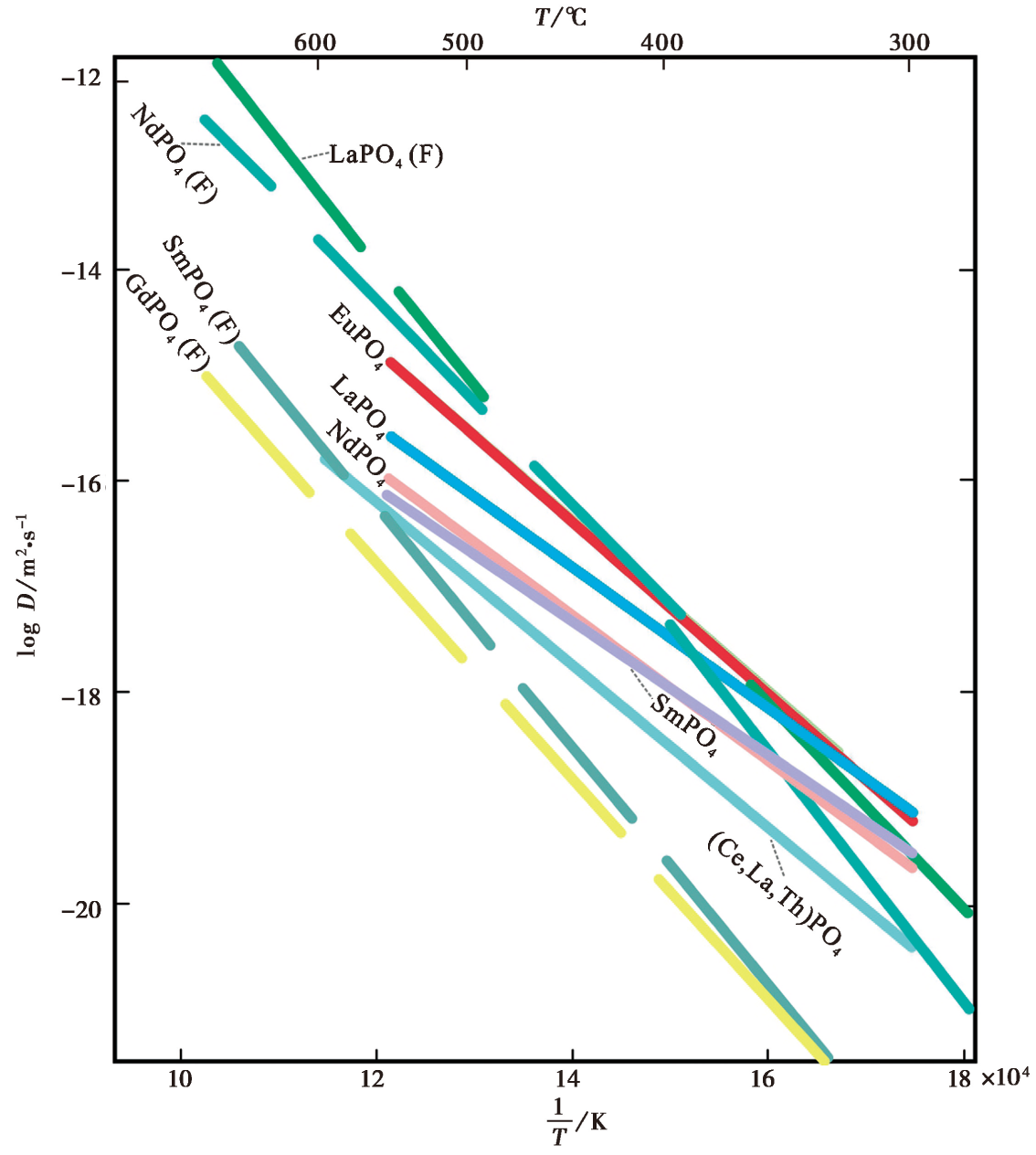
Fig. 1 Summary of measurements for He diffusion in natural monazite and synthetic REE phosphates of monazite structure(modified from Cherniak et al., 2013).
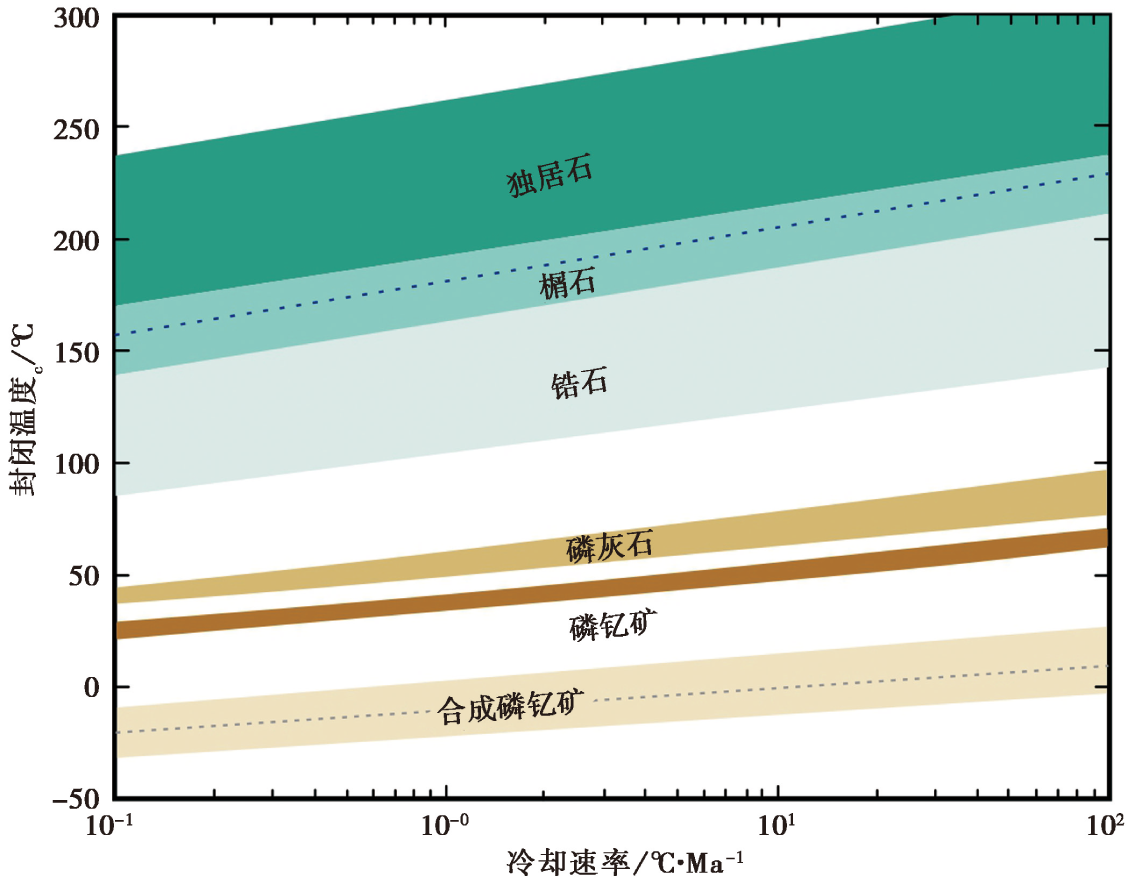
Fig. 2 Helium bulk closure temperature for monazite, titanite, zircon, apatite, synthetic xenotime(modified from Anderson et al., 2019).
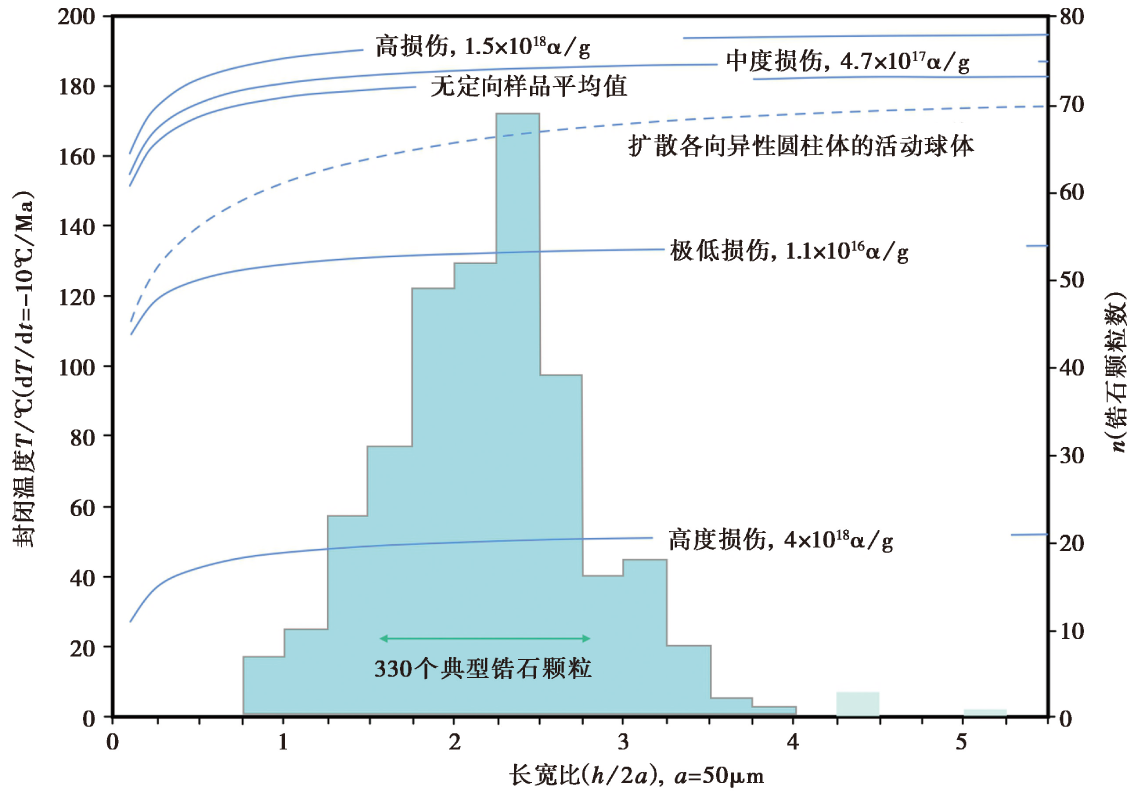
Fig. 3 Closure temperature of equivalent sphere zircon grains with simplified circular cylinder morphologies and aspect ratios 0.1-5.5 with a=50μm.(modified from Cherniak et al., 2009).
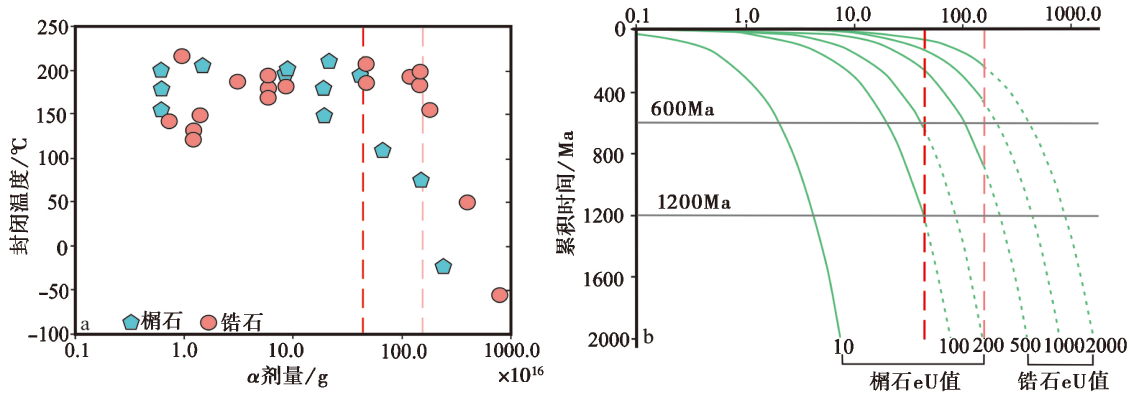
Fig. 4 a Tc(℃)versus estimated alpha dose(α×1016/g) for titanites and zircon, b Accumulation time(Ma) versus alpha dose(α×1016/g) for titanite and zircon of variable eU(modified from Baughman et al., 2017).
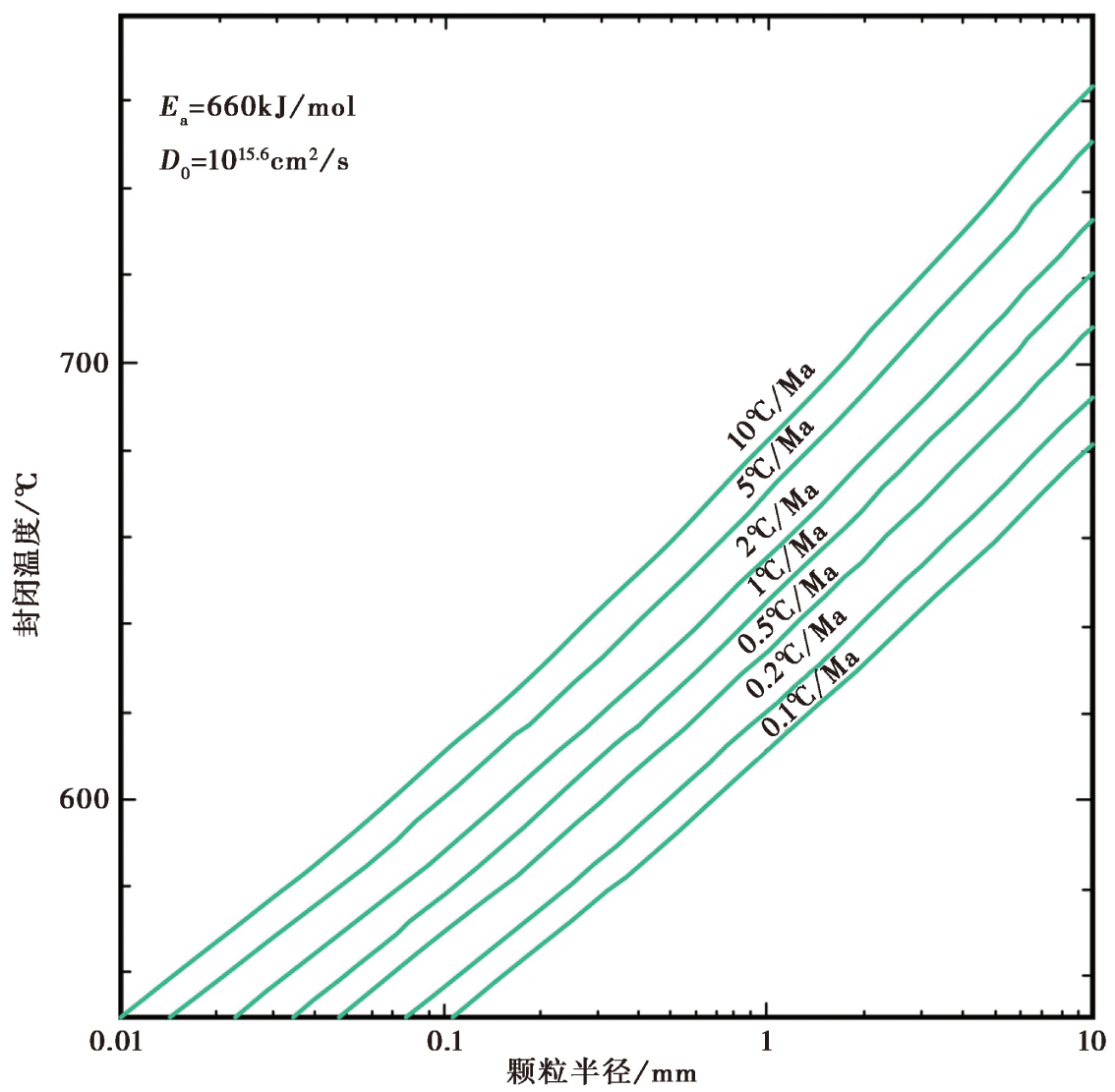
Fig. 5 Closure temperature for He diffusion in garnet for various grain sizes and cooling rates(modified from Dunai et al., 1996).
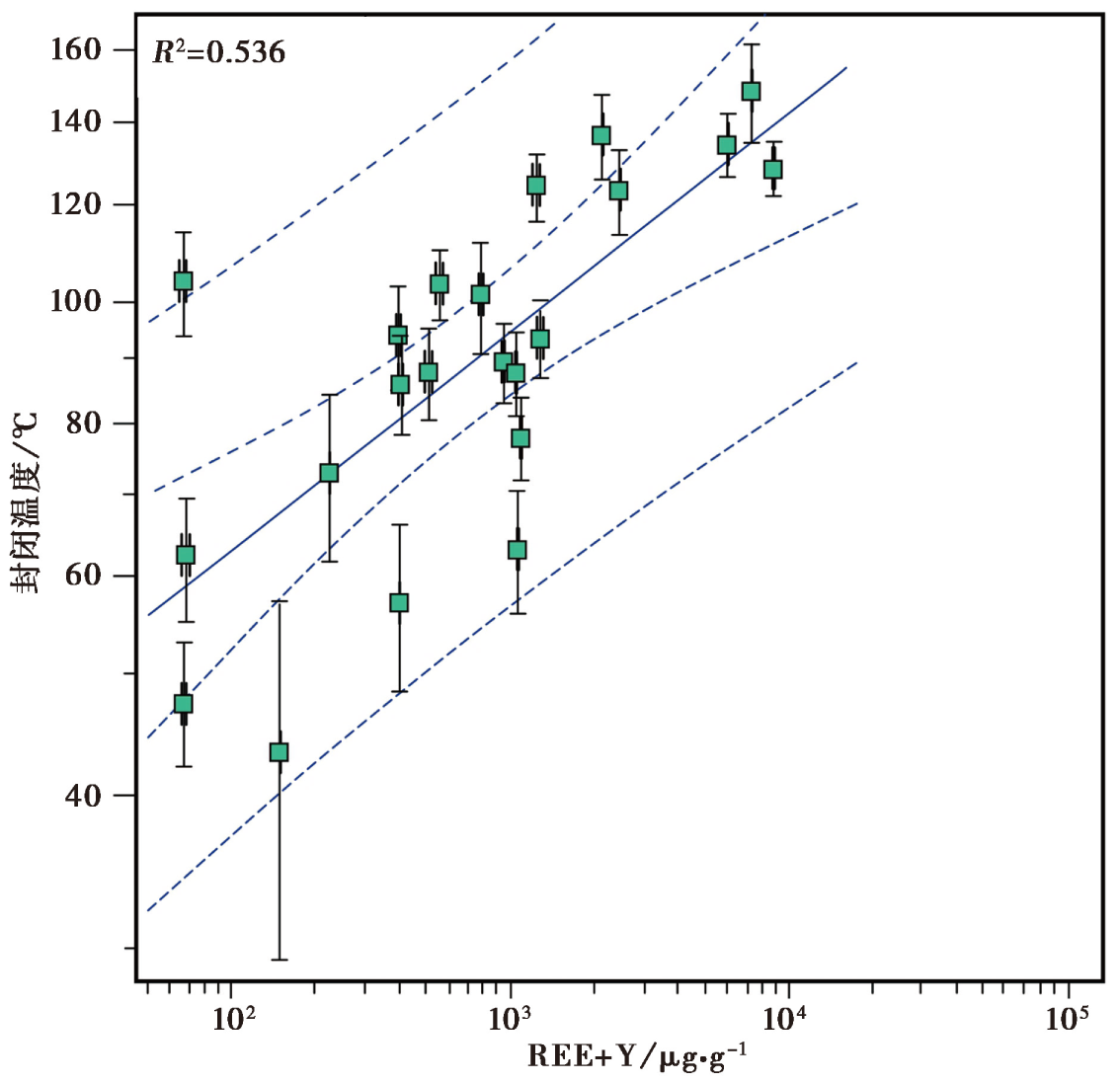
Fig. 6 Most prominent cations(REE+Y[lg/g])substituting for Ca plotted against the closure temperature(Wolff et al., 2016).
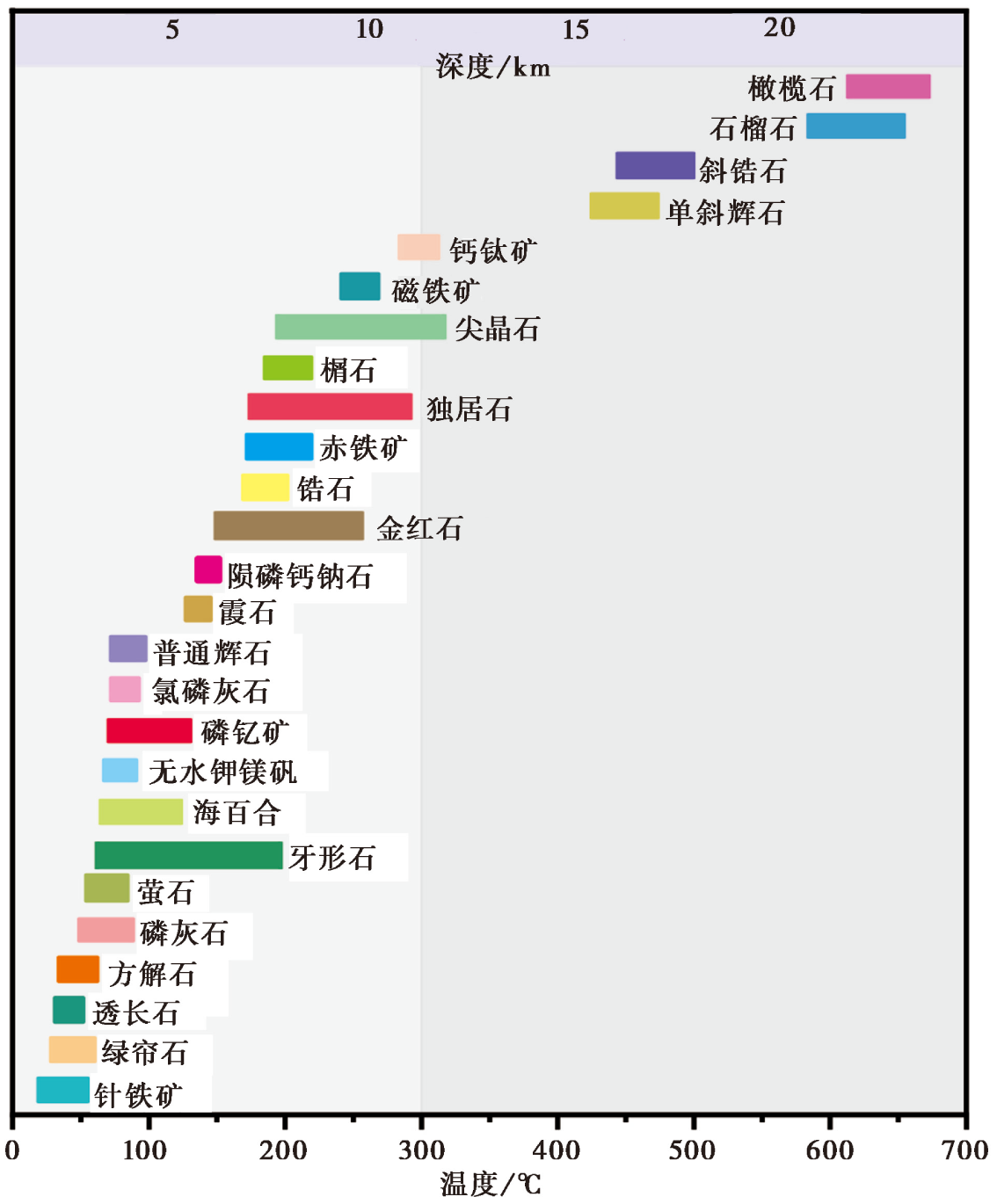
Fig. 7 Closure temperature(Tc)ranges for (U-Th)/He thermochronometry systems.
| [1] |
戴梦瑶, 王平, 李安波, 等. 2023. 低温热年代学数据库建设现状与前景展望[J]. 地震地质, 45(6): 1432-1451. doi: 10.3969/j.issn.0253-4967.2023.06.011.
|
|
DOI |
|
| [2] |
王英, 郑德文, 武颖, 等. 2017. 磷灰石单颗粒(U-Th)/He测年实验流程的建立及验证[J]. 地震地质, 39(6): 1143-1157. doi: 10.3969/j.issn.0253-4967.2017.06.004.
|
|
DOI |
|
| [3] |
王英, 郑德文, 李又娟, 等. 2019. 国际标样Fish Canyon Tuff锆石的(U-Th)/He年龄测定[J]. 地震地质, 41(5): 1302-1315. doi: 10.3969/j.issn.0253-4967.2019.05.016.
|
|
DOI |
|
| [4] |
袁万明. 2016. 矿床保存变化研究的热年代学技术方法[J]. 岩石学报, 32(8): 2571-2578.
|
|
|
|
| [5] |
喻顺, 田云涛. 2023. Fish Canyon Tuff榍石He扩散及(U-Th)/He年代学研究[J]. 地质学报, 97(1): 278-290.
|
|
|
|
| [6] |
喻顺, 陈文, 吕修祥, 等. 2014. (U-Th)/He技术约束下库车盆地北缘构造热演化- -以吐孜2井为例 [J]. 地球物理学报, 57(1): 62-74.
|
|
|
|
| [7] |
杨静, 郑德文, 陈文, 等. 2014. 磷灰石4He/3He热年代学--一种低温热年代学研究的新技术[J]. 地震地质, 36(4): 1009-1019. doi: 10.3969/j.issn.0253-4967.2014.04.006.
|
|
|
|
| [8] |
杨莉, 袁万明, 王珂. 2018. 热年代学方法、 技术手段及其在矿床地质中的研究进展[J]. 地球科学, 43(6): 1887-1902.
|
|
|
|
| [9] |
郑德文, 武颖, 庞建章, 等. 2016. U-Th/He热年代学原理、 测试及应用[J]. 第四纪研究, 36(5): 1027-1036.
|
|
|
|
| [10] |
张会平, 张培震, 郑文俊, 等. 2007. 活动构造研究中相关速率的原地宇宙成因核素年代学约束[J]. 地震地质, 29(2): 418-430. doi: 10.3969/j.issn.0253-4967.2007.02.020.
|
|
|
|
| [11] |
DOI URL |
| [12] |
DOI URL |
| [13] |
DOI URL |
| [14] |
DOI URL |
| [15] |
DOI URL |
| [16] |
DOI URL |
| [17] |
DOI URL |
| [18] |
DOI URL |
| [19] |
DOI URL |
| [20] |
DOI URL |
| [21] |
DOI URL |
| [22] |
DOI |
| [23] |
|
| [24] |
DOI URL |
| [25] |
|
| [26] |
DOI URL |
| [27] |
DOI URL |
| [28] |
DOI URL |
| [29] |
DOI URL |
| [30] |
DOI URL |
| [31] |
|
| [32] |
DOI |
| [33] |
|
| [34] |
DOI URL |
| [35] |
DOI URL |
| [36] |
DOI URL |
| [37] |
DOI URL |
| [38] |
DOI URL |
| [39] |
DOI URL |
| [40] |
DOI URL |
| [41] |
DOI URL |
| [42] |
|
| [43] |
DOI URL |
| [44] |
|
| [45] |
DOI URL |
| [46] |
DOI URL |
| [47] |
DOI URL |
| [48] |
DOI URL |
| [49] |
DOI URL |
| [50] |
|
| [51] |
DOI URL |
| [52] |
DOI URL |
| [53] |
DOI URL |
| [54] |
DOI URL |
| [55] |
|
| [56] |
DOI URL |
| [57] |
DOI URL |
| [58] |
DOI URL |
| [59] |
DOI URL |
| [60] |
DOI URL |
| [61] |
|
| [62] |
DOI URL |
| [63] |
DOI URL |
| [64] |
DOI URL |
| [65] |
DOI URL |
| [66] |
DOI URL |
| [67] |
DOI URL |
| [68] |
DOI URL |
| [69] |
DOI URL |
| [70] |
|
| [71] |
|
| [72] |
|
| [73] |
DOI URL |
| [74] |
|
| [75] |
DOI URL |
| [76] |
|
| [77] |
DOI URL |
| [78] |
DOI URL |
| [79] |
|
| [80] |
DOI URL |
| [81] |
DOI URL |
| [82] |
DOI URL |
| [83] |
DOI URL |
| [84] |
DOI URL |
| [85] |
DOI URL |
| [86] |
|
| [87] |
DOI URL |
| [88] |
DOI URL |
| [89] |
DOI URL |
| [90] |
|
| [91] |
DOI URL |
| [92] |
DOI URL |
| [93] |
DOI URL |
| [94] |
DOI URL |
| [95] |
DOI URL |
| [96] |
DOI URL |
| [97] |
DOI URL |
| [98] |
DOI URL |
| [99] |
|
| [100] |
DOI URL |
| [101] |
DOI URL |
| [102] |
DOI URL |
| [103] |
|
| [104] |
DOI URL |
| [105] |
DOI URL |
| [106] |
|
| [107] |
DOI URL |
| [108] |
DOI URL |
| [109] |
|
| [110] |
DOI URL |
| [111] |
DOI URL |
| [112] |
|
| [113] |
DOI |
| [114] |
DOI URL |
| [115] |
DOI |
| [116] |
|
| [117] |
DOI URL |
| [118] |
DOI URL |
| [119] |
DOI URL |
| [120] |
|
| [121] |
DOI URL |
| [122] |
DOI URL |
| [123] |
|
| [124] |
DOI URL |
| [1] | LI Jia-yu, ZHENG Wen-jun, WANG Wei-tao, WAN Ying, ZHANG Pei-zhen, WANG Yang. THE NORTHWARD GROWTH OF THE NORTHEASTERN TIBETAN PLATEAU IN LATE CENOZOIC: IMPLICATIONS FROM APATITE (U-Th)/He AGES OF LONGSHOU SHAN [J]. SEISMOLOGY AND GEOLOGY, 2020, 42(2): 472-491. |
| [2] | WANG Ying, ZHENG De-wen, LI You-juan, WU Ying. (U-TH)/HE DATING OF INTERNATIONAL STANDARD FISH CANYON TUFF ZIRCON [J]. SEISMOLOGY AND GEOLOGY, 2019, 41(5): 1302-1315. |
| [3] | WANG Ying, ZHENG De-wen, WU Ying, LI You-juan, WANG Yi-zhou. MEASUREMENT PROCEDURE OF SINGLE-GRAIN APATITE(U-Th)/He DATING AND ITS VALIDATION BY DURANGO APATITE STANDARD [J]. SEISMOLOGY AND GEOLOGY, 2017, 39(6): 1143-1157. |
| [4] | ZHANG Wei-bin, WU Lin, WANG Fei. FACTORS IMPACTING THE ACCURACY OF APATITE(U-TH)/HE DATING [J]. SEISMOLOGY AND GEOLOGY, 2016, 38(4): 1107-1123. |
| [5] | LI Zi-hong, LI Bin, LIU Hong-fu, YAN Xiao-bing, HU Gui-rang. RESEARCH ON TECTONIC STRESS OF THE NORTHEAST SEGMENT OF HANCHENG FAULT ZONE [J]. SEISMOLOGY AND GEOLOGY, 2015, 37(2): 468-481. |
| [6] | YANG Jing, ZHENG De-wen, WU Ying. 40Ar/39Ar GEOCHRONOLOGY OF SUPERGENE ALUNITE-GROUP MINERALS [J]. SEISMOLOGY AND GEOLOGY, 2013, 35(1): 177-187. |
| [7] | WANG Duo-jun, MA Jin, YANG Xiao-song, ZHOU Ping. A REVIEW TO ELECTRICAL CONDUCTIVITY OF MANTLE MINERALS [J]. SEISMOLOGY AND EGOLOGY, 2007, 29(1): 152-160. |
| [8] | Feng Jin-jiang, Cheng Shao-ping, Hu Bi-ru, Zhang Bing-liang, Niu Luan-fang. RELATIONSHIP BETWEEN CHARACTERISTIC PARAMETERS AND TIME OF SOIL LAYER Bms OF ALLUVIAL FAN IN HEYUAN AREA, GUANGDONG [J]. SEISMOLOGY AND GEOLOGY, 1991, 13(4): 361-368. |
| Viewed | ||||||
|
Full text |
|
|||||
|
Abstract |
|
|||||
Copyright © SEISMOLOGY AND GEOLOGY, All Rights Reserved.
Tel: 010-62009049/9063 E-mail: dzdz@ies.ac.cn
Powered by Beijing Magtech Co., Ltd.