
SEISMOLOGY AND GEOLOGY ›› 2026, Vol. 48 ›› Issue (1): 19-42.DOI: 10.3969/j.issn.0253-4967.20240075
• Research pape • Previous Articles Next Articles
LATE-QUATERNARY ACTIVITY OF THE XUSHUI SOUTH FAULT AND NIUDONG FAULT IN THE NORTH OF THE NORTH CHINA PLAIN, EVIDENCE FROM DRILLING
HUANG Xiong-nan1)( ), YANG Xiao-ping1),*, LIU Bao-jin2), SHI Feng1), ZHUANG Qi-tian3), HAO Hai-jian1), SHI Jin-hu2), SUN Hao-yue1), LU Ren-qi1), HU Zong-kai1), LI Kang1), CAO Jun1,4), SHU Peng1), REN Guang-xue1), WANG Zhen-nan1)
- 1)
State Key Laboratory of Earthquake Dynamics and Forecasting ,Institute of Geology, China Earthquake Administration
2)Geophysical Exploration Center ,China Earthquake Administration
3)POWER CHINA Kunming Engineering Corporation Limited
4)Hebei Earthquake Agency
-
Received:2025-05-31Revised:2025-10-24Online:2026-02-20Published:2026-03-14
华北平原北部徐水南断裂和牛东断裂晚第四纪活动性——来自钻孔联合地质剖面的证据
黄雄南1)(), 杨晓平1),*, 刘保金2), 石峰1), 庄其天3), 郝海健1), 石金虎2), 孙浩越1), 鲁人齐1), 胡宗凯1), 李康1), 曹筠1,4), 疏鹏1), 任光雪1), 王振南1)
- 1)
地震动力学与强震预测全国重点实验室(中国地震局地质研究所)
2)中国地震局地球物理勘探中心
3)中国电建集团昆明勘测设计研究院有限公司
4)河北省地震局
-
通讯作者:* 杨晓平, 男, 1962年生, 研究员, 主要研究方向为活动构造及地震危险性评价, E-mail: yangxiaoping-1@163.com。 -
作者简介:黄雄南, 男, 1974年生, 2003年于北京大学获构造地质学专业博士学位, 副研究员, 主要研究方向为活动构造与地震地质, E-mail: xiongnan_h@sohu.com。
-
基金资助:中国地震局地质研究所基本科研业务专项(IGCEA1902)

Cite this article
HUANG Xiong-nan, YANG Xiao-ping, LIU Bao-jin, SHI Feng, ZHUANG Qi-tian, HAO Hai-jian, SHI Jin-hu, SUN Hao-yue, LU Ren-qi, HU Zong-kai, LI Kang, CAO Jun, SHU Peng, REN Guang-xue, WANG Zhen-nan. LATE-QUATERNARY ACTIVITY OF THE XUSHUI SOUTH FAULT AND NIUDONG FAULT IN THE NORTH OF THE NORTH CHINA PLAIN, EVIDENCE FROM DRILLING[J]. SEISMOLOGY AND GEOLOGY, 2026, 48(1): 19-42.
黄雄南, 杨晓平, 刘保金, 石峰, 庄其天, 郝海健, 石金虎, 孙浩越, 鲁人齐, 胡宗凯, 李康, 曹筠, 疏鹏, 任光雪, 王振南. 华北平原北部徐水南断裂和牛东断裂晚第四纪活动性——来自钻孔联合地质剖面的证据[J]. 地震地质, 2026, 48(1): 19-42.
share this article
Add to citation manager EndNote|Ris|BibTeX
URL: https://www.dzdz.ac.cn/EN/10.3969/j.issn.0253-4967.20240075
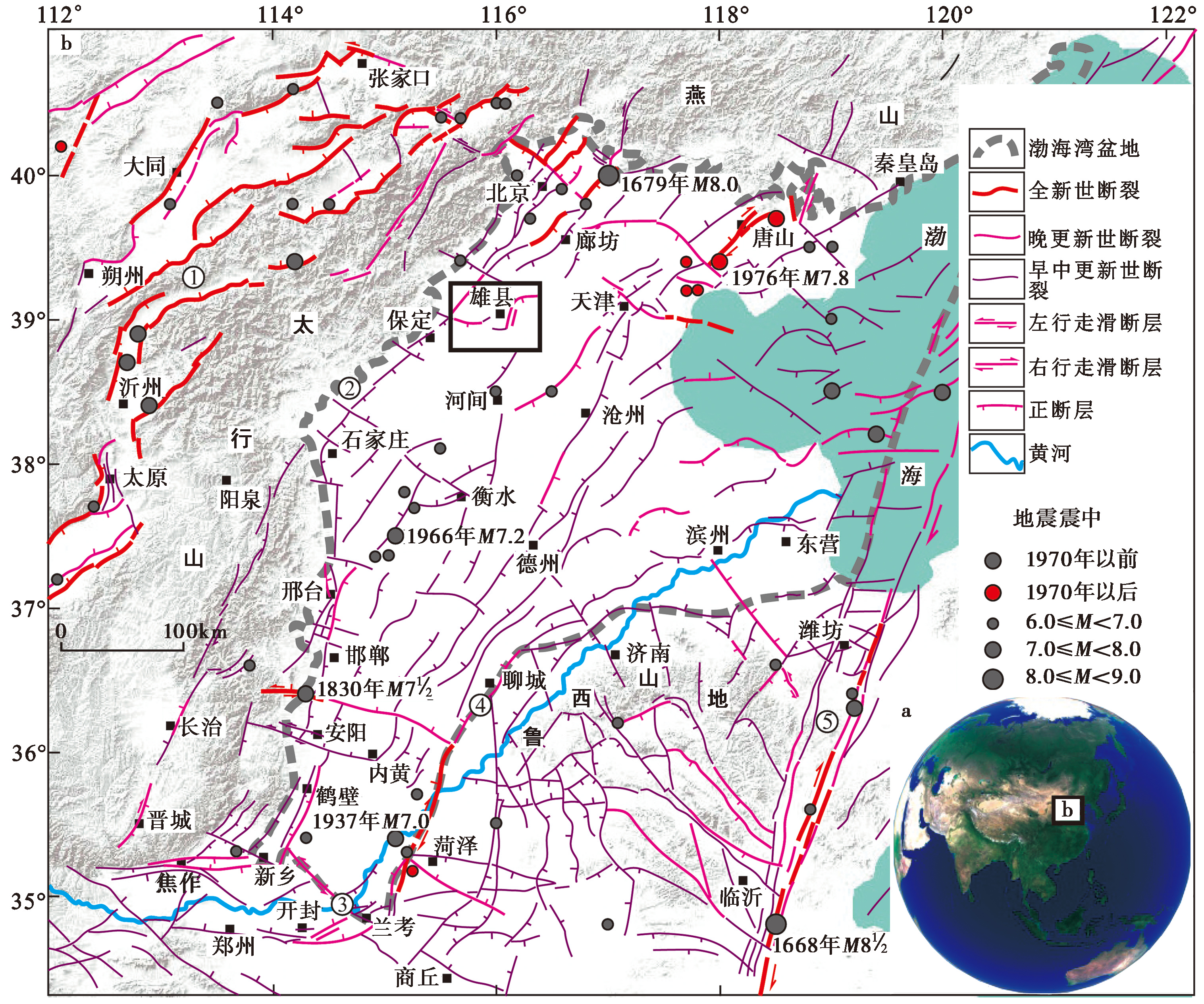
Fig. 1 Distribution map of Quaternary faults of the North China Plain(modified by LI Feng et al., 2022).
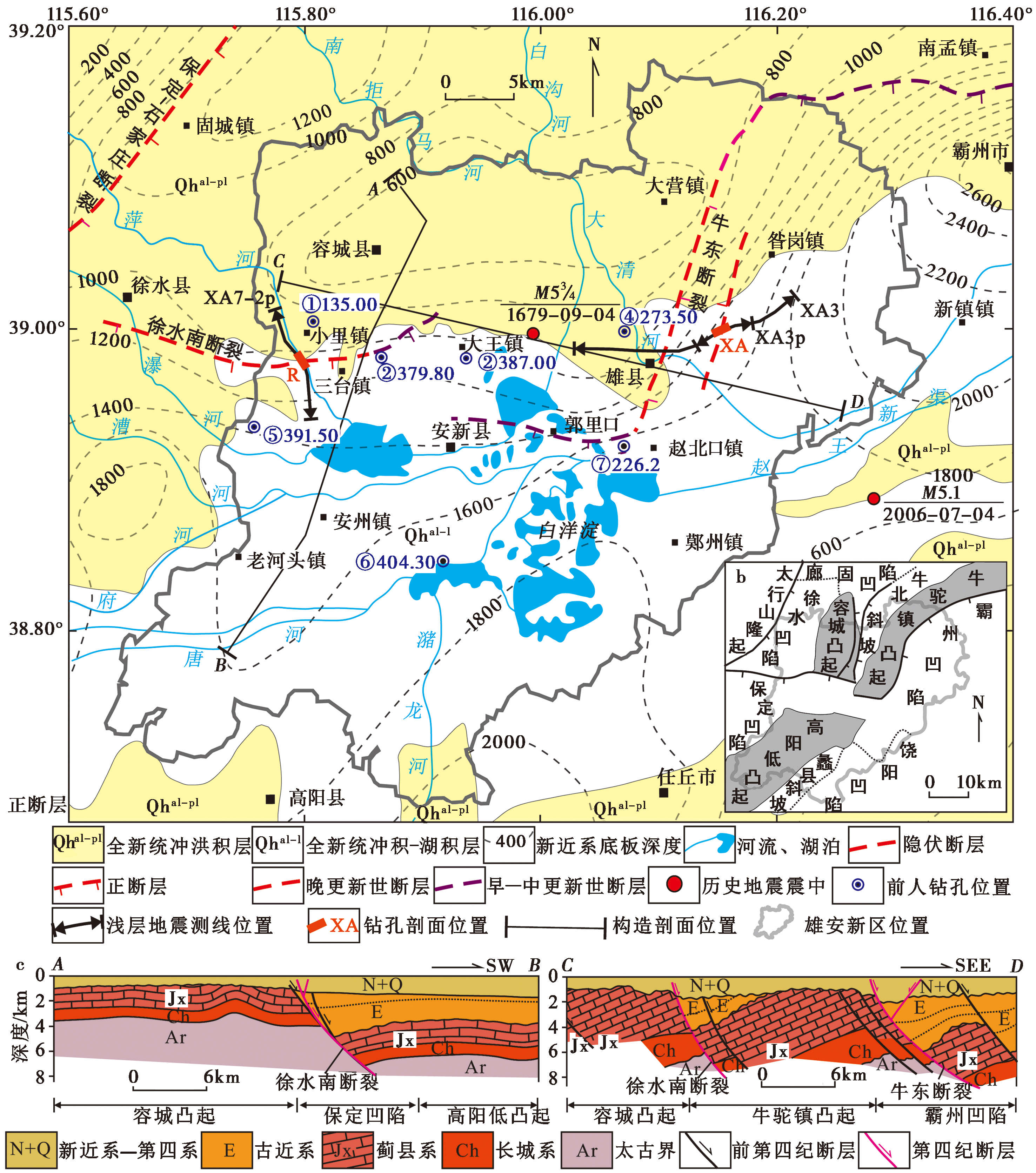
Fig. 2 Distribution map of Quaternary faults(a), distribution of structural units and structure profiles(b) of the Xiong'an new area.
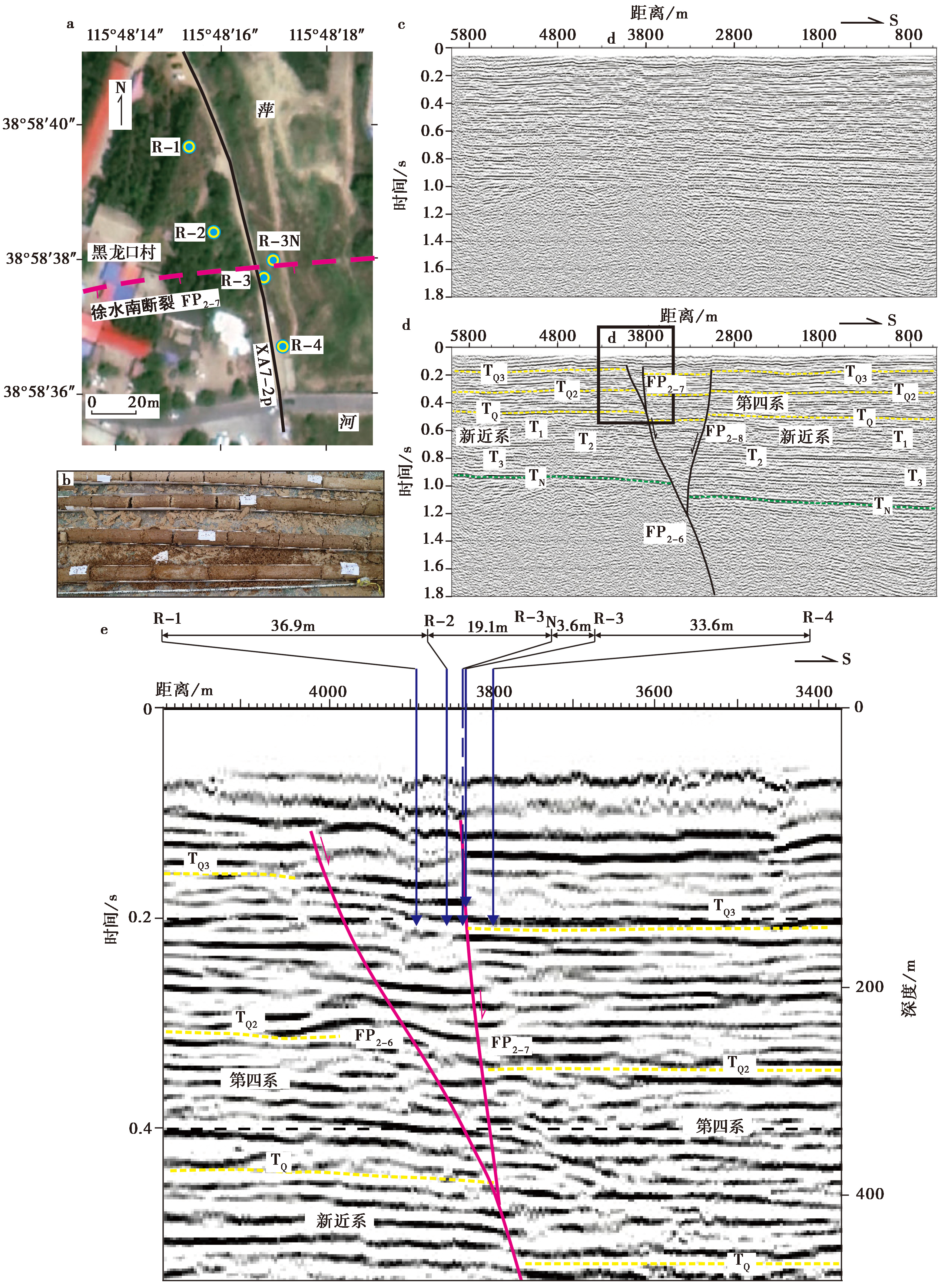
Fig. 3 Distribution map of boreholes in Rongcheng(a), photograph of the core array(b), time-section(c), and interpretation(d) of the XA7-2p shallow seismic exploration line and the vertical layout of the boreholes(e).
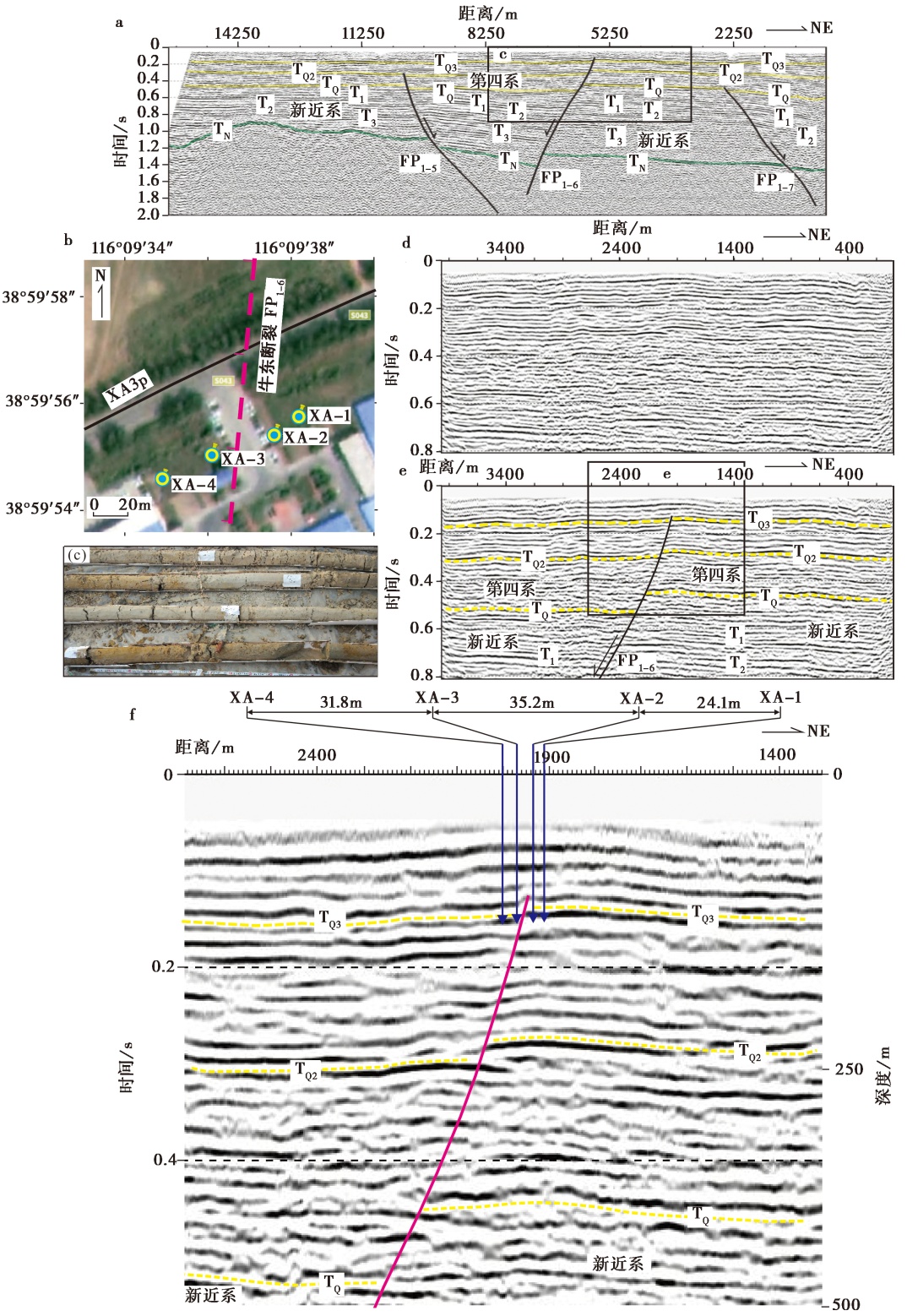
Fig. 4 The XA3 shallow seismic exploration profile(a), distribution map of boreholes in Xiongxian(b), photograph of the core array(c), time-section(d) and interpretation(e) of the XA3p shallow seismic exploration line and the vertical layout of the boreholes(f).
| 孔号 | 样品埋深/m | 地层单元 | 样品岩性 | 测年方法 | 测年结果 |
|---|---|---|---|---|---|
| R-2 | 10.55 | UR2 | 有机沉积物 | 14C | (19701±194)a BP |
| R-2 | 20.0 | UR3 | 有机沉积物 | 14C | (23220±250)a BP |
| R-2 | 35.9 | UR3 | 有机沉积物 | 14C | (24359±217)a BP |
| R-2 | 50.1 | UR4 | 有机沉积物 | 14C | (38206±620)a BP |
| R-2 | 62.60 | UR4 | 粉砂 | OSL | (51.3±4.8)ka |
| R-2 | 69.20 | UR4 | 细砂 | OSL | (61.0±5.3)ka |
| R-2 | 79.00 | UR6 | 粉砂 | OSL | (155.1±15.8)ka |
| R-2 | 89.60 | UR6 | 粉砂 | OSL | (158.4±21.2)ka |
| R-2 | 90.9 | UR6 | 粉砂 | ESR | (378±60)ka |
| R-2 | 101.6 | UR6 | 砂 | ESR | (466±72)ka |
| R-2 | 114.4 | UR6 | 砂 | ESR | (425±77)ka |
| R-2 | 123.9 | UR6 | 粉细砂 | ESR | (489±103)ka |
| R-2 | 136.5 | UR6 | 粉砂 | ESR | (501±88)ka |
| R-2 | 142.4 | UR6 | 细砂 | ESR | (758±222)ka |
| XA-3 | 3.7 | UX1 | 有机沉积物 | 14C | (3851±121)a BP |
| XA-3 | 7.15 | UX1 | 有机沉积物 | 14C | (7379±60)a BP |
| XA-3 | 39.5 | UX3 | 有机沉积物 | 14C | (35855±420)a BP |
| XA-3 | 54.8 | UX5 | 有机沉积物 | 14C | (43718±778)a BP |
| XA-3 | 82.70 | UX6 | 粉砂 | OSL | (143.8±19.6)ka |
| XA-3 | 94.4 | UX7 | 粉细砂 | ESR | (441±56)ka |
| XA-3 | 110.4 | U8 | 细砂 | ESR | (468±52)ka |
| XA-3 | 141.6 | U8 | 中细砂 | ESR | (738±215)ka |
Table1 Test results of the dating samples from Xiong'an composite drilling sections
| 孔号 | 样品埋深/m | 地层单元 | 样品岩性 | 测年方法 | 测年结果 |
|---|---|---|---|---|---|
| R-2 | 10.55 | UR2 | 有机沉积物 | 14C | (19701±194)a BP |
| R-2 | 20.0 | UR3 | 有机沉积物 | 14C | (23220±250)a BP |
| R-2 | 35.9 | UR3 | 有机沉积物 | 14C | (24359±217)a BP |
| R-2 | 50.1 | UR4 | 有机沉积物 | 14C | (38206±620)a BP |
| R-2 | 62.60 | UR4 | 粉砂 | OSL | (51.3±4.8)ka |
| R-2 | 69.20 | UR4 | 细砂 | OSL | (61.0±5.3)ka |
| R-2 | 79.00 | UR6 | 粉砂 | OSL | (155.1±15.8)ka |
| R-2 | 89.60 | UR6 | 粉砂 | OSL | (158.4±21.2)ka |
| R-2 | 90.9 | UR6 | 粉砂 | ESR | (378±60)ka |
| R-2 | 101.6 | UR6 | 砂 | ESR | (466±72)ka |
| R-2 | 114.4 | UR6 | 砂 | ESR | (425±77)ka |
| R-2 | 123.9 | UR6 | 粉细砂 | ESR | (489±103)ka |
| R-2 | 136.5 | UR6 | 粉砂 | ESR | (501±88)ka |
| R-2 | 142.4 | UR6 | 细砂 | ESR | (758±222)ka |
| XA-3 | 3.7 | UX1 | 有机沉积物 | 14C | (3851±121)a BP |
| XA-3 | 7.15 | UX1 | 有机沉积物 | 14C | (7379±60)a BP |
| XA-3 | 39.5 | UX3 | 有机沉积物 | 14C | (35855±420)a BP |
| XA-3 | 54.8 | UX5 | 有机沉积物 | 14C | (43718±778)a BP |
| XA-3 | 82.70 | UX6 | 粉砂 | OSL | (143.8±19.6)ka |
| XA-3 | 94.4 | UX7 | 粉细砂 | ESR | (441±56)ka |
| XA-3 | 110.4 | U8 | 细砂 | ESR | (468±52)ka |
| XA-3 | 141.6 | U8 | 中细砂 | ESR | (738±215)ka |
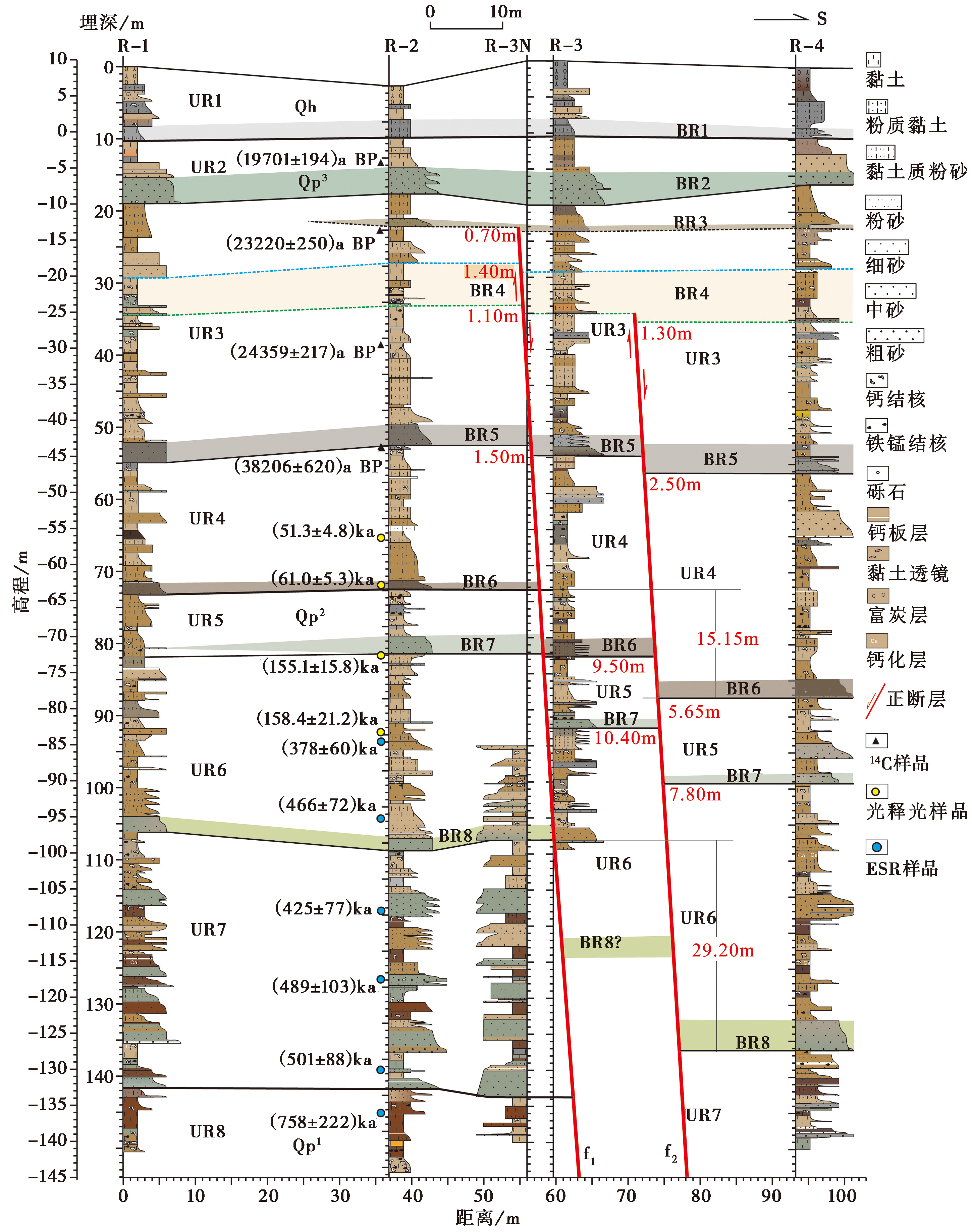
Fig. 5 Composite drilling geological profile for the Rongcheng site.

Fig. 6 Composite drilling geological profile for the Xiongxian site.
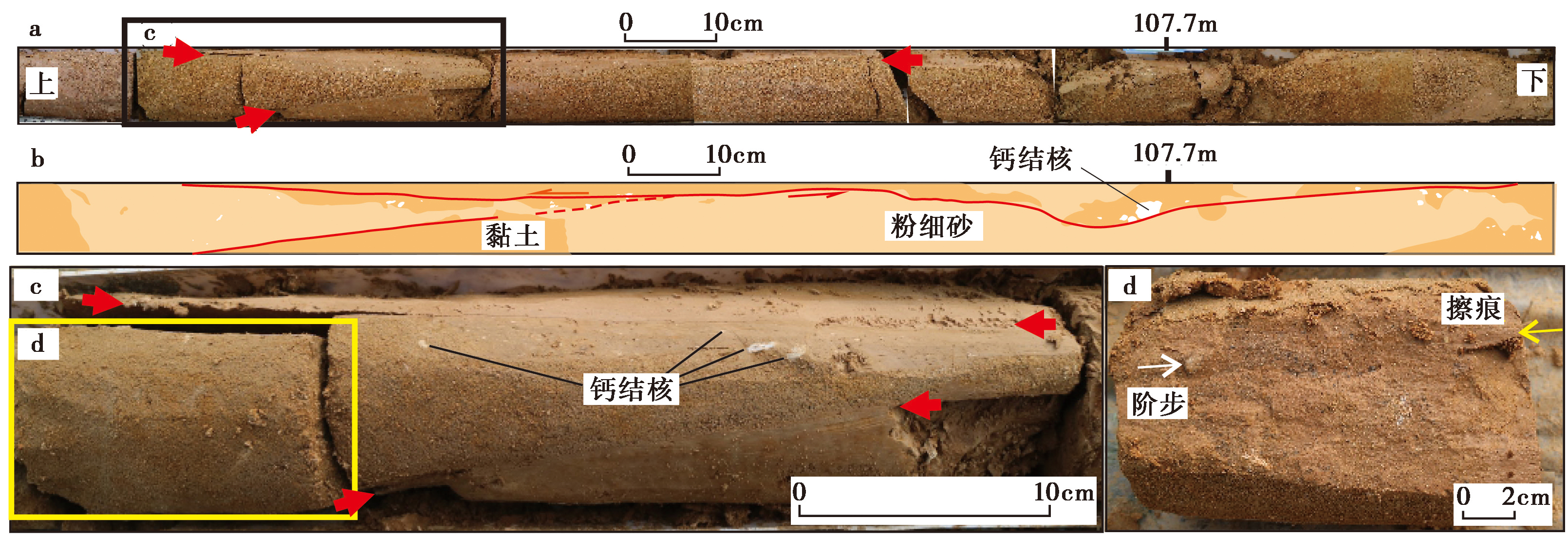
Fig. 7 Photos of the fault face revealed by the R-3 borehole in Rongcheng.
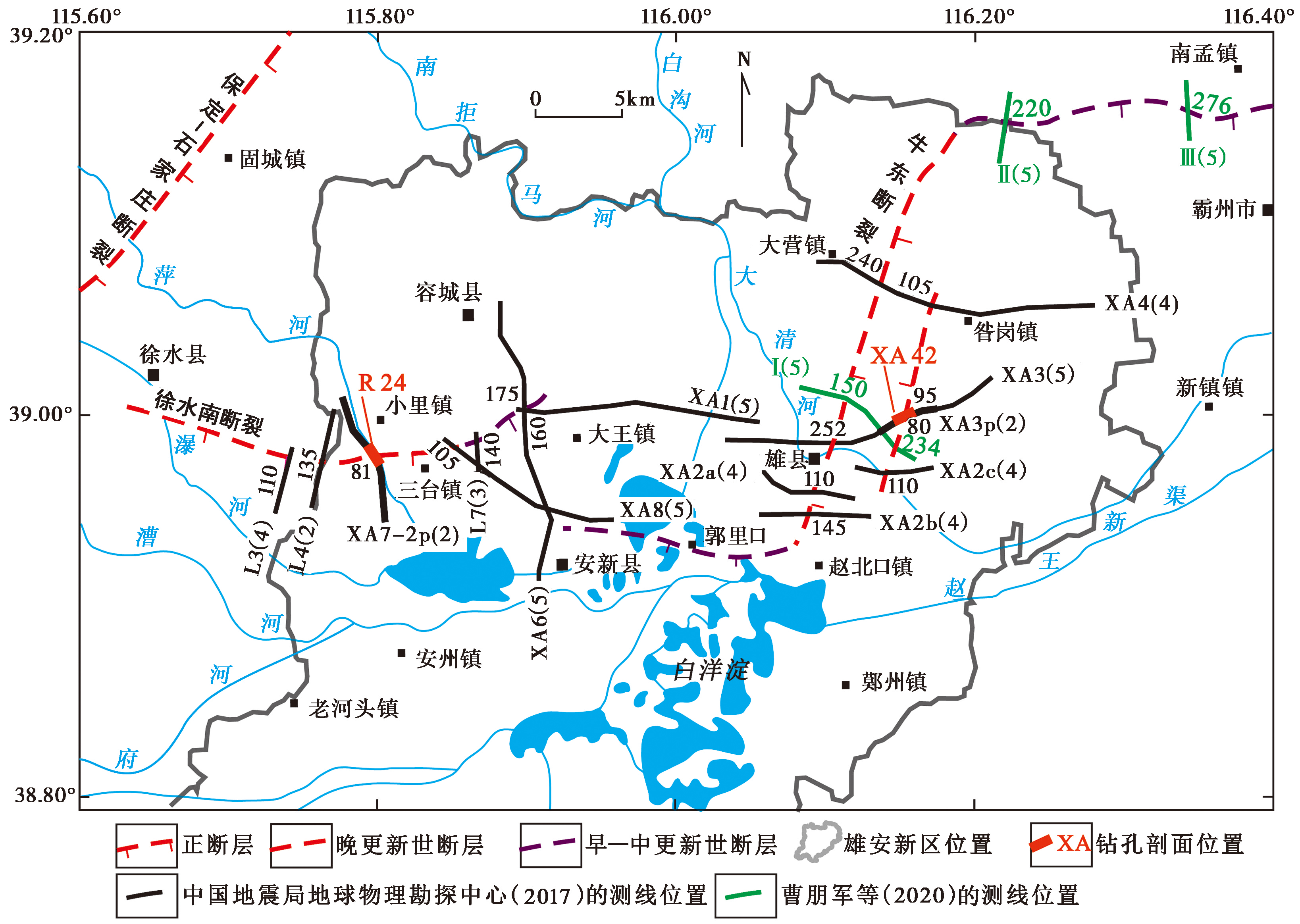
Fig. 8 Locations of shallow seismic profile survey lines on the Xushuinan Fault and Niudong Fault, Xiong'an New Area.
| [1] |
曹朋军, 黄忠峰, 杨学明, 等. 2020. 浅层地震勘探在牛东断裂探测中的应用[J]. 勘察科学技术, (2): 53—56.
|
|
|
|
| [2] |
陈亭亭, 杨振京, 刘荣访, 等. 2017. 白洋淀ZK-1钻孔晚更新世以来的粒度特征及其沉积环境分析[J]. 河北地质大学学报, 40(6): 1—7.
|
|
|
|
| [3] |
陈望和, 倪明云. 1987. 河北第四纪地质[M]. 北京: 地质出版社.
|
|
|
|
| [4] |
戴明刚, 孙彭光, 雷海飞, 等. 2023. 雄安新区地层及主要热储空间结构特征与地热水资源潜力[J]. 地质科学, 58(2): 412—437.
|
|
|
|
| [5] |
戴明刚, 汪新伟, 刘金侠, 等. 2019. 雄安新区起步区及周边地热资源特征与影响因素[J]. 地质科学, 54(1): 176—191.
|
|
|
|
| [6] |
代鹏, 邓晓红, 王盛栋, 等. 2022. 永定河冲积平原南部第四纪年代地层划分及沉积速率特征[J]. 地质通报, 41(2-3): 253—261.
|
|
|
|
| [7] |
邓起东, 张培震, 冉勇康, 等. 2003. 中国活动构造与地震活动[J]. 地学前缘, 10(S1): 66—73.
|
|
|
|
| [8] |
杜亚楠, 李传金, 朱辉云, 等. 2023. 雄安新区岩土标准地层序列划分[J]. 地质通报, 42(9): 1494—1504.
|
|
|
|
| [9] |
高战武, 吴昊, 李光涛, 等. 2014. 太行山山前断裂带中北段晚第四纪活动性研究[J]. 震灾防御技术, 9(2): 159—170.
|
|
|
|
| [10] |
顾功叙. 1983. 中国地震目录(公元前1831年—公元1969年)[M]. 北京: 科学出版社.
|
|
|
|
| [11] |
国家地震局震害防御司编. 1995. 中国历史强震目录(公元前23世纪—公元1911年)[M]. 北京: 地震出版社.
|
|
Earthquake Disaster Prevention Department, State Seismological Bureau. 1995. Catalogue of Chinese Strong Historical Earthquakes[M]. Seismological Press, Beijing (in Chinese).
|
|
| [12] |
韩博, 夏雨波, 马震, 等. 2023. 雄安新区工程地质层组划分、三维地质结构构建及其在城市规划建设中的应用[J]. 中国地质, 50(6): 1903—1918.
|
|
|
|
| [13] |
河北省区域地质矿产调查研究所. 2017. 中国区域地质志(河北志)[M]. 北京: 地质出版社.
|
|
Hebei Institute of Regional and Mineral Resource Survey. 2017. Regional Geology of Hebei Province, China[M]. Geological Publishing House, Beijing (in Chinese).
|
|
| [14] |
何登发, 单帅强, 张煜颖, 等. 2018. 雄安新区的三维地质结构: 来自反射地震资料的约束[J]. 中国科学(地球科学), 48(9): 1207—1222.
|
|
|
|
| [15] |
何乃华, 朱宣清. 1992. 白洋淀地区近3万年来的古环境与历史上人类活动的影响[J]. 海洋地质与第四纪地质, 12(2): 79—88.
|
|
|
|
| [16] |
江娃利. 2006. 有关华北平原强震发震构造问题的讨论[J]. 中国地震, 22(2): 135—141.
|
|
|
|
| [17] |
李传友, 汪一鹏, 王志才. 2007. 中国东部城市地区隐伏断裂上断点与最新活动时代关系的初步分析: 以邢台、唐山地震区为例[J]. 地震地质, 29(2): 431—445.
|
|
|
|
| [18] |
李峰, 张杰汉, 卢巍, 等. 2022. 黄河中下游活动断层分布及其对古河道变迁的影响[J]. 震灾防御技术, 17(2): 197—207.
|
|
|
|
| [19] |
李三忠, 索艳慧, 戴黎明, 等. 2010. 渤海湾盆地形成与华北克拉通破坏[J]. 地学前缘, 17(4): 64—89.
|
|
|
|
| [20] |
刘开明, 胥勤勉, 段连峰, 等. 2020. 雄安新区西部GB014孔第四纪地层结构与演化过程[J]. 科学通报, 65(20): 2145—2160.
|
|
|
|
| [21] |
刘立军, 徐海振, 崔秋苹, 等. 2010. 河北平原第四纪地层划分研究[J]. 地理与地理信息科学, 26(2): 53—57.
|
|
|
|
| [22] |
马岩, 张保建, 闫金凯, 等. 2022. 雄安新区深部储热构造探测研究与地热井优选技术[J]. 地球学报, 43(5): 699—710.
|
|
|
|
| [23] |
钱施. 2023. 中国东部晚新生代以来水热格局的演化: 来自地质脂类的证据[D]. 武汉: 中国地质大学.
|
|
|
|
| [24] |
全国地层委员会. 2001. 中国地层指南及中国地层指南说明书[M]. 北京: 地质出版社:1—59.
|
|
National Commission on Stratigraphy of China. 2001. Stratigraphical Guide of China and its Explanation[M]. Geological Publishing House, Beijing: 1—59 (in Chinese).
|
|
| [25] |
全国地层委员会. 2017. 中国地层指南及中国地层指南说明书(2016年版)[M]. 北京: 地质出版社. 1—62.
|
|
National Commission on Stratigraphy of China. 2017. Stratigraphical Guide of China and its Explanation(2016)[M]. Geological Publishing House, Beijing: 1—62 (in Chinese).
|
|
| [26] |
商世杰, 丰成君, 谭成轩, 等. 2019. 雄安新区附近主要隐伏断裂第四纪活动性研究[J]. 地球学报, 40(6): 836—846.
|
|
|
|
| [27] |
申改慧, 丁国强, 阳小兰, 等. 2018. 白洋淀地区全新世以来的气候环境变化[J]. 第四纪研究, 38(3): 756—768.
|
|
|
|
| [28] |
王凯. 2022. 基于综合地球物理探测的雄安新区地热地质结构及深部热源机制研究[D]. 长春: 吉林大学.
|
|
|
|
| [29] |
王强, 刘立军, 徐海振, 等. 2003. 华北平原第四系下限的再研究[J]. 地质调查与研究, 26(1): 52—60.
|
|
|
|
| [30] |
汪新伟, 郭世炎, 高楠安, 等. 2023. 雄安新区牛东断裂带碳酸盐岩热储探测及其对地热勘探的启示[J]. 地质通报, 42(1): 14—26.
|
|
|
|
| [31] |
王永, 闵隆瑞, 董进, 等. 2015. 河北白洋淀全新统沉积特征与地层划分[J]. 地球学报, 36(5): 575—582.
|
|
|
|
| [32] |
吴忱, 许清海. 1998. “演化阶段”与“成因”不能混为一谈:也谈白洋淀的成因[J]. 湖泊科学, 10(3): 91—96.
|
|
|
|
| [33] |
徐杰, 方仲景, 杨理华. 1988. 1966年邢台7.2级地震的构造背景和发震构造[J]. 地震地质, 10(4): 51—59.
|
|
|
|
| [34] |
徐杰, 高战武, 孙建宝, 等. 2001. 区域伸展体制下盆-山构造耦关系的探讨——以渤海湾盆地和太行山为例[J]. 地质学报, 75(2): 165—174.
|
|
|
|
| [35] |
徐锡伟, 白鸾曦, 魏雷鸣, 等. 2019. 华北克拉通破坏区最新构造运动起始时间讨论[J]. 地球科学, 44(5): 1647—1660.
|
|
|
|
| [36] |
徐锡伟, 于贵华, 王峰, 等. 2000. 1966年邢台地震群的发震构造模型:新生断层形成?先存活断层摩擦黏滑?[J]. 中国地震, 16(4): 364—378.
|
|
|
|
| [37] |
杨慧君, 王永, 迟振卿, 等. 2015. 河北白洋淀老河头剖面25.5kaBP以来气候环境变化的沉积记录[J]. 现代地质, 29(2): 291—298.
|
|
|
|
| [38] |
于长春, 乔日新, 张迪硕. 2017. 雄安新区航磁推断的三维基底构造特征[J]. 物探与化探, 41(3): 385—391.
|
|
|
|
| [39] |
岳航羽, 王凯, 王小江, 等. 2023. 深地震反射剖面揭示的雄安新区及外围地壳精细结构与构造特征[J]. 煤田地质与勘探, 51(12): 106—115.
|
|
|
|
| [40] |
张保卫, 岳航羽, 谢伟, 等. 2022. 反射地震在冀中坳陷保定凹陷精细地质结构探测中的应用[J]. 物探与化探, 46(6): 1359—1368.
|
|
|
|
| [41] |
张世民, 吕悦军, 任俊杰. 2006. 华北平原强震构造带与潜在震源区划分[J]. 震灾防御技术, 1(3): 234—244.
|
|
|
|
| [42] |
张岳桥, 施炜, 董树文. 2019. 华北新构造: 印欧碰撞远场效应与太平洋俯冲地幔上涌之间的相互作用[J]. 地质学报, 93(5): 971—1001.
|
|
|
|
| [43] |
赵勇, 王强, 李瑞杰, 等. 2018. 北京平原区南部PGZ01孔第四纪地层划分及其环境意义[J]. 古地理学报, 20(2): 337—348.
|
|
|
|
| [44] |
中国地震局地球物理勘探中心. 2017. 雄安新区活动断层探测浅层地震勘探工作报告[R]. 郑州: 中国地震局地球物理勘探中心.
|
|
Geophysical Exploration Center, China Earthquake Administration. 2017. Shallow seismic exploration work report for active fault detection in Xiong'an New Area[R]. Geophysical Exploration Center, China Earthquake Administration, Zhengzhou (in Chinese).
|
|
|
中国地震局震害防御司编. 1999. 中国近代地震目录(1912—1990年, MS≥4.7)[M]. 北京: 中国科学技术出版社.
|
|
|
Department of Earthquake Disaster Prevention, China Earthquake Administration. 1999. Catalogue of Chinese modern earthquakes(1912—1990, MS≥4.7)[M]. Chinese Science and Technology Press, Beijing (in Chinese).
|
|
| [46] |
中国地震台网中心. 2024. 历史查询[DB/OL][2024-05-27]. http://www.ceic.ac.cn/history.
|
|
China Earthquake Networks Center. 2024. History inquiry[DB/OL][2024-05-27]. http://www.ceic.ac.cn/history in Chinese).
|
|
| [47] |
朱日祥, 徐义刚. 2009. 西太平洋板块俯冲与华北克拉通破坏[J]. 中国科学(地球科学), 49(9): 1346—1356.
|
|
|
|
| [48] |
朱思雨, 丰成君, 谭成轩, 等. 2022. 雄安容城深热储层回灌注水诱发断层失稳危险性研究[J]. 岩石力学与工程学报, 41(S1): 2735—2756.
|
|
|
|
| [49] |
|
| [50] |
|
| [51] |
|
| [52] |
|
| [53] |
|
| [54] |
|
| [55] |
|
| [56] |
|
| [57] |
|
| [58] |
|
| [59] |
|
| [60] |
|
| [61] |
|
| [62] |
|
| [1] | GU Pei-yuan, WAN Yong-ge, HUANG Ji-chao, JIN Zhi-tong, SONG Ze-yao, GUAN Zhao-xuan, ZHOU Zi-yao. SLIP CHARACTERISTICS OF THE SEISMOGENIC FAULT OF THE 2022 LUDING MS 6.6 EARTHQUAKE AND AN EXPLANA-TION FOR THE NORMAL-FAULTING EARTHQUAKE TO ITS WEST [J]. SEISMOLOGY AND GEOLOGY, 2026, 48(1): 181-199. |
| [2] | LI Xiao-ni, YANG Chen-yi, LI Gao-yang, FENG Xi-jie, HUANG Yin-di, LI Chen-xia, LI Miao, PEI Gen-di, WANG Wan-he. SHALLOW STRUCTURE AND LATE QUATERNARY ACTIVITIES OF BRANCH FAULTS ON THE NORTHERN SIDE OF THE WEINAN TABLELAND IN THE SOUTHEASTERN MARGIN OF THE WEIHE BASIN [J]. SEISMOLOGY AND GEOLOGY, 2023, 45(2): 484-499. |
| [3] | QIN Jing-jing, LIU Bao-jin, WANG Zhi-cai, FENG Shao-ying, DENG Xiao-juan, HUA Xin-sheng, LI Qian. RESEARCH ON SHALLOW STRUCTURAL CHARACTERISTICS IN THE BANQUAN SEGMENT OF ANQIU-JUXIAN FAULT ZONE BASED ON SHALLOW SEISMIC REFLECTION PROFILING [J]. SEISMOLOGY AND GEOLOGY, 2022, 44(2): 349-362. |
| [4] | WANG Bo, ZHOU Yong-sheng, ZHONG Jun, HU Xiao-jing, ZHANG Xiang, ZHOU Qing-yun, LI Xu-mao. GEOCHEMICAL CHARACTERISTICS OF SOIL GAS IN ACTIVE FAULT ZONE IN NORTHWEST YUNNAN AND ITS ENLIGHTENMENT TO FAULT ACTIVITY [J]. SEISMOLOGY AND GEOLOGY, 2022, 44(2): 428-447. |
| [5] | YANG Chen-yi, LI Xiao-ni, FENG Xi-jie, ZHU Lin, LI Miao, ZHANG En-hui. THE LATE QUATERNARY AND PRESENT-DAY ACTIVITIES OF THE KOUZHEN-GUANSHAN FAULT ON THE NORTHERN BOUNDARY OF WEIHE GRABEN BASIN, CHINA [J]. SEISMOLOGY AND GEOLOGY, 2021, 43(3): 504-520. |
| [6] | LU Bang-hua, WANG Ping, WANG Hui-ying, LAI Zhong-ping, DENG Zhi-hui, BI Li-si, WAN Wan-he. LATEST PROGRESS ON ACTIVITY OF HESHAN-MODAOMEN SEGMENT, XIJIANG FAULT [J]. SEISMOLOGY AND GEOLOGY, 2020, 42(6): 1370-1384. |
| [7] | MA Jun, ZHOU Ben-gang, WANG Ming-ming, AN Li-ke. GEOLOGICAL AND GEOMORPHIC EVIDENCES FOR THE HOLOCENE ACTIVITY OF THE NW ZHEDUOTANG BRANCH WITHIN THE XIANSHUIHE FAULT SYSTEM [J]. SEISMOLOGY AND GEOLOGY, 2020, 42(5): 1021-1038. |
| [8] | HE Fu-bing, XU Xi-wei, HE Zhen-jun, ZHANG Xiao-liang, LIU Li-yan, ZHANG Wei, WEI Bo, NI Jing-bo. RESEARCH ON NEOGENE-QUATERNARY STRATIGRAPHIC STRUCTURE AND SHALLOW TECTONIC FEATURES IN THE NORTH SECTION OF DAXING FAULT ZONE BASED ON SHALLOW SEISMIC REFLECTION PROFILING [J]. SEISMOLOGY AND GEOLOGY, 2020, 42(4): 893-908. |
| [9] | LIANG Ming-jian, CHEN Li-chun, RAN Yong-kang, LI Yan-bao, WANG Dong, GAO Shuai-po, HAN Ming-ming, ZENG Di. LATE-QUATERNARY ACTIVITY OF THE YALAHE FAULT OF THE XIANSHUIHE FAULT ZONE, EASTERN MARGIN OF THE TIBET PLATEAU [J]. SEISMOLOGY AND GEOLOGY, 2020, 42(2): 513-525. |
| [10] | XU Liang-xin, BIAN Ju-mei, HU Nan, TIAN Qin-hu, TIAN Wei-xin, DUAN Rui. THE ACTIVITY OF WESTERN LISHAN FAULT SINCE THE LATE PLEISTOCENE [J]. SEISMOLOGY AND GEOLOGY, 2019, 41(3): 561-575. |
| [11] | ZHAO Jian-ming, LI Ying, CHEN Zhi, LIU Zhao-fei, ZHAO Rong-qi, RONG Wei-jian. CORRELATION BETWEEN GAS GEOCHEMICAL EMISSION AND FAULT ACTIVITY OF THE YUXIAN-GUANGLING AND KOUQUAN FAULTS [J]. SEISMOLOGY AND GEOLOGY, 2018, 40(6): 1402-1416. |
| [12] | WANG Xu-guang, LI Chuan-you, LÜ Li-xing, DONG Jin-yuan. ANALYSIS OF THE LATE QUATERNARY ACTIVITY ALONG THE WENCHUAN-MAOXIAN FAULT -MIDDLE OF THE BACK-RANGE FAULT AT THE LONGMENSHAN FAULT ZONE [J]. SEISMOLOGY AND GEOLOGY, 2017, 39(3): 572-586. |
| [13] | XU Wei, YANG Yuan-yuan, YUAN Zhao-de, LIU Zhi-cheng, GAO Zhan-wu. LATE QUATERNARY FAULTED LANDFORMS AND FAULT ACTIVITY OF THE HUASHAN PIEDMONT FAULT [J]. SEISMOLOGY AND GEOLOGY, 2017, 39(3): 587-604. |
| [14] | HU Gui-rang, LI Zi-hong, YAN Xiao-bing, ZHAO Jin-quan, ZENG Jin-yan, GUO Jin. THE STUDY OF LATE QUATERNARY ACTIVITY OF HANCHENG FAULT [J]. SEISMOLOGY AND GEOLOGY, 2017, 39(1): 206-217. |
| [15] | ZHANG Long-sheng, ZHOU Ben-gang, JI Feng-ju, YANG Xiao-ping, AN Yan-fen. FAULT ACTIVITY OF THE SOUTHWESTERN SEGMENT OF THE EASTERN BRANCH OF XINYI-LIANJIANG FAULT ZONE IN GUANGDONG PROVINCE [J]. SEISMOLOGY AND GEOLOGY, 2016, 38(2): 316-328. |
| Viewed | ||||||
|
Full text |
|
|||||
|
Abstract |
|
|||||
Copyright © SEISMOLOGY AND GEOLOGY, All Rights Reserved.
Tel: 010-62009049/9063 E-mail: dzdz@ies.ac.cn
Powered by Beijing Magtech Co., Ltd.