
SEISMOLOGY AND GEOLOGY ›› 2026, Vol. 48 ›› Issue (4): 995-1010.DOI: 10.3969/j.issn.0253-4967.20250005
• Research paper • Previous Articles Next Articles
QUANTIFYING THE ROLE OF NORMAL-FAULTING EARTHQUAKES IN CRUSTAL THINNING WITHIN THE QINGHAI-XIZANG PLATEAU
WANG Yue-xiang( ), WANG Teng*()
School of Earth and Space Science ,Peking University
-
Received:2025-01-13Revised:2025-03-06Online:2026-08-20Published:2026-09-09
量化正断层地震在青藏高原内部地壳减薄中的作用
王悦翔(), 王腾*()
北京大学 ,地球与空间科学学院
-
通讯作者:* 王腾, 男, 1980年生, 博士, 助理教授, 主要研究方向为InSAR影像大地测量学、 地震形变与地球动力学, E-mail: wang.teng@pku.edu.cn。 -
作者简介:王悦翔, 男, 1998年生, 现为北京大学地球与空间科学学院地球物理专业在读博士生, 主要研究方向为基于InSAR观测的青藏高原地球动力学过程, E-mail: 2001110577@pku.edu.cn。
-
基金资助:国家自然科学基金委创新研究群体项目(42021003)

Cite this article
WANG Yue-xiang, WANG Teng. QUANTIFYING THE ROLE OF NORMAL-FAULTING EARTHQUAKES IN CRUSTAL THINNING WITHIN THE QINGHAI-XIZANG PLATEAU[J]. SEISMOLOGY AND GEOLOGY, 2026, 48(4): 995-1010.
王悦翔, 王腾. 量化正断层地震在青藏高原内部地壳减薄中的作用[J]. 地震地质, 2026, 48(4): 995-1010.
share this article
Add to citation manager EndNote|Ris|BibTeX
URL: https://www.dzdz.ac.cn/EN/10.3969/j.issn.0253-4967.20250005
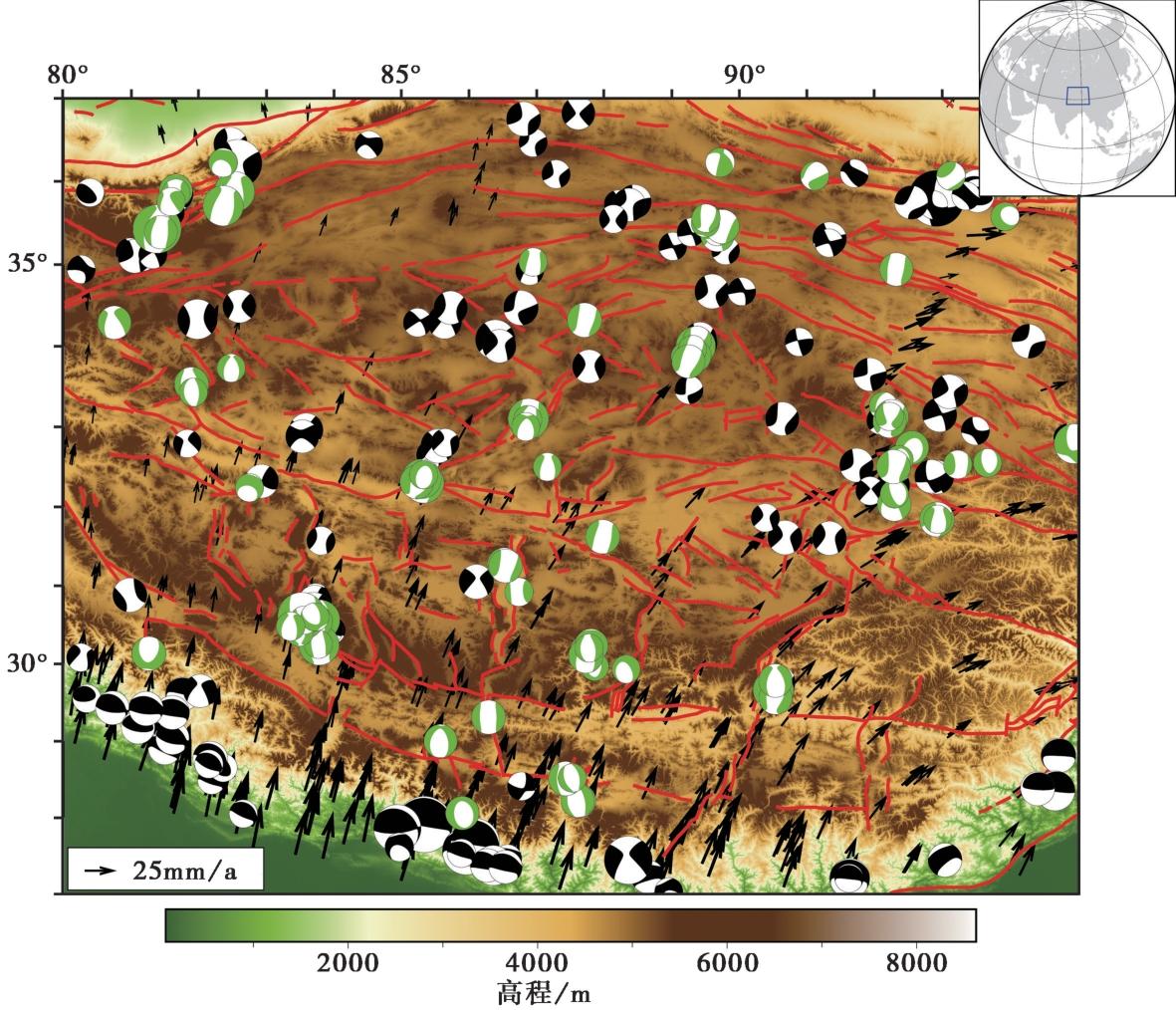
Fig. 1 Regional tectonic map and earthquake distribution of the Qinghai-Xizang Plateau.
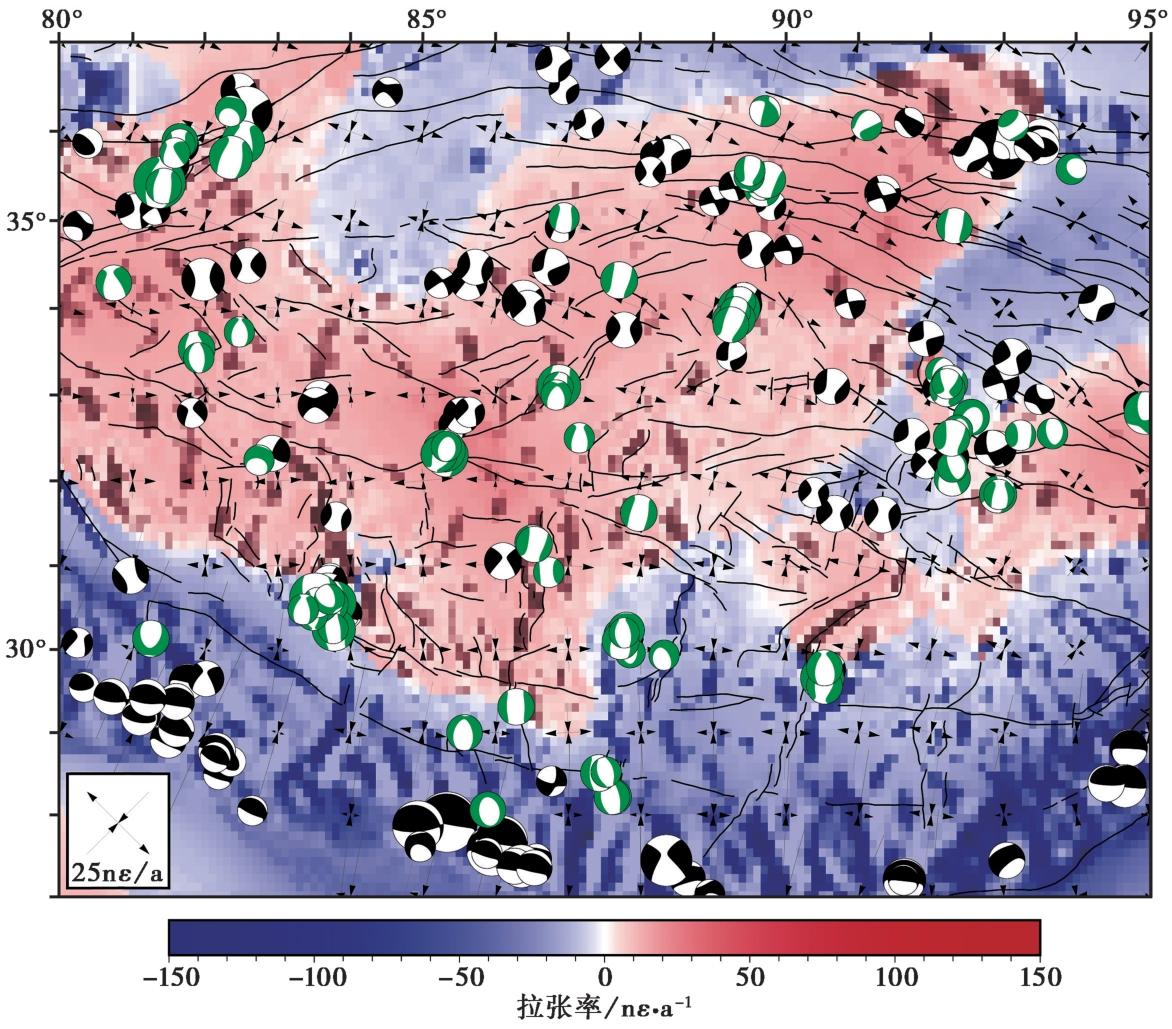
Fig. 2 Dilatational strain rate field of the Qinghai-Xizang Plateau.
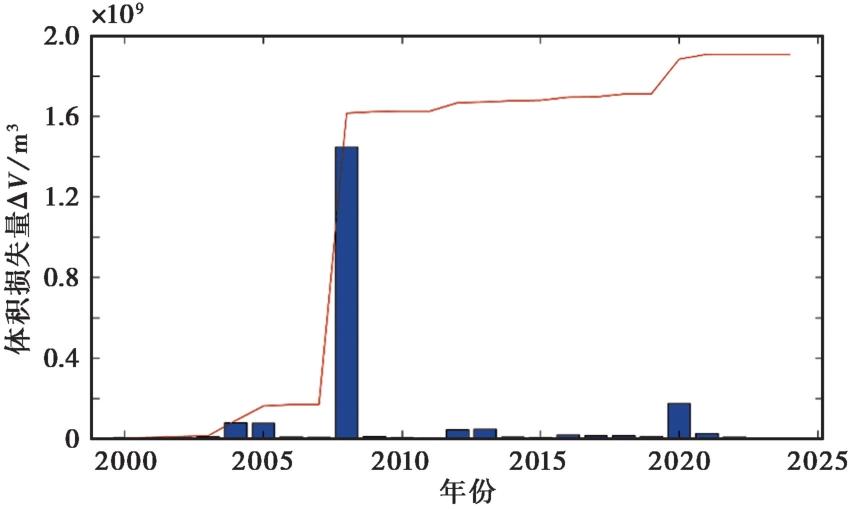
Fig. 3 Annual and cumulative crustal volume loss caused by normal-faulting earthquakes.
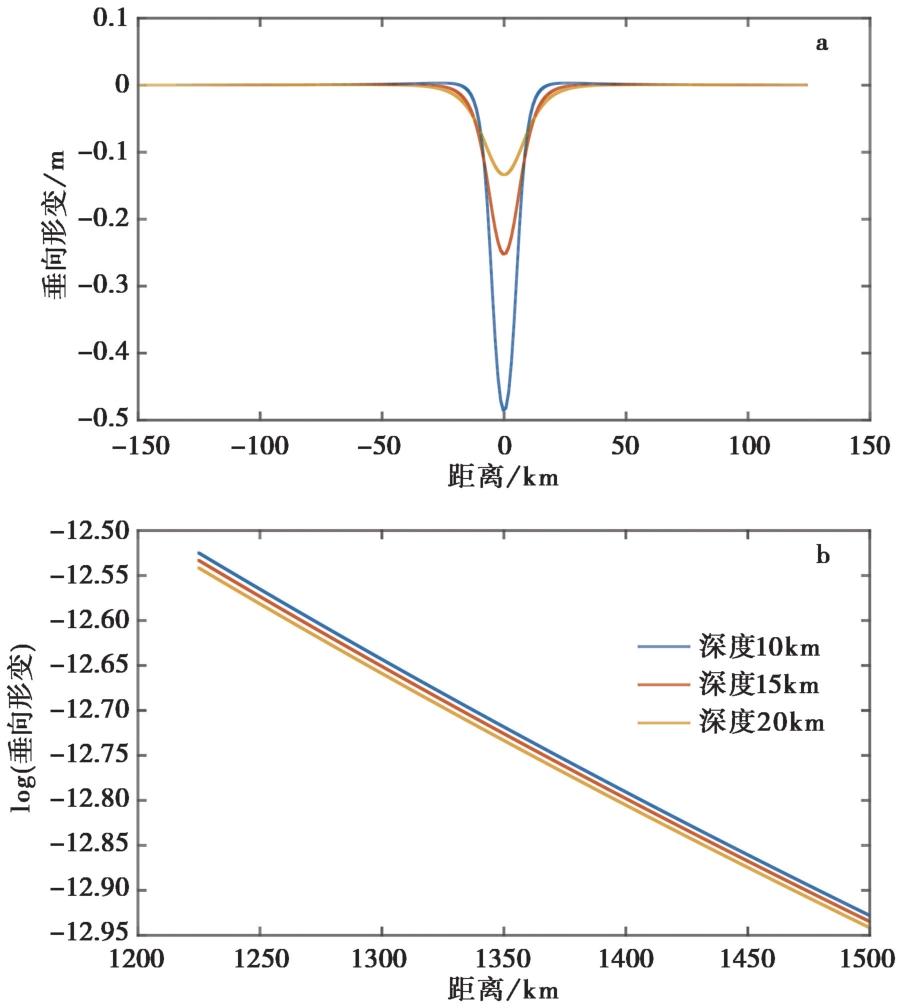
Fig. 4 Simulated surface deformation of normal-faulting earthquakes at different source depths.
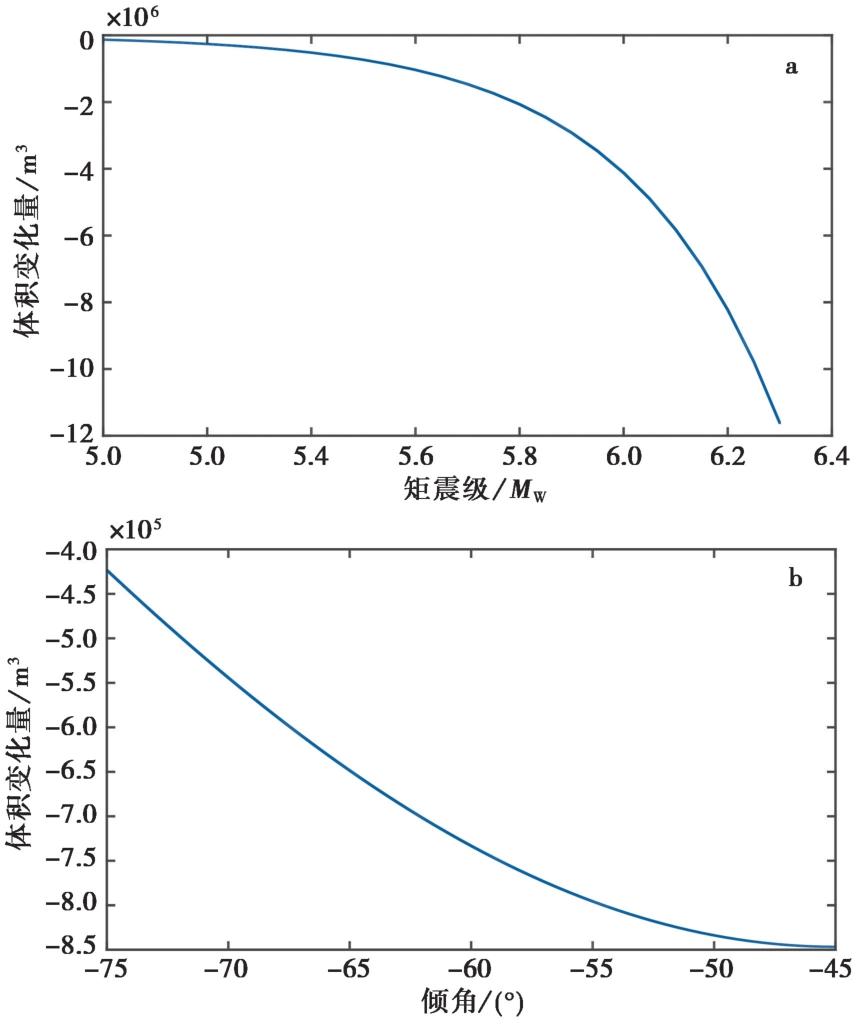
Fig. 5 Effects of magnitude and dip angle on crustal volume loss caused by normal-faulting earthquakes.
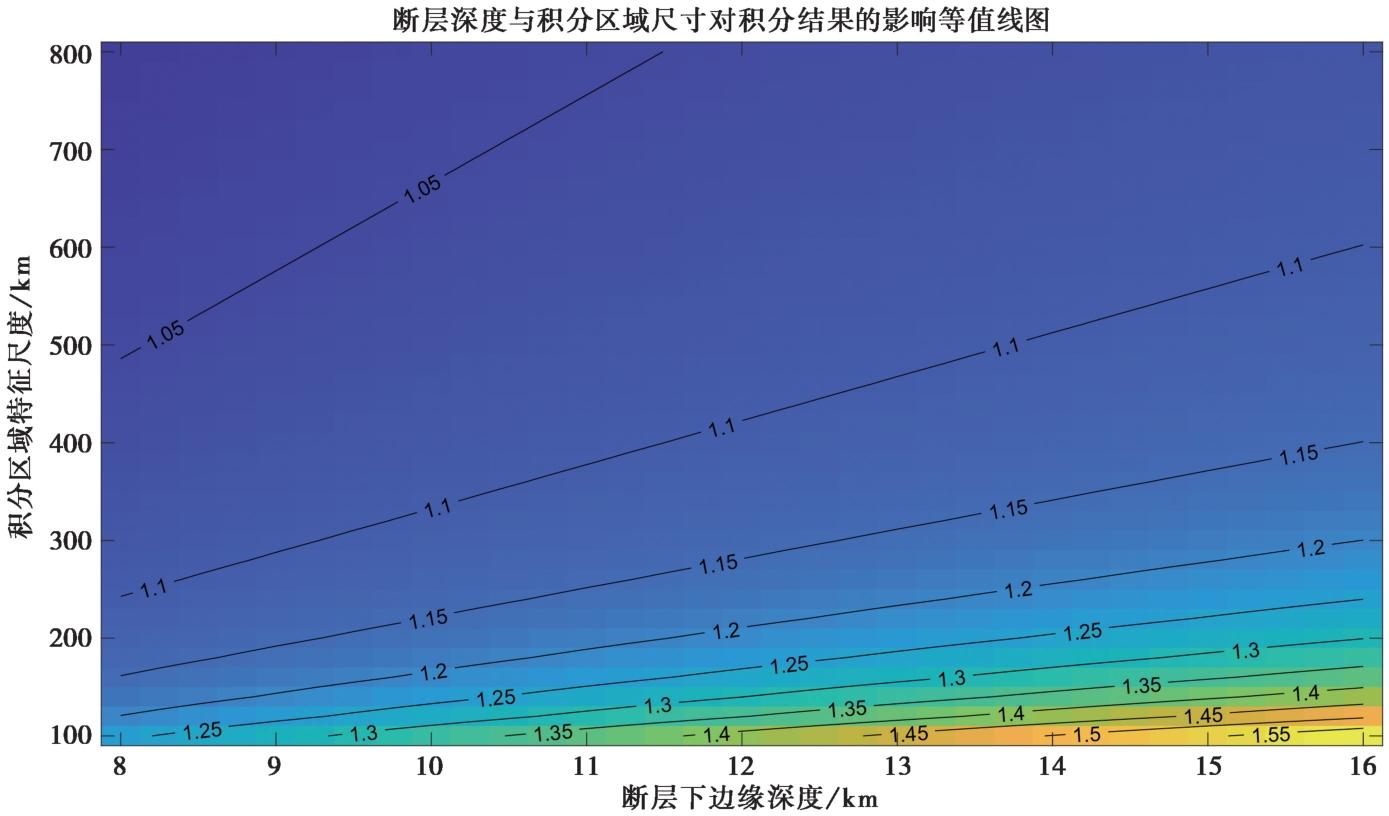
Fig. 6 Ratio of volume loss between finite and infinite integration.
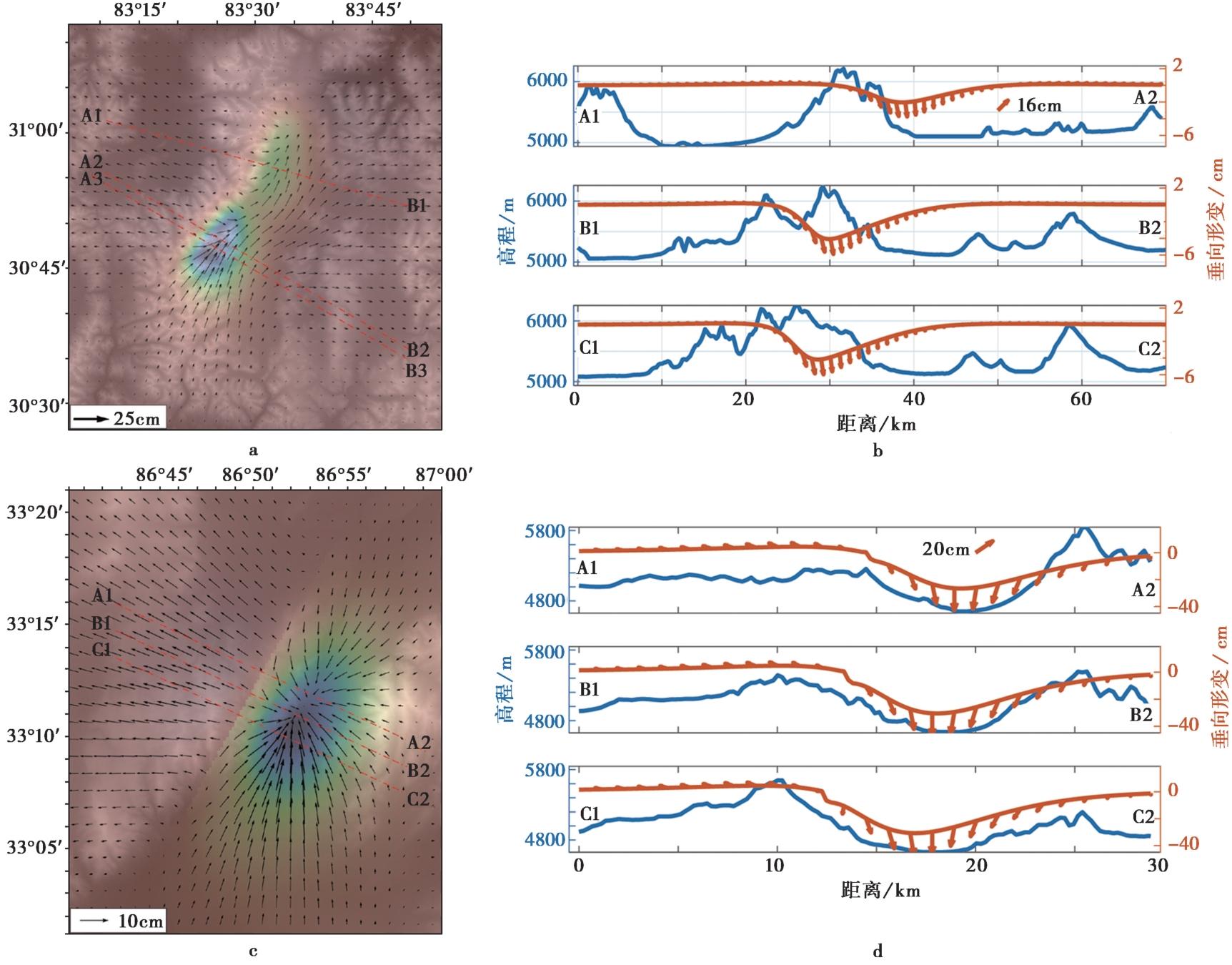
Fig. 7 Three-dimensional deformation field and cross-profile deformation of typical normal-faulting earthquakes.
| [1] |
蒋浩. 2018. 青藏高原东部典型地质背景小流域风化剥蚀作用研究[D]. 北京: 中国科学院大学.
|
|
|
|
| [2] |
潘桂棠, 王立全, 尹福光, 等. 2022. 青藏高原形成演化研究回顾, 进展与展望[J]. 沉积与特提斯地质, 42(2): 151-175.
|
|
|
|
| [3] |
邱江涛, 孙建宝. 2023. InSAR揭示的青藏高原近期正断型地震形变特征与指示意义[J]. 地球与行星物理论评, 54(6): 600-611.
|
|
|
|
| [4] |
汪洋舰, 杨少敏. 2017. InSAR约束下2001年昆仑山 MS8.1 地震震后黏弹性松弛效应[J]. 大地测量与地球动力学, 37(6): 585-589.
|
|
|
|
| [5] |
许志琴, 杨经绥, 侯增谦, 等. 2016. 青藏高原大陆动力学研究若干进展[J]. 中国地质, 43(1): 1-42.
|
|
|
|
| [6] |
DOI |
| [7] |
DOI URL |
| [8] |
DOI URL |
| [9] |
DOI URL |
| [10] |
|
| [11] |
DOI URL |
| [12] |
|
| [13] |
|
| [14] |
PMID |
| [15] |
|
| [16] |
DOI URL |
| [17] |
|
| [18] |
DOI |
| [19] |
DOI |
| [20] |
DOI URL |
| [21] |
PMID |
| [22] |
DOI URL |
| [23] |
|
| [24] |
DOI URL |
| [25] |
DOI URL |
| Viewed | ||||||
|
Full text |
|
|||||
|
Abstract |
|
|||||
Copyright © SEISMOLOGY AND GEOLOGY, All Rights Reserved.
Tel: 010-62009049/9063 E-mail: dzdz@ies.ac.cn
Powered by Beijing Magtech Co., Ltd.