
SEISMOLOGY AND GEOLOGY ›› 2026, Vol. 48 ›› Issue (1): 200-216.DOI: 10.3969/j.issn.0253-4967.20240074
• Research pape • Previous Articles Next Articles
DISCUSSION ON STRAIN STATE AND SEISMOGENIC MECHANISM OF THE NORTH SECTION OF YILAN-YITONG FAULT ZONE
CHANG Jin-long1,2)( ), GAN Wei-jun3),*(), ZHOU Chen1), ZHU Cheng-lin4), LIU Chang-sheng1), YAO Cheng-yue2)
- 1)
Heilongjiang Earthquake Agency
2)Hegang Seismic Station of Heilongjiang Provice
3)State Key Laboratory of Earthquake Dynamics and Forecasting ,Institute of Geology, China Earthquake Administration
4)Shandong Earthquake Agency
-
Received:2025-05-19Revised:2025-12-27Online:2026-02-20Published:2026-03-14
依兰-伊通断裂北段应变状态及发震机制讨论
常金龙1,2)(), 甘卫军3),*(), 周晨1), 朱成林4), 刘长生1), 姚程越2)
- 1)
黑龙江省地震局
2)鹤岗地震监测中心站
3)中国地震局地质研究所 ,地震动力学与强震预测全国家重点实验室
4)山东省地震局
-
通讯作者:* 甘卫军, 男, 1964年生, 研究员, 主要从事地壳形变与构造运动、 GPS大地测量及其地学应用方面研究, E-mail: wjgan@ies.ac.cn。 -
作者简介:常金龙, 男, 1979年生, 高级工程师, 主要从事GPS在地壳形变监测中的应用、 地球物理观测与地震孕育过程研究, E-mail: changjinlong2004@163.com。
-
基金资助:中国地震局监测、预报、科研三结合课题(3JH-202402069); 黑龙江省地震局内重点项目(202401)

Cite this article
CHANG Jin-long, GAN Wei-jun, ZHOU Chen, ZHU Cheng-lin, LIU Chang-sheng, YAO Cheng-yue. DISCUSSION ON STRAIN STATE AND SEISMOGENIC MECHANISM OF THE NORTH SECTION OF YILAN-YITONG FAULT ZONE[J]. SEISMOLOGY AND GEOLOGY, 2026, 48(1): 200-216.
常金龙, 甘卫军, 周晨, 朱成林, 刘长生, 姚程越. 依兰-伊通断裂北段应变状态及发震机制讨论[J]. 地震地质, 2026, 48(1): 200-216.
share this article
Add to citation manager EndNote|Ris|BibTeX
URL: https://www.dzdz.ac.cn/EN/10.3969/j.issn.0253-4967.20240074

Fig. 1 Regional geological structure and focal mechanism solution(Magnitude: ML).
| 日期 | 北纬 /(°) | 东经 /(°) | 震级 /ML | 节面Ⅰ | 节面Ⅱ | P轴 | T轴 | B轴 | |||||||
|---|---|---|---|---|---|---|---|---|---|---|---|---|---|---|---|
| 走向 /(°) | 倾角 /(°) | 滑动角 /(°) | 走向 /(°) | 倾角 /(°) | 滑动角 /(°) | 走向 /(°) | 倾角 /(°) | 走向 /(°) | 倾角 /(°) | 走向 /(°) | 倾角 /(°) | ||||
| 2021-09-07 | 48.70 | 129.82 | 3.3 | 175 | 90 | -130 | 85 | 40 | 0 | 52 | 33 | 298 | 33 | 175 | 40 |
| 2021-11-17 | 47.71 | 130.49 | 3.2 | 178 | 61 | 28 | 73 | 66 | 147 | 126 | 3 | 33 | 40 | 220 | 50 |
| 2023-01-11 | 48.32 | 130.43 | 3.7 | 109 | 82 | -3 | 200 | 87 | -172 | 65 | 8 | 334 | 4 | 217 | 81 |
| 2023-05-06 | 47.70 | 130.80 | 3.8 | 143 | 67 | -10 | 237 | 81 | -157 | 102 | 23 | 8 | 9 | 257 | 65 |
| 2023-06-11 | 48.68 | 129.68 | 4.1 | 12 | 83 | -175 | 281 | 85 | -7 | 236 | 8 | 327 | 2 | 68 | 81 |
Table1 The focal mechanism solutions of 5 earthquakes from the initial P-wave initial motion
| 日期 | 北纬 /(°) | 东经 /(°) | 震级 /ML | 节面Ⅰ | 节面Ⅱ | P轴 | T轴 | B轴 | |||||||
|---|---|---|---|---|---|---|---|---|---|---|---|---|---|---|---|
| 走向 /(°) | 倾角 /(°) | 滑动角 /(°) | 走向 /(°) | 倾角 /(°) | 滑动角 /(°) | 走向 /(°) | 倾角 /(°) | 走向 /(°) | 倾角 /(°) | 走向 /(°) | 倾角 /(°) | ||||
| 2021-09-07 | 48.70 | 129.82 | 3.3 | 175 | 90 | -130 | 85 | 40 | 0 | 52 | 33 | 298 | 33 | 175 | 40 |
| 2021-11-17 | 47.71 | 130.49 | 3.2 | 178 | 61 | 28 | 73 | 66 | 147 | 126 | 3 | 33 | 40 | 220 | 50 |
| 2023-01-11 | 48.32 | 130.43 | 3.7 | 109 | 82 | -3 | 200 | 87 | -172 | 65 | 8 | 334 | 4 | 217 | 81 |
| 2023-05-06 | 47.70 | 130.80 | 3.8 | 143 | 67 | -10 | 237 | 81 | -157 | 102 | 23 | 8 | 9 | 257 | 65 |
| 2023-06-11 | 48.68 | 129.68 | 4.1 | 12 | 83 | -175 | 281 | 85 | -7 | 236 | 8 | 327 | 2 | 68 | 81 |
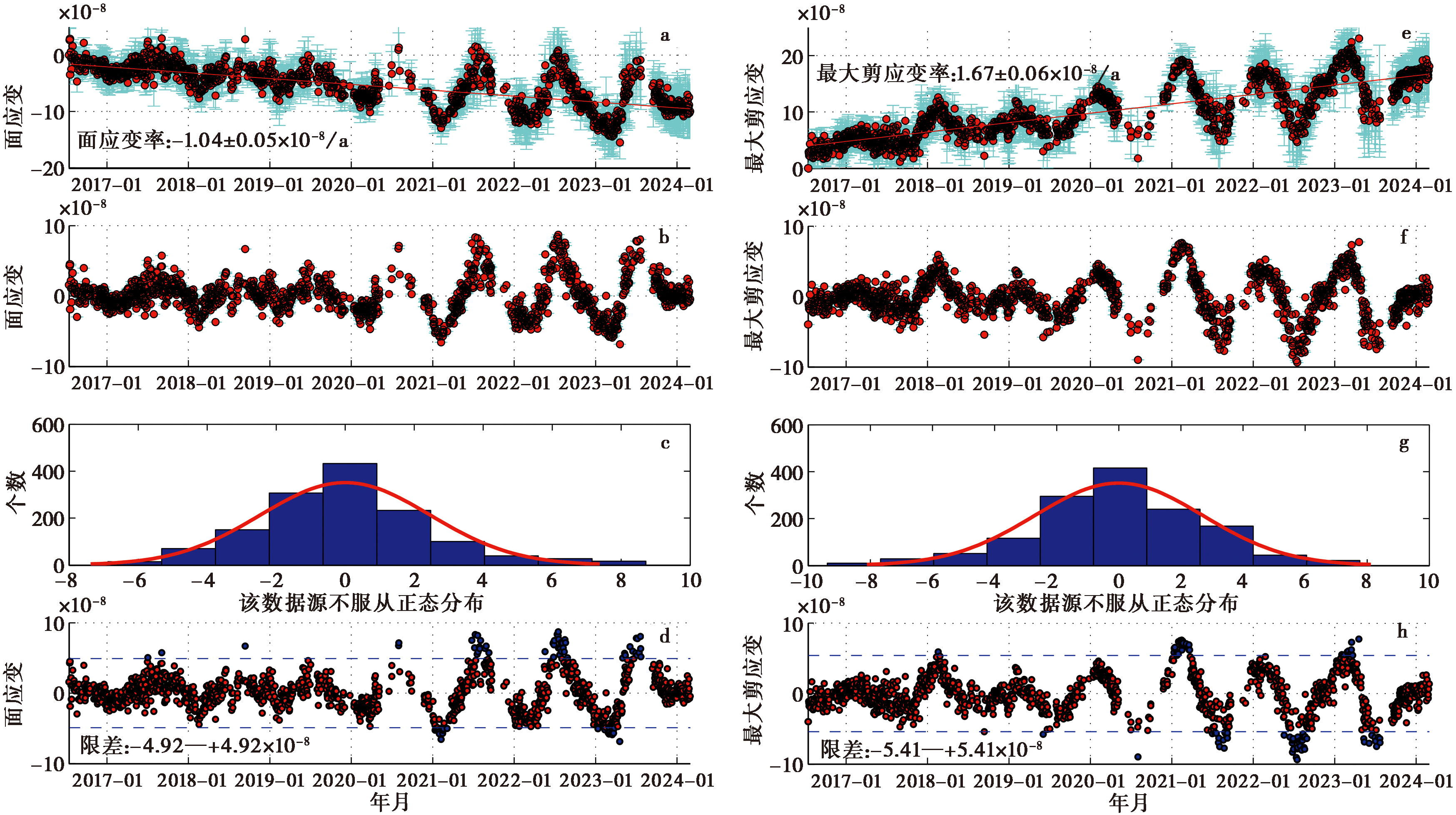
Fig. 2 Time series of area strain and max shear strain parameters.
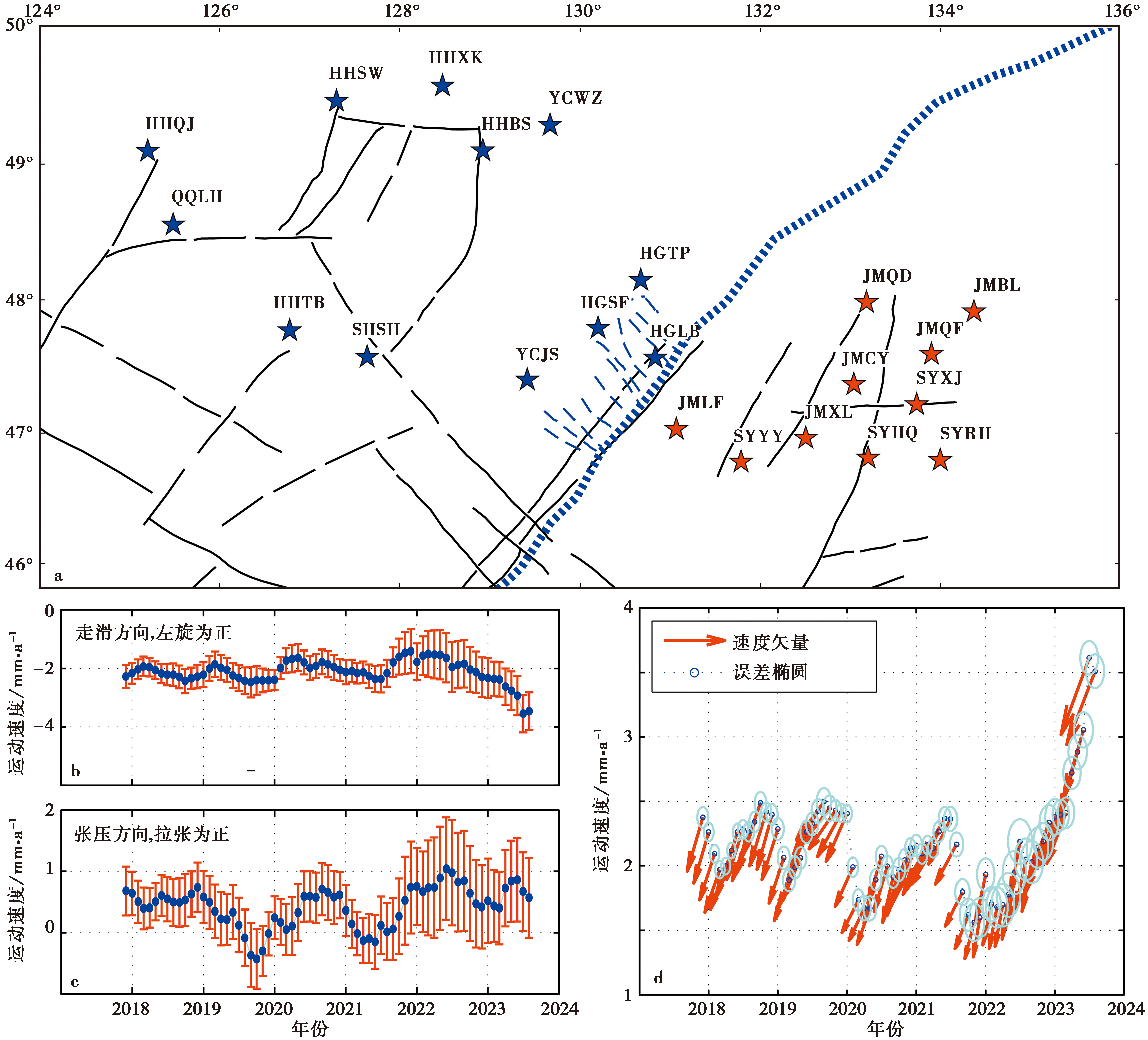
Fig. 3 Changes in the relative velocity of the blocks on both sides of the northern section of the Yilan-Yitong fault zone.
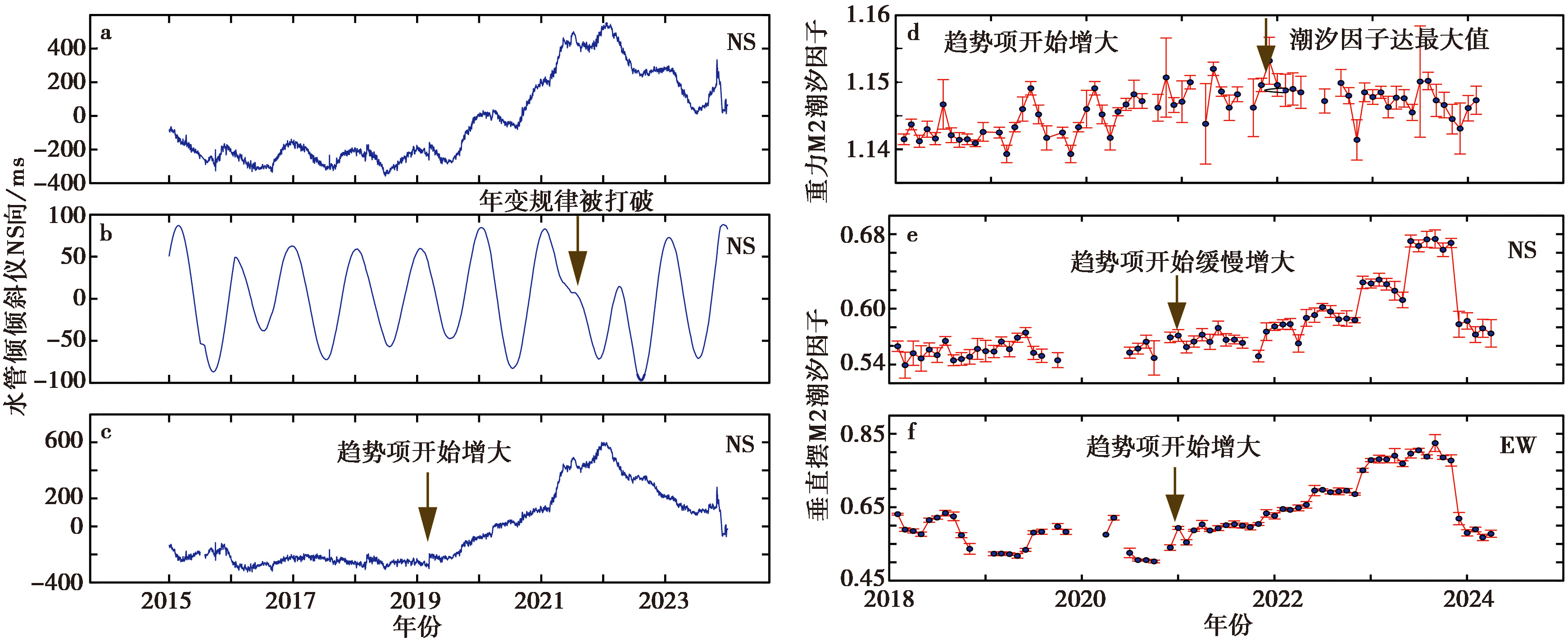
Fig. 4 Fixed-point deformation and gravity observation curves.
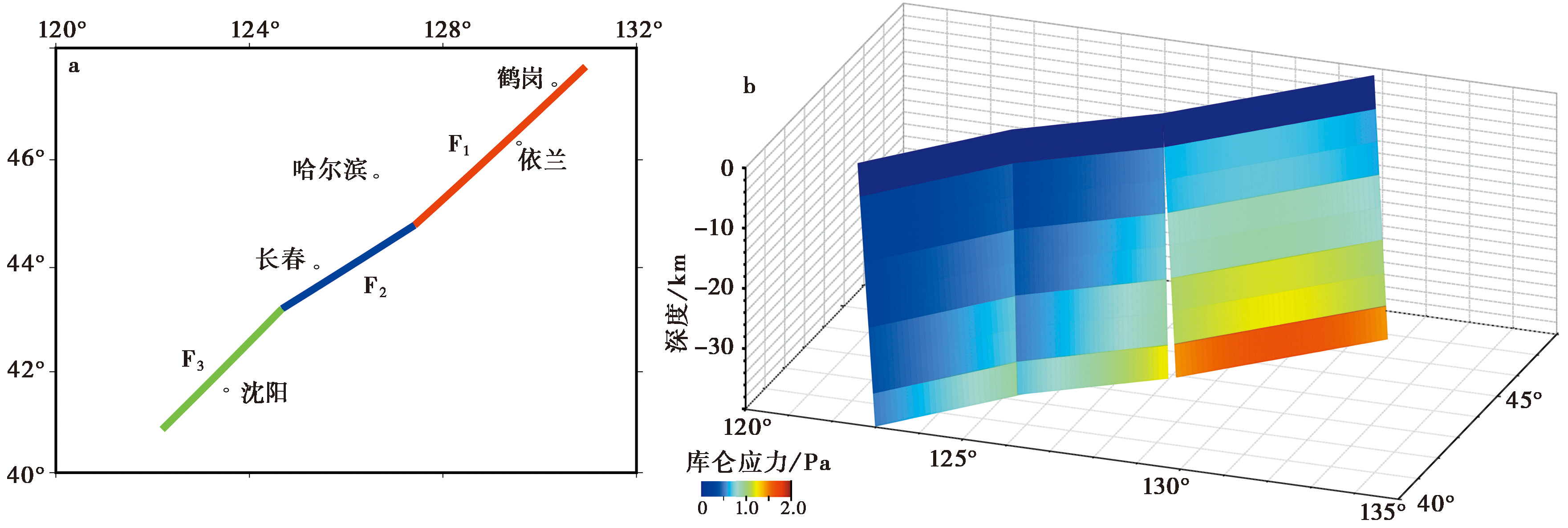
Fig. 5 Finite fault model and co-seismic Coulomb fracture stress of Yilan-Yitong fault zone.
| 活动断裂带 | 走向 | 倾向 | 倾角 | 第四纪以来主要活动性质 |
|---|---|---|---|---|
| 黑龙江段(F1) | N40°E | SE | 60° | 右旋走滑兼正断 |
| 吉林段(F2) | N60°E | SE | 60° | 正断 |
| 辽宁段(F3) | N40°E | SE | 60° | 右旋走滑兼逆断 |
Table2 Fault geometry parameters of different sections of Yilan-Yitong fault zone
| 活动断裂带 | 走向 | 倾向 | 倾角 | 第四纪以来主要活动性质 |
|---|---|---|---|---|
| 黑龙江段(F1) | N40°E | SE | 60° | 右旋走滑兼正断 |
| 吉林段(F2) | N60°E | SE | 60° | 正断 |
| 辽宁段(F3) | N40°E | SE | 60° | 右旋走滑兼逆断 |
| 层数 | 深度/km | VP/km·s-1 | VS/km·s-1 | 密度/kg·m-3 |
|---|---|---|---|---|
| 1 | 14 | 6.0 | 3.5 | 2700 |
| 2 | 9 | 6.6 | 3.7 | 2900 |
| 3 | 11 | 7.2 | 4.0 | 3050 |
| 4 | ∞ | 8.0 | 4.6 | 3300 |
Table3 Stratified crust model parameters
| 层数 | 深度/km | VP/km·s-1 | VS/km·s-1 | 密度/kg·m-3 |
|---|---|---|---|---|
| 1 | 14 | 6.0 | 3.5 | 2700 |
| 2 | 9 | 6.6 | 3.7 | 2900 |
| 3 | 11 | 7.2 | 4.0 | 3050 |
| 4 | ∞ | 8.0 | 4.6 | 3300 |
| [34] |
|
| [35] |
朱治国, 秦姗兰, 刘代芹, 等. 2018. 阿克陶 MS6.7 地震前帕米尔东北缘地形变特征的GPS研究[J]. 内陆地震, 32(3): 193—199.
|
|
|
|
| [36] |
|
| [37] |
|
| [38] |
|
| [39] |
DOI URL |
| [40] |
|
| [41] |
|
| [1] |
常金龙, 陈石, 李冬妮, 等. 2024. 中国东北地区岩石圈有效弹性厚度及构造涵义研究[J]. 大地测量与地球动力学, 44(3): 325—330.
|
|
|
|
| [2] |
常金龙, 甘卫军, 刘淑杰, 等. 2021. 依兰-伊通断裂带黑龙江段构造运动特征[J]. 地震研究, 44(1): 72—77.
|
|
|
|
| [3] |
陈为涛, 甘卫军, 肖根如, 等. 2012. 3·11日本大地震对中国东北部地区地壳形变态势的影响[J]. 地震地质, 34(3): 425—439. doi: 10.3969/j.issn.0253-4967.2012.03.004.
|
|
|
|
| [4] |
邓起东, 冉勇康, 杨晓平, 等. 2007. 中国活动构造图(1︰400万)[CM]. 北京: 地震出版社.
|
|
|
|
| [5] |
丰成君, 张鹏, 孙炜锋, 等. 2013. 日本 MW9.0 地震对中国华北-东北大陆主要活动断裂带的影响及地震危险性初步探讨[J]. 地学前缘, 20(6): 123—140.
|
|
|
|
| [6] |
高立新, 戴勇, 王磊, 等. 2021. 现今中国东北地区地震活动特征与趋势探讨[J]. 大地测量与地球动力学, 41(5): 441—447.
|
|
|
|
| [7] |
郭德明. 1986. 依兰萝北地堑盆地地震地质特征的初步探讨[J]. 东北地震研究, 2(1): 49—60.
|
|
|
|
| [8] |
郭德明. 2004. 依兰—萝北地区地震危险区地震活动跟踪研究[J]. 东北地震研究, 20(3): 8—16.
|
|
|
|
| [9] |
李振月, 万永革, 靳志同, 等. 2020. 2017年11月18日西藏米林M6.9地震对后续地震的静态库伦应力的影响[J]. 地震地质, 42(5): 1991—1108. doi: 10.3969/j.issn.0253-4967.2020.05.005.
|
|
|
|
| [10] |
吕品姬, 张燕, 赵莹, 等. 2014. 巴东 MS5.1 地震前的潮汐形变观测异常分析[J]. 大地测量与地球动力学, 34(3): 52—58.
|
|
|
|
| [11] |
孟宪森, 郑辉, 姜锦华. 2003. 西太平洋板块俯冲与我国东北和华北块体地震活动[J]. 东北地震研究, 19(1): 12—18.
|
|
|
|
| [12] |
闵伟, 焦德成, 周本刚, 等. 2011. 依兰-伊通断裂全新世活动的新发现及其意义[J]. 地震地质, 33(1): 141—150. doi: 10.3969/j.issn.0253-4967.2011.01.014.
|
|
|
|
| [13] |
单斌, 熊熊, 郑勇, 等. 2013. 2013年芦山地震导致的周边断层应力变化及其与2008年汶川地震的关系[J]. 中国科学(地球科学), 43(6): 1002—1009.
|
|
|
|
| [14] |
苏培臻, 安祥宇, 李恩来, 等. 2020. 辽宁地区近期中小地震震源机制研究[J]. 地球物理学报, 63(11): 4023—4036.
|
|
|
|
| [15] |
孙文斌, 和跃时. 2004. 中国东北地区地震活动特征及其与日本海板块俯冲的关系[J]. 地震地质, 26(1): 122—132.
|
|
|
|
| [16] |
谭成轩, 胡秋韵, 张鹏, 等. 2015. 日本 MW9.0 大地震前后华北和东北地区现今构造应力作用调整过程与研究意义探讨[J]. 地学前缘, 22(1): 346—360.
|
|
|
|
| [17] |
王成志, 孟祥龙, 朱勇, 等. 1999. 汤原4.7级地震前后依兰台地倾斜异常机制的研究[J]. 东北地震研究, 15(2): 17—21.
|
|
|
|
| [18] |
王丽凤, 刘杰, 赵金贵. 2013. 2011年日本9.0级地震的同震位错以及震后应力松弛过程对中国大陆的影响[J]. 地震, 33(4): 238—247.
|
|
|
|
| [19] |
王敏, 李强, 王凡, 等. 2011. 全球定位系统测定的2011年日本宫城 MW9.0 地震远场同震位移[J]. 科学通报, 56(20): 1593—1596.
|
|
|
|
| [20] |
王智雄. 2022. 萝北地区依兰-伊通断裂的背景噪声成像研究[D]. 长春: 吉林大学.
|
|
|
|
| [21] |
吴翼麟. 1990. 定点形变前兆预报地震的观测技术与分析方法[J]. 地震, 10(5): 33—46.
|
|
|
|
| [22] |
杨博, 占伟, 梁洪宝, 等. 2019. 2011年东日本大地震对中国东北地区地壳变形的持续影响[J]. 地震, 39(2): 88—96.
|
|
|
|
| [23] |
姚立珣, 汪进, 李亚荣. 1992. 用震源机制解确定东北地区地壳应力场[J]. 东北地震研究, 8(2): 27—32.
|
|
|
|
| [24] |
尹祥础. 1987. 地震预测新途径的探索[J]. 中国地震, 3(1): 1—8.
|
|
|
|
| [25] |
余中元. 2016. 依兰-伊通断裂带的晚第四纪构造变形与分段活动习性[D]. 北京: 中国地震局地质研究所.
|
|
|
|
| [26] |
余中元, 闵伟, 韦庆海, 等. 2017. 太平沟断裂的新发现与1963年黑龙江萝北5.8级地震的关系研究[J]. 震灾防御技术, 12(1): 31—39.
|
|
|
|
| [27] |
翟明见. 2020. 依兰-伊通断裂带新构造活动规律[D]. 合肥: 合肥工业大学.
|
|
|
|
| [28] |
占伟, 武艳强, 梁洪宝, 等. 2015. GPS观测结果反映的尼泊尔 MW7.8 地震孕震特征[J]. 地球物理学报, 58(5): 1818—1826.
|
|
|
|
| [29] |
张凤鸣, 许晓艳, 刘铁军, 等. 2005. 应用震源机制解分析依兰-伊通地堑北段现代构造应力场[J]. 东北地震研究, 21(4): 15—22.
|
|
|
|
| [30] |
张辉, 刘小凤, 赵凌云. 2007. 由多个震源机制解分析甘肃及边邻地区应力场特征[J]. 华南地震, 27(2): 33—39.
|
|
|
|
| [31] |
张萍, 焦明若, 李芳, 等. 2011. 东北地区ML≥4.0地震震源机制特征分析[J]. 地震地磁观测与研究, 32(5): 9—14.
|
|
|
|
| [42] |
|
| [43] |
DOI URL |
| [44] |
|
| [45] |
|
| [46] |
DOI URL |
| [32] |
张燕, 王迪晋, 赵莹, 等. 2022. 定点形变观测现状及研究进展[J]. 武汉大学学报(信息科学版), 47(6): 830—838.
|
|
|
|
| [33] |
赵忠海. 2018. 黑龙江省CORS系统数据质量分析[J]. 全球定位系统, 43(3): 62—66.
|
|
|
|
| [34] |
朱成林, 甘卫军, 贾媛, 等. 2016. GPS测定沂沭断裂带两侧块体的相对运动状态[J]. 大地测量与地球动力学, 36(1): 57—61.
|
| No related articles found! |
| Viewed | ||||||
|
Full text |
|
|||||
|
Abstract |
|
|||||
Copyright © SEISMOLOGY AND GEOLOGY, All Rights Reserved.
Tel: 010-62009049/9063 E-mail: dzdz@ies.ac.cn
Powered by Beijing Magtech Co., Ltd.