
SEISMOLOGY AND GEOLOGY ›› 2026, Vol. 48 ›› Issue (1): 142-161.DOI: 10.3969/j.issn.0253-4967.20250097
• Research pape • Previous Articles Next Articles
A STUDY ON THE DURATION OF AFTERSHOCK SEQUENCES FOLLOWING SIX LARGE EARTHQUAKES IN North China
LIU Yue( ), LÜ Xiao-jian*()
Key Laboratory of Earthquake Forecasting and Risk Assessment ,Ministry of Emergency Management, Institute of Earthquake Forecasting, China Earthquake Administration
-
Received:2025-04-27Revised:2025-06-04Online:2026-02-20Published:2026-03-14
华北地区6次大地震的余震持续时间
刘月(), 吕晓健*()
中国地震局地震预测研究所 ,地震预测与风险评估应急管理部重点实验室
-
通讯作者:* 吕晓健, 女, 1970年生, 研究员, 主要从事地震活动性研究与地震危险性分析, E-mail: lxj@ief.ac.cn。 -
作者简介:刘月, 女, 1987年生, 副研究员, 主要从事地震活动性和地震破裂模拟研究, E-mail: liuyue126liuyue@126.com。
-
基金资助:国家重点研发计划项目(2022YFC3003502)

Cite this article
LIU Yue, LÜ Xiao-jian. A STUDY ON THE DURATION OF AFTERSHOCK SEQUENCES FOLLOWING SIX LARGE EARTHQUAKES IN North China[J]. SEISMOLOGY AND GEOLOGY, 2026, 48(1): 142-161.
刘月, 吕晓健. 华北地区6次大地震的余震持续时间[J]. 地震地质, 2026, 48(1): 142-161.
share this article
Add to citation manager EndNote|Ris|BibTeX
URL: https://www.dzdz.ac.cn/EN/10.3969/j.issn.0253-4967.20250097
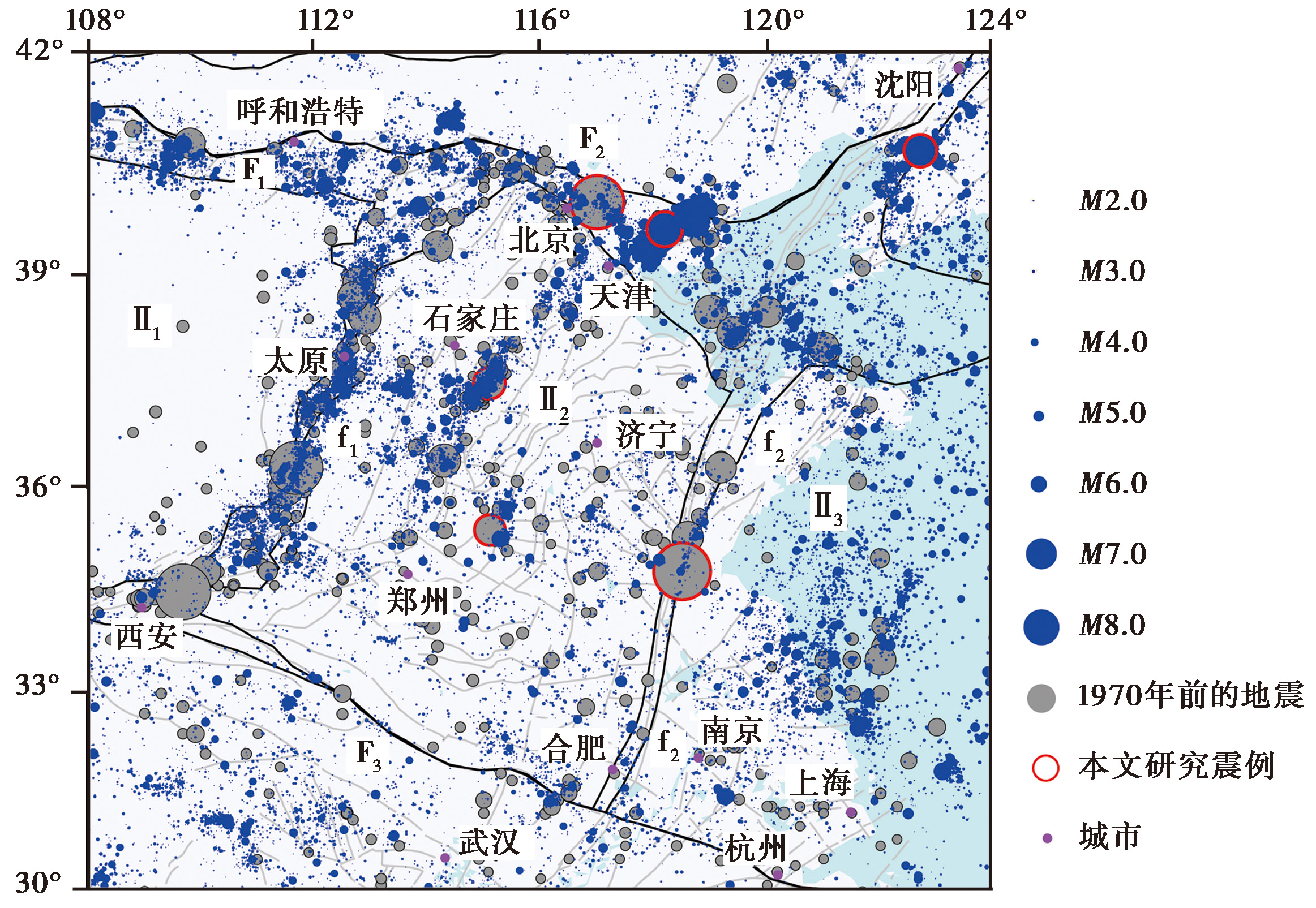
Fig. 1 Epicenter distribution of historical and modern recorded earthquakes in North China.

Fig. 2 Aftershocks and the aftershock zone of three modern earthquakes(M>7) in North China.
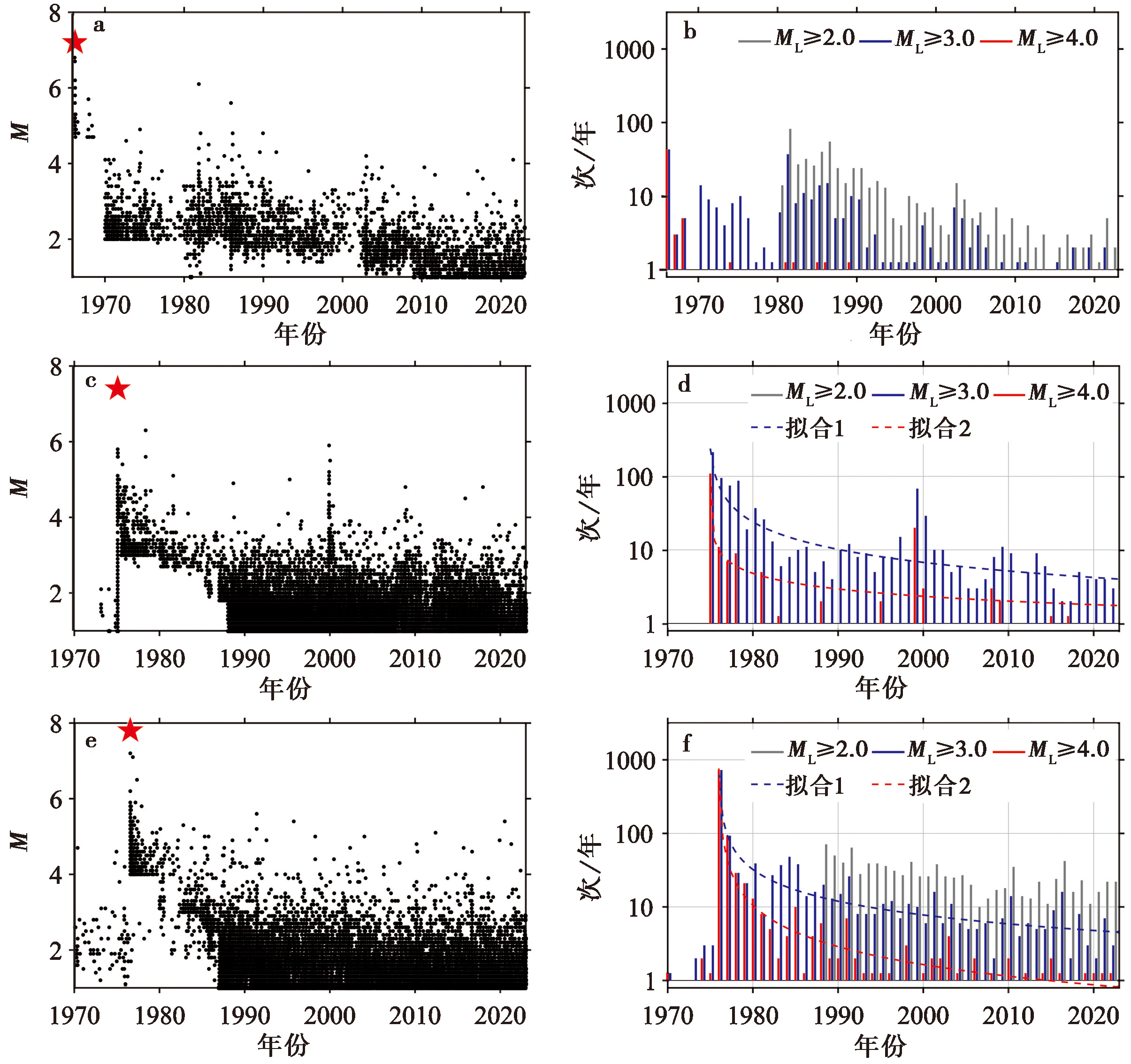
Fig. 3 Aftershock sequences and their decay characteristics of three modern earthquakes(M>7) in North China.
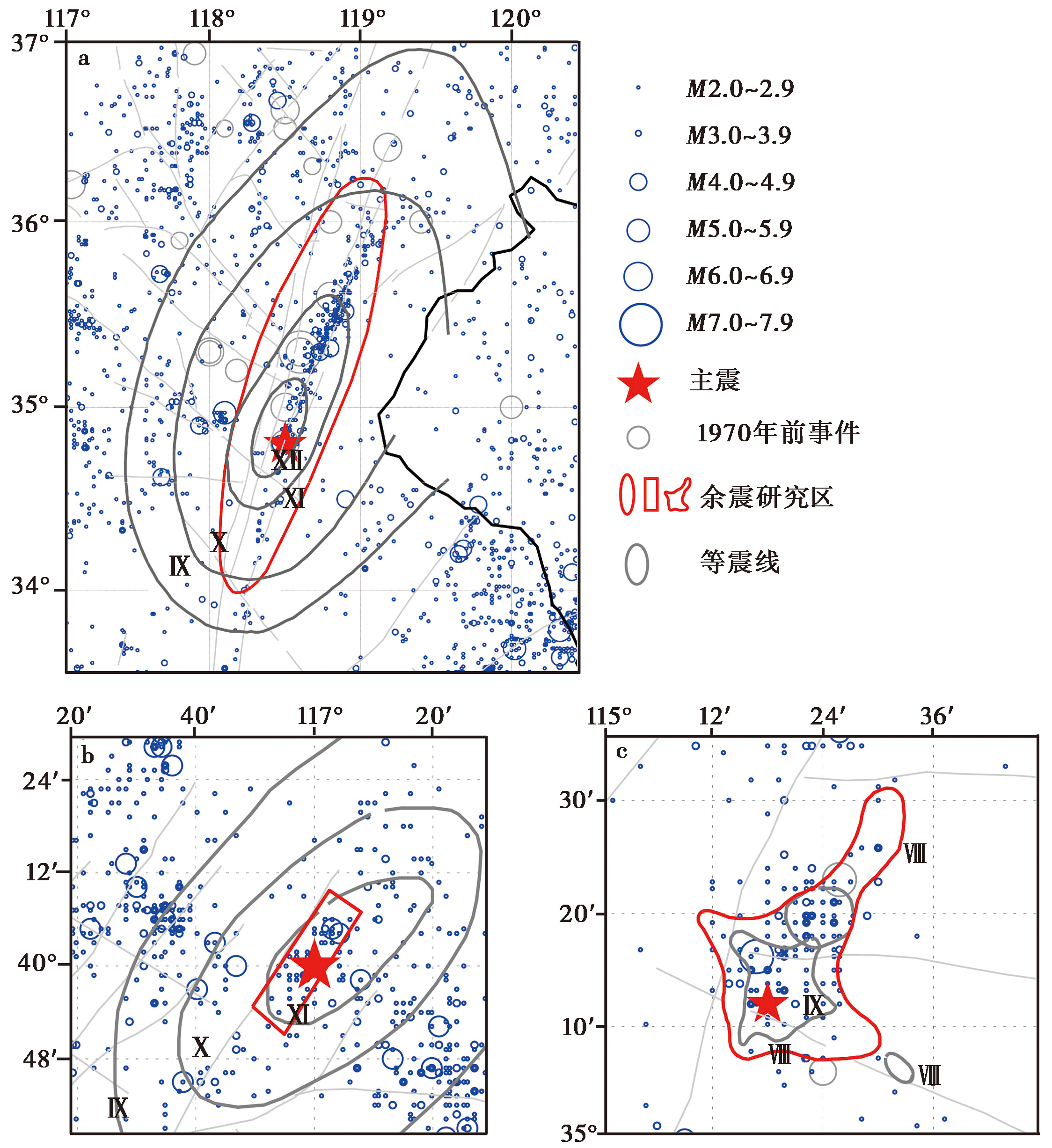
Fig. 4 Aftershocks and the aftershock zone of three historical earthquakes(M≥7) in North China.
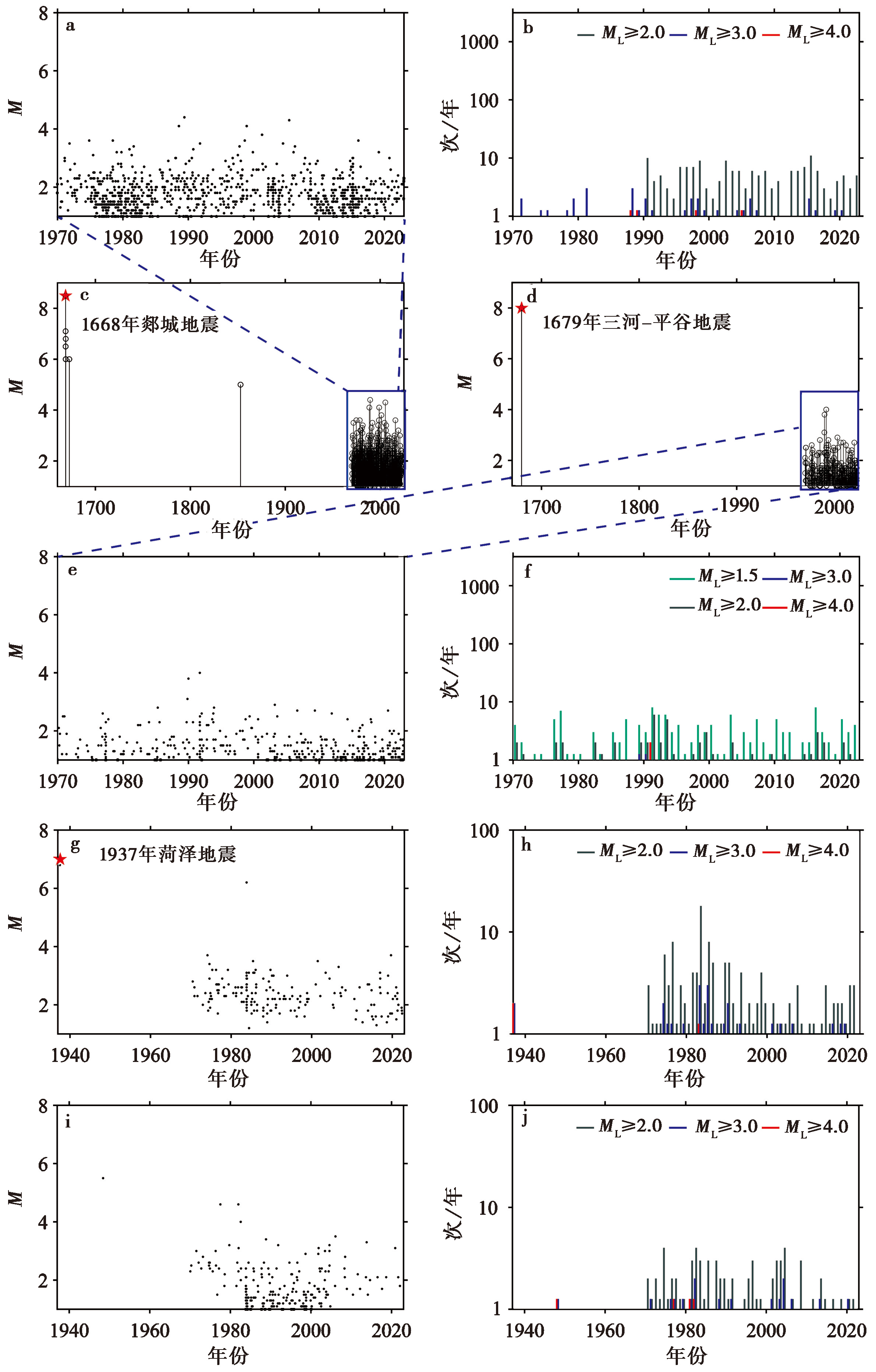
Fig. 5 Aftershocks of three historical earthquakes(M≥7) in North China.
| [7] |
|
| [8] |
虢顺民, 李志义, 程绍平, 等. 1977. 唐山地震区域构造背景和发震模式的讨论[J]. 地质科学, 12(4): 3—19.
|
|
|
|
| [9] |
国家地震局震害防御司. 1995. 中国历史强震目录(公元前 23世纪—公元1911年)[M]. 北京: 地震出版社.
|
|
Earthquake Disaster Prevention Department, State Seismological Bureau. 1995. Catalogue of Chinese Historical Strong Earthquakes(the 23rd century BC to 1911 AD)[M]. Seismological Press, Beijing (in Chinese).
|
|
| [10] |
中国地震局震害防御司. 1999. 中国近代地震目录(公元1912—1990年)[M]. 北京: 中国科学技术出版社, 1999.
|
|
Earthquake Disaster Prevention Department, China Earthquake Administration.. 1999. Catalog of Modern Chinese Earthquakes(AD 1912—1990)[M]. China Science and Technology Press, Beijing.
|
|
| [11] |
郭慧, 江娃利, 谢新生. 2011. 对1976 年河北唐山 MS7.8地震地表破裂带展布及位移特征的新认识[J]. 地震地质, 33(3): 506—524. doi: 10.3969/j.issn.0253-4967.2011.03.002.
|
|
|
|
| [12] |
河北省地震局. 1986. 一九六六年邢台地震[M]. 北京: 地震出版社.
|
|
Hebei Earthquake Agency. 1986. 1966 Xingtai Earthquake[M]. Seismological Press, Beijing (in Chinese).
|
|
| [13] |
胡长和. 1991. 1937年菏泽地震[M]. 北京: 地震出版: 2—6.
|
|
|
|
| [14] |
胡小幸, 林邦慧. 1989. 邢台地震空间分布随时间变化的立体图像与地震发生过程[J]. 地震学报, 11(1): 1—11.
|
|
|
|
| [15] |
蒋长胜, 吴忠良, 庄建仓. 2013. 地震的“序列归属”问题与ETAS模型——以唐山序列为例[J]. 地球物理学报, 56(9): 2971—2981.
|
|
|
|
| [16] |
蒋海昆, 郑建常, 吴琼, 等. 2007. 中国大陆中强以上地震余震分布尺度的统计特征[J]. 地震学报, 29(2): 151—164.
|
|
|
|
| [17] |
焦远碧, 吴开统, 杨满栋. 1990. 我国地震台网监测能力及台网观测条件质量评定[J]. 中国地震, 6(4): 1—7.
|
|
|
|
| [18] |
李保昆, 刁桂苓, 冯向东, 等. 2009. 唐山与通海两大地震的强余震的差别及其原因探讨[J]. 西北地震学报, 31(2): 161—166.
|
|
|
|
| [19] |
李家灵, 晁洪太, 崔昭文, 等. 1994. 1668 年郯城 8½ 级地震断层及其破裂机制[J]. 地震地质, 16(3): 229—237.
|
|
|
|
| [20] |
李铁明, 沈正康, 徐杰, 等. 2007. 华北地区MS≥6.5地震震源断层参数的研究[J]. 地球物理学进展, 22(1): 95—103.
|
|
|
|
| [21] |
李彦川, 单新建, 宋小刚, 等. 2016. GPS 揭示的郯庐断裂带中南段闭锁及滑动亏损[J]. 地球物理学报, 59(11): 4022—4034.
|
|
|
|
| [22] |
梁姗姗, 邹立晔, 赵博, 等. 2021. 中国测震台网地震监测能力初步分析[J]. 地震地磁观测与研究, 42(6): 68—75.
|
|
|
|
| [23] |
林邦慧, 陈运泰, 魏富胜, 等. 1979. 不对称双侧破裂过程的研究及其在海城地震的应用[J]. 地震学报, 1(2): 133—149.
|
|
|
|
| [24] |
刘广英, 梁宽, 李志鹏, 等. 2024. 华北平原中南部聊城-兰考断裂的第四纪晚期活动性探测: 兼论1937年菏泽7.0级地震发震机制[J]. 地质力学学报, 30(2): 242—259.
|
|
|
|
| [25] |
刘蒲雄, 吕晓健. 2011. 唐山地震序列空间分布复杂性原因研究[J]. 地震, 31(4): 1—14.
|
|
|
|
| [26] |
刘晓霞, 江在森, 武艳强. 2021. 利用 GPS 资料研究郯庐带现今运动及变形状态[J]. 地震, 32(4): 1—10.
|
|
|
|
| [27] |
龙锋, 闻学泽, 徐锡伟. 2006. 华北地区地震活断层的震级-破裂长度、 破裂面积的经验关系[J]. 地震地质, 28(4): 511—535.
|
|
|
|
| [28] |
吕晓健, 高孟潭, 高战武, 等. 2007. 强余震和主震地面运动分布比较研究[J]. 地震学报, 29(3): 295—301.
|
| [1] |
晁洪太, 李家灵, 崔昭文, 等. 1997. 郯庐断裂带潍坊—嘉山段全新世活断层的活动方式与发震模式[J]. 地震研究, 20(2): 218—226.
|
|
|
|
| [2] |
陈运泰, 林邦慧, 王新华, 等. 1979. 用大地测量资料反演的1976年唐山地震的位错模式[J]. 地球物理学报, 22(3): 201—217.
|
|
|
|
| [3] |
邓起东, 王挺梅, 李建国, 等. 1976. 关于海城地震震源模式的讨论[J]. 地质科学, 11(3): 195—204.
|
|
|
|
| [4] |
邓起东, 张培震, 冉勇康, 等. 2003. 中国活动构造与地震活动[J]. 地学前缘, 10(S1): 66—73.
|
|
|
|
| [5] |
刁守中, 刁颋, 李霞, 等. 2020. 历史强余震史料考证原则及目录校订方案探索——以1668年郯城 8½ 级地震强余震为例[J]. 地震科学进展, 50(5): 22—34.
|
| [28] |
|
| [29] |
吕晓健, 闻学泽. 2014. 根据烈度分布确定华北历史地震破裂区的经验准则及其应用[J]. 地震地质, 36(1): 62—79. doi: 10.3969/j.issn.0253-4967.2014.01.006.
|
|
|
|
| [30] |
马玉香, 钟普裕. 2009. 1668年山东郯城8.5级地震综述[J]. 国际地震动态, (2): 9—18.
|
|
|
|
| [31] |
毛昌伟, 丁锐, 龚正, 等. 2010. 1679年三河-平谷8级地震地表断层陡坎的GPS测量[J]. 地壳构造与地壳应力文集, (1): 8.
|
|
|
|
| [32] |
孟宪梁, 杜春涛, 王瑞, 等. 1983. 1679年三河-平谷大震的地震断裂带[J]. 地震, (3): 18—23.
|
|
|
|
| [33] |
冉勇康, 邓起东, 杨晓平, 等. 1997. 1679年三河-平谷8级地震发震断层的古地震及其重复间隔[J]. 地震地质, 19(3): 193—201.
|
|
|
|
| [34] |
邵志刚, 冯蔚, 王芃, 等. 2020. 中国大陆活动地块边界带的地震活动特征研究综述[J]. 地震地质, 42(2): 271—282.
|
|
|
|
| [35] |
石川有三, 朱传镇, 曹天青. 1983. 唐山、 海城、 盐源-宁蒗地震强余震特征[J]. 地震学报, 5(1): 17—32.
|
|
|
|
| [36] |
石耀霖, 陈棋福, 马丽. 1990. 台网监测能力变化及其对地震活动性研究的影响[J]. 中国地震, 6(3): 1—10.
|
|
|
|
| [37] |
万永革, 万永魁, 靳志同, 等. 2017. 用形变资料反演1976年唐山地震序列的破裂分布[J]. 地球物理学报, 60(9): 3378—3395.
|
|
|
|
| [38] |
王华林, 耿杰. 1995. 关于1937年菏泽7 级地震成因的探讨[J]. 高原地震, 7(3): 1—8.
|
|
|
|
| [39] |
王辉, 刘勉, 李振, 等. 2013. 华北地区大地震的长余震序列[J]. 地震, 33(3): 1—12.
|
|
|
|
| [40] |
王景明, 郑文俊, 陈国顺, 等. 1981. 唐山地震地面主破裂带及地震成因探讨[J]. 地震研究, 4(4): 427—450.
|
|
|
|
| [41] |
王瑞田, 赵宪超, 毕桂香. 1994. 1937年菏泽地震地裂缝追踪研究[J]. 西北地震学报, 16(4): 70—75.
|
|
|
|
| [42] |
向宏发, 方仲景, 徐杰, 等. 1988. 三河-平谷8级地震区的构造背景与大震重复性研究[J]. 地震地质, 10(1): 15—28.
|
|
|
|
| [43] |
邢晓琴, 戚帮申, 丰成君, 等. 2023. 北京平原区夏垫断裂1679年三河-平谷8级地震地表破裂带特征[J]. 地球科学与环境学报, 45(5): 1257—1269.
|
|
|
|
| [44] |
徐杰, 方仲景, 杨理华. 1988. 1966年邢台7.2级地震的构造背景和发震构造[J]. 地震地质, 10(4): 51—59.
|
|
|
|
| [45] |
徐锡伟, 计凤桔, 于贵华, 等. 2000. 用钻孔地层剖面记录恢复古地震序列: 河北夏垫断裂古地震研究[J]. 地震地质, 22(1): 9—19. doi: 10.3969/j.issn.0253-4967.2000.01.002.
|
|
|
|
| [46] |
杨理华. 1982. 烈度与震害//国家地震局《一九七六年唐山地震》编辑组编. 一九七六年唐山地震[M]. 北京: 地震出版社. 1—32.
|
|
|
|
| [47] |
殷娜, 李莹甄, 纪同娟, 等. 2021. 1679 年三河-平谷8级地震地表破裂端部特征及其地质意义[J]. 地震工程学报, 43(6): 1288—1293.
|
|
|
|
| [48] |
张国民, 马宏生, 王辉, 等. 2005. 中国大陆活动地块边界带与强震活动[J]. 地球物理学报, 48(3): 602—610.
|
|
|
|
| [49] |
张培震, 邓起东, 张国民, 等. 2003. 中国大陆的强震活动与活动地块[J]. 中国科学(D辑), 33(B04): 12—20.
|
|
|
|
| [50] |
张四昌, 刁桂苓. 1992. 唐山地震序列的构造过程[J]. 中国地震, 8(2): 73—80.
|
|
|
|
| [51] |
张志中, 潘华, 鄢家全, 等. 2009. 历史地震之余震参数的复核方法[J]. 中国地震, 25(2): 159—169.
|
|
|
|
| [52] |
仲秋, 史保平. 2012. 1976 年唐山 MS7.8 地震余震序列持续时间及对地震危险性分析的意义[J]. 地震学报, 34(4): 494—508.
|
|
|
|
| [53] |
周蕙兰. 1985. 浅源走滑大震震源过程的某些特征[J]. 地球物理学报, 28(6): 579—587.
|
|
|
|
| [54] |
朱日祥, 徐义刚, 朱光, 等. 2012. 华北克拉通破坏[J]. 中国科学(D辑), 42(8): 1135—1159.
|
|
|
|
| [55] |
|
| [56] |
|
| [57] |
|
| [58] |
|
| [59] |
|
| [60] |
|
| [61] |
|
| [62] |
DOI URL |
| [63] |
|
| [64] |
|
| [65] |
|
| [66] |
|
| [67] |
|
| [68] |
|
| [69] |
|
| [70] |
|
| [71] |
|
| [72] |
|
| [73] |
DOI PMID |
| [5] |
|
| [6] |
方仲景, 丁梦, 向宏发, 等. 1987. 郯庐断裂带[M]. 北京: 地震出版社.
|
|
|
|
| [7] |
高维明, 郑朗荪, 李家灵, 等. 1988. 1668年郯城8.5级地震的发震构造[J]. 中国地震, 4(3): 9—15.
|
| [74] |
|
| [75] |
|
| [76] |
DOI URL |
| [77] |
|
| [78] |
|
| [79] |
|
| [1] | FAN Ji-di, WANG Xin, XIANG Jian-bin. AEROMAGNETIC INTERPRETATION OF BURIED FAULT SPATIAL DISTRIBUTION CHARACTERISTICS IN THE NORTH CHINA BASIN [J]. SEISMOLOGY AND GEOLOGY, 2026, 48(2): 475-496. |
| [2] | HUANG Xiong-nan, YANG Xiao-ping, LIU Bao-jin, SHI Feng, ZHUANG Qi-tian, HAO Hai-jian, SHI Jin-hu, SUN Hao-yue, LU Ren-qi, HU Zong-kai, LI Kang, CAO Jun, SHU Peng, REN Guang-xue, WANG Zhen-nan. LATE-QUATERNARY ACTIVITY OF THE XUSHUI SOUTH FAULT AND NIUDONG FAULT IN THE NORTH OF THE NORTH CHINA PLAIN, EVIDENCE FROM DRILLING [J]. SEISMOLOGY AND GEOLOGY, 2026, 48(1): 19-42. |
| [3] | LI Chen, XING Hui-lin, YAO Qi, ZHONG Zhen-xiang. DYNAMIC SIMULATION OF DEFORMATION OF ACTIVE BLOCKS IN NORTH CHINA [J]. SEISMOLOGY AND GEOLOGY, 2026, 48(1): 233-256. |
| [4] | FENG Shao-ying, LIU Bao-jin, ZUO Ying, JI Ji-fa, TAN Ya-li, DING Kui, WU Quan. THE STUDY OF FINE CRUSTAL STRUCTURE OF THE SOUTHERN MARGIN OF TAIHANG MOUNTAIN BY DEEP SEISMIC REFLECTION PROFILE [J]. SEISMOLOGY AND GEOLOGY, 2025, 47(1): 267-283. |
| [5] | ZHU Guo-jun, FENG Shao-ying, YUAN Hong-ke, HOU Li-hua, QIN Jing-jing, HAN Jian, WU Quan, ZUO Ying. RESEARCH ON SHALLOW STRUCTURAL CHARACTERISTICS OF THE ZHUMADIAN-HUAIBIN DEPRESSION IN THE SOUTHERN MARGIN OF THE NORTH CHINA BLOCK BY USING REFLECTION SEISMIC DATA [J]. SEISMOLOGY AND GEOLOGY, 2023, 45(6): 1419-1431. |
| [6] | WANG Ming-liang, ZHANG Yang, XU Shun-qiang, XU Zhi-ping. DEEP STRUCTURE IN THE MIDDLE AND SOUTH AREA OF NORTH CHINA DEPRESSION AND THE VICINITY BY MAGNETOTELLURICS [J]. SEISMOLOGY AND GEOLOGY, 2023, 45(2): 536-552. |
| [7] | FENG Shao-ying, LIU Bao-jin, LI Qian, YUAN Hong-ke, ZHU Guo-jun, TIAN Yi-ming, WANG Hong-wei, HOU Li-hua, DENG Xiao-juan, TAN Ya-li. THE FINE CRUSTAL STRUCTURE OF THE SOUTHERN MARGIN OF NORTH CHINA BLOCK REVEALED BY DEEP SEISMIC REFLECTION PROFILE [J]. SEISMOLOGY AND GEOLOGY, 2020, 42(3): 581-594. |
| [8] | ZHANG Qun-wei, ZHU Shou-biao. THE COULOMB STRESS CHANGES AND SEISMICITY ON SOME MAJOR FAULTS IN NORTH CHINA [J]. SEISMOLOGY AND GEOLOGY, 2019, 41(3): 649-669. |
| [9] | DONG Ze-yi, TANG Ji, CHEN Xiao-bin, WANG Li-feng, WANG Ji-jun, MENG Bu-zai, BAI Yun. DEEP ELECTRIC STRUCTURE BENEATH NORTHEASTERN BOUNDARY AREAS OF THE NORTH CHINA CRATON [J]. SEISMOLOGY AND GEOLOGY, 2016, 38(1): 107-120. |
| [10] | LI Zhe-jun, XU Ru-gang, ZHANG Wei-jing, ZHANG Yi, LI Hui, YANG Guang-liang, LONG Jian-feng. ISOSTATIC GRAVITY ANOMALY, STRUCTURAL FEATURES AND SEISMICITY OF NORTH CHINA CRATON [J]. SEISMOLOGY AND GEOLOGY, 2015, 37(2): 496-509. |
| [11] | LÜ Xiao-jian, WEN Xue-ze. EMPIRICAL CRITERIONS AND THEIR PRELIMINARY APPLICATION TO DETERMINE RUPTURE ZONES OF HISTORICAL EARTHQUAKES IN NORTH CHINA FROM SEISMIC INTENSITY DISTRIBUTIONS [J]. SEISMOLOGY AND GEOLOGY, 2014, 36(1): 62-79. |
| [12] | HU Meng-qian, DENG Zhi-hui, LU Yuan-zhong, SONG Jian, LU Yu, ZHU Xiu-yun, SUN Feng. CONTEMPORARY TECTONIC DEFORMATION IN NORTH CHINA BY USING THREE-DIMENSIONAL SIMULATION [J]. SEISMOLOGY AND GEOLOGY, 2014, 36(1): 148-165. |
| [13] | XU Jie, ZHOU Ben-gang, JI Feng-ju, GAO Zhan-wu, CHEN Guo-guang, SUN Jian-bao. FEATURES OF SEISMOGENIC STRUCTURES OF GREAT EARTHQUAKES IN THE BOHAI BAY BASIN AREA,NORTH CHINA [J]. SEISMOLOGY AND GEOLOGY, 2012, (4): 618-636. |
| [14] | HU Meng-qian, DENG Zhi-hui, LU Yuan-zhong. ADVANCES IN APPLICATION OF FINITE ELEMENT NUMERICAL SIMULATION TO SEISMOGEOLOGY IN NORTH CHINA [J]. SEISMOLOGY AND GEOLOGY, 2010, 32(1): 162-173. |
| [15] | DING Zhi-feng, F Vaccari, CHEN Yun-tai, G F Panza. DETERMINISTIC SEISMIC GROUND HAZARD MAP IN NORTH CHINA [J]. SEISMOLOGY AND GEOLOGY, 2006, 28(4): 604-611. |
| Viewed | ||||||
|
Full text |
|
|||||
|
Abstract |
|
|||||
Copyright © SEISMOLOGY AND GEOLOGY, All Rights Reserved.
Tel: 010-62009049/9063 E-mail: dzdz@ies.ac.cn
Powered by Beijing Magtech Co., Ltd.