
SEISMOLOGY AND GEOLOGY ›› 2025, Vol. 47 ›› Issue (6): 1649-1666.DOI: 10.3969/j.issn.0253-4967.2025.06.20240067
Previous Articles Next Articles
THREE-DIMENSIONAL WAVE VELOCITY STRUCTURE AND SEISMOGENIC STRUCTURE FOR THE 2023 WEISHAN EARTHQUAKE SWARM
DAI Zong-hui1)( ), QU Jun-hao1),*(), XU Ning2), LI Cui-qin1), LI Dong-mei1), YIN Yu-zhen1)
- 1) Shandong Earthquake Agency, Jinan 250102, China
2) Jining Seismic Monitoring Center, Jining 272000, China
-
Received:2024-05-16Revised:2024-08-02Online:2025-12-20Published:2025-12-31
2023年微山震群震源区三维速度结构与发震构造
戴宗辉1)(), 曲均浩1),*(), 徐宁2), 李翠芹1), 李冬梅1), 尹玉振1)
- 1) 山东省地震局, 济南 250102
2) 济宁市地震监测中心, 济宁 272000
-
通讯作者:*曲均浩, 男, 1981年生, 研究员, 主要从事地震学研究, E-mail: gisqjh@126.com。 -
作者简介:戴宗辉, 男, 1988年生, 工程师, 主要从事地震活动性和数字地震学研究, E-mail: daizonghui001@163.com。
-
基金资助:山东省地震局一般科研项目(YB2403); 山东省地震局科技创新团队培育专项(TD202302); 山东省地震局科技创新团队培育专项(TD202301)

Cite this article
DAI Zong-hui, QU Jun-hao, XU Ning, LI Cui-qin, LI Dong-mei, YIN Yu-zhen. THREE-DIMENSIONAL WAVE VELOCITY STRUCTURE AND SEISMOGENIC STRUCTURE FOR THE 2023 WEISHAN EARTHQUAKE SWARM[J]. SEISMOLOGY AND GEOLOGY, 2025, 47(6): 1649-1666.
戴宗辉, 曲均浩, 徐宁, 李翠芹, 李冬梅, 尹玉振. 2023年微山震群震源区三维速度结构与发震构造[J]. 地震地质, 2025, 47(6): 1649-1666.
share this article
Add to citation manager EndNote|Ris|BibTeX
URL: https://www.dzdz.ac.cn/EN/10.3969/j.issn.0253-4967.2025.06.20240067
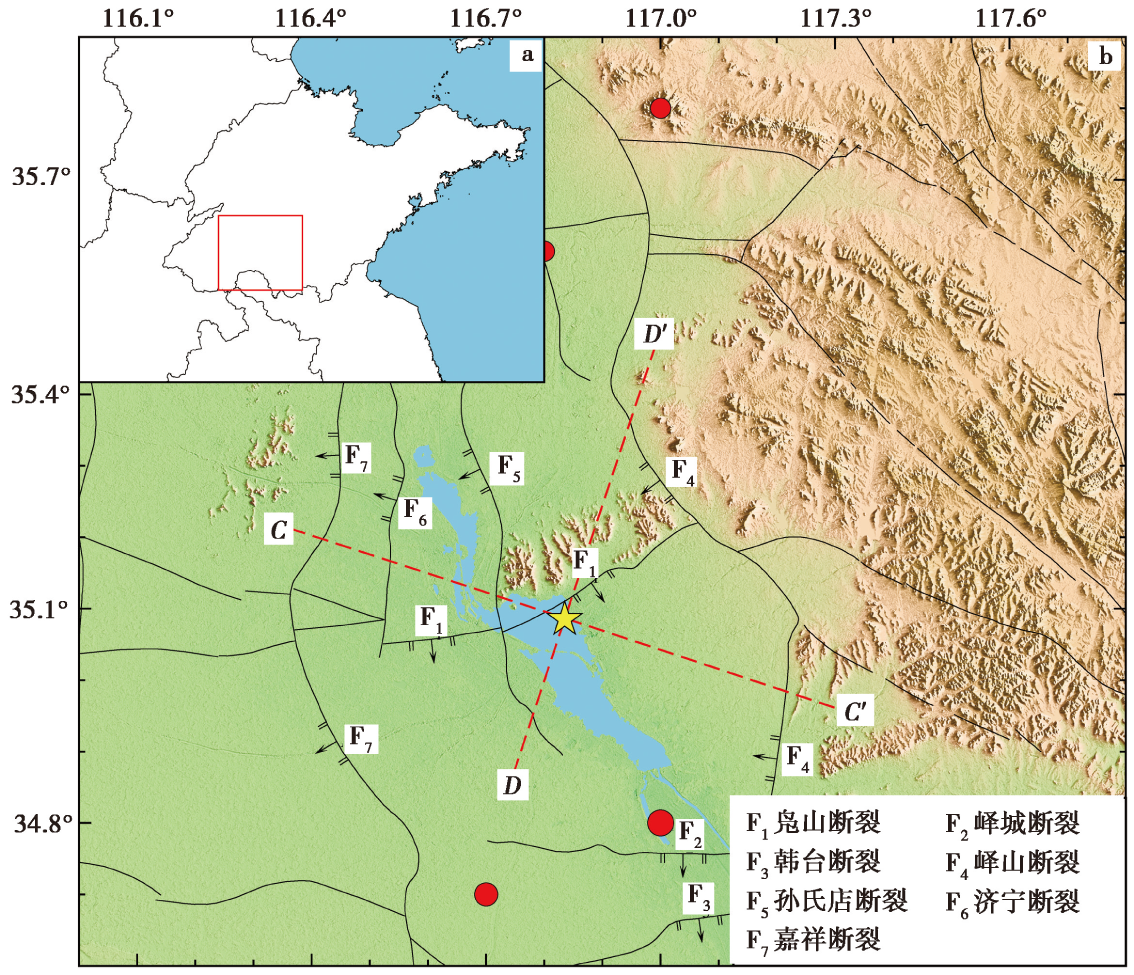
Fig. 1 The distribution of faults and historical earthquakes around the epicenter region of the Weishan earthquake swarm.
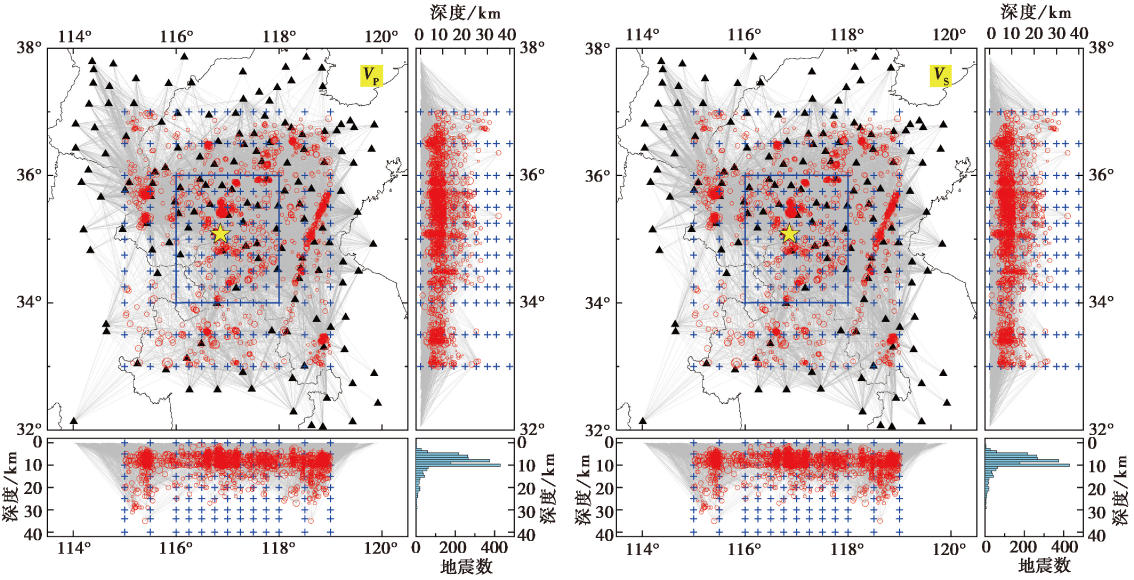
Fig. 2 The hypocentres, stations and rays in the horizontal plane and vertical plane along the longitude and latitude used for VP and VS tomography.
| 深度/km | 0 | 5 | 10 | 15 | 20 | 25 | 30 | 34 | 40 |
|---|---|---|---|---|---|---|---|---|---|
| VP/km·s-1 | 4.792 | 5.621 | 6.062 | 6.212 | 6.251 | 6.500 | 6.824 | 7.400 | 8.100 |
| VS/km·s-1 | 2.856 | 3.351 | 3.533 | 3.613 | 3.615 | 3.760 | 3.971 | 4.300 | 4.690 |
| VP/VS | 1.678 | 1.677 | 1.716 | 1.719 | 1.729 | 1.729 | 1.718 | 1.721 | 1.727 |
Table1 Initial velocity model
| 深度/km | 0 | 5 | 10 | 15 | 20 | 25 | 30 | 34 | 40 |
|---|---|---|---|---|---|---|---|---|---|
| VP/km·s-1 | 4.792 | 5.621 | 6.062 | 6.212 | 6.251 | 6.500 | 6.824 | 7.400 | 8.100 |
| VS/km·s-1 | 2.856 | 3.351 | 3.533 | 3.613 | 3.615 | 3.760 | 3.971 | 4.300 | 4.690 |
| VP/VS | 1.678 | 1.677 | 1.716 | 1.719 | 1.729 | 1.729 | 1.718 | 1.721 | 1.727 |
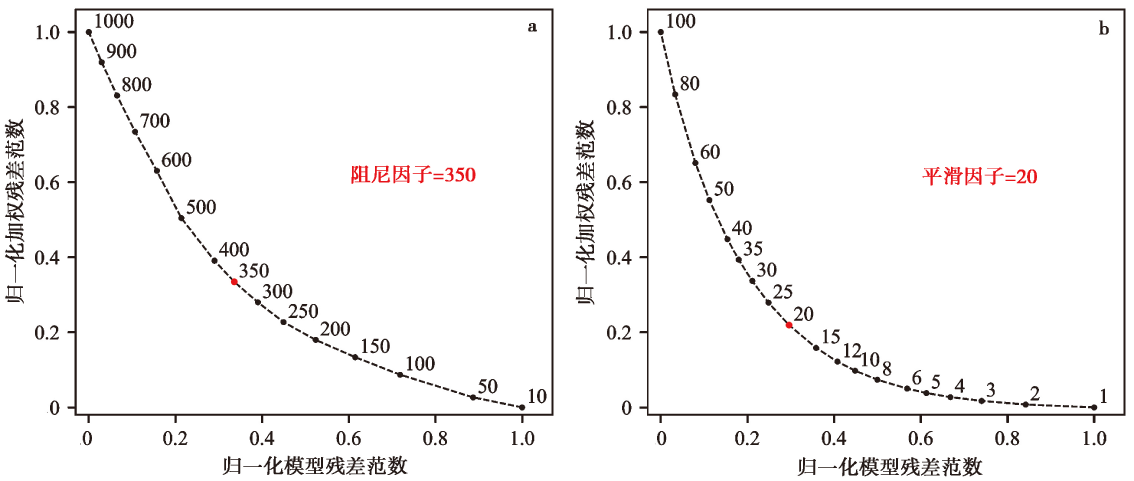
Fig. 3 L-curves for the damping and smoothing factors.
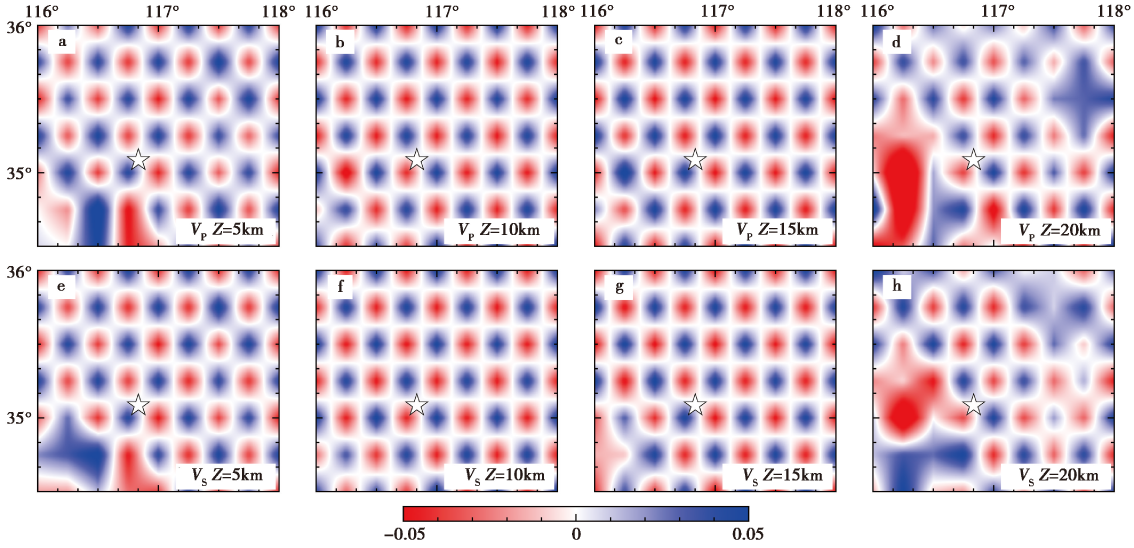
Fig. 4 P-wave and S-wave checkerboard resolution test at different depth.
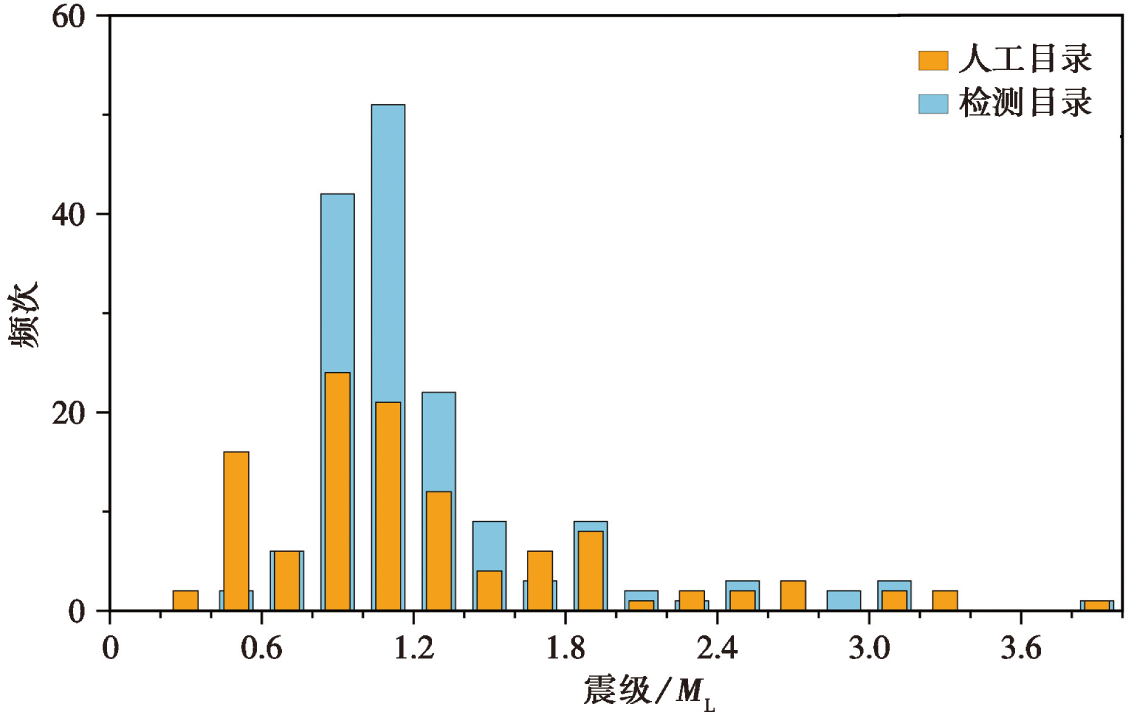
Fig. 5 Comparison of magnitude-frequency between manually and automatically detected catalogs.
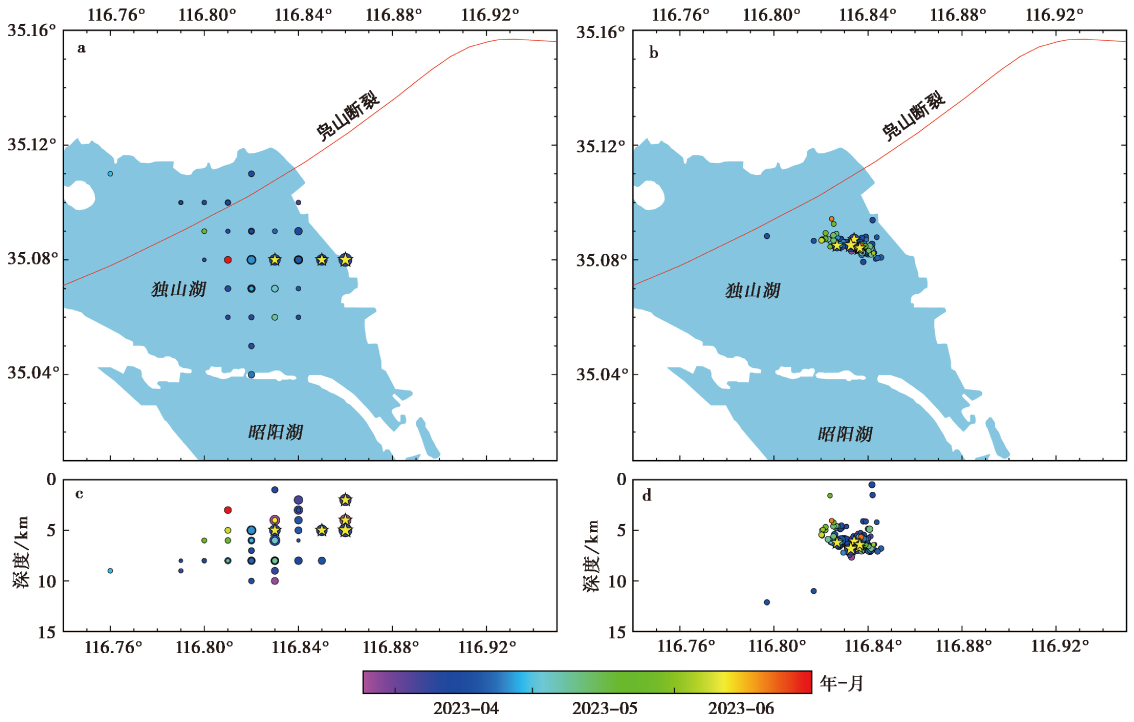
Fig. 6 Epicenter distribution of events from manually and automatically detected catalogs.
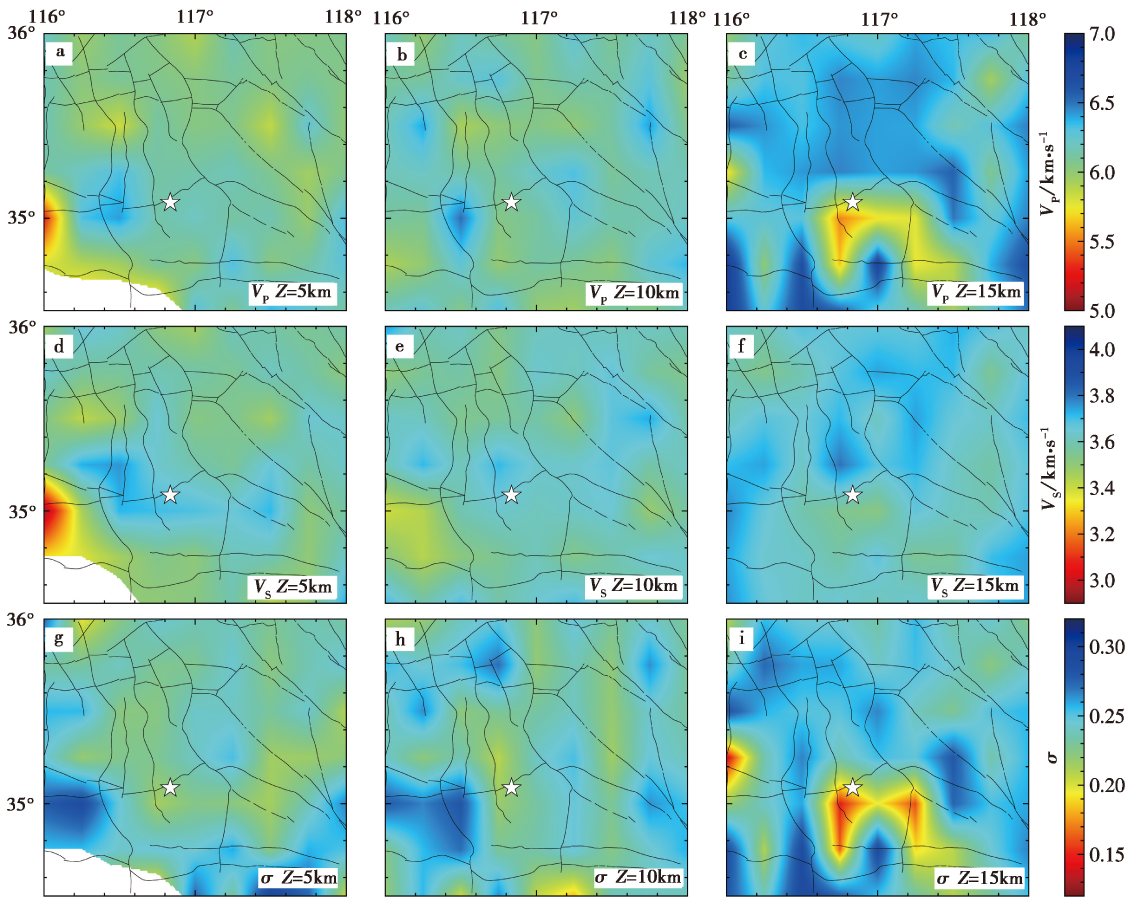
Fig. 7 Tomography results of P-wave and S-Wave velocity at different depth.
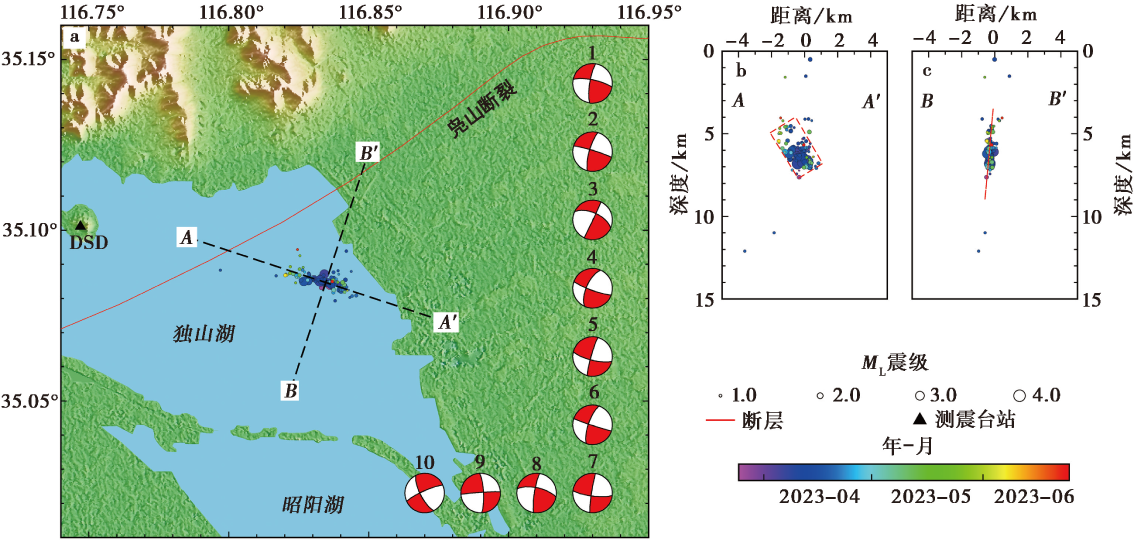
Fig. 8 Seismic precise relocation results and partial focal mechanism solution.
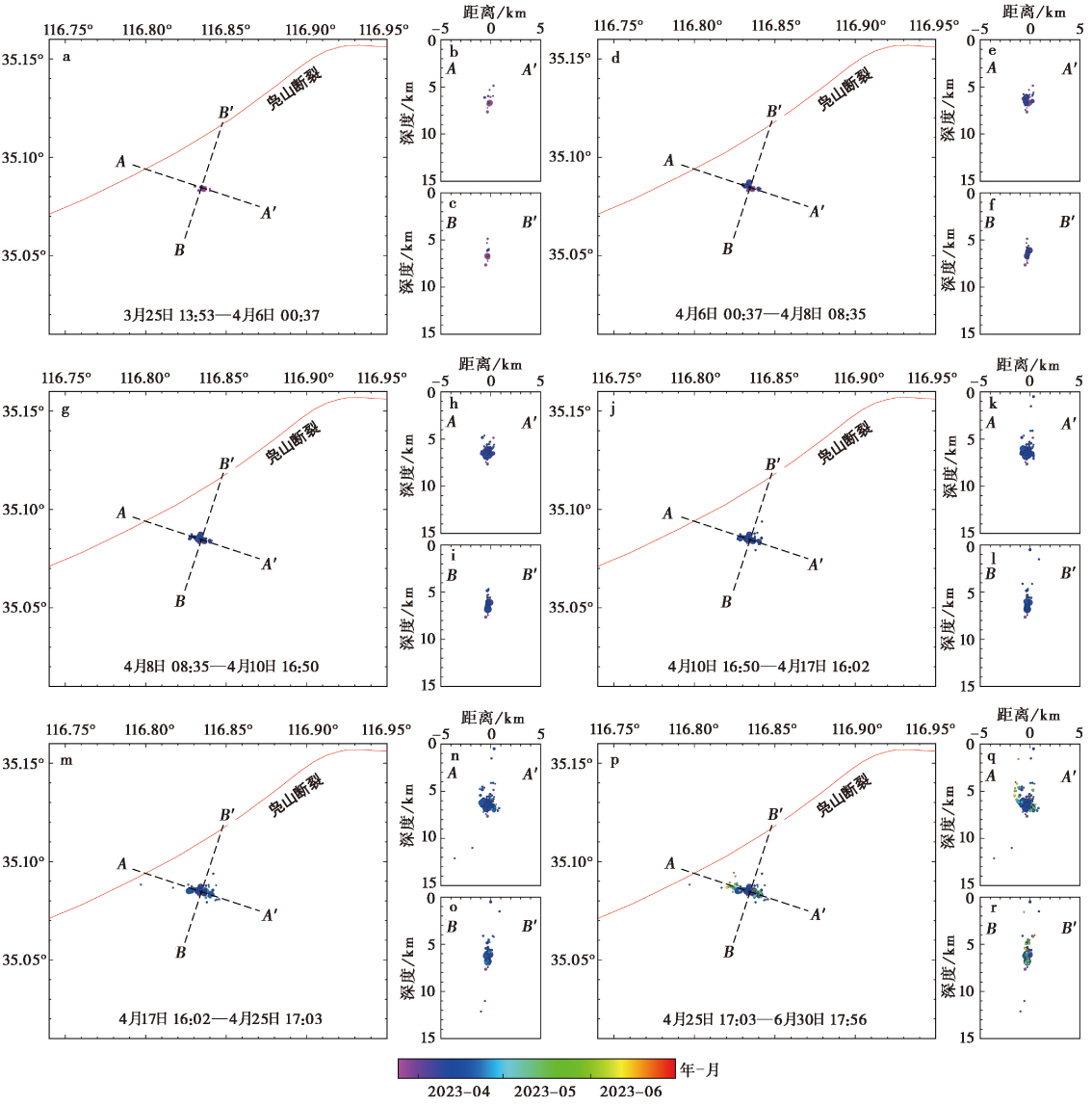
Fig. 9 The distribution of seismic sequence along the plane and depth profile in different time periods after the earthquake.
| 序号 | 节面Ⅰ | 节面Ⅱ | 发震时间 | 震级/ML | |||||||||||
|---|---|---|---|---|---|---|---|---|---|---|---|---|---|---|---|
| 走向/(°) | 倾角/(°) | 滑动角/(°) | 走向/(°) | 倾角/(°) | 滑动角/(°) | ||||||||||
| 1 | 188.6 | 78.3 | 165.3 | 281.7 | 75.6 | 12.1 | 2023-03-25, 13:53:20 | 3.2 | |||||||
| 2 | 195.6 | 76.3 | 174.5 | 286.9 | 84.7 | 13.8 | 2023-04-06, 00:38:00 | 3.3 | |||||||
| 3 | 25.0 | 88.8 | -150.2 | 294.3 | 60.2 | -1.4 | 2023-04-06, 00:48:13 | 2.4 | |||||||
| 4 | 204.2 | 65.0 | -170.2 | 110.0 | 81.1 | -25.3 | 2023-04-06, 00:54:37 | 2.0 | |||||||
| 5 | 195.7 | 83.9 | -164.6 | 104.0 | 74.7 | -6.3 | 2023-04-08, 08:36:01 | 3.9 | |||||||
| 6 | 199.1 | 72.8 | -177.0 | 108.2 | 87.1 | -17.2 | 2023-04-10, 16:50:04 | 3.1 | |||||||
| 7 | 188.3 | 85.5 | -167.4 | 97.3 | 77.4 | -4.6 | 2023-04-12, 07:34:54 | 2.0 | |||||||
| 8 | 188.6 | 80.7 | 157.8 | 282.4 | 68.1 | 10.0 | 2023-04-17, 15:46:35 | 2.5 | |||||||
| 9 | 357.0 | 77.7 | -176.9 | 266.3 | 87.0 | -12.3 | 2023-04-17, 16:02:06 | 3.1 | |||||||
| 10 | 245.7 | 81.0 | -161.7 | 152.7 | 71.9 | -9.5 | 2023-04-18, 02:21:20 | 2.0 | |||||||
Table2 Focal mechanism solutions of selected earthquakes with magnitude ML≥2.0
| 序号 | 节面Ⅰ | 节面Ⅱ | 发震时间 | 震级/ML | |||||||||||
|---|---|---|---|---|---|---|---|---|---|---|---|---|---|---|---|
| 走向/(°) | 倾角/(°) | 滑动角/(°) | 走向/(°) | 倾角/(°) | 滑动角/(°) | ||||||||||
| 1 | 188.6 | 78.3 | 165.3 | 281.7 | 75.6 | 12.1 | 2023-03-25, 13:53:20 | 3.2 | |||||||
| 2 | 195.6 | 76.3 | 174.5 | 286.9 | 84.7 | 13.8 | 2023-04-06, 00:38:00 | 3.3 | |||||||
| 3 | 25.0 | 88.8 | -150.2 | 294.3 | 60.2 | -1.4 | 2023-04-06, 00:48:13 | 2.4 | |||||||
| 4 | 204.2 | 65.0 | -170.2 | 110.0 | 81.1 | -25.3 | 2023-04-06, 00:54:37 | 2.0 | |||||||
| 5 | 195.7 | 83.9 | -164.6 | 104.0 | 74.7 | -6.3 | 2023-04-08, 08:36:01 | 3.9 | |||||||
| 6 | 199.1 | 72.8 | -177.0 | 108.2 | 87.1 | -17.2 | 2023-04-10, 16:50:04 | 3.1 | |||||||
| 7 | 188.3 | 85.5 | -167.4 | 97.3 | 77.4 | -4.6 | 2023-04-12, 07:34:54 | 2.0 | |||||||
| 8 | 188.6 | 80.7 | 157.8 | 282.4 | 68.1 | 10.0 | 2023-04-17, 15:46:35 | 2.5 | |||||||
| 9 | 357.0 | 77.7 | -176.9 | 266.3 | 87.0 | -12.3 | 2023-04-17, 16:02:06 | 3.1 | |||||||
| 10 | 245.7 | 81.0 | -161.7 | 152.7 | 71.9 | -9.5 | 2023-04-18, 02:21:20 | 2.0 | |||||||
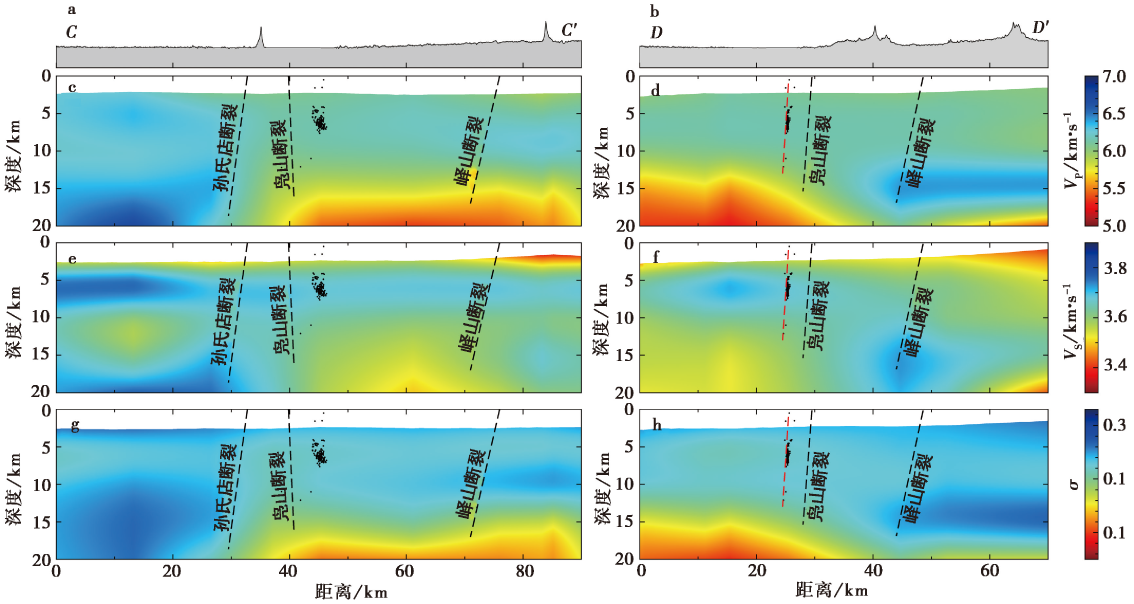
Fig. 10 Profiles of P-wave, S-wave velocity and Poisson's ratio near the source area of Weishan earthquake swarm.
| [1] |
曹颖, 钱佳威, 黄江培, 等. 2024. 云南洱源地区地壳三维精细速度结构成像[J]. 地震地质, 46(1): 162-183. doi: 10.3969/j.issn.0253-4967.2024.01.010.
|
|
DOI |
|
| [2] |
晁洪太, 王锜, 李家灵, 等. 1997. 山东省地震构造图、 山东省新构造图及说明书(1︰100万)[M]. 济南: 山东省地图出版社.
|
|
|
|
| [3] |
邓文泽, 陈九辉, 郭飚, 等. 2014. 龙门山断裂带精细速度结构的双差层析成像研究[J]. 地球物理学报, 57(4): 1101-1110.
|
|
|
|
| [4] |
胡玉禄, 回寒星, 胡红文, 等. 2005. 曲阜近山前地区地热地质条件浅析[J]. 山东国土资源, 21(4): 35-37.
|
|
|
|
| [5] |
李翠平, 唐茂云, 郭卫英, 等. 2022. 荣昌及周边三维速度结构初步研究[J]. 地震地质, 44(1): 205-219. doi: 10.3969/j.issn.0253-4967.2022.01.013.
|
|
DOI |
|
| [6] |
李强, 吴建平. 2023. 福建地区地壳三维P波速度结构与构造含义[J]. 地震地质, 45(4): 970-986. doi: 10.3969/j.issn.0253-4967.2023.04.010.
|
|
DOI |
|
| [7] |
刘亢, 杨婷, 李红光, 等. 2023. 小地震精定位与层析成像揭示的邢台地震区深部构造特征[J]. 地震地质, 45(6): 1328-1348. doi: 10.3969/j.issn.0253-4967.2023.06.005.
|
|
DOI |
|
| [8] |
裴玮来, 周仕勇. 2022. 基于最大顺序统计量的P波初动极性自动读取方法的小震震源机制反演及在云南小江地区的应用研究[J]. 地球物理学报, 65(3): 992-1005.
|
|
|
|
| [9] |
任青芳, 张成科, 赵金仁, 等. 1992. 菏泽地区地壳结构特征与地震[J]. 华北地震科学, 10(3): 45-52.
|
|
|
|
| [10] |
苏道磊, 范建柯, 吴时国, 等. 2016. 山东地区地壳P波三维速度结构及其与地震活动的关系[J]. 地球物理学报, 59(4): 1335-1349.
DOI |
|
|
|
| [11] |
汤永安. 1981. 鲁中南地区地壳构造与地震[J]. 地壳形变与地震, (1): 66-72.
|
|
|
|
| [12] |
万永革. 2022. 断裂带震源机制节面聚类确定断裂带产状方法及在2021年漾濞地震序列中的应用[J]. 地球物理学报, 65(2): 637-648.
|
|
|
|
| [13] |
王光杰, 滕吉文, 张先康. 2007. 鲁西地区的地壳结构及壳内近直立高速异常体的发现[J]. 地球物理学报, 50(5): 1480-1487.
|
|
|
|
| [14] |
王雷, 王志才, 付俊东, 等. 2018. 山东凫山断裂和峄山断裂的新活动时代研究[J]. 中国地震, 34(4): 800-808.
|
|
|
|
| [15] |
王未来, 吴建平, 房立华, 等. 2014. 2014年云南鲁甸 MS6.5 地震序列的双差定位[J]. 地球物理学报, 57(9): 3042-3051.
DOI |
|
|
|
| [16] |
王小娜, 邓志辉, 叶秀薇, 等. 2020. 广东阳江地区的地壳速度结构与地震活动性[J]. 地震地质, 42(5): 1153-1171. doi: 10.3969/j.issn.0253-4967.2020.05.008.
|
|
DOI |
|
| [17] |
吴海波, 申学林, 王杰, 等. 2018. 三峡库区上地壳三维速度结构的双差层析成像研究[J]. 地球物理学报, 61(7): 2802-2814.
DOI |
|
|
|
| [18] |
|
| [19] |
|
| [20] |
|
| [21] |
|
| [22] |
|
| [23] |
|
| [24] |
|
| [25] |
|
| [26] |
|
| [27] |
|
| [28] |
|
| [29] |
|
| [30] |
|
| [31] |
|
| [32] |
|
| [33] |
|
| [34] |
|
| [35] |
|
| [36] |
|
| [37] |
|
| [38] |
|
| [39] |
|
| [40] |
|
| [41] |
|
| [1] | ZHANG Bo, WANG Ai-guo, FENG Zi-wei, HE Xiao-long, ZHU Jun-wen, YAO Yun-sheng, CAI Yi-meng. SEIMOTECTONIC ANALYSIS OF 2023 JISHISHAN MS6.2 EARTHQUAKE IN GANSU PROVINCE [J]. SEISMOLOGY AND GEOLOGY, 2025, 47(6): 1586-1605. |
| [2] | LI Ting-ting, MIAO Fa-jun, SUN Ye-jun, FAN Wen-hua, GONG Jie, GU Qin-ping, DU Hang, SUN Xiao-hang, ZHANG Cen, LI Zi-ye. THREE-DIMENSIONAL WAVE VELOCITY STRUCTURE AND SEISMOGENIC STRUCTURE FOR THE JIANGDU EARTHQUAKE SWARM IN JIANGSU [J]. SEISMOLOGY AND GEOLOGY, 2025, 47(5): 1343-1363. |
| [3] | LI Lin-lin, JIANG Wen-liang, LI De-wen, JIAO Qi-song, LUO Yi, LI Yong-sheng, TIAN Yun-feng, LI Ying-ying. SURFACE RUPTURE CHARACTERISTICS OF THE JISHISHAN MS6.2 EARTHQUAKE ON DECEMBER 18, 2023 [J]. SEISMOLOGY AND GEOLOGY, 2025, 47(4): 1058-1074. |
| [4] | ZHOU Ben-wei, FANG Li-hua, ZHANG Li-fen, WANG Jie, WANG Shi-guang, LIU Hua-biao. CONSTRUCTION OF A COMPLETE EARTHQUAKE CATALOG OF THE THREE GORGES SEISMIC NETWORK USING PALM AND THE GENESIS MECHANISM OF THE BADONG EARTHQUAKE SWARM FROM 2017 TO 2018 [J]. SEISMOLOGY AND GEOLOGY, 2025, 47(4): 1152-1166. |
| [5] | CHEN Han-lin, WANG Qin-cai, GAO Jin-rui, LI Jun. PRELIMINARY STUDY ON THE SEISMOGENIC STRUCTURE OF THE 2025 XIZANG DINGRI MS6.8 EARTHQUAKE SEQUENCE [J]. SEISMOLOGY AND GEOLOGY, 2025, 47(3): 747-760. |
| [6] | YIN Xin-xin, ZUO Ke-zhen, ZHAO Cui-ping, CAI Run. RELOCATION AND FORESHOCK SEQUENCE IDENTIFICATION OF DINGRI MS6.8 EARTHQUAKE IN XIZANG [J]. SEISMOLOGY AND GEOLOGY, 2025, 47(3): 850-868. |
| [7] | WANG Xue-zhu, WU Chuan-yong, LIU Jian-ming, ZANG Ke-zhi, YUAN Hai-yang, GAO Zhan, ZHANG Jin-shuo, MA Yun-xiao. EARTHQUAKE SEQUENCE RELOCATION AND SEISMOGENIC STRUCTURE OF THE 2024 MS7.1 WUSHI EARTHQUAKE ON JANUARY 23, 2024, XINJIANG [J]. SEISMOLOGY AND GEOLOGY, 2025, 47(2): 488-506. |
| [8] | XU Ying-cai, GUO Xiang-yun. MOMENT TENSOR INVERSION AND SEISMOGENIC STRUCTURE OF THE 2023 MS5.5 PINGYUAN EARTHQUAKE [J]. SEISMOLOGY AND GEOLOGY, 2025, 47(1): 284-305. |
| [9] | WANG Xin, ZHANG Ke, WANG Yue. CHARACTERISTICS AND SEISMIC STRUCTURE ANALYSIS OF THE MS5.9 AND MS4.7 EARTHQUAKE SEQUENCES IN ALUKEERQIN BANNER, INNER MONGOLIA [J]. SEISMOLOGY AND GEOLOGY, 2024, 46(6): 1314-1331. |
| [10] | CHEN Han-lin, WANG Qin-cai, ZHANG Jin-chuan, LIU Rui-feng. DISCUSSION ON SEISMOGENIC STRUCTURE OF THE JUNE 2022 MS6.1 EARTHQUAKE AND ITS RELATIONSHIP WITH THE APRIL 2013 MS7.0 EARTHQUAKE IN LUSHAN, SICHUAN PROVINCE [J]. SEISMOLOGY AND GEOLOGY, 2023, 45(5): 1233-1246. |
| [11] | FU Ying, HU Bin, ZHAO Min, LONG Feng. PRECISE LOCATION AND SEISMOGENIC STRUCTURE OF THE 2022 LUSHAN MS6.1 EARTHQUAKE [J]. SEISMOLOGY AND GEOLOGY, 2023, 45(4): 987-1005. |
| [12] | LIU Bai-yun, ZHAO Li, LIU Yun-yun, WANG Wen-cai, ZHANG Wei-dong. THE RESEARCH ON RELOCATION AND FAULT PLANE SOLUTION AND GEOMETRIC MEANING OF THE MADUO M7.4 EARTHQUAKE ON 22 MAY 2021 [J]. SEISMOLOGY AND GEOLOGY, 2023, 45(2): 500-516. |
| [13] | ZHAO De-zheng, QU Chun-yan, ZHANG Gui-fang, GONG Wen-yu, SHAN Xin-jian, ZHU Chuan-hua, ZHANG Guo-hong, SONG Xiao-gang. APPLICATIONS AND ADVANCES FOR THE COSEISMIC DEFORMA-TION OBSERVATIONS, EARTHQUAKE EMERGENCY RESPONSE AND SEISMOGENIC STRUCTURE INVESTIGATION USING INSAR [J]. SEISMOLOGY AND GEOLOGY, 2023, 45(2): 570-592. |
| [14] | ZHANG Ke, WANG Xin, YANG Hong-ying, WANG Yue, XU Yan, LI Jing. THE CHARACTERISTICS AND SEISMOGENIC STRUCTURE ANALYSIS OF THE 2021 YANGBI MS6.4 EARTHQUAKE SEQUENCE, YUNNAN [J]. SEISMOLOGY AND GEOLOGY, 2023, 45(1): 231-251. |
| [15] | LI Chuan-you, SUN Kai, MA Jun, LI Jun-jie, LIANG Ming-jian, FANG Li-hua. THE 2022 M6.8 LUDING EARTHQUAKE: A COMPLICATED EVENT BY FAULTING OF THE MOXI SEGMENT OF THE XIANSHUIHE FAULT ZONE [J]. SEISMOLOGY AND GEOLOGY, 2022, 44(6): 1648-1666. |
| Viewed | ||||||
|
Full text |
|
|||||
|
Abstract |
|
|||||
Copyright © SEISMOLOGY AND GEOLOGY, All Rights Reserved.
Tel: 010-62009049/9063 E-mail: dzdz@ies.ac.cn
Powered by Beijing Magtech Co., Ltd.