
SEISMOLOGY AND GEOLOGY ›› 2026, Vol. 48 ›› Issue (1): 162-180.DOI: 10.3969/j.issn.0253-4967.20240068
• Research pape • Previous Articles Next Articles
CHARACTERISTICS OF EARTHQUAKE SEQUENCE TYPES WITH M≥5.0 IN YUNNAN AND ITS NEIGHBORING AREAS
ZHAO Xiao-yan1)( ), MENG Ling-yuan2),*(), PENG Guan-ling1), WANG Guang-ming1)
- 1)
Yunnan Earthquake Agency
2)China Earthquake Networks Center
-
Received:2025-05-16Revised:2025-08-13Online:2026-02-20Published:2026-03-14
云南及邻区M≥5.0地震序列类型特征
赵小艳1)(), 孟令媛2),*(), 彭关灵1), 王光明1)
- 1)
云南省地震局
2)中国地震台网中心
-
通讯作者:* 孟令媛, 女, 1983年生, 博士, 研究员, 主要从事震源物理、 地震活动性等方面的研究, E-mail: menglingyuan@seis.ac.cn。 -
作者简介:赵小艳, 女, 1982年生, 高级工程师, 主要从事地震活动、 震后趋势、 人工智能地震预测相关研究, E-mail: zhaoxiaoyan@seis.ac.cn。
-
基金资助:云南省重点研发项目(202203AC100003); 国家重点研发计划项目(2021YFC3000705-08)

Cite this article
ZHAO Xiao-yan, MENG Ling-yuan, PENG Guan-ling, WANG Guang-ming. CHARACTERISTICS OF EARTHQUAKE SEQUENCE TYPES WITH M≥5.0 IN YUNNAN AND ITS NEIGHBORING AREAS[J]. SEISMOLOGY AND GEOLOGY, 2026, 48(1): 162-180.
赵小艳, 孟令媛, 彭关灵, 王光明. 云南及邻区M≥5.0地震序列类型特征[J]. 地震地质, 2026, 48(1): 162-180.
share this article
Add to citation manager EndNote|Ris|BibTeX
URL: https://www.dzdz.ac.cn/EN/10.3969/j.issn.0253-4967.20240068
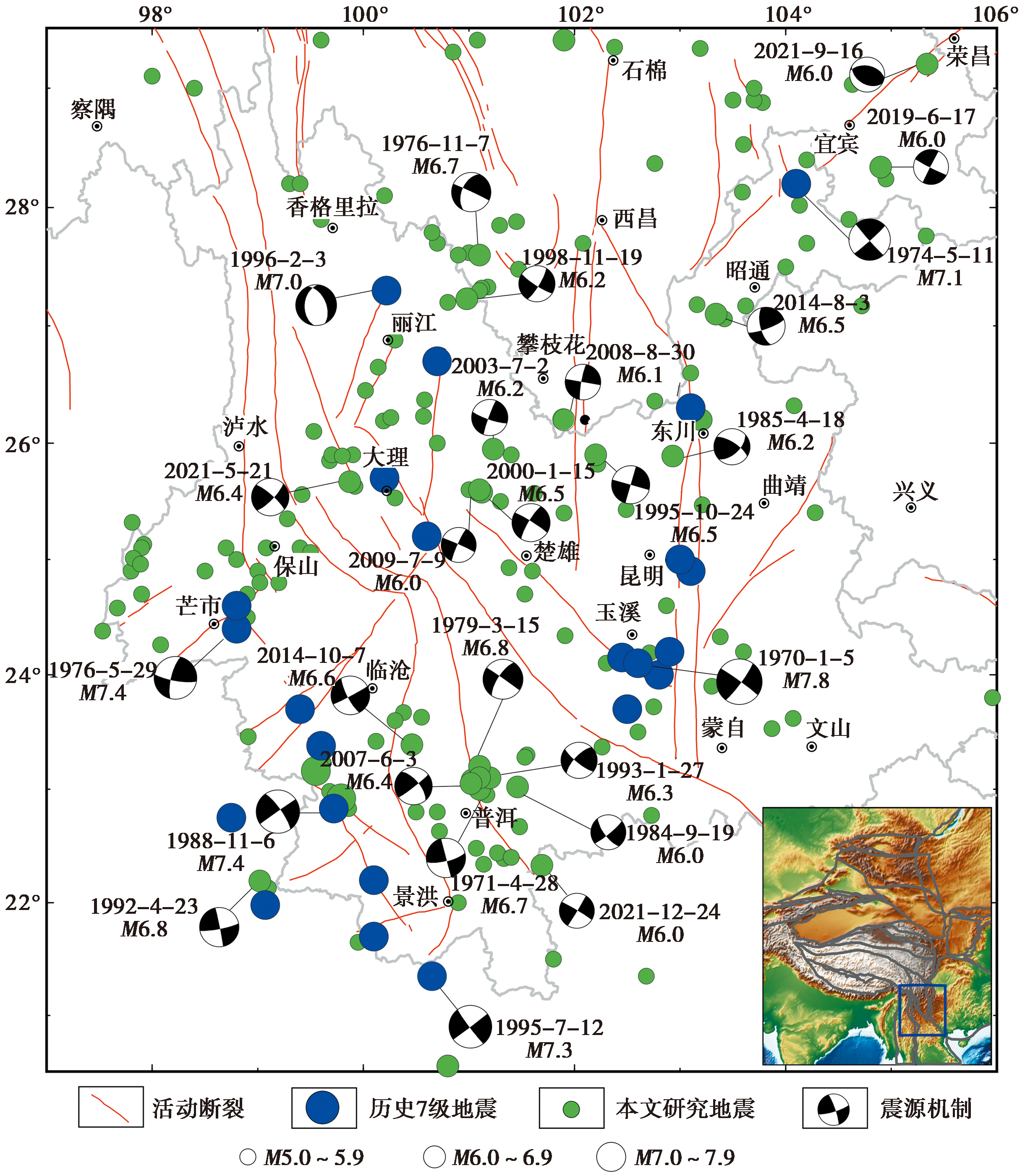
Fig. 1 The active structures and tectonic background of historical strong earthquakes in Yunnan and its neighboring areas.
| 主震震级/MS | 多震型 | 主余型 | 孤立型 | 总计 | ||||||
|---|---|---|---|---|---|---|---|---|---|---|
| N | M | T | N | M | T | N | M | T | ||
| 5.0~5.9 | 25 | 21.4% | 71.4% | 64 | 54.7% | 67.4% | 28 | 23.9% | 82.4% | 117 |
| 6.0~6.9 | 8 | 27.6% | 22.9% | 20 | 69.0% | 21.1% | 1 | 3.4% | 2.9% | 29 |
| 7.0~7.9 | 2 | 33.3% | 5.7% | 4 | 66.7% | 4.2% | 0 | 0.0% | 0.0% | 6 |
| 总计 | 35/23.0% | 88/57.9% | 29/19.1% | 152 | ||||||
Table1 Statistics of earthquake sequence type with different magnitude
| 主震震级/MS | 多震型 | 主余型 | 孤立型 | 总计 | ||||||
|---|---|---|---|---|---|---|---|---|---|---|
| N | M | T | N | M | T | N | M | T | ||
| 5.0~5.9 | 25 | 21.4% | 71.4% | 64 | 54.7% | 67.4% | 28 | 23.9% | 82.4% | 117 |
| 6.0~6.9 | 8 | 27.6% | 22.9% | 20 | 69.0% | 21.1% | 1 | 3.4% | 2.9% | 29 |
| 7.0~7.9 | 2 | 33.3% | 5.7% | 4 | 66.7% | 4.2% | 0 | 0.0% | 0.0% | 6 |
| 总计 | 35/23.0% | 88/57.9% | 29/19.1% | 152 | ||||||
| 地震破裂类型 | 序列类型 | 次数 | 占比/% |
|---|---|---|---|
| 走滑型 121/80.0% | 多震 | 25 | 21.5% |
| 主余 | 74 | 59.5% | |
| 孤立 | 23 | 19.0% | |
| 逆冲型 9/6.0% | 多震 | 4 | 44.4% |
| 主余 | 2 | 22.2% | |
| 孤立 | 3 | 33.3% | |
| 正断型 12/8.0% | 多震 | 4 | 33.3% |
| 主余 | 8 | 66.7% | |
| 孤立 | 0 | 0.0% | |
| 无资料 9/6.0% | 多震 | 1 | 11.1% |
| 主余 | 5 | 55.6% | |
| 孤立 | 3 | 33.3% |
Table2 Statistics of rupture type and sequence type of M≥5.0 earthquakes in Yunnan and its neighboring areas
| 地震破裂类型 | 序列类型 | 次数 | 占比/% |
|---|---|---|---|
| 走滑型 121/80.0% | 多震 | 25 | 21.5% |
| 主余 | 74 | 59.5% | |
| 孤立 | 23 | 19.0% | |
| 逆冲型 9/6.0% | 多震 | 4 | 44.4% |
| 主余 | 2 | 22.2% | |
| 孤立 | 3 | 33.3% | |
| 正断型 12/8.0% | 多震 | 4 | 33.3% |
| 主余 | 8 | 66.7% | |
| 孤立 | 0 | 0.0% | |
| 无资料 9/6.0% | 多震 | 1 | 11.1% |
| 主余 | 5 | 55.6% | |
| 孤立 | 3 | 33.3% |
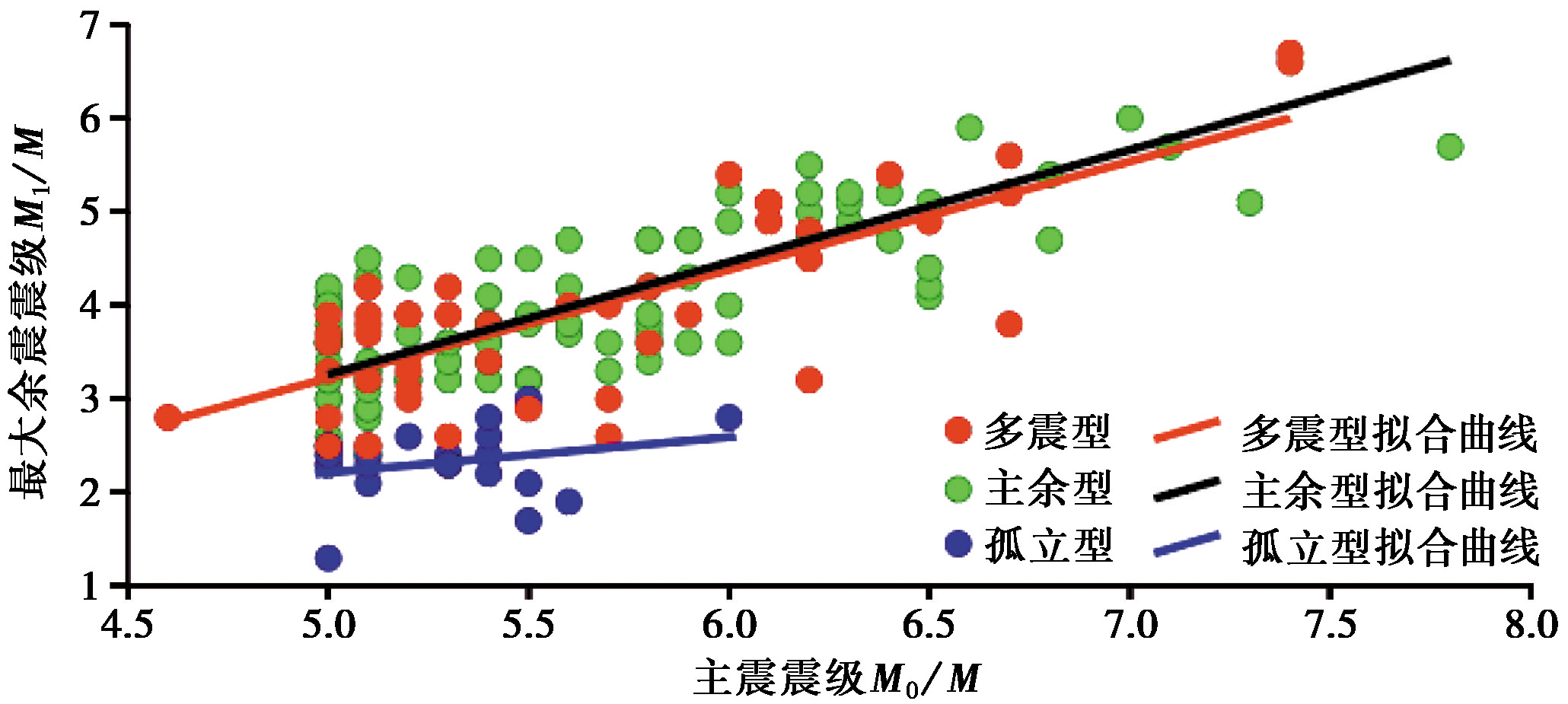
Fig. 2 Relationship between the magnitude of the largest aftershock and the mainshock.
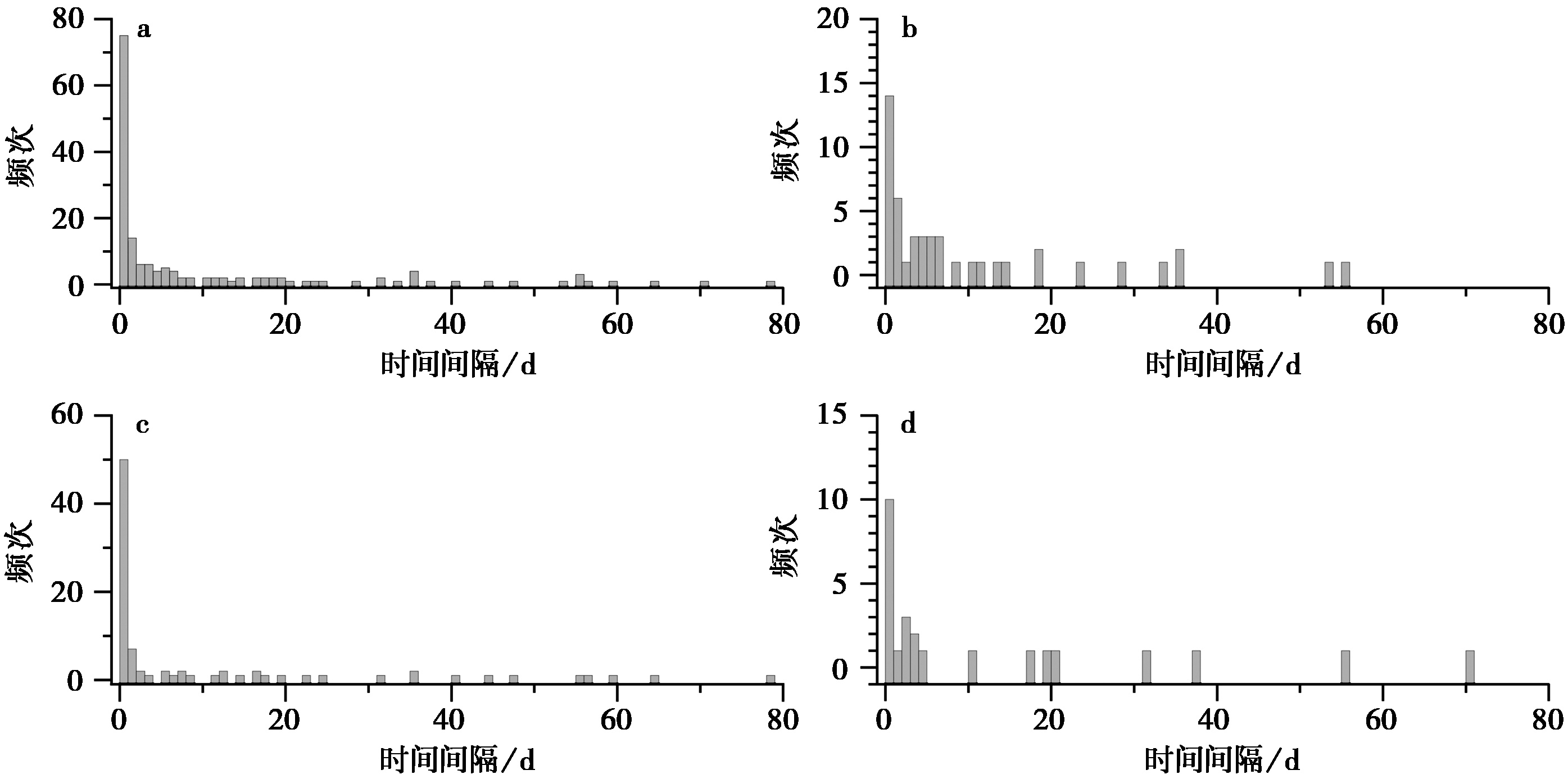
Fig. 3 Statistics of the time interval between the largest aftershock and the mainshock in the earthquake sequences.
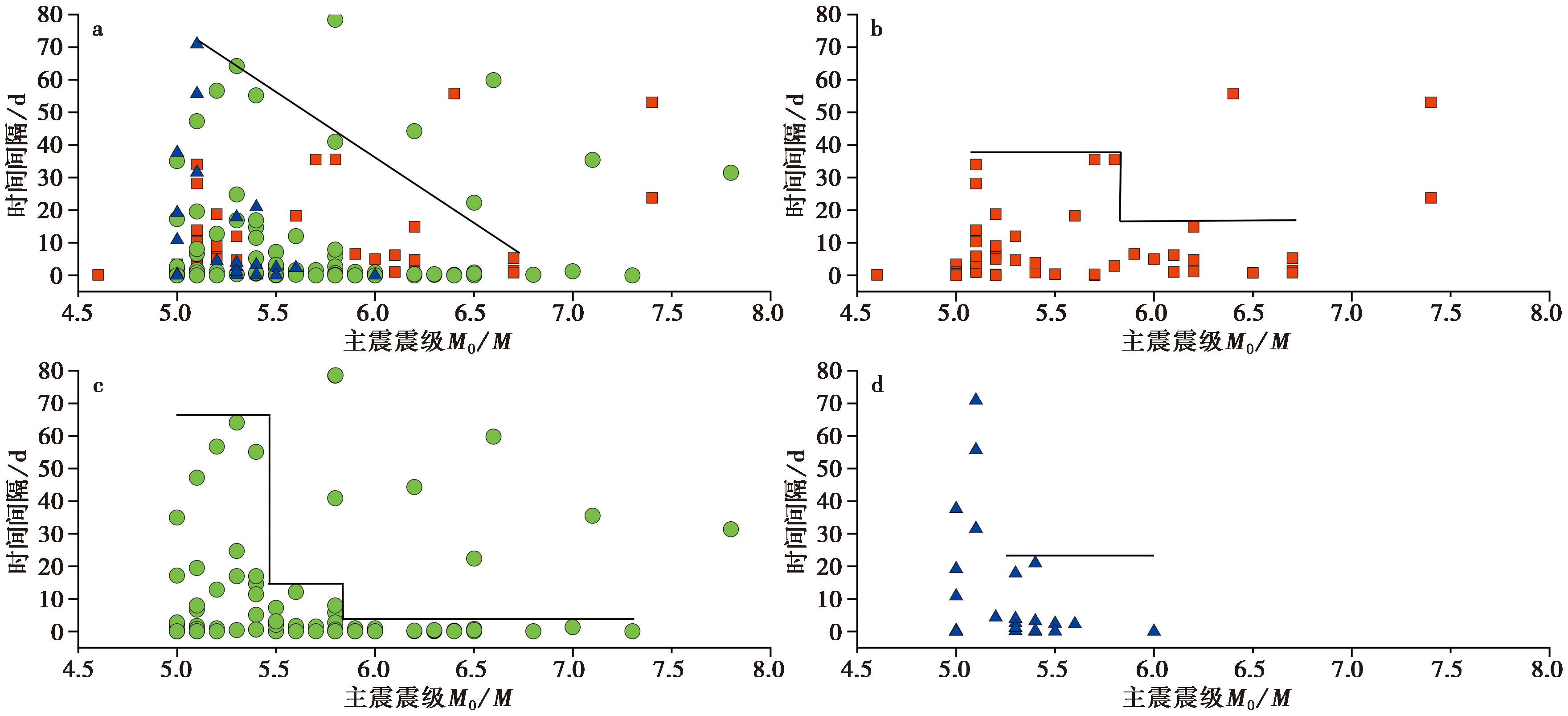
Fig. 4 Relationships between occurrence time of the maximum aftershock and magnitude of the mainshock for different sequence types.
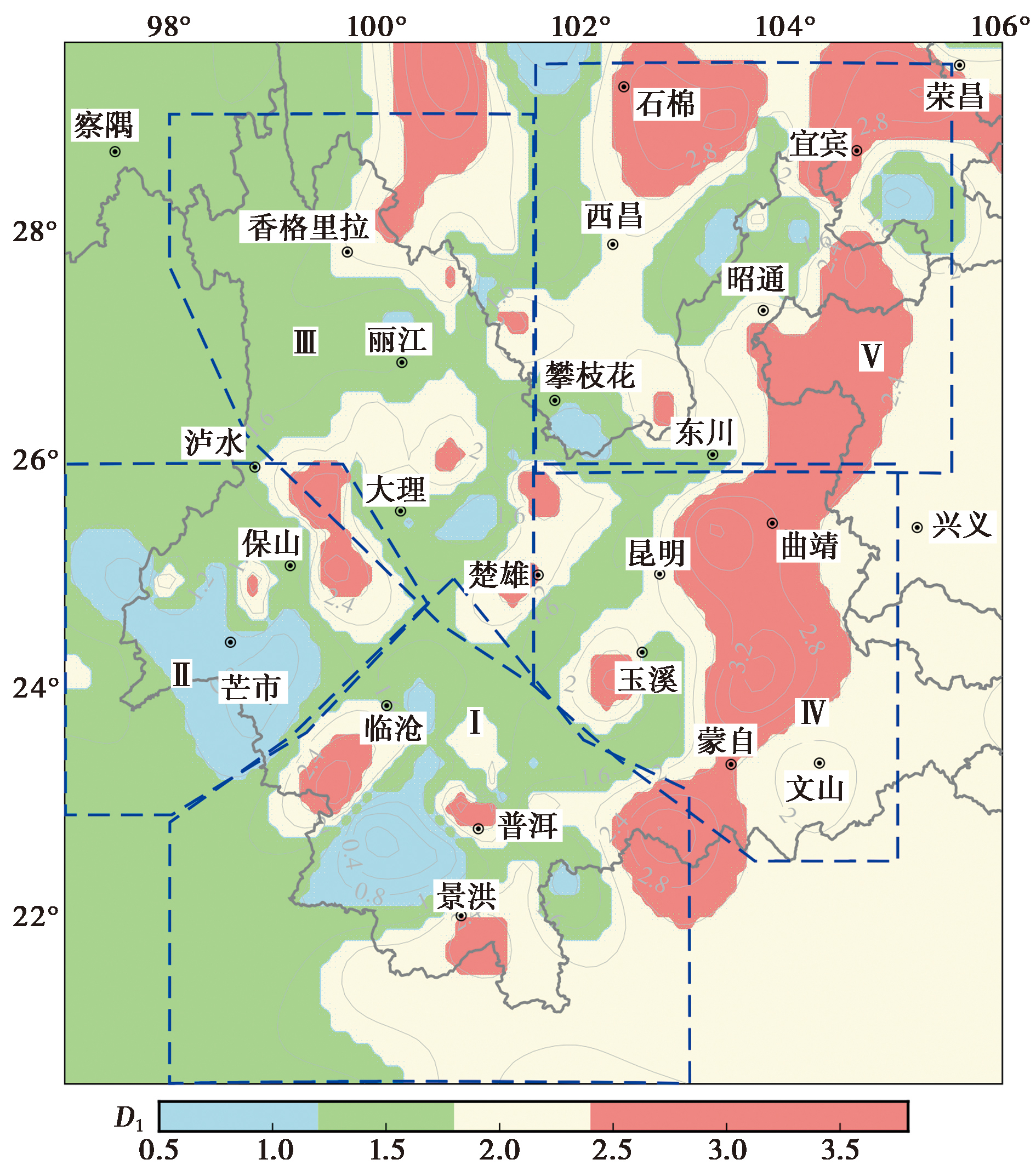
Fig. 5 Spatial distribution of D1 value in Yunnan and its neighboring areas.
| 构造分区 | 样本量 | D1平均值 | D1中位值 |
|---|---|---|---|
| 滇西南(Ⅰ区) | 35 | 1.665 | 1.660 |
| 小滇西(Ⅱ区) | 20 | 1.557 | 1.381 |
| 滇西北(Ⅲ区) | 42 | 1.838 | 1.817 |
| 滇中(Ⅳ区) | 24 | 2.095 | 1.943 |
| 滇东北(Ⅴ区) | 40 | 2.017 | 2.024 |
Table3 Statistics of the average and median values of D1 in different structure zones
| 构造分区 | 样本量 | D1平均值 | D1中位值 |
|---|---|---|---|
| 滇西南(Ⅰ区) | 35 | 1.665 | 1.660 |
| 小滇西(Ⅱ区) | 20 | 1.557 | 1.381 |
| 滇西北(Ⅲ区) | 42 | 1.838 | 1.817 |
| 滇中(Ⅳ区) | 24 | 2.095 | 1.943 |
| 滇东北(Ⅴ区) | 40 | 2.017 | 2.024 |

Fig. 6 Spatial distribution of earthquake sequence type of M≥5.0 in Yunnan and its neighboring areas.
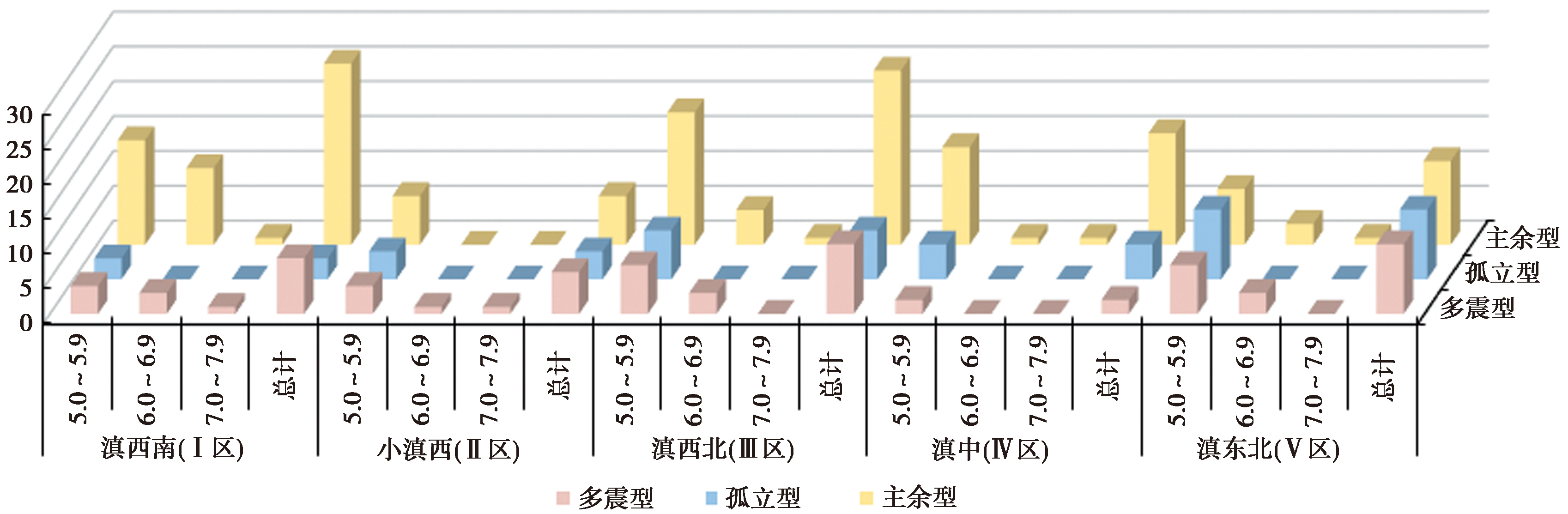
Fig. 7 Statistical analysis of earthquake sequence types in different structural areas.
| [1] |
安晓文, 常祖峰, 陈宇军, 等. 2018. 云南第四纪活动断裂分布图[CM]. 北京: 地震出版社: 31—45.
|
|
|
|
| [2] |
毕金孟, 蒋长胜, 曹付阳. 2023. 震后早期阶段余震预测研究进展[J]. 地球与行星物理论评, 54(5): 498—511.
|
|
|
|
| [3] |
常祖峰, 常昊, 李鉴林, 等. 2021a. 维西-乔后断裂全新世活动与古地震[J]. 地震地质, 43(4): 881—898. doi: 10.3969/j.issn.0253-4967.2021.04.009.
|
|
|
|
| [4] |
常祖峰, 常昊, 毛泽斌, 等. 2021b. 中缅交界苏典断裂的最新活动特征及意义[J]. 地震地质, 43(3): 559—575. doi: 10.3969/j.issn.0253-4967.2021.03.006.
|
|
|
|
| [5] |
樊文杰, 左可桢, 赵翠萍, 等. 2023. 2021年6月10日云南双柏地震序列发震构造分析[J]. 地球物理学报, 66(5): 1991—2006.
|
|
|
|
| [6] |
虢顺民, 向宏发, 徐锡伟, 等. 1999. 滇西南龙陵-澜沧断裂带: 大陆地壳上一条新生的破裂带[J]. 科学通报, 44(19): 2118—2121.
|
|
|
|
| [7] |
虢顺民, 徐锡伟, 向宏发, 等. 2002. 龙陵-澜沧新生断裂带地震破裂分段与地震预测研究[J]. 地震地质, 24(2): 133—144.
|
|
|
|
| [8] |
皇甫岗, 秦嘉政, 李忠华, 等. 2007. 云南地震类型分区特征研究[J]. 地震学报, 29(2): 142—150.
|
|
|
|
| [9] |
蒋海昆, 李永莉, 曲延军, 等. 2006a. 中国大陆中强地震序列类型的空间分布特征[J]. 地震学报, 28(4)389—398.
|
|
|
|
| [10] |
蒋海昆, 曲延军, 李永莉, 等. 2006b. 中国大陆中强地震余震序列的部分统计特征[J]. 地球物理学报, 49(4): 1110—1117.
|
|
|
|
| [11] |
蒋海昆, 杨马陵, 付虹, 等. 2015. 震后趋势判定参考指南[M]. 北京: 地震出版社:100—120.
|
|
|
|
| [12] |
蒋海昆, 张晓东, 单新建, 等. 2011 国家“十一五”科技支撑计划课题“水库地震预测方法研究(2008BAC38B03)”研究报告[R]: 38.
|
|
|
|
| [13] |
雷兴林, 苏金蓉, 王志伟. 2020. 四川盆地南部持续增长的地震活动及其与工业注水活动的关联[J]. 中国科学(地球科学), 50(11): 1505—1532.
|
|
|
|
| [14] |
李君, 王勤彩, 崔子健, 等. 2019. 川滇菱形块体东边界及邻区震源机制解与构造应力场空间分布特征[J]. 地震地质, 41(6): 1395—1412. doi: 10.3969/j.issn.0253-4967.2019.06.006.
|
|
|
|
| [15] |
李通, 郭志, 高星. 2020. 云南通海2018年8月地震序列重定位及震源机制[J]. 地震地质, 42(4): 881—891. doi: 10.3969/j. issn.0253-4967.2020.04.007.
|
|
|
|
| [16] |
梁萱, 唐新功, 余俊虎, 等. 2023. 滇东北地区三维电性构造研究[J]. 地球物理学报, 66(7): 2860—2874.
|
|
|
|
| [17] |
刘建华, 刘福田, 何建坤, 等. 2000. 攀西古裂谷的地震成像研究[J]. 中国科学(D辑), 30(S1): 9—15.
|
|
|
|
| [18] |
刘蒲雄, 陈修启, 吕晓健, 等. 1996. 地震序列的后续显著地震的预测研究[J]. 地震学报, 18(1): 27—33.
|
|
|
|
| [19] |
刘瑞丰, 陈运泰, 任枭, 等. 2007. 中国地震台网震级的对比[J]. 地震学报, 29(5): 467—476.
|
|
|
|
| [20] |
刘瑞丰, 陈运泰, 许绍燮, 等. 2017. 地震震级的规定(GB17740-2017)[S]. 北京: 中国标准出版社: 47—57.
|
|
|
|
| [21] |
M7专项工作组. 2012. 中国大陆大地震中—长期危险性研究[M]. 北京: 地震出版社:230—245.
|
|
Working Group of M7. 2012. Study on the Mid- to Long-term Potential of Large Earthquakes on the Chinese Continent[M]. Seismological Press, Beijing: 230—245 (in Chinese).
|
|
| [22] |
罗建伟, 李勇, 叶建庆. 2020. 溪洛渡水库影响区地震活动性分析[J]. 地震研究, 43(1): 118—124.
|
|
|
|
| [23] |
罗艳, 赵里, 田建慧. 2020. 2008年8月30日攀枝花 MS6.1 地震序列深度及震源区应力特征[J]. 中国科学(地球科学), 50(3): 404—417.
|
|
|
|
| [24] |
祁玉萍, 龙锋, 林圣杰, 等. 2021. 南北地震带中段及周边中强地震序列类型的特征[J]. 地震地质, 43(1): 177—196. doi: 10.3969/j.issn.0253-4967.2021.01.011.
|
|
|
|
| [25] |
秦嘉政, 皇甫岗, 钱晓东. 2005. 云南强震活动与预测方法研究[M]. 昆明: 云南科技出版社:21—30.
|
|
|
|
| [26] |
苏有锦, 李忠华, 赵小艳, 等. 2014. 全球7级以上地震序列研究[M]. 昆明: 云南大学出版社: 5—17.
|
|
|
|
| [27] |
苏有锦, 刘祖荫, 蔡明军, 等. 1999. 云南地区强震分布的深部地球介质背景[J]. 地震学报, 21(3): 313—332.
|
|
|
|
| [28] |
孙业君, 赵小艳, 黄耘, 等. 2017. 云南地区震源机制及应力场特征[J]. 地震地质, 39(2): 390—407.
|
|
|
|
| [29] |
王椿镛, 楼海, 吴建平, 等. 2002. 腾冲火山地热区地壳结构的地震学研究[J]. 地震学报, 24(3): 231—242.
|
|
|
|
| [30] |
王光明, 彭关灵, 赵小艳, 等. 2021. 基于地震序列时空分布特征分析维西-乔后断裂带地震危险性[J]. 地震研究, 44(3): 367—379.
|
|
|
|
| [31] |
王月, 孟令媛, 韩颜颜, 等. 2020. 2018年云南通海 MS5.0 震群序列重定位及震源区速度结构成像[J]. 地震研究, 43(2): 332—339.
|
|
|
|
| [32] |
闻学泽, 杜方, 易桂喜, 等. 2013. 川滇交界东段昭通、 莲峰断裂带的地震危险背景[J]. 地球物理学报, 56(10): 3361—3372.
|
|
|
|
| [33] |
闻学泽, 易桂喜. 2003. 川滇地区地震活动统计单元的新划分[J]. 地震研究, 26(S1): 1—9.
|
|
|
|
| [34] |
吴开统, 焦远碧, 吕培苓, 等. 1990. 地震序列概论[M]. 北京: 北京大学出版社:15—21.
|
|
|
|
| [35] |
吴小平, 付虹,
|
|
|
|
| [36] |
谢富仁, 刘光勋, 梁海庆. 1994. 滇西北及邻区现代构造应力场[J]. 地震地质, 16(4): 329—338.
|
|
|
|
| [37] |
许绍燮, 陆远忠, 郭履灿, 等. 1999. 地震震级的规定(GB17740-1999)[S]. 北京: 中国标准出版社.
|
|
|
|
| [38] |
易桂喜, 龙锋, 梁明剑, 等. 2019. 2019年6月17日四川长宁 MS6.0 地震序列震源机制解与发震构造分析[J]. 地球物理学报, 62(9): 3432—3447.
|
|
|
|
| [39] |
张广伟, 雷建设. 2015. 2011年云南腾冲5.2级双震发震机理[J]. 地球物理学报, 58(4): 1194—1204.
|
|
|
|
| [40] |
张建国, 刘丽芳, 李西. 2009. 姚安、 大姚中强震区地震构造初析[J]. 地震地质, 31(3): 536—534.
|
|
|
|
| [41] |
张致伟, 程万正, 梁明剑, 等. 2012. 四川自贡—隆昌地区注水诱发地震研究[J]. 地球物理学报, 55(5): 1635—1645.
|
|
|
|
| [42] |
赵小艳, 蒋海昆, 孟令媛, 等. 2024. 基于决策树的川滇地区地震序列类型判定特征重要性研究[J]. 地震研究, 47(3): 321—335.
|
|
|
|
| [43] |
|
| [44] |
|
| [45] |
|
| [46] |
|
| [47] |
|
| [48] |
|
| [49] |
DOI URL |
| No related articles found! |
| Viewed | ||||||
|
Full text |
|
|||||
|
Abstract |
|
|||||
Copyright © SEISMOLOGY AND GEOLOGY, All Rights Reserved.
Tel: 010-62009049/9063 E-mail: dzdz@ies.ac.cn
Powered by Beijing Magtech Co., Ltd.