
SEISMOLOGY AND GEOLOGY ›› 2026, Vol. 48 ›› Issue (1): 64-80.DOI: 10.3969/j.issn.0253-4967.20230138
• Research pape • Previous Articles Next Articles
LATE QUATERNARY ACTIVITY OF PARALLEL NORMAL FAULTS IN THE SOUTHERN MARGIN OF YUGUANG FAULTED BASIN IN SHANXI RIFT AND ITS SEISMOGEOLOGICAL SIGNIFICANCE
ZOU Jun-jie1,2)( ), HE Hong-lin2,3),*(), SHAO Zhi-gang1), WEI Zhan-yu2,3), SHI Feng2,3), ZHANG Bo4), GENG Shuang2), ZHAO Jia-hao5)
- 1)
Institute of Earthquake Forecasting ,China Earthquake Administration
2)State Key Laboratory of Earthquake Dynamics and Forecasting(Institute of Geology ,China Earthquake Administration)
3)Shanxi Taiyuan Continental Rift Dynamics National Observation and Research Station
4)School of Earth and Space Sciences ,Peking University
5)China University of Geosciences(Beijing)
-
Received:2025-01-21Revised:2025-06-30Online:2026-02-20Published:2026-03-14
山西地堑系蔚广盆地南缘断裂带平行正断层的晚第四纪活动及其地震地质意义
邹俊杰1,2)(), 何宏林2,3),*(), 邵志刚1), 魏占玉2,3), 石峰2,3), 张波4), 耿爽2), 赵家豪5)
- 1)
中国地震局地震预测研究所
2)地震动力学与强震预测全国重点实验室(中国地震局地质研究所)
3)山西太原大陆裂谷动力学国家野外科学观测研究站
4)北京大学 ,地球与空间科学学院
5)中国地质大学(北京)
-
通讯作者:* 何宏林, 男, 1964年生, 研究员, 现主要研究方向为活动构造、 地震地质和构造地貌, E-mail: hehonglin123@vip.sina.com。 -
作者简介:邹俊杰, 男, 1991 年生, 副研究员, 主要从事活动构造、 地震地质和构造地貌学、 地震活动性分析研究, E-mail: junjiezou_ucas@126.com。
-
基金资助:地震动力学与强震预测全国重点实验室开放基金(LED2024B03); 国家自然科学基金(U1939201); 国家自然科学基金(42202255); 中国地震局地震预测研究所基本科研业务专项(CEAIEF20230208); 中国地震局地震预测研究所基本科研业务专项(2024030101)

Cite this article
ZOU Jun-jie, HE Hong-lin, SHAO Zhi-gang, WEI Zhan-yu, SHI Feng, ZHANG Bo, GENG Shuang, ZHAO Jia-hao. LATE QUATERNARY ACTIVITY OF PARALLEL NORMAL FAULTS IN THE SOUTHERN MARGIN OF YUGUANG FAULTED BASIN IN SHANXI RIFT AND ITS SEISMOGEOLOGICAL SIGNIFICANCE[J]. SEISMOLOGY AND GEOLOGY, 2026, 48(1): 64-80.
邹俊杰, 何宏林, 邵志刚, 魏占玉, 石峰, 张波, 耿爽, 赵家豪. 山西地堑系蔚广盆地南缘断裂带平行正断层的晚第四纪活动及其地震地质意义[J]. 地震地质, 2026, 48(1): 64-80.
share this article
Add to citation manager EndNote|Ris|BibTeX
URL: https://www.dzdz.ac.cn/EN/10.3969/j.issn.0253-4967.20230138
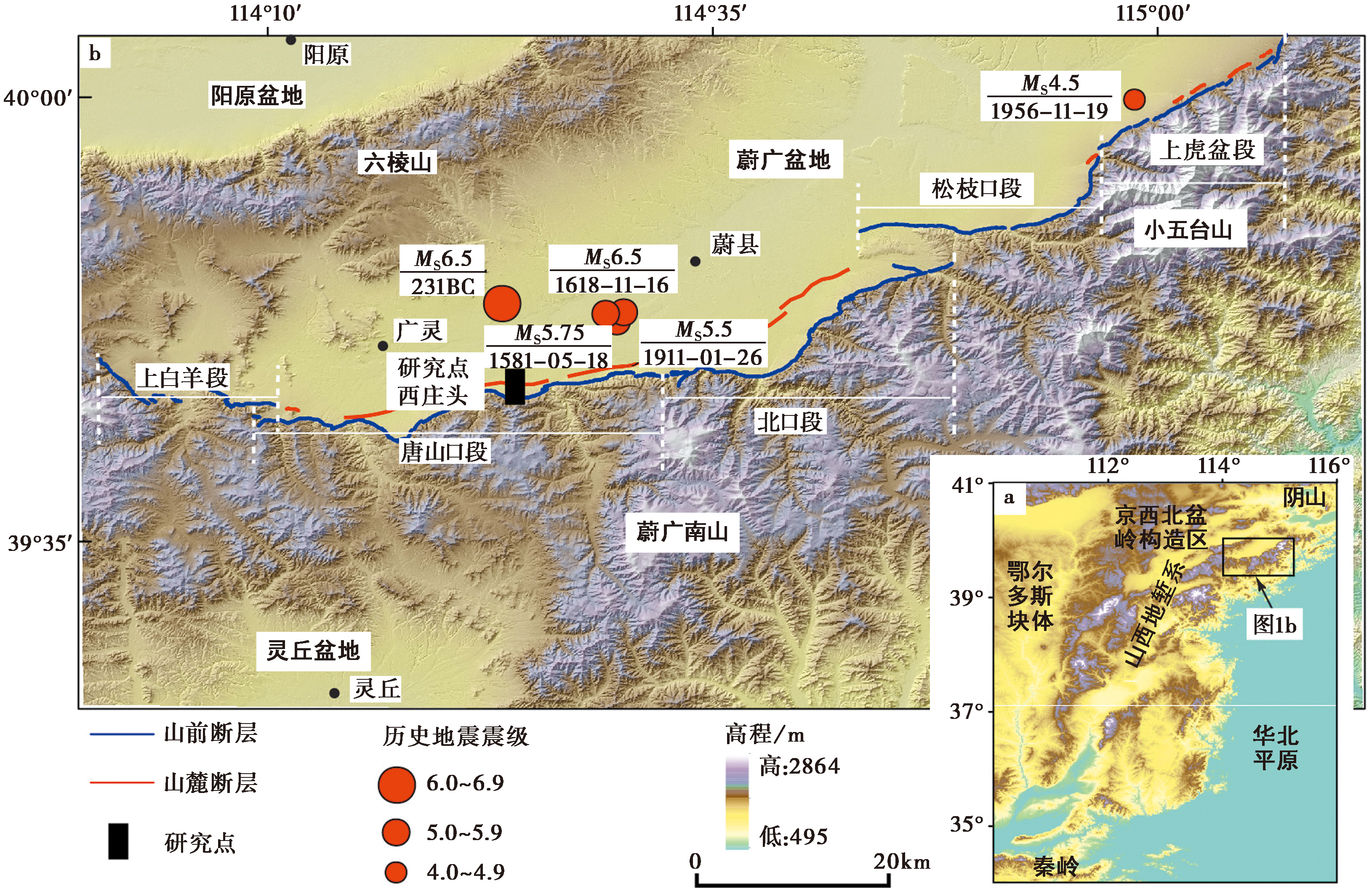
Fig. 1 The geometric distribution, segmentation features and the survey sites of the Yuguang Basin southern marginal fault.
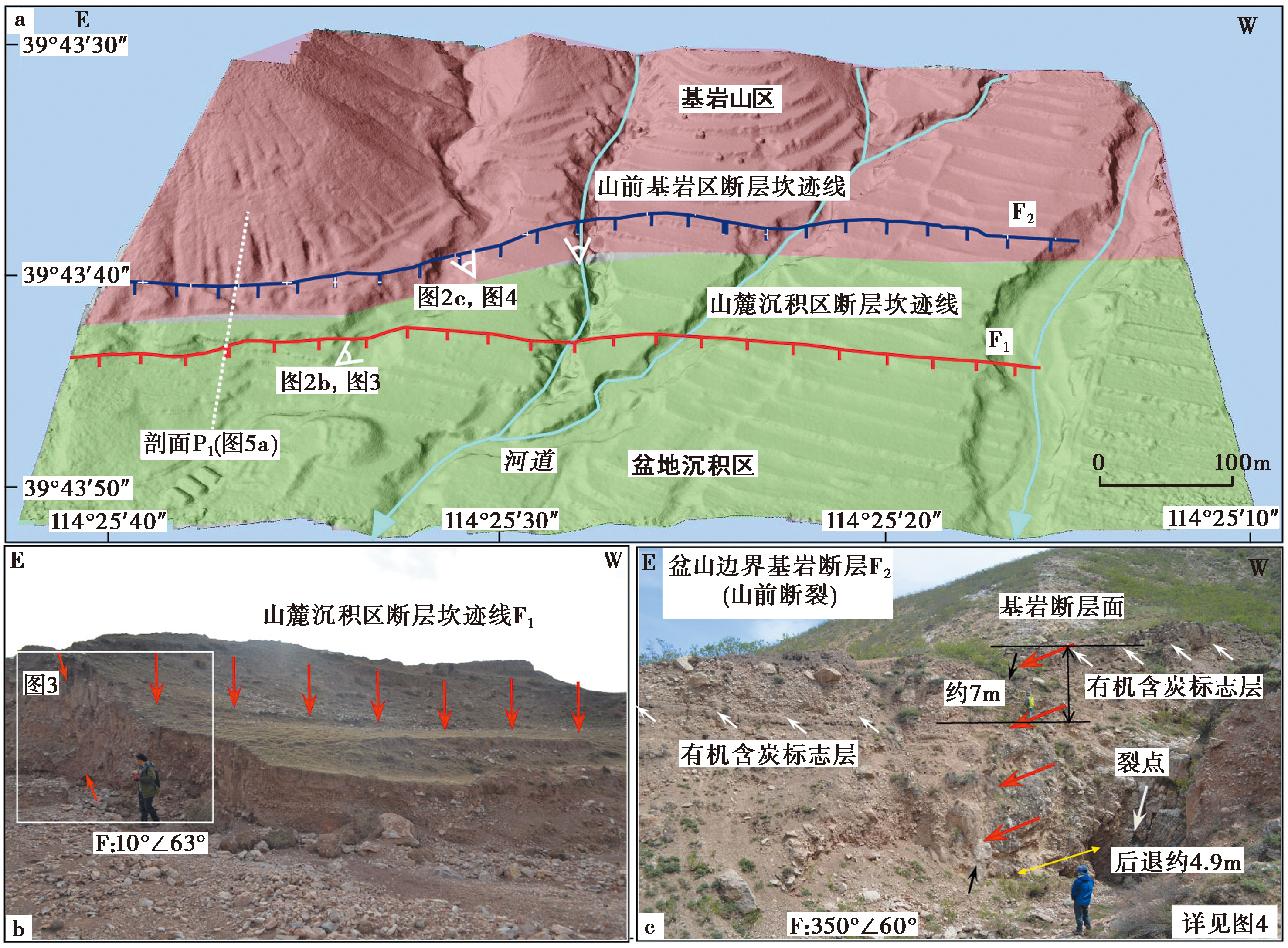
Fig. 2 Drone aerial survey, geological investigation, and geomorphological features at the Xizhuangtou survey site.

Fig. 3 Geological section of the Yuguang Basin southern marginal Fault F1 in the piedmont area at Xizhuangtou.
| 样品编号 | 深度 /m | 含水量 /% | U① /Bg·kg-1 | Th① /Bg·kg-1 | K① /Bg·kg-1 | /Gy·ka-1 | /Gy | 年龄 /ka |
|---|---|---|---|---|---|---|---|---|
| XZTC-01 | 1.1 | 10 | 36.5±6.4 | 55.2±0.8 | 839.6±16.2 | 4.6±0.3 | 95.1±5.2 | 20.8±1.8 |
| XZTC-02 | 2.2 | 10 | 23.1±6.1 | 44.1±0.7 | 619.8±12.8 | 3.6±0.2 | 83.5±5.2 | 23.4±2.1 |
| XZTC-03 | 2.5 | 10 | 26.7±6.0 | 40.4±0.7 | 587.5±12.2 | 3.4±0.2 | 77.0±7.9 | 22.5±2.7 |
Table1 Optically Stimulated Luminescence(OSL) age of samples from the Yuguang Basin southern marginal fault in the piedmont area at Xiguangtou village
| 样品编号 | 深度 /m | 含水量 /% | U① /Bg·kg-1 | Th① /Bg·kg-1 | K① /Bg·kg-1 | /Gy·ka-1 | /Gy | 年龄 /ka |
|---|---|---|---|---|---|---|---|---|
| XZTC-01 | 1.1 | 10 | 36.5±6.4 | 55.2±0.8 | 839.6±16.2 | 4.6±0.3 | 95.1±5.2 | 20.8±1.8 |
| XZTC-02 | 2.2 | 10 | 23.1±6.1 | 44.1±0.7 | 619.8±12.8 | 3.6±0.2 | 83.5±5.2 | 23.4±2.1 |
| XZTC-03 | 2.5 | 10 | 26.7±6.0 | 40.4±0.7 | 587.5±12.2 | 3.4±0.2 | 77.0±7.9 | 22.5±2.7 |
| 样品编号 | 深度/m | (13C/12C)/‰ | 放射性碳① | 日历年龄② | 样品描述 |
|---|---|---|---|---|---|
| XZTC-14C | 1.2 | -23.6 | (28390±130)a BP | 30840—29840BC | 炭屑物质 |
Table2 Radiocarbon age(14C) and calibrated calendar date of a sample from the Yuguang Basin southern marginal fault in the piedmont area at Xiguangtou village
| 样品编号 | 深度/m | (13C/12C)/‰ | 放射性碳① | 日历年龄② | 样品描述 |
|---|---|---|---|---|---|
| XZTC-14C | 1.2 | -23.6 | (28390±130)a BP | 30840—29840BC | 炭屑物质 |

Fig. 4 Geological section of the Yuguang Basin southern marginal Fault F2 in the mountain front area at Xizhuangtou
| 样品编号 | 深度/m | (13C/12C)/‰ | 放射性碳① | 日历年龄② | 样品描述 |
|---|---|---|---|---|---|
| 14C-01 | 1.8 | -24.3 | (8580±40)a BP | 7605—7570BC | 有机沉积物 |
| 14C-02 | 2.2 | -26.3 | (8970±30)a BP | 8035—8015BC | 炭屑物质 |
| 14C-03 | 3.5 | -24.8 | (7420±40)a BP | 6395—6225BC | 有机沉积物 |
| 14C-04 | 4.2 | -25.7 | (8240±30)a BP | 7350—7175BC | 炭屑物质 |
Table3 Radiocarbon age(14C) and calibrated calendar date of samples from the Yuguang Basin southern marginal fault in the mountain front area at Xiguangtou village
| 样品编号 | 深度/m | (13C/12C)/‰ | 放射性碳① | 日历年龄② | 样品描述 |
|---|---|---|---|---|---|
| 14C-01 | 1.8 | -24.3 | (8580±40)a BP | 7605—7570BC | 有机沉积物 |
| 14C-02 | 2.2 | -26.3 | (8970±30)a BP | 8035—8015BC | 炭屑物质 |
| 14C-03 | 3.5 | -24.8 | (7420±40)a BP | 6395—6225BC | 有机沉积物 |
| 14C-04 | 4.2 | -25.7 | (8240±30)a BP | 7350—7175BC | 炭屑物质 |
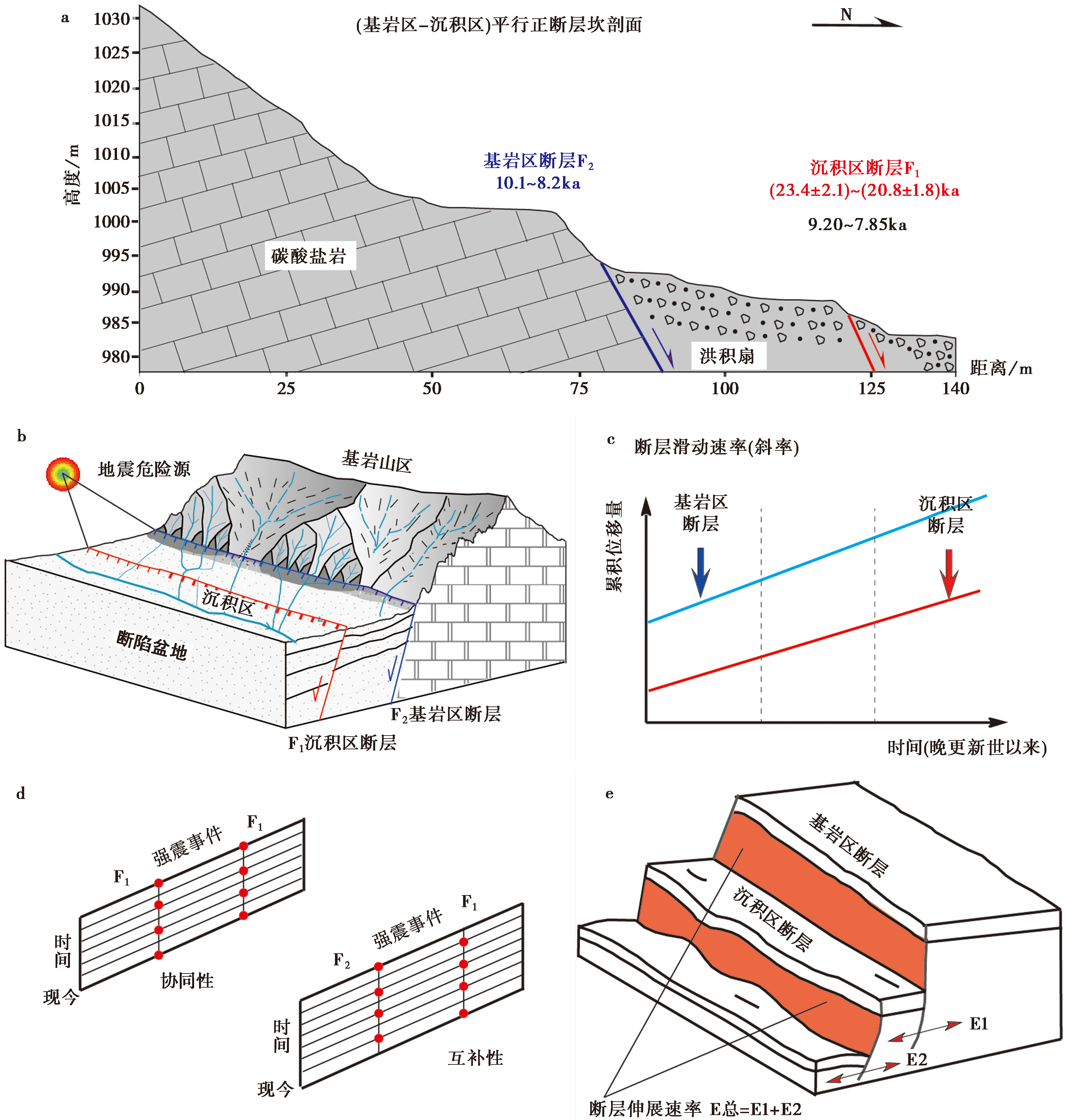
Fig. 5 The role of mountain front and piedmont faults in regional seismic risk assessment and bearing deformation of the basin-mountain boundary zone.
| [1] |
毕海芸, 郑文俊, 曾江源, 等. 2017. SfM摄影测量方法在活动构造定量研究中的应用[J]. 地震地质, 39(4): 656—674. doi: 10.3969/j.issn.0253-4967.2017.04.003.
|
|
|
|
| [2] |
曹鹏举, 程三友, 林海星, 等, 2021. DEM在构造地貌定量分析中的应用与展望[J]. 地质力学学报, 27(6): 949—962.
|
|
|
|
| [3] |
程绍平, 杨桂枝. 1998. 河北蔚县九宫口断层重叠带的断层生长、 位移转移和演化[J]. 地震地质, 20(1): 1—8.
|
|
|
|
| [4] |
邓飞, 窦爱霞, 袁小祥. 2017. 轻小型无人机在房屋建筑结构类型调查中的应用[J]. 震灾防御技术, 12(4): 786—796.
|
|
|
|
| [5] |
邓起东, 陈立春, 冉勇康. 2004. 活动构造定量研究与应用[J]. 地学前缘, 11(4): 383—392.
|
|
|
|
| [6] |
邓起东, 张培震, 冉勇康. 2003. 中国活动构造与地震活动[J]. 地学前缘, 10(S1): 66—73.
|
|
|
|
| [7] |
国家地震局地震地质大队, 北京大学地质地理系. 1979. 临汾盆地活动构造体系与地震[G]//中国地质科学院地质力学研究所编. 地质力学论丛(5). 北京: 科学出版社: 140—150.
|
|
Seismo-geological Brigade, State Seismological Bureau, Geology and Geography Department, Peking University. 1979. Active tectonic system and earthquake in Linfen Basin[G]//Institute of Geo-mechanics, Chinese Academy of Geological Sciences(eds). Collected Papers and Notes on Geo-mechanics, No. 5. Science Press, Beijing: 140—150 (in Chinese).
|
|
| [8] |
国家地震局“鄂尔多斯周缘活动断裂系”课题组. 1988. 鄂尔多斯周缘活动断裂系[M]. 北京: 地震出版社.
|
|
The Research Group on Active Fault System around Ordos Massif, State Seismological Bureau. 1988. Active Fault System around Ordos Massif[M]. Seismological Press, Beijing (in Chinese).
|
|
| [9] |
韩帅, 吴中海, 高扬, 等. 2022. 2022年1月8日青海门源 MS6.9 地震地表破裂考察的初步结果及对冷龙岭断裂活动行为和区域强震危险性的启示[J]. 地质力学学报, 28(2): 155—168.
|
|
|
|
| [10] |
江娃利, 郭慧, 谢新生, 等, 2012. 交城断裂 1︰5万条带状地质填图[CM]. 北京: 中国地震局地壳应力研究所.
|
|
|
|
| [11] |
李彦宝, 2013. 鄂尔多斯周缘几个盆地的构造组合及其强震响应[D]. 北京: 中国地震局地质研究所.
|
|
|
|
| [12] |
李有利, 王怡然, 司苏沛, 等. 2013. 山西中条山北麓断裂中段活动速率[C]. 中国地球物理学会第二十九届年会, 昆明: 14—15.
|
|
|
|
| [13] |
刘静, 汪良谋. 1996. 震级与地震破裂参数统计关系式系数的讨论[J]. 地震地质, 18(3): 225—236.
|
|
|
|
| [14] |
冉勇康, 王虎, 李彦宝, 等. 2012. 中国大陆古地震研究的关键技术与案例解析(1): 走滑活动断裂的探槽地点、布设与事件识别标志[J]. 地震地质, 34(2): 197—210. doi: 10.3969/j.issn.0253-4967.2012.02.001.
|
|
|
|
| [15] |
冉勇康, 王虎, 杨会丽, 等. 2014. 中国大陆古地震研究的关键技术与案例解析(4): 古地震定年技术的样品采集和事件年代分析[J]. 地震地质, 36(4): 939—955. doi: 10.3969/j.issn.0253-4967.2014.04.001.
|
|
|
|
| [16] |
任俊杰. 2013. 龙日坝断裂带晚第四纪活动及与其周边断裂的运动学关系[D]. 北京: 中国地震局地质研究所.
|
|
|
|
| [17] |
孙稳, 何宏林, 魏占玉, 等. 2019. 基于无人机航测获取高分辨率DEM数据的断层几何结构精细解译与分析: 以海原断裂唐家坡为例[J]. 地震地质, 41(6): 1350—1365. doi: 10.3969/j.issn.0253-4967.2019.06.003.
|
|
|
|
| [18] |
田勤俭, 王林, 李德文, 等, 2012. 蔚广盆地南缘断裂1︰5万条带状地质填图[CM]. 北京: 中国地震局地震预测研究所.
|
|
|
|
| [19] |
王林. 2013. 盆地边界活动正断层多尺度构造地貌研究: 以京西北蔚广盆地南缘断裂带为例[D]. 北京: 中国地震局地质研究所.
|
|
|
|
| [20] |
王林, 田勤俭, 李德文, 等. 2011. 京西北蔚县-广灵半地堑盆地南缘断裂带的断层生长研究[J]. 地震地质, 33(4): 828—838. doi: 10.3969/j.issn.0253-4967.2011.04.008.
|
|
|
|
| [21] |
王林, 田勤俭, 李德文, 等. 2017. 蔚广盆地南缘断裂带唐山口段山前断层活动性研究[J]. 震灾防御技术, 12(2): 319—328.
|
|
|
|
| [22] |
吴中海. 2019. 活断层的定义与分类: 历史、现状和进展[J]. 地球学报, 40(5): 661—697.
|
|
|
|
| [23] |
徐锡伟, 吴为民, 张先康, 等. 2002. 首都圈地区地壳最新构造变动与地震[M]. 北京: 科学出版社.
|
|
|
|
| [24] |
徐岳仁, 何宏林, 李文巧, 等, 2018. 1303年洪洞地震宏观震中修订的新证据[J]. 地震地质, 40(5): 945—966. doi: 10.3969/j.issn.0253-4967.2018.05.001.
|
|
|
|
| [25] |
于慎谔. 2013. 恒山北麓断裂1︰5万条带状地质填图[CM]. 北京: 中国地震局地壳应力研究所.
|
|
|
|
| [26] |
张培震, 邓起东, 张竹琪, 等. 2013. 中国大陆的活动断裂、地震灾害及其动力过程[J]. 中国科学(地球科学), 43(10): 1607—1620.
|
|
|
|
| [27] |
张世民, 杨景春, 苏宗正. 1989. 公元1038年定襄地震的地质、 地貌遗迹的研究[J]. 华北地震科学, 7(3): 22—30.
|
|
|
|
| [28] |
郑文俊, 张培震, 袁道阳, 等, 2019. 中国大陆活动构造基本特征及其对区域动力过程的控制[J]. 地质力学学报, 25(5): 699—721.
|
|
|
|
| [29] |
周廷儒, 李华章, 李清泗, 等. 1991. 泥河湾盆地新生代古地理研究[M]. 北京: 科学出版社.
|
|
|
|
| [30] |
邹俊杰, 何宏林, 石峰, 等. 2019. 利用灰岩断层面形貌特征识别罗云山山前断裂古地震信息[J]. 地震地质, 41(2): 400—418. doi: 10.3969/j.issn.0253-4967.2019.02.009.
|
|
|
|
| [31] |
邹俊杰, 何宏林, 周永胜, 等. 2022. 断层面高精度形貌对比研究: 基岩区古地震研究的选址[J]. 第四纪研究, 42(3): 768—782.
|
|
|
|
| [32] |
|
| [33] |
|
| [34] |
|
| [35] |
|
| [36] |
|
| [37] |
DOI URL |
| [38] |
DOI URL |
| [1] | ZOU Jun-jie, HE Hong-lin, ZHOU Yong-sheng, WEI Zhan-yu, SHI Feng, GENG Shuang, SU Peng, SUN Wen. APPLICATION OF SMALL UNMANNED AERIAL VEHICLE(sUAV)IN THE SELECTION OF SUITABLE SITES IN PALEO-SEISMIC STUDY OF BEDROCK FAULT SURFACES [J]. SEISMOLOGY AND GEOLOGY, 2023, 45(4): 833-846. |
| [2] | ZHAO Ling-qiang, ZHAN Yan, WANG Qing-liang, SUN Xiang-yu, HAN Jing, CAO Cong, ZHANG Song, CAI Yan. THE SEISMOGENIC STRUCTURE OF THE 1303 HONGTONG M8 EARTHQUAKE INFERRED FROM MAGNETOTELLURIC IMAGING [J]. SEISMOLOGY AND GEOLOGY, 2022, 44(3): 686-700. |
| [3] | HUANG Shuai-tang, CHANG Xiang-de, MA Jian, HU Wei-hua, REN Jing, LIU Jian-ming, ZHANG Wen-xiu, LAI Ai-jing. A STUDY ON THE SCARPS ALONG THE EASTERN SECTION OF THE KUSONGMUQIKE PIEDMONT FAULT AT THE NORTHERN FOOT OF TIANSHAN [J]. SEISMOLOGY AND EGOLOGY, 2022, 44(1): 20-34. |
| [4] | LIU Zhi-cheng, GAO Zhan-wu, XU Wei, WANG Ji, WANG Wan-he, WANG Wan-he. TECTONIC CHARACTERISTICS OF BAOTOU UPLIFT IN HETAO DEPRESSION ZONE [J]. SEISMOLOGY AND GEOLOGY, 2019, 41(5): 1105-1122. |
| [5] | ZOU Jun-jie, HE Hong-lin, SHI Feng, WEI Zhan-yu, SU Peng, YAN Xiao-bing. IDENTIFICATION OF PALEO-EARTHQUAKES OF LUOYUNSHAN PIEDMONT FAULT BY QUANTITATIVE MORPHOLOGY OF LIMESTONE FAULT SURFACES [J]. SEISMOLOGY AND GEOLOGY, 2019, 41(2): 400-418. |
| [6] | XU Yue-ren, HE Hong-lin, LI Wen-qiao, ZHANG Wei-heng, TIAN Qin-jian. NEW EVIDENCES FOR AMENDMENT OF MACRO-EPICENTER LOCATION OF 1303AD HONGTONG EARTHQUAKE [J]. SEISMOLOGY AND GEOLOGY, 2018, 40(5): 945-966. |
| [7] | XU Yue-ren, ZHANG Wei-heng, LI Wen-qiao, HE Hong-lin, TIAN Qin-jian. DISTRIBUTION CHARACTERISTICS OF THE AD 1556 HUAXIAN EARTHQUAKE TRIGGERED DISASTERS AND ITS IMPLICATIONS [J]. SEISMOLOGY AND GEOLOGY, 2018, 40(4): 721-737. |
| [8] | LEI Qi-yun, ZHANG Pei-zhen, ZHENG Wen-jun, DU Peng, WANG Wei-tao, YU Jing-xing, XIE Xiao-feng. GEOLOGICAL AND GEOMORPHIC EVIDENCE FOR DEXTRAL STRIKE SLIP OF THE HELAN SHAN WEST-PIEDMONT FAULT AND ITS TECTONIC IMPLICATIONS [J]. SEISMOLOGY AND GEOLOGY, 2017, 39(6): 1297-1315. |
| [9] | BI Li-si, HE Hong-lin, XU Yue-ren, WEI Zhan-yu, SHI Feng, SUN Hao-yue. RESPONSES OF THE S-A DOUBLE-LOG GRAPH, CONCAVITY INDEX AND STEEPNESS INDEX OF CHANNELS TO THE TECTO-NIC MOVEMENT OF THE HUOSHAN PIEDMONT FAULT [J]. SEISMOLOGY AND GEOLOGY, 2017, 39(6): 1158-1172. |
| [10] | XU Wei, YANG Yuan-yuan, YUAN Zhao-de, LIU Zhi-cheng, GAO Zhan-wu. LATE QUATERNARY FAULTED LANDFORMS AND FAULT ACTIVITY OF THE HUASHAN PIEDMONT FAULT [J]. SEISMOLOGY AND GEOLOGY, 2017, 39(3): 587-604. |
| [11] | WEI Lei-hua, HE Hong-lin, JIANG Han-chao, XU Yue-ren, WEI Zhan-yu, GAO Wei, ZOU Jun-jie. significance of high-resolution loess stratification based on grain size and magnetic susceptibility analysis to paleo-earthquake study: a case study of dongyugou loess section, at hongtong, shanxi province [J]. SEISMOLOGY AND GEOLOGY, 2015, 37(4): 1096-1114. |
| [12] | JIAO Qi-song, ZHANG Jing-fa, JIANG Wen-liang. GEOMORPHIC FEATURES AND REMOTE SENSING RESEARCH OF FAULT ACTIVITY ALONG THE SOUTHEASTERN PIEDMONT FAULTS OF NYENCHEN TONGLHA MOUNTAINS [J]. SEISMOLOGY AND GEOLOGY, 2015, 37(2): 613-626. |
| [13] | LEI Qi-yun, CHAI Chi-zhang, DU Peng, YU Jing-xing, WANG Yin, XIE Xiao-feng. THE SEISMOGENIC STRUCTURE OF THE M8.0 PINGLUO EARTHQUAKE IN 1739 [J]. SEISMOLOGY AND GEOLOGY, 2015, 37(2): 413-429. |
| [14] | HE Hong-lin, WEI Zhan-yu, BI Li-si, XU Yue-ren. IDENTIFY PALEO-EARTHQUAKES USING QUANTITATIVE MORPHOLOGY OF BEDROCK FAULT SURFACE——A CASE STUDY ON THE HUOSHAN PIEDMONT FAULT [J]. SEISMOLOGY AND GEOLOGY, 2015, 37(2): 400-412. |
| [15] | BI Li-si, HE Hong-lin, XU Yue-ren, WEI Zhan-yu, SHI Feng. THE EXTRACTION OF KNICKPOINT SERIES BASED ON THE HIGH RESOLUTION DEM DATA AND THE IDENTIFICATION OF PALEO-EARTHQUAKE SERIES —A CASE STUDY OF THE HUOSHAN MTS.PIEDMONT FAULT [J]. SEISMOLOGY AND GEOLOGY, 2011, 33(4): 963-977. |
| Viewed | ||||||
|
Full text |
|
|||||
|
Abstract |
|
|||||
Copyright © SEISMOLOGY AND GEOLOGY, All Rights Reserved.
Tel: 010-62009049/9063 E-mail: dzdz@ies.ac.cn
Powered by Beijing Magtech Co., Ltd.