SEISMOLOGY AND GEOLOGY ›› 2026, Vol. 48 ›› Issue (2): 314-328.DOI: 10.3969/j.issn.0253-4967.20240124

• Research paper • Previous Articles     Next Articles

QUANTIFYING THERMAL DAMAGE OF QUARTZDIORITE: A COMPARISON STUDY

SHEN Feng-ming1)(), WANG Li-feng1),*(), GUO Yan-shuang1), QI Wen-bo1), ZHOU Bin2)   

  1. 1) State Key Laboratory of Earthquake Dynamics and Forecasting, Institute of Geology, China Earthquake Administration, Beijing 100029, China
    2) College of Mining Engineering, Taiyuan University of Technology, Taiyuan 030024, China
  • Received:2025-01-18 Revised:2025-04-17 Online:2026-04-20 Published:2026-05-14
  • Contact: WANG Li-feng

定量岩石热损伤的方法对比研究——以石英闪长岩为例

申丰铭1)(), 王丽凤1),*(), 郭彦双1), 齐文博1), 周斌2)   

  1. 1) 地震动力学与强震预测全国重点实验室(中国地震局地质研究所) 北京 100029
    2) 太原理工大学, 矿业工程学院, 太原 030024;
  • 通讯作者: 王丽凤
  • 作者简介:

    申丰铭, 男, 1996年生, 现为中国地震局地质研究所固体地球物理学专业在读博士研究生, 主要研究方向为地震动力学, E-mail:

  • 基金资助:
    中国地震局地质研究所基本科研业务专项(IGCEA2006); 国家自然科学基金(U2239204)

Abstract:

Rock damage is a widespread natural phenomenon closely associated with earthquakes, landslides, and engineering practices such as geothermal energy development and nuclear-waste disposal. For instance, fault damage zones influence seismic energy release, whereas in geothermal exploitation thermal damage can modify the physical and mechanical properties of rocks, thereby affecting extraction efficiency and reservoir stability. Consequently, thermal damage in rocks has become a key topic in geomechanics with increasing engineering relevance. Previous studies show that heating-cooling cycles induce microstructural changes, including mineral thermal expansion and crack initiation/propagation, which in turn lead to macroscopic degradation of mechanical properties. Thermal damage also alters other physical parameters, such as thermal conductivity, porosity, and compressive strength. Despite growing practical demand, systematic comparisons among methods for evaluating rock damage remain limited. To address needs in geothermal engineering and earthquake-related studies, we conduct thermal-damage experiments on quartz diorite and compare several quantification approaches, including P-wave(longitudinal)velocity, quality factor(Q), total signal power, and mass-loss rate. We further evaluate the temperature ranges over which each method is most applicable.
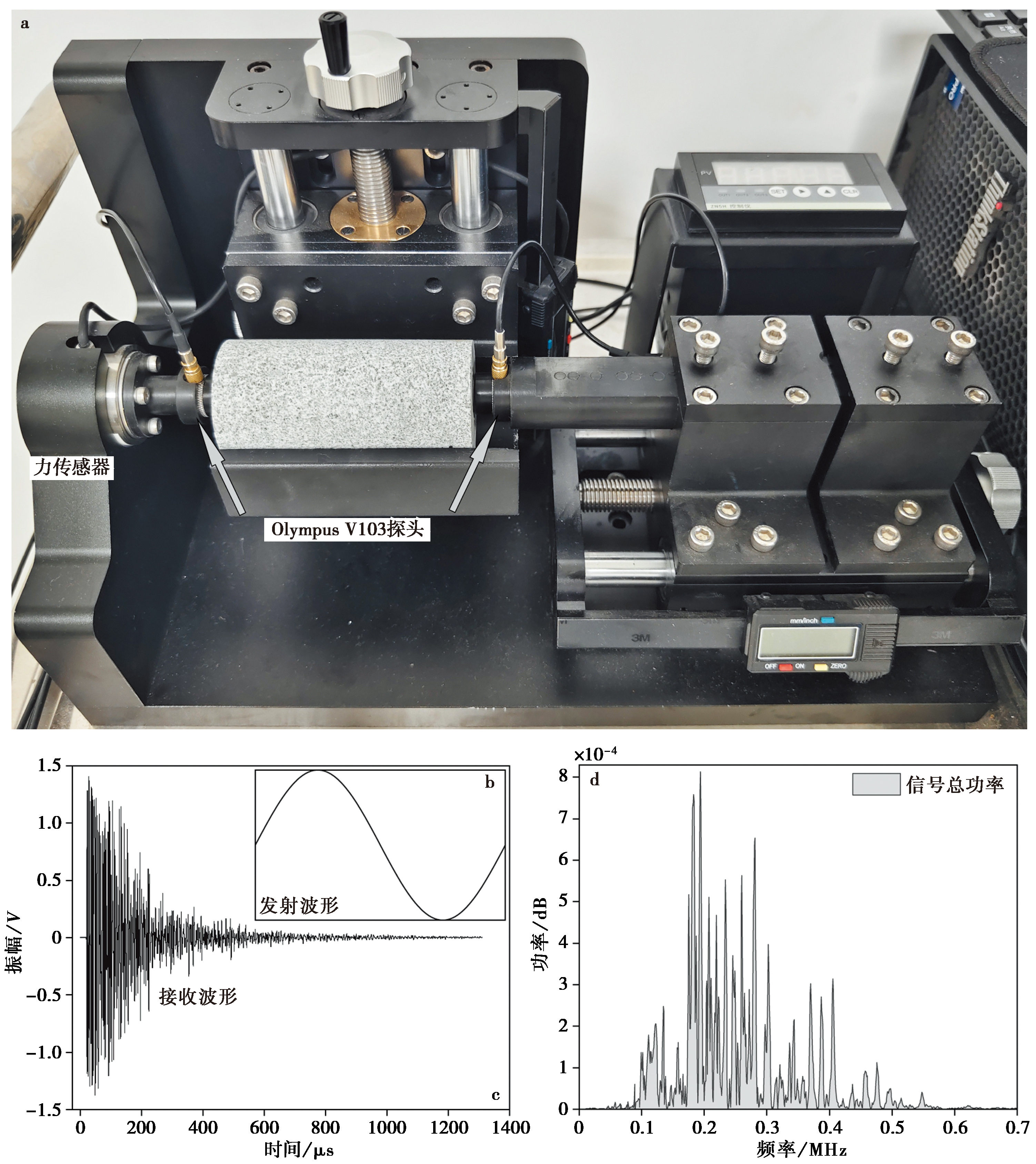
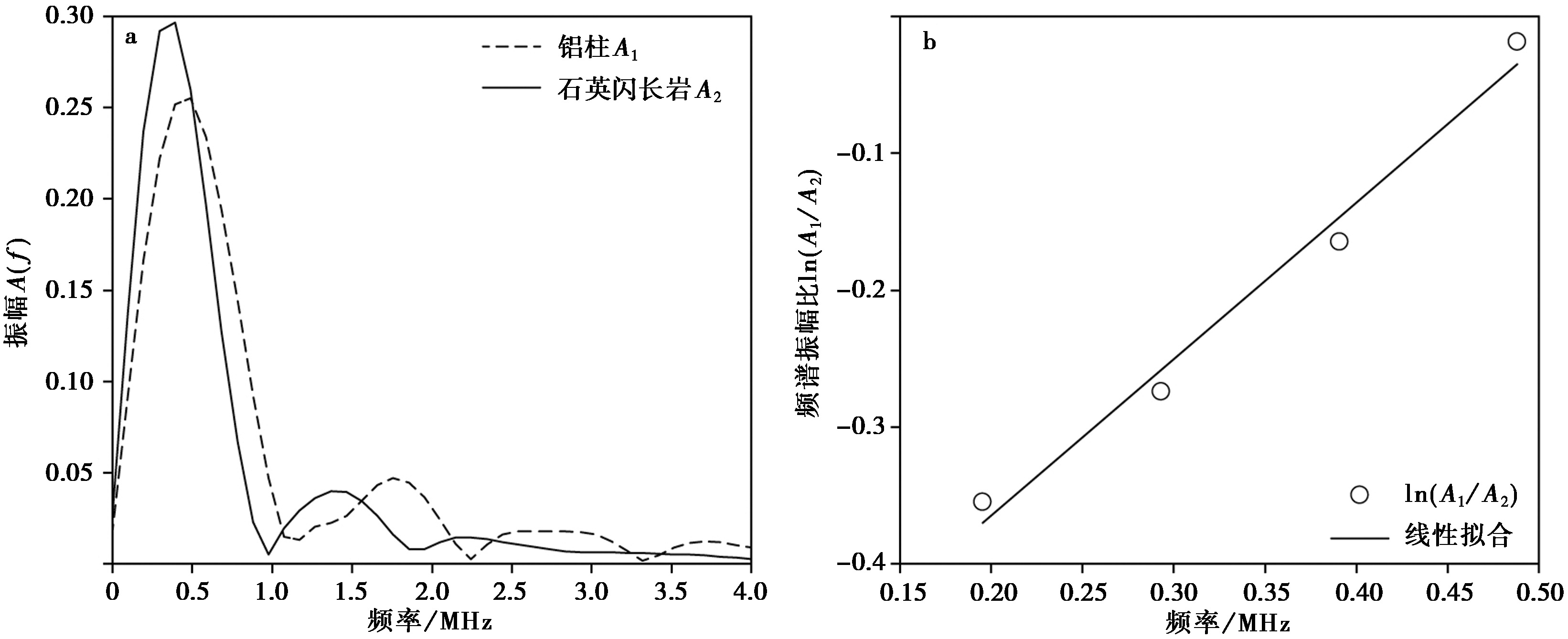
Quartzdiorite samples were collected from Fangshan, Beijing(density: 2.88×10³kg/m3), with mineral grain sizes of 1~5mm. The major components of the samples are labradorite(53%), biotite(27%), orthoclase(10%), quartz(6%), and amphibole(4%). Cylindrical cores(ϕ50mm×100mm) were prepared, and 24 specimens with initial P-wave velocities of(5250±150)m/s were selected to ensure comparable initial properties. The specimens were divided into eight groups(three per group) and heat-treated from 25 to 800℃. Elastic-wave signals were acquired using a matrix-type ultrasonic measurement system developed by the Institute of Geology, China Earthquake Administration. From the recorded waveforms we derived P-wave velocity, Q, and total signal power. Thermal damage was quantified by comparing changes in velocity, Q, signal power, and mass before and after heating.
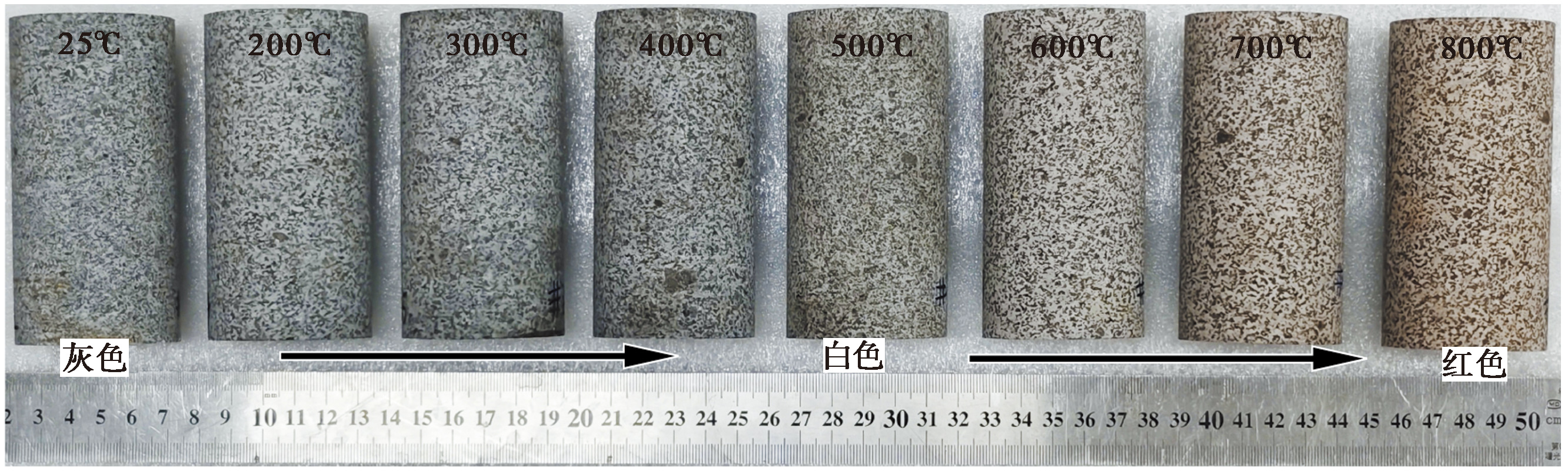
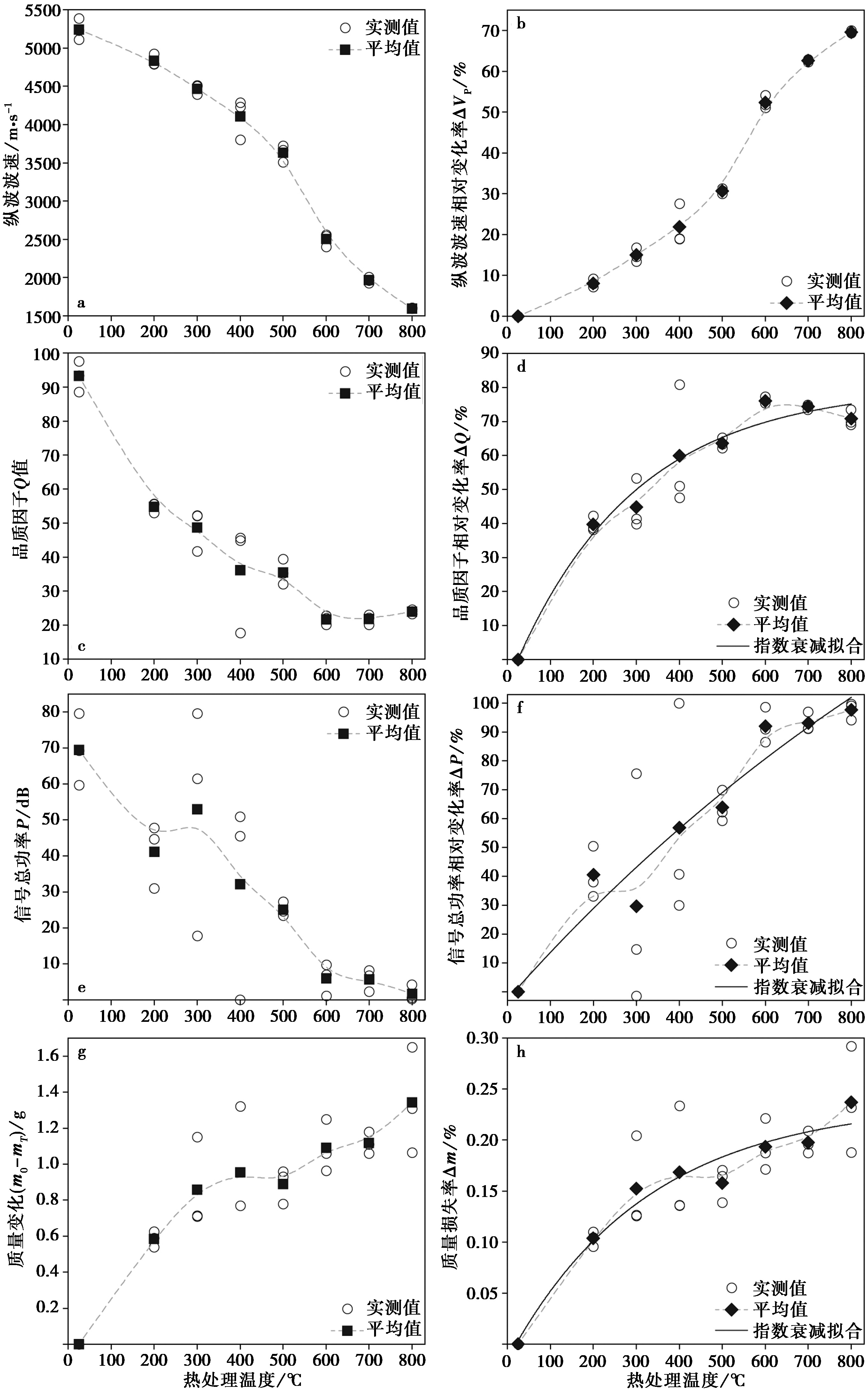
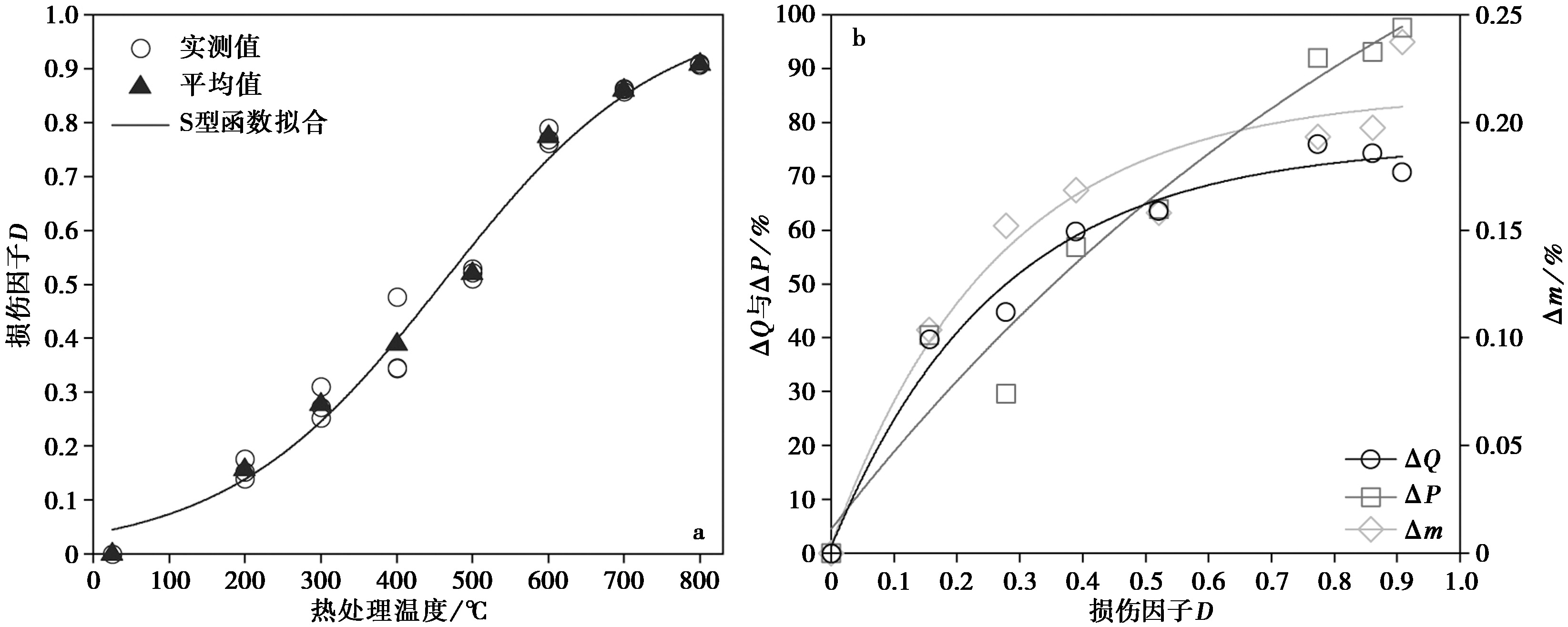
With increasing treatment temperature, the apparent color of the specimens shifts from gray at room temperature to light red. P-wave velocity decreases at ~300m/s per 100℃ over 25~400℃, accelerates to ~1130m/s per 100℃ over 400~600℃, and then slows to ~450m/s per 100℃ over 600~800℃. Q and total signal power exhibit similar behavior, with pronounced reductions over 200~600℃(Q decreases by 76% and signal power by 92%), followed by a more gradual decline over 600~800℃. The mass-loss rate increases rapidly to 0.15% over 25~300℃, remains nearly stable between 300℃ and 500℃, and then rises to 0.25% over 500~800℃.
Overall, thermal damage in quartz diorite increases monotonically with temperature, as indicated by the velocity-based damage factor and a temperature-dependent thermal-damage relation, with the most rapid increase occurring at 400~600℃. The different metrics show distinct temperature ranges of sensitivity. P-wave velocity provides an effective damage indicator across the full temperature interval. Q is more suitable for quantifying damage below 600℃ but becomes less sensitive at higher temperatures. Total signal power is more informative above 600℃. The mass-loss rate shows clear temperature dependence mainly over 25~400℃ and 600~800℃, making it most useful within these intervals. These results clarify the respective applicability of common damage quantification methods and may inform their use in field and engineering settings.

Key words: Quartzdiorite, thermal damage, damage evaluation

摘要:

研究岩石经高温作用后形成的热损伤, 在地震地质与地热能开发、 核废料埋藏等工程应用中具有重要意义。目前, 关于大陆地壳主要岩石类型的热损伤机制及其相应的物性变化已有广泛研究, 但针对岩石损伤程度定量方法的适用性分析仍有所欠缺。文中以石英闪长岩为例, 开展不同温度条件(25~800℃) 的热损伤实验, 并对比纵波波速、 品质因子Q值、 信号总功率P及质量损失率等几种定量损伤程度的方法。结果表明, 几种定量热损伤的方法具有不同温度条件的适用性。纵波波速测量适用于所有温度, Q值更适用于600℃以下的热损伤情况, 信号总功率较适用于600℃以上, 质量损失率更适合400℃以下或600℃以上。关于这些方法的适用性认识, 可为野外工程实践中量化损伤程度提供重要参考依据。

关键词: 石英闪长岩, 热损伤, 损伤定量