
SEISMOLOGY AND GEOLOGY ›› 2026, Vol. 48 ›› Issue (3): 704-723.DOI: 10.3969/j.issn.0253-4967.20250007
• Research paper • Previous Articles Next Articles
SEASONAL VARIATIONS OF WAVE VELOCITY AND ITS INFLUENCE FACTORS ON ROCK SLOPE: APPLICA-TION TO THE PUBUGOU ROCK SLOPE IN SOUTHWEST CHINA
LI De-kang1)( ), XIE Fan1),*(), XIE Jun-ju1), DAI Shi-gui2), LI Li1)
- 1)
State Key Laboratory of Earthquake Dynamics and Forecasting ,Institute of Geophysics, China Earthquake Administration
2)Earthquake Administration of Sichuan Province
-
Received:2025-01-17Revised:2025-03-18Online:2026-06-20Published:2026-07-09
岩质边坡季节性波速变化及其影响因素研究——以中国西南地区瀑布沟岩质边坡为例
李德康1)(), 谢凡1),*(), 谢俊举1), 戴仕贵2), 李丽1)
- 1)
地震动力学与强震预测全国重点实验室 ,中国地震局地球物理研究所
2)四川省地震局
-
通讯作者:*谢凡, 男, 1981年生, 研究员, 主要从事环境地震学研究及其应用, E-mail: xiefan@cea-igp.ac.cn。 -
作者简介:李德康, 男, 1995年生, 2025年于中国地震局地球物理研究所获固体地球物理学专业博士学位, 主要从事介质变化监测等方面的研究工作, E-mail: dkli@cnic.cn。
-
基金资助:国家自然科学基金(42120104002); 中国三峡建工(集团)有限公司科研项目(JG/20024B)

Cite this article
LI De-kang, XIE Fan, XIE Jun-ju, DAI Shi-gui, LI Li. SEASONAL VARIATIONS OF WAVE VELOCITY AND ITS INFLUENCE FACTORS ON ROCK SLOPE: APPLICA-TION TO THE PUBUGOU ROCK SLOPE IN SOUTHWEST CHINA[J]. SEISMOLOGY AND GEOLOGY, 2026, 48(3): 704-723.
李德康, 谢凡, 谢俊举, 戴仕贵, 李丽. 岩质边坡季节性波速变化及其影响因素研究——以中国西南地区瀑布沟岩质边坡为例[J]. 地震地质, 2026, 48(3): 704-723.
share this article
Add to citation manager EndNote|Ris|BibTeX
URL: https://www.dzdz.ac.cn/EN/10.3969/j.issn.0253-4967.20250007
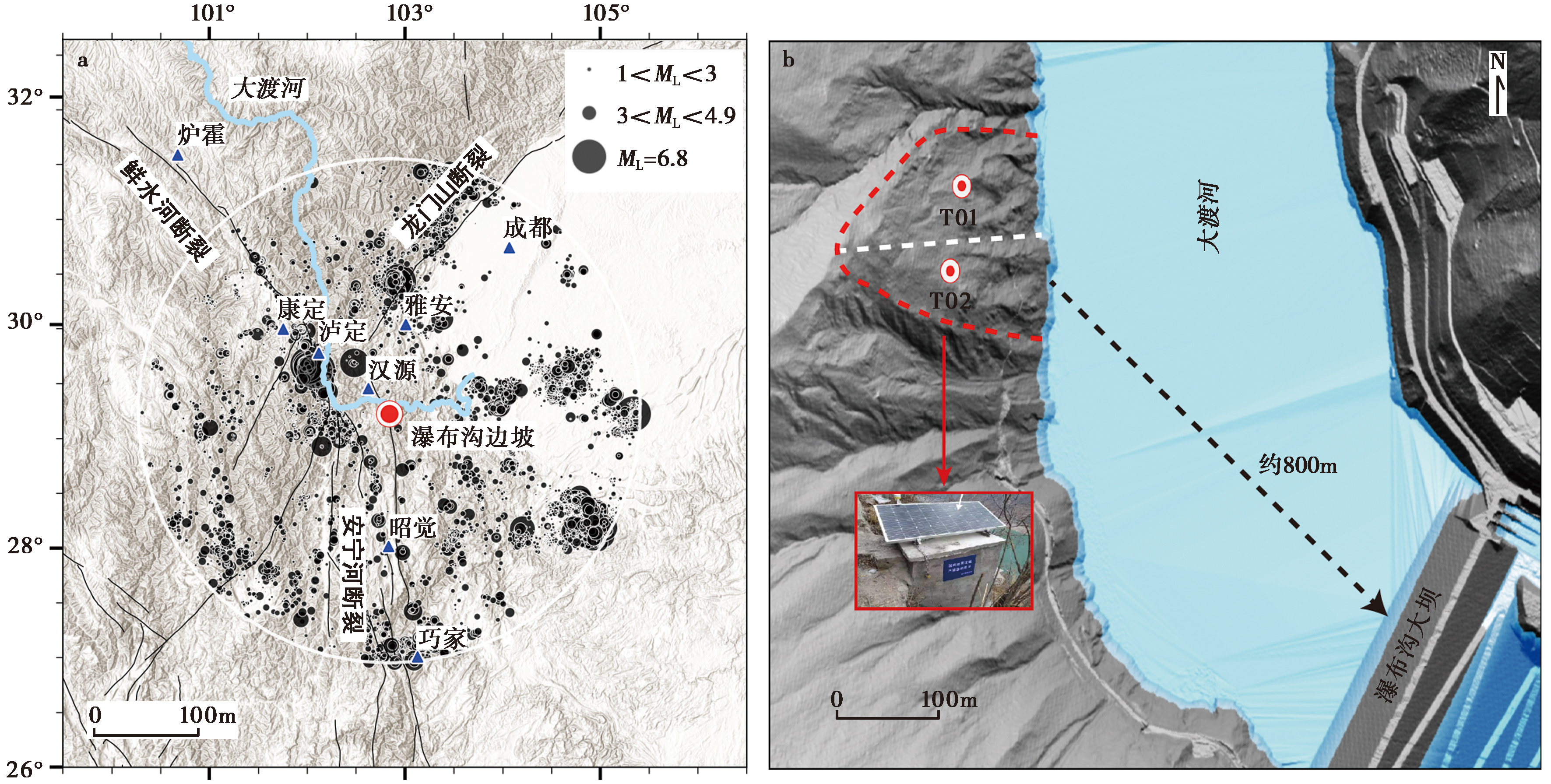
Fig. 1 Tectonic setting and Terrain map surrounding the Pubugou rock slope.
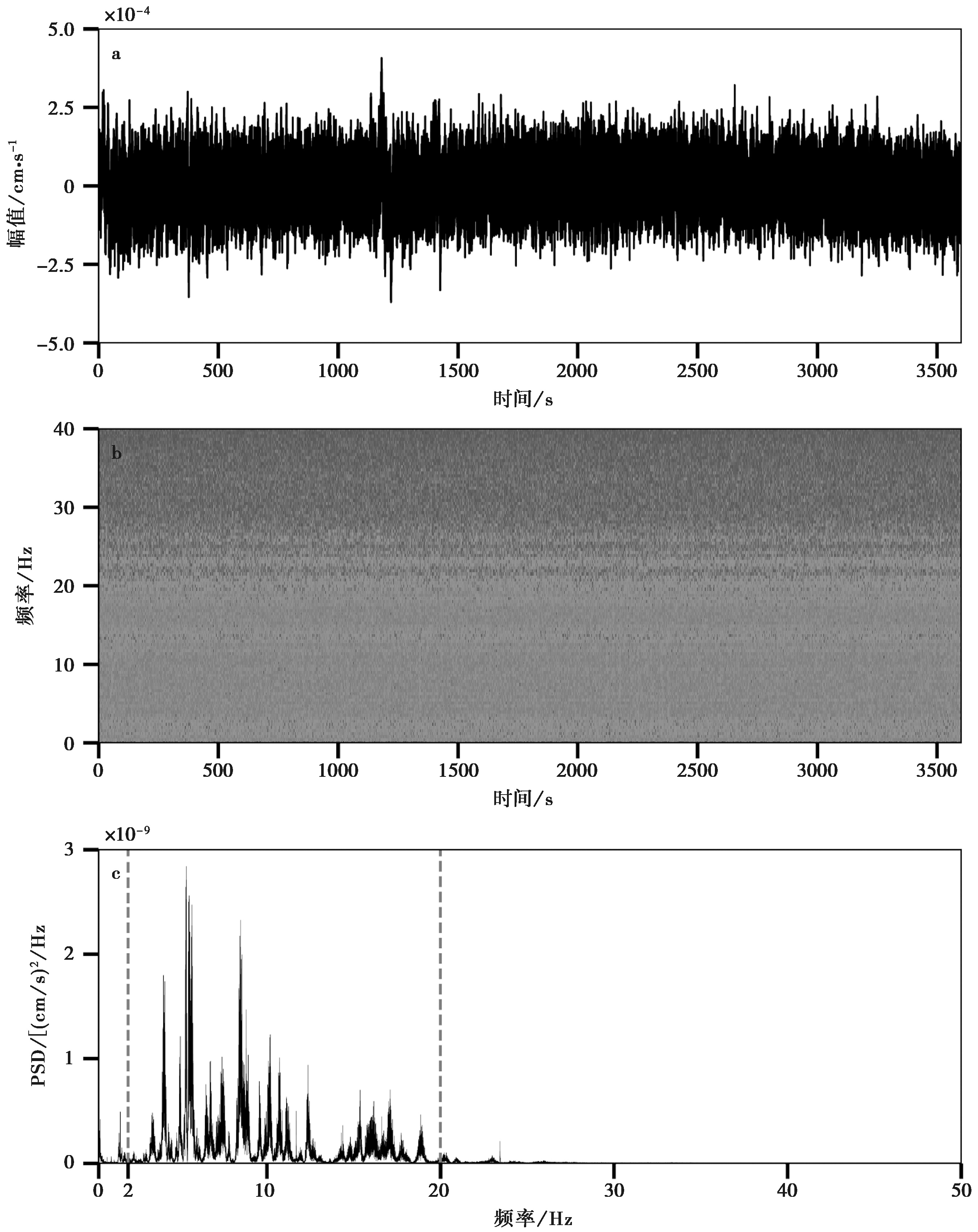
Fig. 2 One-hour raw seismic background noise waveform randomly selected from Station T01, Spectrogram of the raw waveform, and Power spectral density(PSD) of the raw waveform.
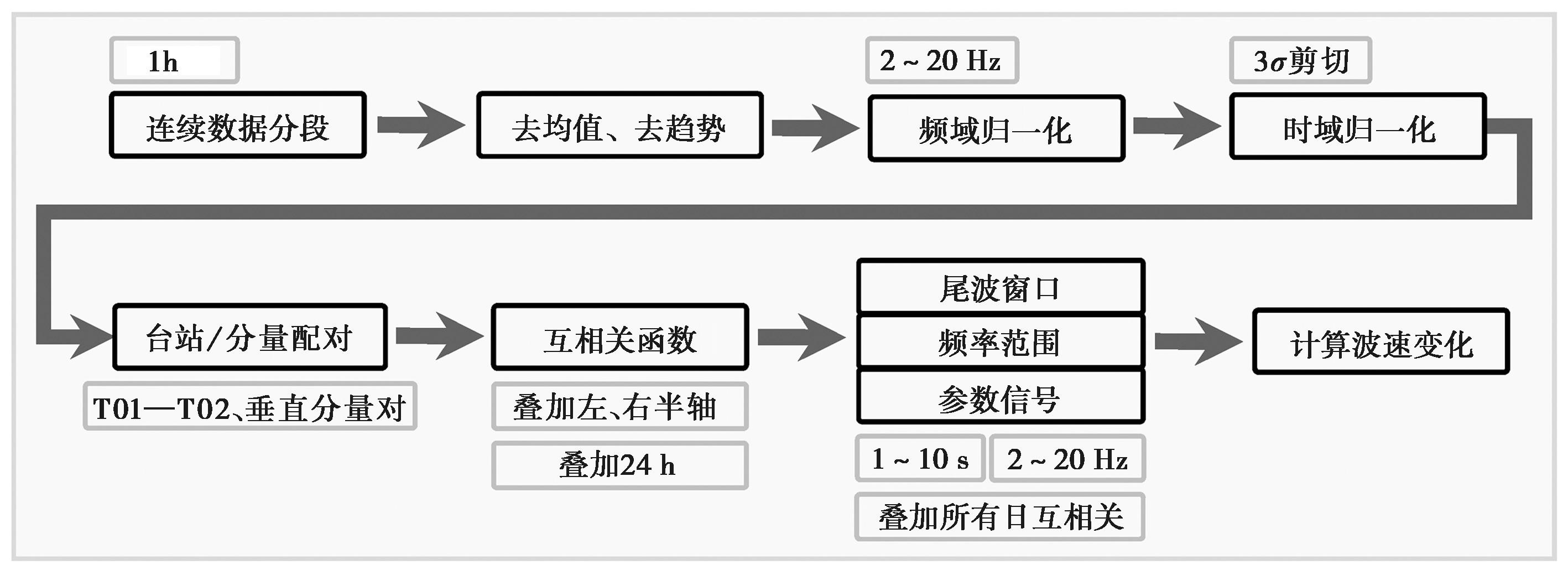
Fig. 3 Workflow of data processing for seismic background noise cross-correlation.
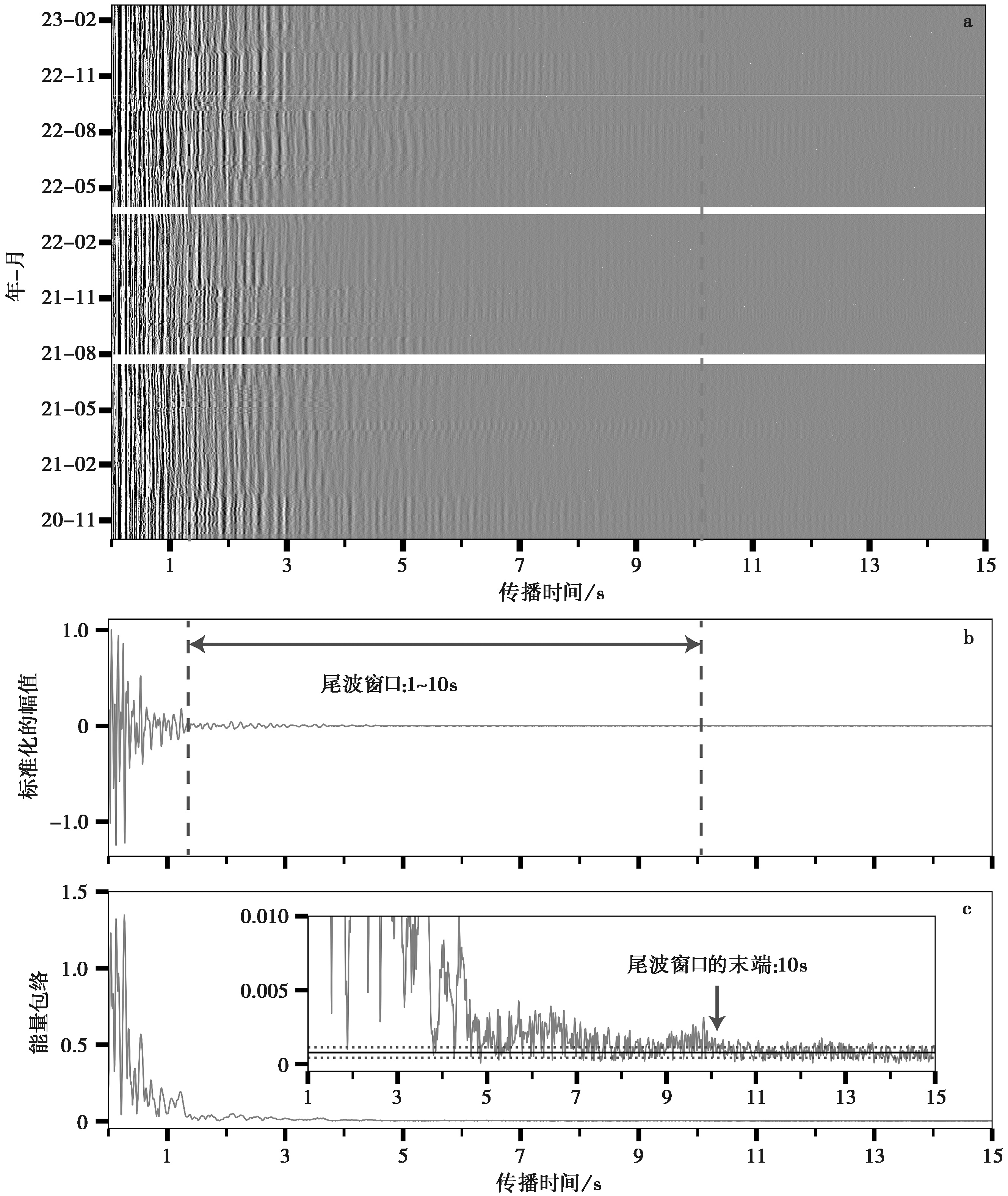
Fig. 4 Daily correlograms di(t) and reference signal dref(t).
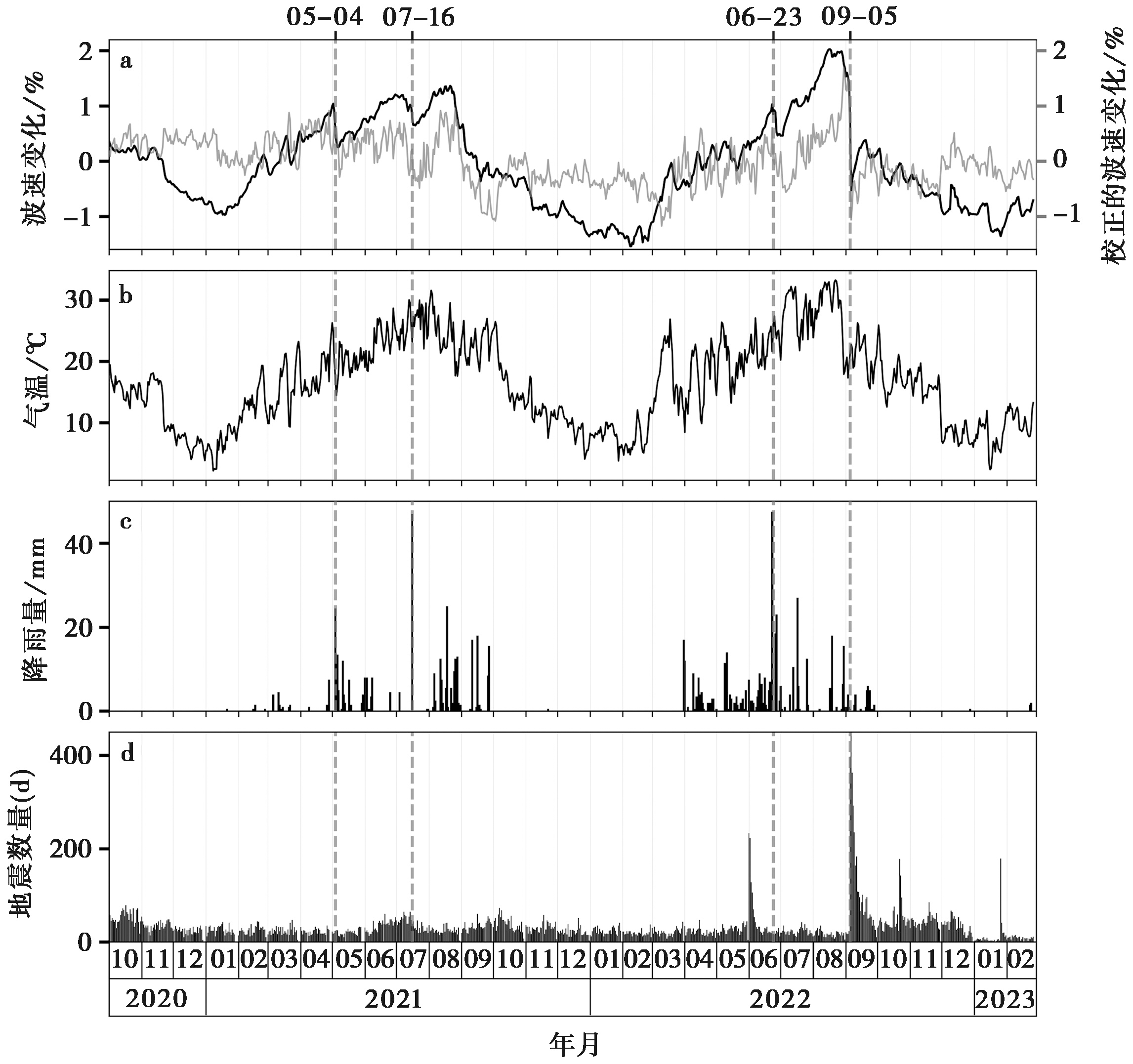
Fig. 5 Seasonal seismic velocity changes(a), air temperature(b), daily rainfall(c), and daily number of earthquake events(ML≥1) within a 250km radius around the slope recorded at a 1-day sampling rate(d) on the Pubugou slope during October 1, 2020, to February 26, 2023.
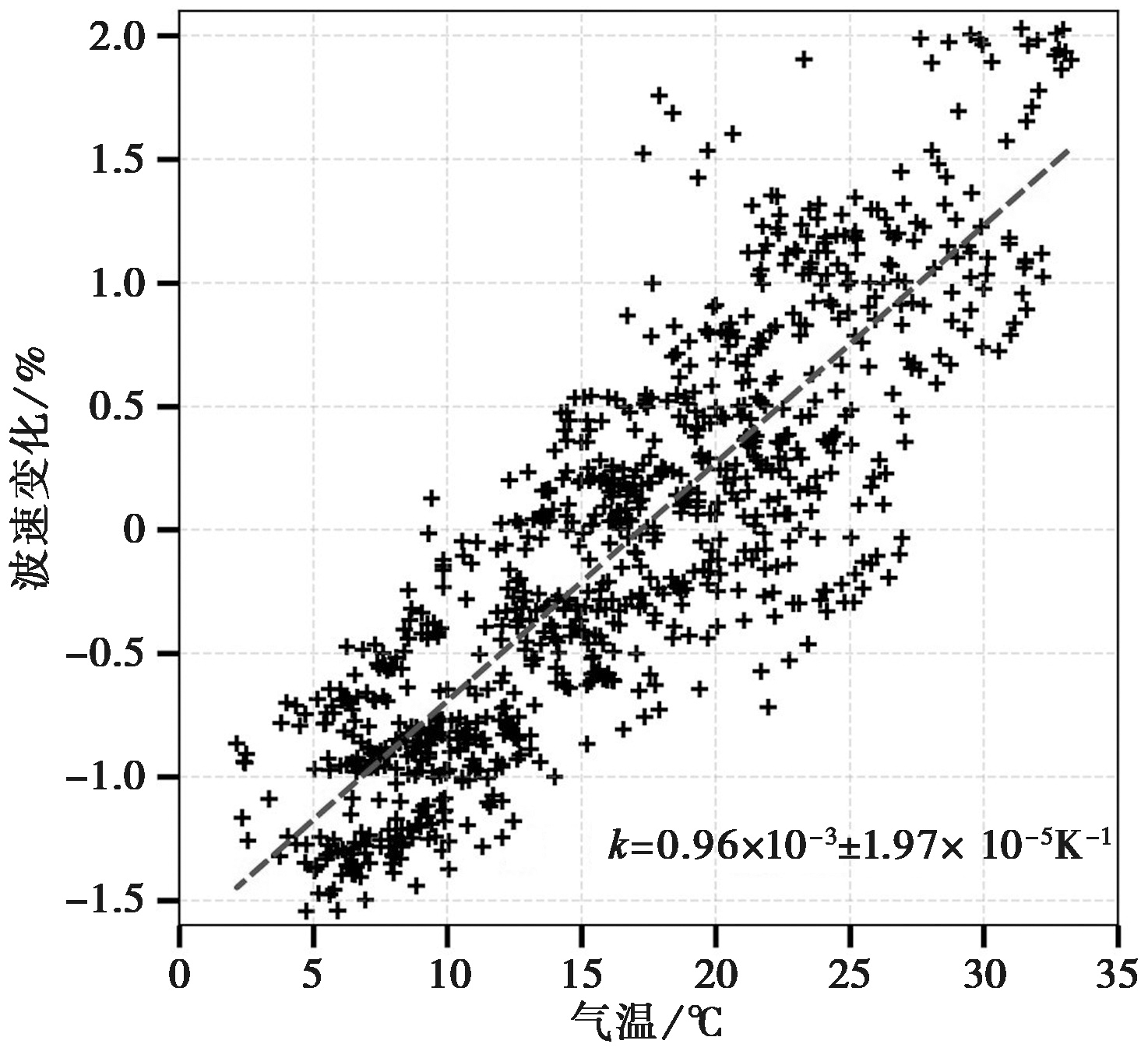
Fig. 6 The relationship between air temperature and seismic velocity changes during October 1, 2020, to February 26, 2023(the red dashed line represents the trend line).
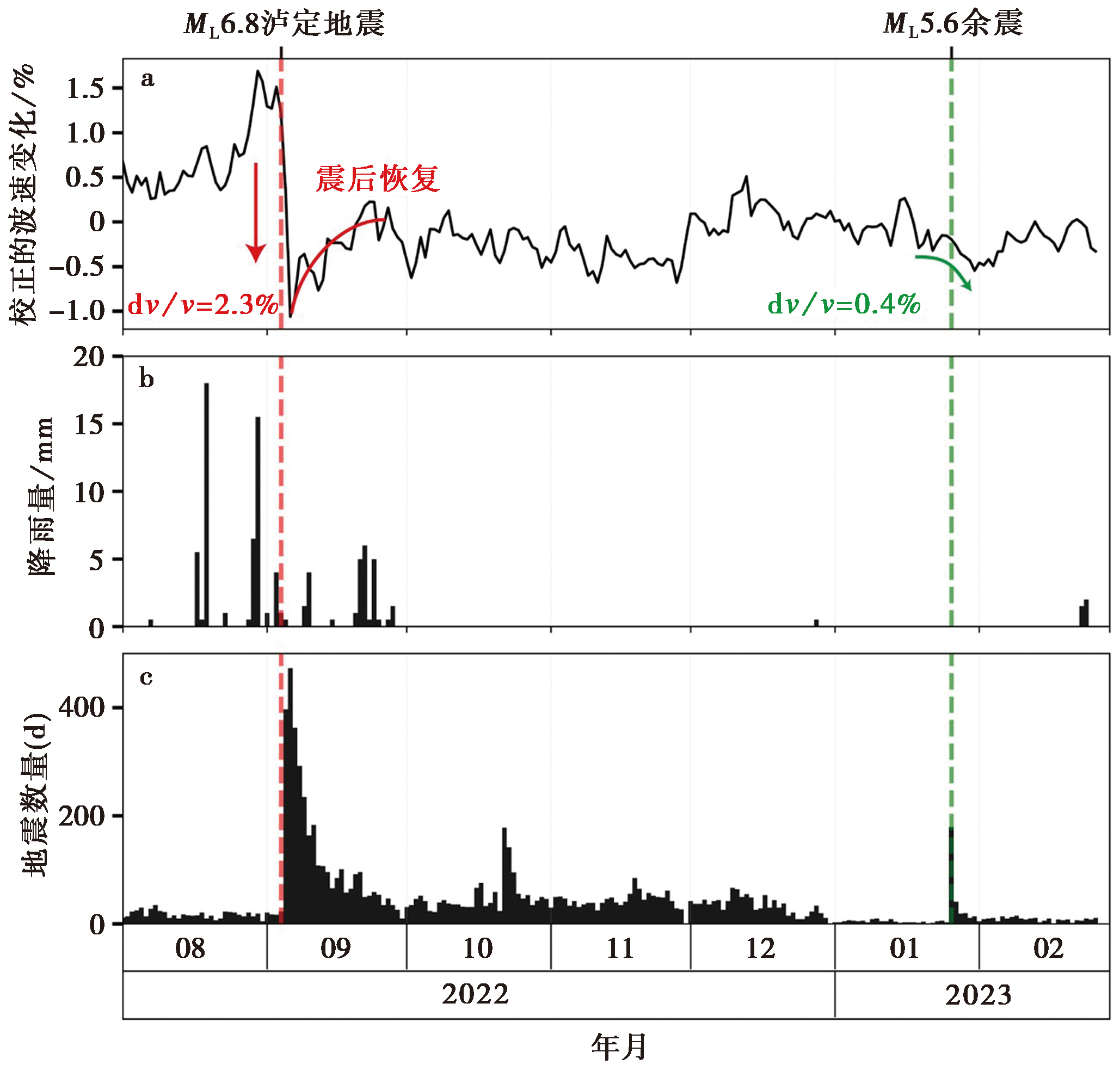
Fig. 7 Coupled influence of the rainfall and earthquake activity for the seismic velocity changes of the slope after removing the influence of the temperature.
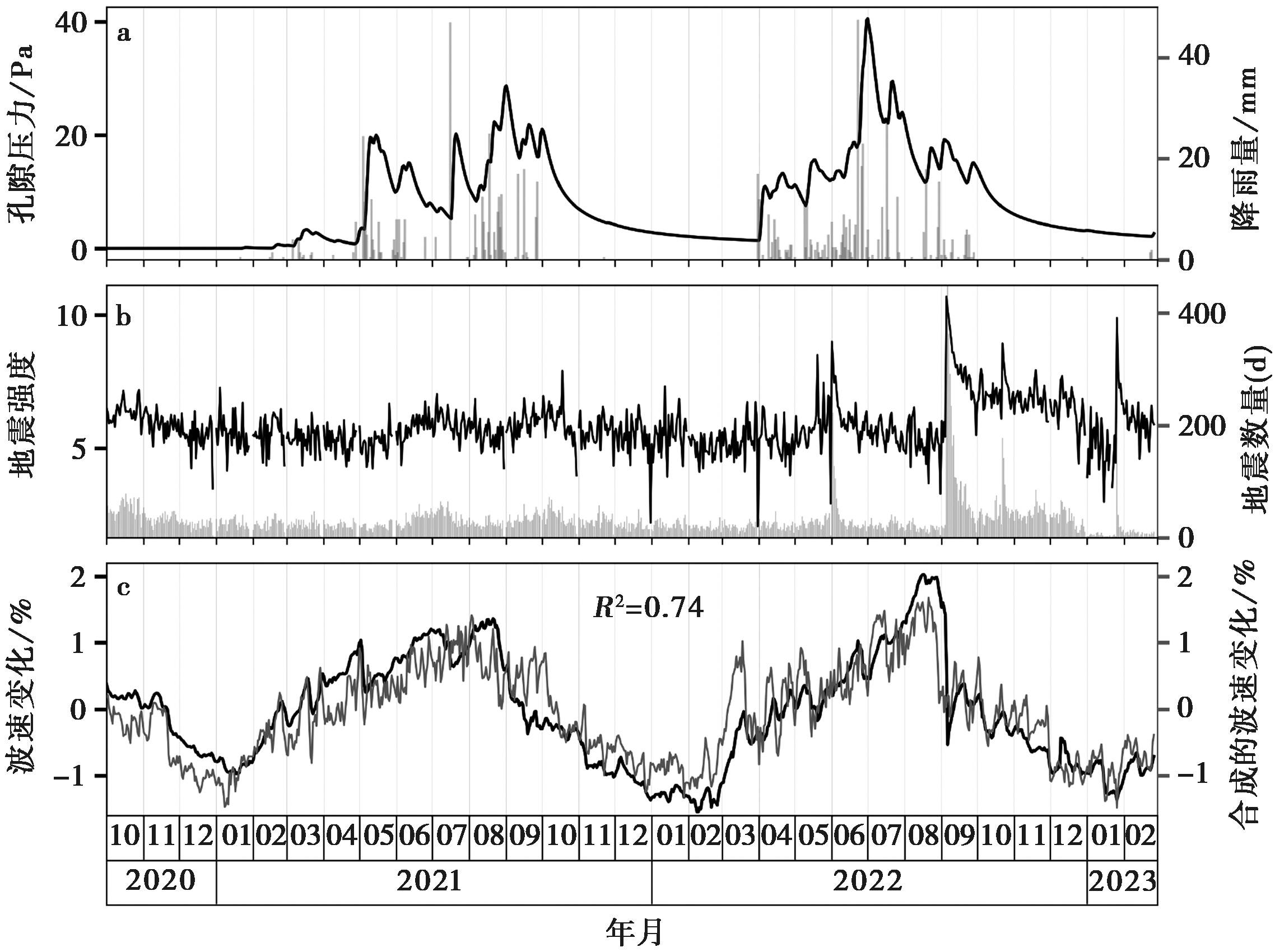
Fig. 8 The evolution of pore pressure, seismic activity, and wave velocity over time.
| 多物理场变量 | 气温αT | 孔隙压力αP | 地震强度αI | 偏移常数C | 显著性系数p |
|---|---|---|---|---|---|
| 最优响应系数 | 1.0×10⁻³ | -3.59×10⁻⁵ | -6.68×10⁻⁴ | -0.013 | 1.74×10⁻⁵ |
Table1 The optimal response coefficients of the air temperature(αT), pore pressure(αP), and seismic intensity(αI)
| 多物理场变量 | 气温αT | 孔隙压力αP | 地震强度αI | 偏移常数C | 显著性系数p |
|---|---|---|---|---|---|
| 最优响应系数 | 1.0×10⁻³ | -3.59×10⁻⁵ | -6.68×10⁻⁴ | -0.013 | 1.74×10⁻⁵ |
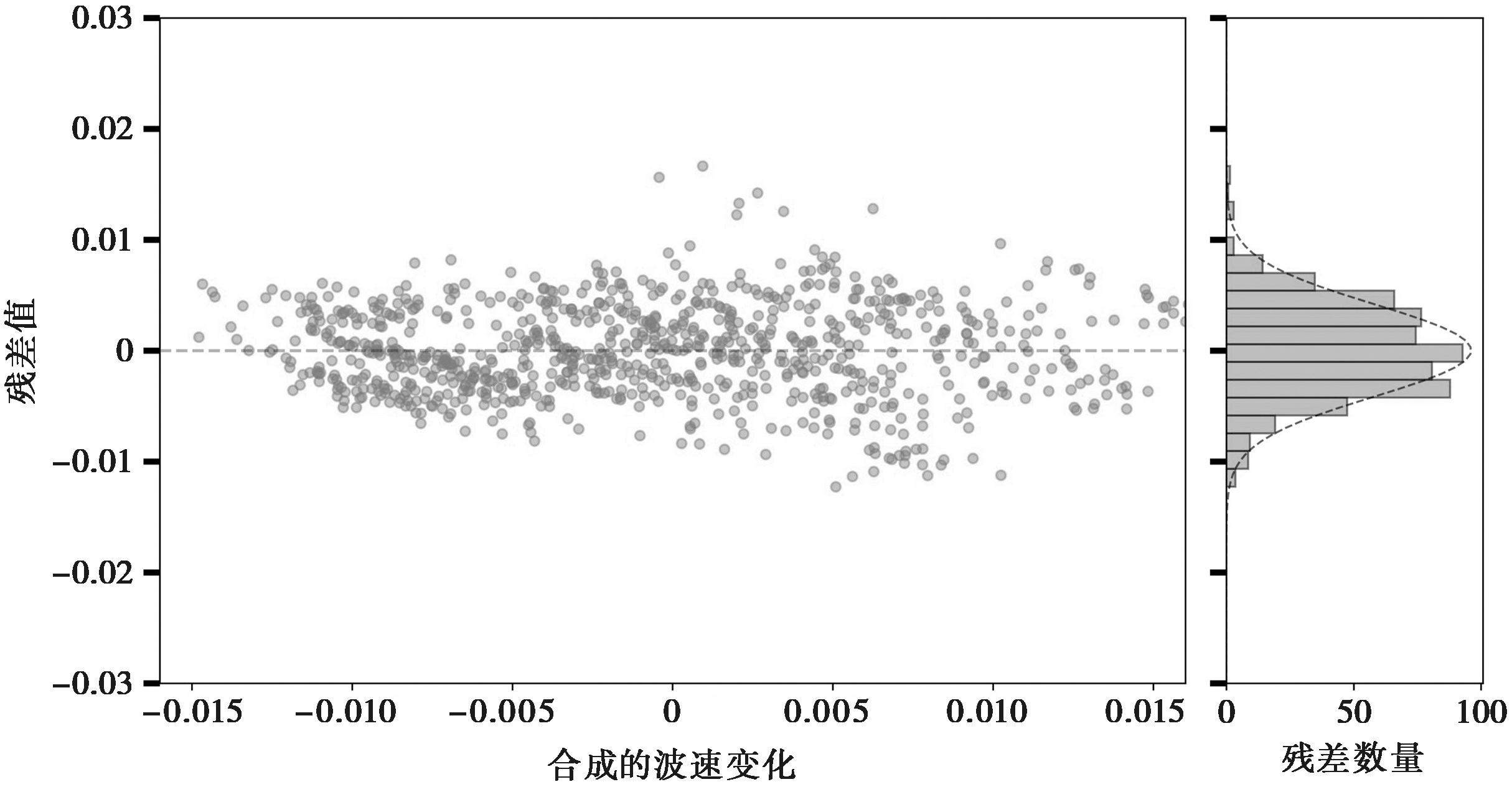
Fig. 9 Residual distribution between measured and synthetic velocity changes.
| [1] |
邓李政, 袁宏永, 张鸣之, 等. 2023. 滑坡变形监测预警技术研究进展[J]. 清华大学学报(自然科学版), 63(6): 849-864.
DOI |
|
DOI |
|
| [2] |
李晓恩, 周亮, 苏奋振, 等. 2021. InSAR 技术在滑坡灾害中的应用研究进展[J]. 遥感学报, 25(2): 614-629.
|
|
|
|
| [3] |
李振洪, 宋闯, 余琛, 等. 2019. 卫星雷达遥感在滑坡灾害探测和监测中的应用: 挑战与对策[J]. 武汉大学学报(信息科学版), 44(7): 967-979.
|
|
|
|
| [4] |
谢凡, 任雅琼, 王宝善. 2017. 利用超声尾波观测1.5m长岩石断层黏滑实验的波速变化[J]. 地球物理学报, 60(4): 1470-1478.
DOI |
|
|
|
| [5] |
谢凡, 夏开文, 黄会宝, 等. 2020. 基于多重散射波波速变化的滑坡实时监测方法与应用研究[J]. 岩石力学与工程学报, 39(11): 2274-2282.
|
|
|
|
| [6] |
许强. 2020. 对滑坡监测预警相关问题的认识与思考[J]. 工程地质学报, 28(2): 360-374.
|
|
|
|
| [7] |
杨晓娟, 邓建辉, 陈群, 等. 2013. 瀑布沟水电站库首右岸拉裂变形体变形特征与分析[J]. 岩石力学与工程学报, 32(3): 549-561.
|
|
|
|
| [8] |
朱建军, 李志伟, 胡俊. 2017. InSAR 变形监测方法与研究进展[J]. 测绘学报, 46(10): 1717-1733.
DOI |
|
|
|
| [9] |
DOI |
| [10] |
DOI URL |
| [11] |
DOI URL |
| [12] |
DOI URL |
| [13] |
DOI |
| [14] |
DOI PMID |
| [15] |
DOI URL |
| [16] |
DOI PMID |
| [17] |
DOI |
| [18] |
PMID |
| [19] |
DOI URL |
| [20] |
DOI URL |
| [21] |
DOI URL |
| [22] |
DOI URL |
| [23] |
DOI URL |
| [24] |
DOI URL |
| [25] |
DOI URL |
| [26] |
DOI URL |
| [27] |
|
| [28] |
|
| [29] |
|
| [30] |
DOI |
| [31] |
DOI URL |
| [32] |
|
| [33] |
DOI URL |
| [34] |
DOI URL |
| [35] |
|
| [36] |
DOI PMID |
| [37] |
DOI URL |
| [38] |
DOI URL |
| [39] |
DOI |
| [40] |
DOI |
| [41] |
DOI URL |
| [42] |
DOI URL |
| [43] |
DOI URL |
| [44] |
DOI URL |
| [45] |
DOI URL |
| [46] |
|
| [47] |
DOI URL |
| [48] |
|
| [49] |
|
| [50] |
DOI URL |
| [51] |
DOI URL |
| [52] |
DOI URL |
| [53] |
|
| [54] |
DOI |
| [55] |
|
| [56] |
DOI |
| [57] |
DOI URL |
| [58] |
DOI URL |
| [59] |
DOI URL |
| [60] |
DOI URL |
| [61] |
DOI URL |
| [62] |
DOI URL |
| [63] |
DOI URL |
| [64] |
DOI URL |
| [65] |
DOI URL |
| [66] |
DOI URL |
| No related articles found! |
| Viewed | ||||||
|
Full text |
|
|||||
|
Abstract |
|
|||||
Copyright © SEISMOLOGY AND GEOLOGY, All Rights Reserved.
Tel: 010-62009049/9063 E-mail: dzdz@ies.ac.cn
Powered by Beijing Magtech Co., Ltd.