
SEISMOLOGY AND GEOLOGY ›› 2026, Vol. 48 ›› Issue (2): 561-581.DOI: 10.3969/j.issn.0253-4967.20240120
Previous Articles Next Articles
THE STRESS FIELD INVERSION AND TRIGGER RELATIONSHIPS OF THE JINGGU EARTHQUAKE SEQUENCE
LI Yan1)( ), CHEN Jun-lei1),*(), LÜ Si-yu1), WANG Yu-dong1), FU Lei2)
- 1)
Faculty of Public Security and Emergency Management ,Kunming University of Science and Technology
2)Institute of Geophysics ,China Earthquake Administration
-
Received:2025-01-07Revised:2025-04-19Online:2026-04-20Published:2026-05-14
景谷地震序列触发关系及应力场反演
李岩1)(), 陈俊磊1),*(), 吕思宇1), 王宇栋1), 傅磊2)
- 1)
昆明理工大学 ,公共安全与应急管理学院
2)中国地震局地球物理研究所
-
通讯作者:* 陈俊磊, 男, 1985年生, 副研究员, 主要研究方向为地震破裂过程, E-mail: jlchen@kust.edu.cn。 -
作者简介:李岩, 男, 1999年生, 现为昆明理工大学公共安全与应急管理学院安全工程专业在读硕士研究生, 研究方向为地震静态库仑应力的触发作用, E-mail: lyxqw123@163.com。 -
基金资助:昆明理工大学引进人才科研启动基金(KKZ3202467043); 国家自然科学基金(52378541); 昆明理工大学科技服务项目(KKF0202567269)

Cite this article
LI Yan, CHEN Jun-lei, LÜ Si-yu, WANG Yu-dong, FU Lei. THE STRESS FIELD INVERSION AND TRIGGER RELATIONSHIPS OF THE JINGGU EARTHQUAKE SEQUENCE[J]. SEISMOLOGY AND GEOLOGY, 2026, 48(2): 561-581.
李岩, 陈俊磊, 吕思宇, 王宇栋, 傅磊. 景谷地震序列触发关系及应力场反演[J]. 地震地质, 2026, 48(2): 561-581.
share this article
Add to citation manager EndNote|Ris|BibTeX
URL: https://www.dzdz.ac.cn/EN/10.3969/j.issn.0253-4967.20240120
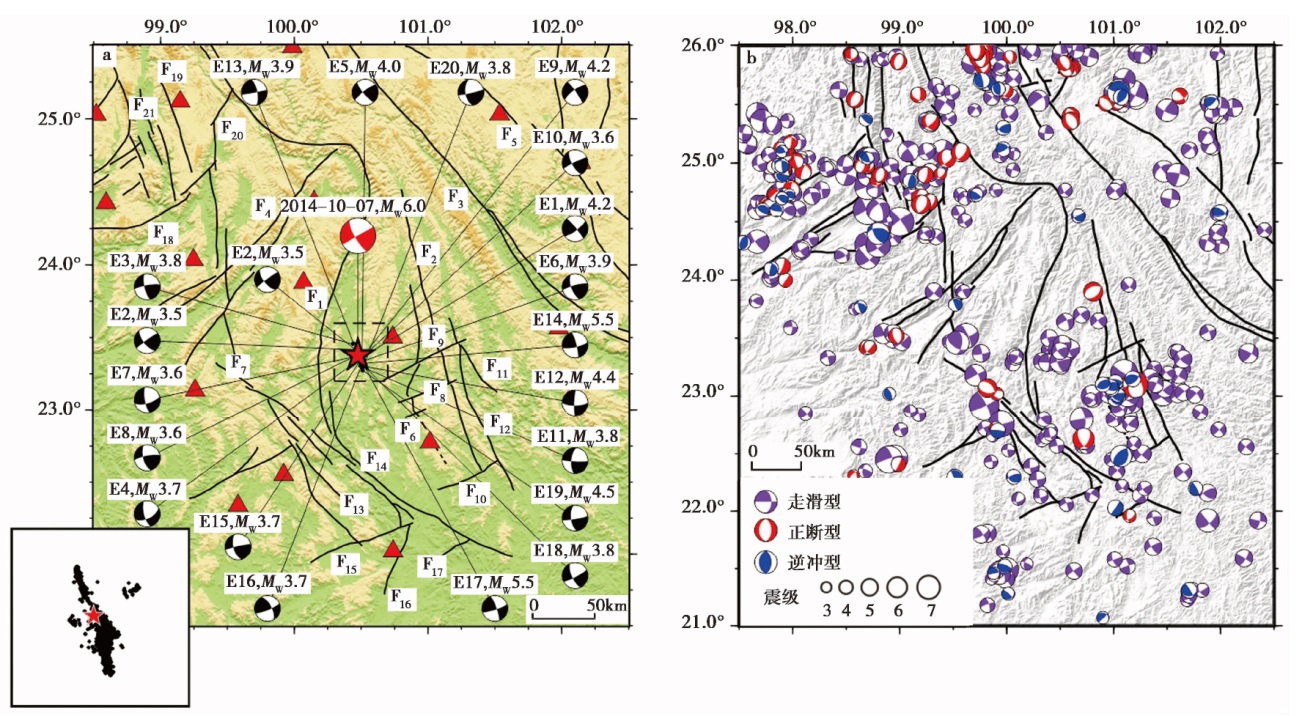
Fig. 1 Geotectonic background of the Jinggu earthquake and distribution of historical seismic source mechanisms in Southwest Yunnan.
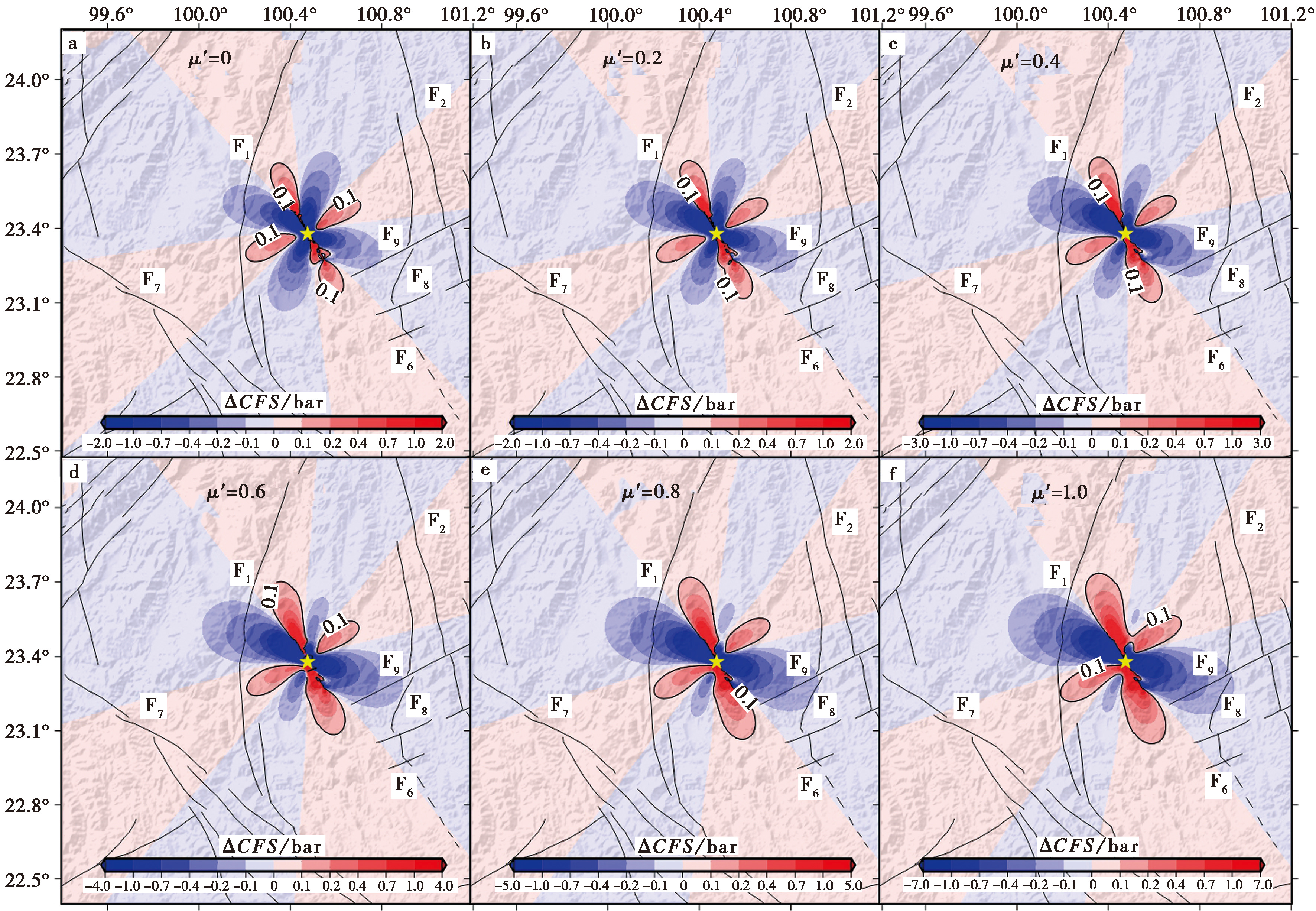
Fig. 2 Static Coulomb stress changes for different μ' value.
| μ' | 0 | 0.2 | 0.4 | 0.6 | 0.8 | 1.0 |
|---|---|---|---|---|---|---|
| 被触发余震百分比/% | 66.57 | 71.19 | 73.46 | 75.34 | 75.92 | 75.87 |
| 被抑制余震百分比/% | 33.43 | 28.81 | 26.54 | 24.66 | 24.08 | 24.13 |
Table 1 The impact of μ'value on the probability of aftershock triggering
| μ' | 0 | 0.2 | 0.4 | 0.6 | 0.8 | 1.0 |
|---|---|---|---|---|---|---|
| 被触发余震百分比/% | 66.57 | 71.19 | 73.46 | 75.34 | 75.92 | 75.87 |
| 被抑制余震百分比/% | 33.43 | 28.81 | 26.54 | 24.66 | 24.08 | 24.13 |

Fig. 3 Inversion results of the stress field on a 1°×1° grid division.
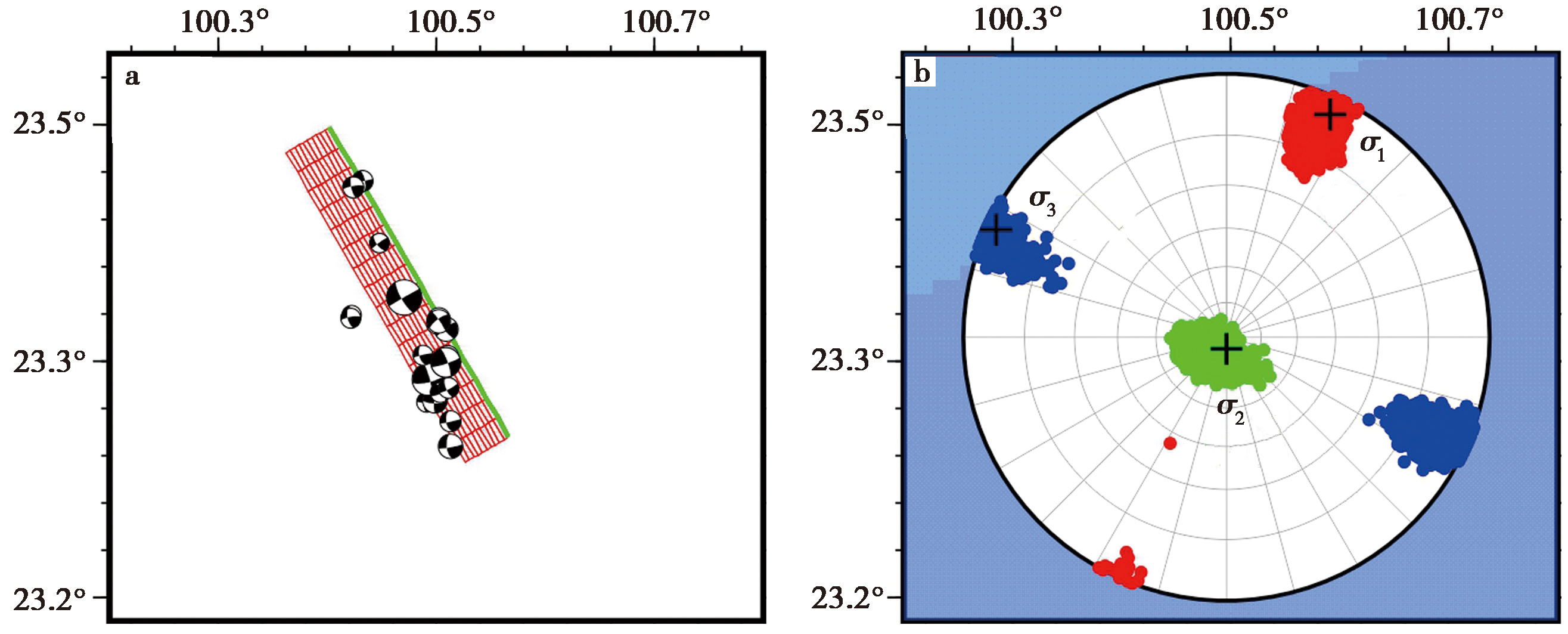
Fig. 4 Distribution of aftershock focal mechanisms and inversion results of local tectonic stress field.
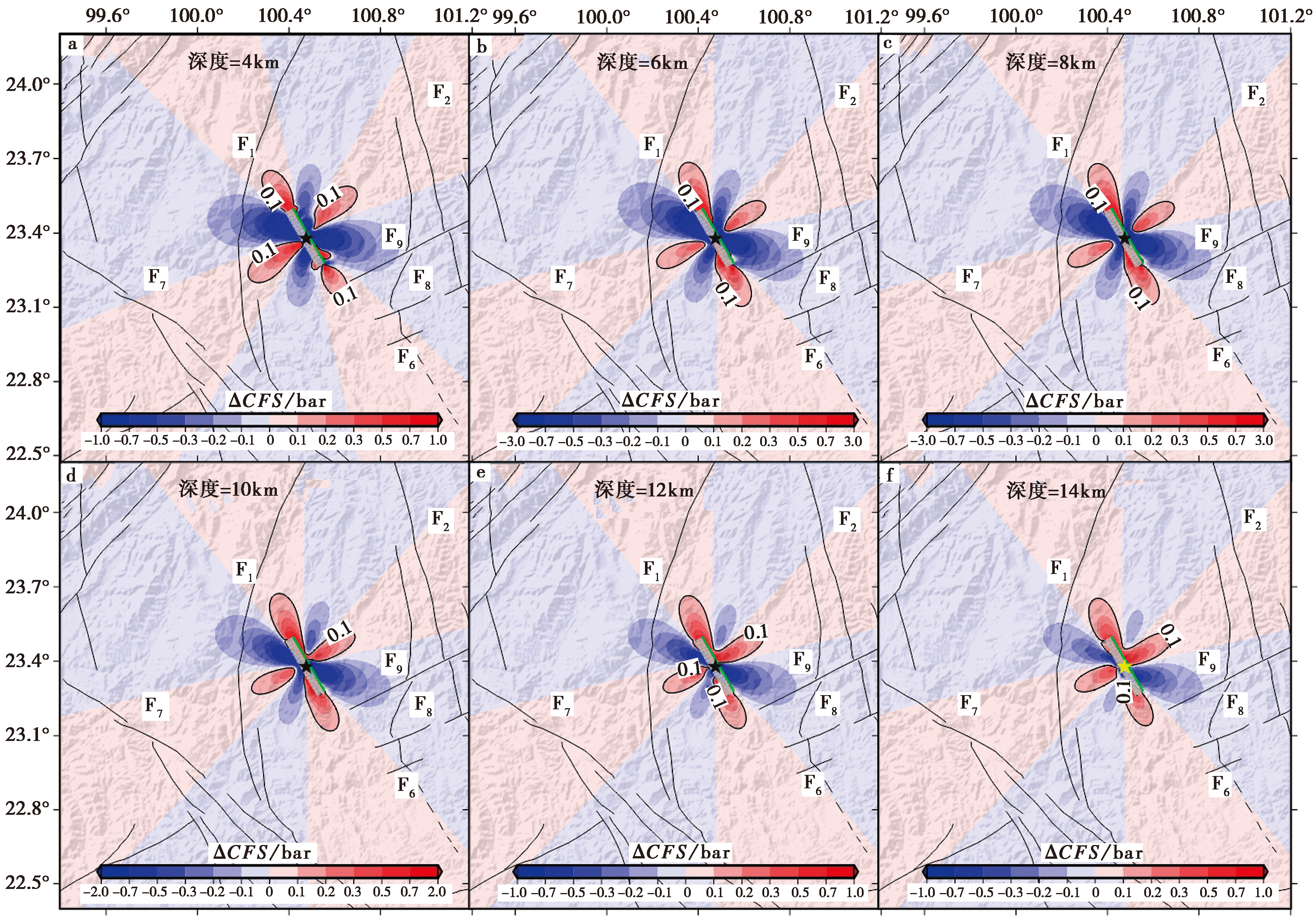
Fig. 5 Results of static Coulomb stress changes at different depth.
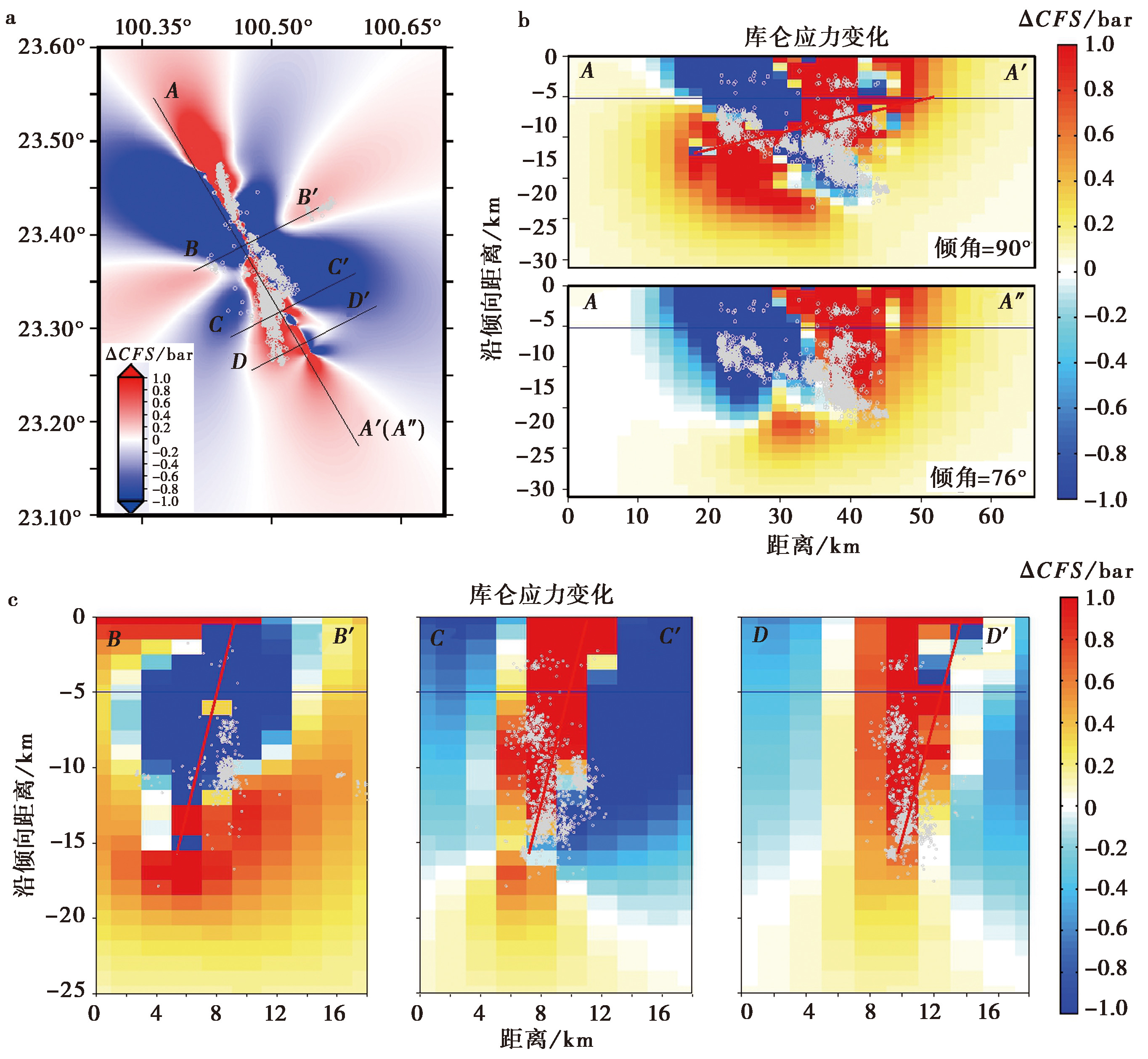
Fig. 6 Results of static Coulomb stress changes on different cross-section.
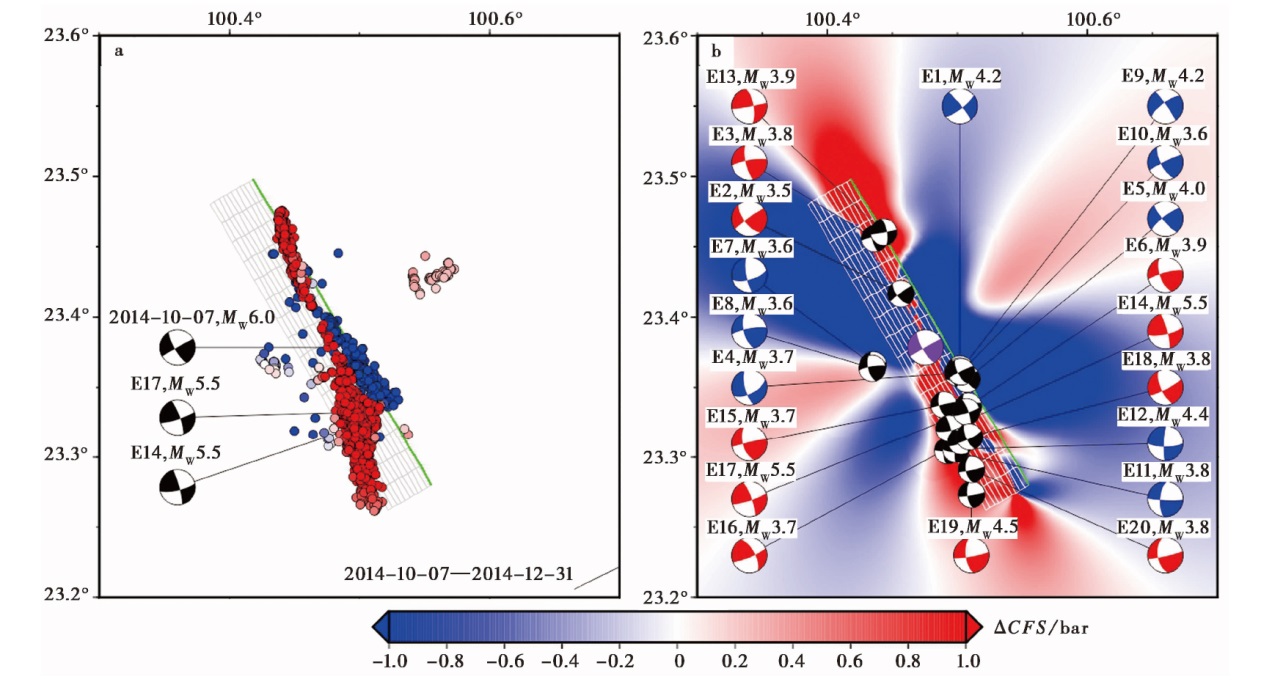
Fig. 7 Triggering of the aftershocks by static Coulomb stress changes from the mainshock.
| 编号 | 北纬/(°) | 东经/(°) | 计算深度/km | 震级/MW | ΔCFS/MPa |
|---|---|---|---|---|---|
| E1 | 23.363 | 100.502 | 8 | 4.2 | -0.7490 |
| E2 | 23.417 | 100.457 | 10 | 3.5 | 0.4122 |
| E3 | 23.456 | 100.436 | 6 | 3.8 | 0.4965 |
| E4 | 23.360 | 100.500 | 6 | 3.7 | -1.1876 |
| E5 | 23.356 | 100.507 | 4 | 4.0 | -0.1558 |
| E6 | 23.337 | 100.509 | 6 | 3.9 | 0.0540 |
| E7 | 23.366 | 100.435 | 10 | 3.6 | -0.0376 |
| E8 | 23.364 | 100.435 | 8 | 3.6 | -0.7076 |
| E9 | 23.361 | 100.502 | 6 | 4.2 | -1.1284 |
| E10 | 23.361 | 100.503 | 6 | 3.6 | -1.1151 |
| E11 | 23.305 | 100.493 | 4 | 3.8 | -0.0919 |
| E12 | 23.306 | 100.499 | 4 | 4.4 | -0.0661 |
| E13 | 23.460 | 100.443 | 6 | 3.9 | 0.3170 |
| E14 | 23.321 | 100.494 | 6 | 5.5 | 0.2510 |
| E15 | 23.338 | 100.490 | 6 | 3.7 | 0.6536 |
| E16 | 23.311 | 100.503 | 6 | 3.7 | 0.1760 |
| E17 | 23.333 | 100.507 | 6 | 5.5 | 0.3760 |
| E18 | 23.314 | 100.509 | 6 | 3.8 | 0.0796 |
| E19 | 23.273 | 100.511 | 2 | 4.5 | 0.1062 |
| E20 | 23.290 | 100.511 | 2 | 3.8 | 0.1239 |
Table 3 Calculation results of the static Coulomb stress changes of the mainshock on the triggering of the aftershocks
| 编号 | 北纬/(°) | 东经/(°) | 计算深度/km | 震级/MW | ΔCFS/MPa |
|---|---|---|---|---|---|
| E1 | 23.363 | 100.502 | 8 | 4.2 | -0.7490 |
| E2 | 23.417 | 100.457 | 10 | 3.5 | 0.4122 |
| E3 | 23.456 | 100.436 | 6 | 3.8 | 0.4965 |
| E4 | 23.360 | 100.500 | 6 | 3.7 | -1.1876 |
| E5 | 23.356 | 100.507 | 4 | 4.0 | -0.1558 |
| E6 | 23.337 | 100.509 | 6 | 3.9 | 0.0540 |
| E7 | 23.366 | 100.435 | 10 | 3.6 | -0.0376 |
| E8 | 23.364 | 100.435 | 8 | 3.6 | -0.7076 |
| E9 | 23.361 | 100.502 | 6 | 4.2 | -1.1284 |
| E10 | 23.361 | 100.503 | 6 | 3.6 | -1.1151 |
| E11 | 23.305 | 100.493 | 4 | 3.8 | -0.0919 |
| E12 | 23.306 | 100.499 | 4 | 4.4 | -0.0661 |
| E13 | 23.460 | 100.443 | 6 | 3.9 | 0.3170 |
| E14 | 23.321 | 100.494 | 6 | 5.5 | 0.2510 |
| E15 | 23.338 | 100.490 | 6 | 3.7 | 0.6536 |
| E16 | 23.311 | 100.503 | 6 | 3.7 | 0.1760 |
| E17 | 23.333 | 100.507 | 6 | 5.5 | 0.3760 |
| E18 | 23.314 | 100.509 | 6 | 3.8 | 0.0796 |
| E19 | 23.273 | 100.511 | 2 | 4.5 | 0.1062 |
| E20 | 23.290 | 100.511 | 2 | 3.8 | 0.1239 |

Fig. 8 Static Coulomb stress changes of the earthquake sequence prior to the MW5.5 strong aftershock.
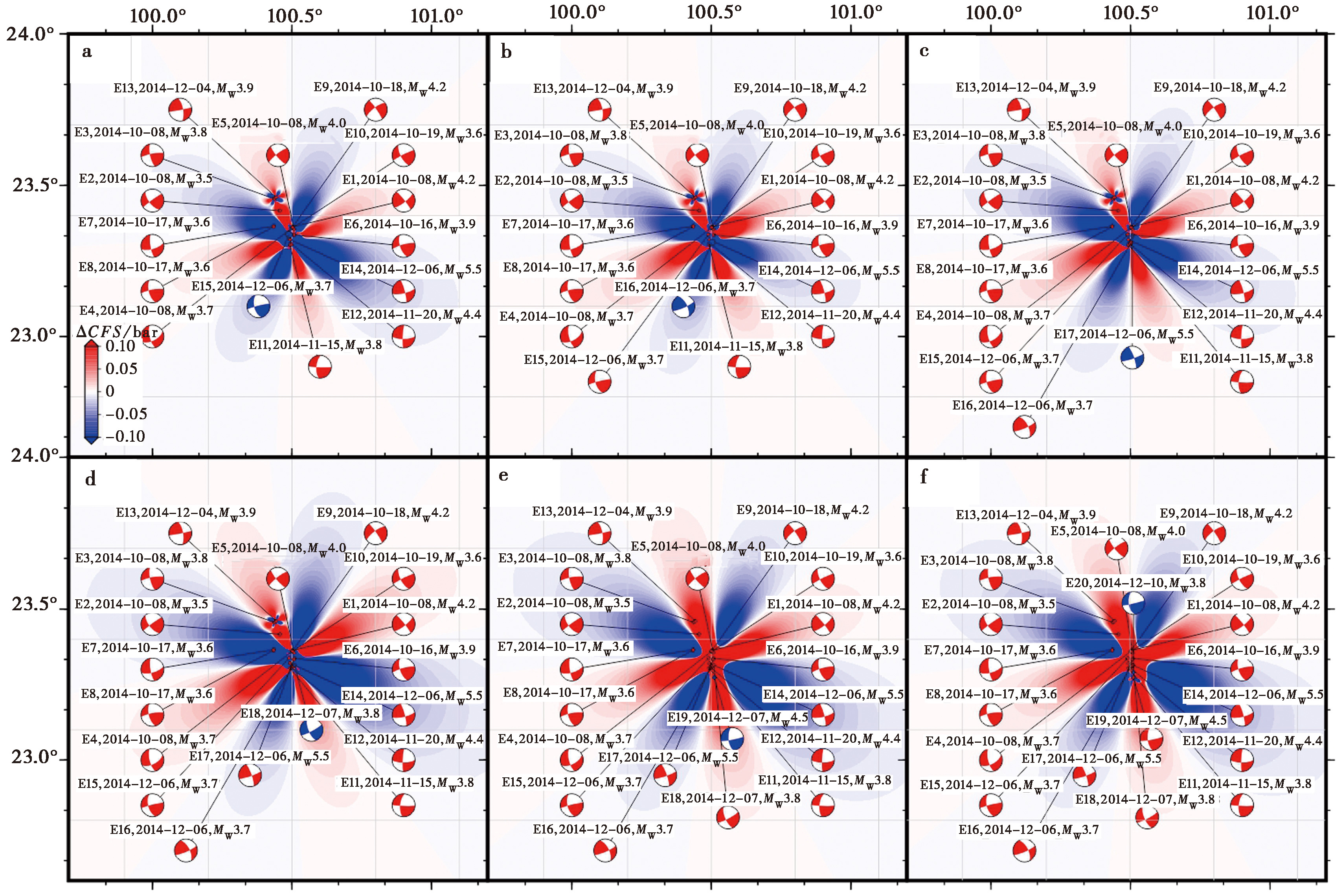
Fig. 9 Static Coulomb stress changes of the earthquake sequence following the MW5.5 strong aftershock.
| [1] |
常祖峰, 陈晓利, 陈宇军, 等. 2016. 景谷 MS6.6 地震同震地表破坏特征与孕震构造[J]. 地球物理学报, 59(7): 2539—2552.
|
|
|
|
| [2] |
陈俊磊. 2022. 川滇块体及其周缘强震震源物理研究[D]. 北京: 中国科学院大学.
|
|
|
|
| [3] |
郭祥云, 蒋长胜, 韩立波, 等. 2022. 中国大陆及邻区震源机制数据集(2009—2021年)[EB/OL].(2024-10-23)[2024-08-08]. https://data.earthquake.cn.
|
|
|
|
| [4] |
李铁明, 白玉柱, 邵德晟. 2017. 滇西南普洱强震群地区地壳形变的数值模拟[J]. 中国地震, 33(2): 203—218.
|
|
|
|
| [5] |
李永华, 徐小明, 张恩会, 等. 2014. 青藏高原东南缘地壳结构及云南鲁甸、 景谷地震深部孕震环境[J]. 地震地质, 36(4): 1204—1216. doi: 10.3969/j.issn.0253-4967.2014.04.021.
|
|
|
|
| [6] |
梁姗姗, 邹立晔, 刘艳琼, 等. 2022a. 2021年12月中国大陆地区M≥4.0地震震源机制解测定[J]. 地震科学进展, 52(1): 40—44.
|
|
|
|
| [7] |
梁姗姗, 邹立晔, 刘艳琼, 等. 2022b. 2022年2—3月中国大陆地区MS≥4.0地震震源机制解测定[J]. 地震科学进展, 52(4): 183—189.
|
|
|
|
| [8] |
梁姗姗, 邹立晔, 刘艳琼, 等. 2022c. 2022年4—6月中国大陆地区MS≥4.0地震震源机制解测定[J]. 地震科学进展, 52(7): 338—343.
|
|
|
|
| [9] |
梁姗姗, 邹立晔, 刘艳琼, 等. 2022d. 2022年7—9月中国大陆地区M≥4.0地震震源机制解测定[J]. 地震科学进展, 52(11): 547—552.
|
|
|
|
| [10] |
梁姗姗, 邹立晔, 刘艳琼, 等. 2023a. 2022年10月—2023年2月中国大陆地区M≥4.0地震震源机制解测定[J]. 地震科学进展, 53(4): 185—191.
|
|
|
|
| [11] |
梁姗姗, 邹立晔, 刘艳琼, 等. 2023b. 2023年3—7月中国大陆地区M≥4.0地震震源机制解测定[J]. 地震科学进展, 53(8): 387—392.
|
|
|
|
| [12] |
梁姗姗, 邹立晔, 刘艳琼, 等. 2023c. 2023年8—10月中国大陆地区M≥4.0地震震源机制解测定[J]. 地震科学进展, 53(12): 589—593.
|
|
|
|
| [13] |
梁姗姗, 邹立晔, 刘艳琼, 等. 2024a. 2023年11月—2024年2月中国大陆地区M≥4.0地震震源机制解测定[J]. 地震科学进展, 54(3): 229—236.
|
|
|
|
| [14] |
梁姗姗, 邹立晔, 刘艳琼, 等. 2024b. 2024年3—6月中国大陆地区M≥4.0地震震源机制解测定[J]. 地震科学进展, 54(7): 476—482.
|
|
|
|
| [15] |
罗钧. 2013. 川滇块体及周边现今震源机制和应力场特征研究[D]. 北京: 中国地震局地震预测研究所.
|
|
|
|
| [16] |
吕坚, 郑秀芬, 肖健, 等. 2013. 2012年9月7日云南彝良 MS5.7、 MS5.6地震震源破裂特征与发震构造研究[J]. 地球物理学报, 56(8): 2645—2654.
|
|
|
|
| [17] |
缪淼, 朱守彪. 2016. 2014年云南景谷 MS6.6 地震的应力触发研究[J]. 大地测量与地球动力学, 36(2): 101—105.
|
|
|
|
| [18] |
盛书中, 胡晓辉, 王晓山, 等. 2022. 云南及邻区地壳应力场研究[J]. 地球物理学报, 65(9): 3252—3267.
|
|
|
|
| [19] |
宋金, 陈运泰, 张勇. 2020. 2013年岷漳地震和2014年景谷地震的能矩比对比研究[J]. 地球物理学报, 63(9): 3324—3337.
|
|
|
|
| [20] |
孙浩越, 江国焰, 何宏林, 等. 2015. 云南景谷 MS6.6 地震对南汀河断裂带地震危险性的影响[J]. 地球物理学报, 58(11): 4197—4206.
|
|
|
|
| [21] |
田建慧, 高原. 2024. 川滇地区地壳应力场研究现状[J]. 地球物理学报, 67(9): 3436—3453.
|
|
|
|
| [22] |
王烁帆, 曾祥方, 王向腾, 等. 2019. 云南景谷地震震源深度: 新生断裂脆韧性转换带深度探讨[J]. 科学通报, 64(4): 474—484.
|
|
|
|
| [23] |
谢张迪, 韩竹军. 2019. 2014年云南景谷 MS6.6 地震发震断层及其动力学参数[J]. 地震地质, 41(4): 887—912. doi: 10.3969/j.issn.0253-4967.2019.04.006.
|
|
|
|
| [24] |
徐甫坤, 刘自凤, 张竹琪, 等. 2015. 2014年云南景谷 MS6.6 地震序列重定位与震源机制解特征[J]. 地球科学(中国地质大学学报), 40(10): 1741—1754.
|
|
|
|
| [25] |
徐锡伟, 程佳, 许冲, 等. 2014. 青藏高原块体运动模型与地震活动主体地区讨论: 鲁甸和景谷地震的启示[J]. 地震地质, 36(4): 1116—1134. doi: 10.3969/j.issn.0253-4967.2014.04.015.
|
|
|
|
| [26] |
徐彦. 2013. 云南地区ML3.0以上中小地震震源机制解汇编(2008—2012)[M]. 昆明: 云南科技出版社.
|
|
|
|
| [27] |
杨帆. 2019. 滇西南及邻区震源机制解与应力场空间分布特征[D]. 廊坊: 防灾科技学院.
|
|
|
|
| [28] |
赵博, 高原, 黄志斌, 等, 2013. 四川芦山 MS7.0 地震余震序列双差定位、 震源机制及应力场反演[J]. 地球物理学报, 56(10): 3385—3395.
|
|
|
|
| [29] |
|
| [30] |
|
| [31] |
|
| [32] |
|
| [33] |
|
| [34] |
|
| [35] |
|
| [36] |
|
| [37] |
DOI URL |
| [38] |
|
| [39] |
|
| [40] |
|
| [41] |
|
| [42] |
|
| [43] |
|
| [44] |
DOI URL |
| [45] |
|
| [46] |
|
| [47] |
|
| [48] |
|
| [49] |
DOI URL |
| [50] |
DOI URL |
| [51] |
|
| [52] |
|
| [1] | WANG Xia, SONG Mei-qing, WU Hao-yu, LIANG Xiang-jun, LÜ Rui, GUO Wen-feng, ZHANG Na, LI Jin. STRESS FIELD IN SHANXI RIFT AND ITS DYNAMIC SIGNIFICANCE [J]. SEISMOLOGY AND GEOLOGY, 2026, 48(1): 257-277. |
| [2] | TANG Mao-yun, LI Cui-ping, HUANG Shi-yuan, DONG Lei, GAO Jian, LI Yong. THE CHARACTERISTICS OF TECTONIC STRESS FIELD AND SPATIOTEMPORAL EVOLUTION OF SEISMIC ACTIVITY IN LUXIAN-RONGCHANG [J]. SEISMOLOGY AND GEOLOGY, 2025, 47(4): 1183-1203. |
| [3] | DONG Chun-li, GUO Wen-feng, LIU Rui-chun, DING Da-ye. STRESS CHARACTERISTICS AND SEISMIC ACTIVITY CORRE-LATION OF SMALL TO MEDIUM EARTHQUAKE SOURCE MECHANISMS IN THE CENTRAL AND SOUTHERN PART OF SHANXI PROVINCE [J]. SEISMOLOGY AND GEOLOGY, 2025, 47(4): 1222-1243. |
| [4] | GUO Zhao-wu, LU Ren-qi, ZHANG Jin-yu, FANG Li-hua, LIU Guan-shen, WU Xi-yan, SUN Xiao, QI Shi-miao. THREE-DIMENSIONAL MODEL OF SEISMOGENIC FAULT AND SEISMIC ENVIRONMENT OF XIZANG DINGRI MS6.8 EARTHQUAKE OF JANUARY 7, 2025 [J]. SEISMOLOGY AND GEOLOGY, 2025, 47(3): 671-688. |
| [5] | XU Yue-yi, XU Bei-bei, XU Chen-yu, SHAO Zhi-gang, HU Chao-zhong. JOINT INVERSION OF THE 2025 DINGRI MS6.8 EARTHQUAKE RUPTURE PROCESS BASED ON TELESEISMIC P WAVES, STRONG-MOTION AND INSAR DATA [J]. SEISMOLOGY AND GEOLOGY, 2025, 47(3): 734-746. |
| [6] | LI Jin, DENG Ming-wen, ZHANG Zhi-guang, SUN Ye-jun, YAO Yuan, XU Kai-chi. PRELIMINARY STUDY ON THE SEISMOGENIC STRUCTURE OF THE 2024 M5 EARTHQUAKE SWARM IN YULI, TARIM BASIN [J]. SEISMOLOGY AND GEOLOGY, 2025, 47(2): 463-487. |
| [7] | CUI Hua-wei, YIN Xin-zhong, CHEN Jiu-hui, GUO Biao, LI Tao, YAO Yuan, LI Shi-ying, JIA Zhen. CHARACTERISTICS OF SEISMICITY AND TECTONIC STRESS FIELD IN THE NORTHEASTERN REGION OF THE PAMIR PLATEAU [J]. SEISMOLOGY AND GEOLOGY, 2025, 47(2): 577-596. |
| [8] | XU Yong-qiang, LEI Jian-she, HU Xiao-hui. DOUBLE-DIFFERENCE RELOCATION OF YUNNAN YANGBI MS6.4 EARTHQUAKE SEQUENCE ON MAY 21, 2021 AND TECTONIC IMPLICATIONS [J]. SEISMOLOGY AND GEOLOGY, 2024, 46(5): 1066-1090. |
| [9] | DONG Chun-li, ZHANG Guang-wei, LI Xin-wei, WANG Yue-jie, DING Da-ye, GONG Zhuo-hong. STUDY ON THE SEISMOGENIC STRUCTURE OF THE 2022 GUJIAO ML4.1 EARTHQUAKE IN SHANXI PROVINCE BASED ON FOCAL MECHANISM AND SEISMIC LOCATION [J]. SEISMOLOGY AND GEOLOGY, 2024, 46(2): 414-432. |
| [10] | WAN Yong-ge, WANG Yu-ru, JIN Zhi-tong. STUDY ON HETEROGENEITY OF THE STRESS FIELD IN THE YANGBI EARTHQUAKE FAULT ZONE [J]. SEISMOLOGY AND GEOLOGY, 2023, 45(4): 1025-1040. |
| [11] | FAN Wen-jie. CHARACTERISTICS OF TECTONIC STRESS FIELD AROUND THE YANGBI MS6.4 EARTHQUAKE AND ITS SURROUNDING AREAS ON MAY 21, 2021 AND ITS GEODYNAMIC IMPLICATION [J]. SEISMOLOGY AND GEOLOGY, 2023, 45(1): 208-230. |
| [12] | YU Shu-yuan, HUANG Xian-liang, ZHENG Hai-gang, LI Ling-li, LUO Jia-ji, DING Juan, FAN Xiao-ran. THE COSEISMIC RUPTURE MODEL AND STRESS CHANGE OF THE 2022 MENYUAN MW6.7 EARTHQUAKE [J]. SEISMOLOGY AND GEOLOGY, 2023, 45(1): 286-303. |
| [13] | YU Shu-yuan, ZHANG Guo-hong, ZHANG Ying-feng, DING Juan, ZHANG Jian-long, FAN Xiao-ran, WANG Shao-jun. COSEISMIC SLIP DISTRIBUTION OF THE 2021 MW5.8 BIRU(TIBET, CHINA)EARTHQUAKE AND THE COULOMB STRESS VARIATION [J]. SEISMOLOGY AND GEOLOGY, 2022, 44(5): 1190-1202. |
| [14] | WANG Yu-qing, FENG Wan-peng, ZHANG Pei-zhen. PRESENT DEFORMATION OF~90° INTERSECTING CONJUGATE FAULTS AND MECHANICAL IMPLICATION TO REGIONAL TECTONICS: A CASE STUDY OF 2019 MW≥6.4 PHILIPPINES EARTHQUAKE SEQUENCE [J]. SEISMOLOGY AND GEOLOGY, 2022, 44(2): 313-332. |
| [15] | YU Zhan-yang, SHEN Xu-zhang, LIANG Hao, ZHENG Wen-jun, LIU Xu-zhou. THE CHARACTERISTICS OF MAJOR FAULTS AND STRESS FIELD IN WEIHE-YUNCHENG BASIN CONSTRAINED BY SEISMIC ACTIVITY AND FOCAL MECHANISM SOLUTIONS [J]. SEISMOLOGY AND GEOLOGY, 2022, 44(2): 395-413. |
| Viewed | ||||||
|
Full text |
|
|||||
|
Abstract |
|
|||||
Copyright © SEISMOLOGY AND GEOLOGY, All Rights Reserved.
Tel: 010-62009049/9063 E-mail: dzdz@ies.ac.cn
Powered by Beijing Magtech Co., Ltd.