
SEISMOLOGY AND GEOLOGY ›› 2026, Vol. 48 ›› Issue (1): 217-232.DOI: 10.3969/j.issn.0253-4967.20240045
• Research pape • Previous Articles Next Articles
THE RUPTURE PROCESS INVERSION OF SEPTEMBER 2022 ML6.6 AND ML6.83 EARTHQUAKES IN TAIWAN ISLAND, CHINA
LIU Lian( ), QU Chun-yan*(), WU Dong-lin, RONG Yi-lin, CHEN Han
State Key Laboratory of Earthquake Dynamics and Forecasting ,Institute of Geology, China Earthquake Administration
-
Received:2025-04-11Revised:2025-02-17Online:2026-02-20Published:2026-03-14
2022年9月台湾岛ML6.6和ML6.832次地震的破裂过程反演
刘恋(), 屈春燕*(), 吴东霖, 容伊霖, 陈晗
地震动力学与强震预测全国重点实验室(中国地震局地质研究所)
-
通讯作者:* 屈春燕, 女, 1966年生, 研究员, 主要研究方向为InSAR/时序InSAR技术在地壳形变观测及卫星红外遥感与断层活动性研究, E-mail: dqyquchy@163.com。 -
作者简介:刘恋, 女, 1995年生, 现为中国地震局地质研究所固体地球物理学专业在读博士研究生, 主要研究方向主要为InSAR地壳形变观测及断层破裂过程反演, E-mail: liulianadream@gmail.com。
-
基金资助:国家自然科学基金(42374007); 中国地震局地质研究所基本科研业务专项(IGCEA2104)

Cite this article
LIU Lian, QU Chun-yan, WU Dong-lin, RONG Yi-lin, CHEN Han. THE RUPTURE PROCESS INVERSION OF SEPTEMBER 2022 ML6.6 AND ML6.83 EARTHQUAKES IN TAIWAN ISLAND, CHINA[J]. SEISMOLOGY AND GEOLOGY, 2026, 48(1): 217-232.
刘恋, 屈春燕, 吴东霖, 容伊霖, 陈晗. 2022年9月台湾岛ML6.6和ML6.832次地震的破裂过程反演[J]. 地震地质, 2026, 48(1): 217-232.
share this article
Add to citation manager EndNote|Ris|BibTeX
URL: https://www.dzdz.ac.cn/EN/10.3969/j.issn.0253-4967.20240045
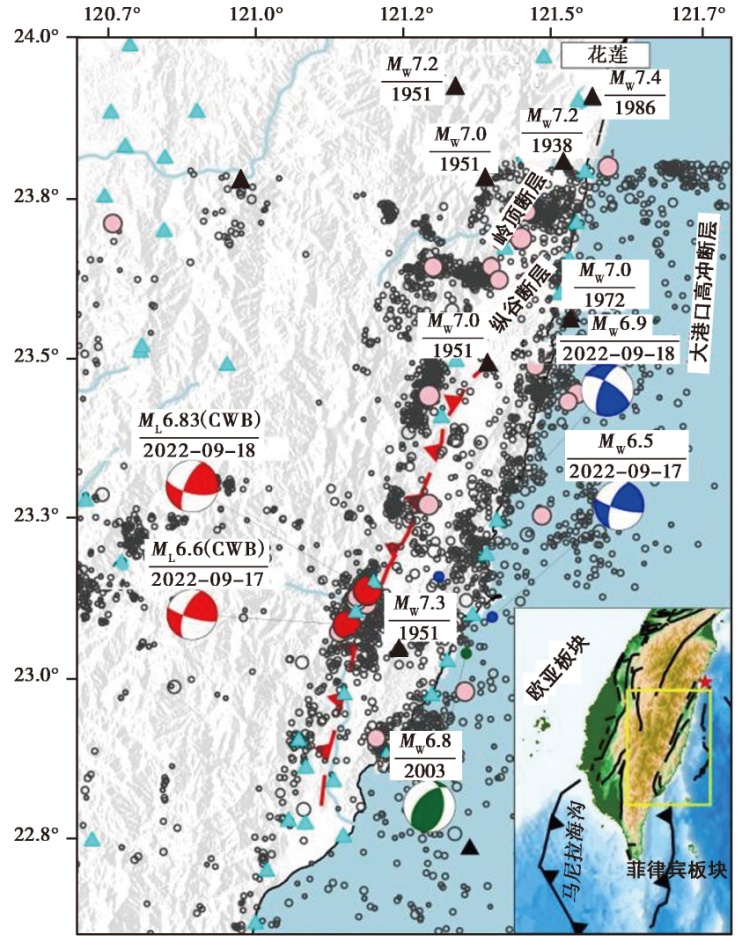
Fig. 1 Tectonic background and aftershock distribution of the 2022 double earthquakes in Taiwan, China.
| 机构 | 发震时间 (UTC) | 东经 /(°) | 北纬 /(°) | 震源深度 /km | 走向 /(°) | 倾角 /(°) | 滑动角 /(°) | 震级 |
|---|---|---|---|---|---|---|---|---|
| CWB | 2022-09-17,13:41:19.11 | 121.1608 | 23.084 | 8.61 | ML6.6 | |||
| 2022-09-18,06:44:15.25 | 121.1958 | 23.137 | 7.81 | ML6.83 | ||||
| USGS | 2022-09-17,13:41:17 | 121.414 | 23.119 | 10 | 202 | 63 | 13 | MW6.5 |
| 2022-09-18,06:44:13 | 121.344 | 23.138 | 10 | 203 | 69 | 25 | MW6.9 | |
| 本文 | 2022-09-17,13:41:19.11 | 121.1608 | 23.084 | 8.61 | 202 | 63 | 13 | MW6.8 |
| 2022-09-18,06:44.15.25 | 121.1958 | 23.137 | 7.81 | 203 | 69 | 70 | MW7.2 |
Table1 Source parameters of two Taitung earthquakes in September 2022
| 机构 | 发震时间 (UTC) | 东经 /(°) | 北纬 /(°) | 震源深度 /km | 走向 /(°) | 倾角 /(°) | 滑动角 /(°) | 震级 |
|---|---|---|---|---|---|---|---|---|
| CWB | 2022-09-17,13:41:19.11 | 121.1608 | 23.084 | 8.61 | ML6.6 | |||
| 2022-09-18,06:44:15.25 | 121.1958 | 23.137 | 7.81 | ML6.83 | ||||
| USGS | 2022-09-17,13:41:17 | 121.414 | 23.119 | 10 | 202 | 63 | 13 | MW6.5 |
| 2022-09-18,06:44:13 | 121.344 | 23.138 | 10 | 203 | 69 | 25 | MW6.9 | |
| 本文 | 2022-09-17,13:41:19.11 | 121.1608 | 23.084 | 8.61 | 202 | 63 | 13 | MW6.8 |
| 2022-09-18,06:44.15.25 | 121.1958 | 23.137 | 7.81 | 203 | 69 | 70 | MW7.2 |
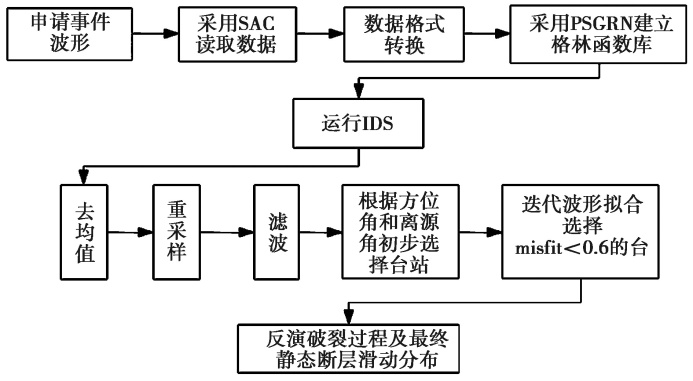
Fig. 2 Inversion flow of source rupture process using IDS method.
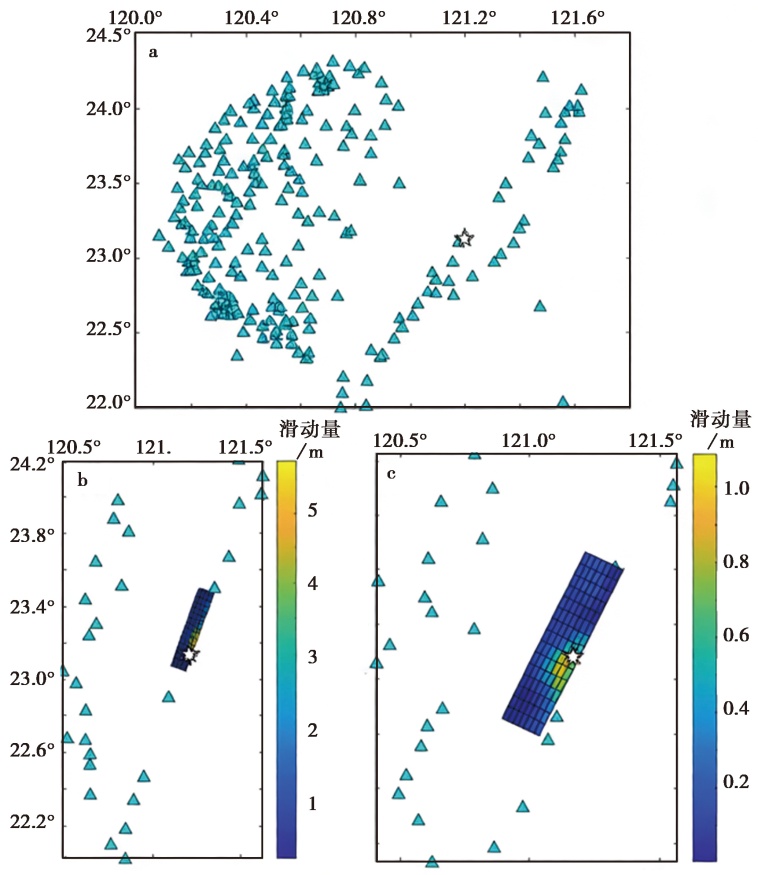
Fig. 3 Distribution of strong seismic data stations used for inversion of rupture process.
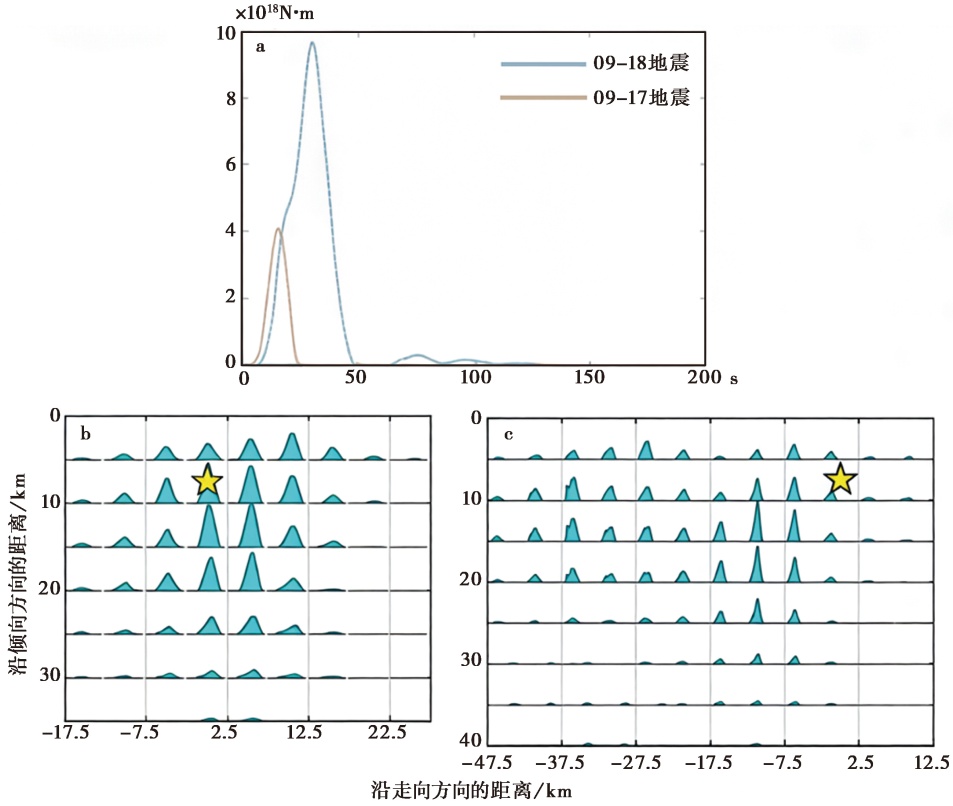
Fig. 4 Source time function of two earthquakes.
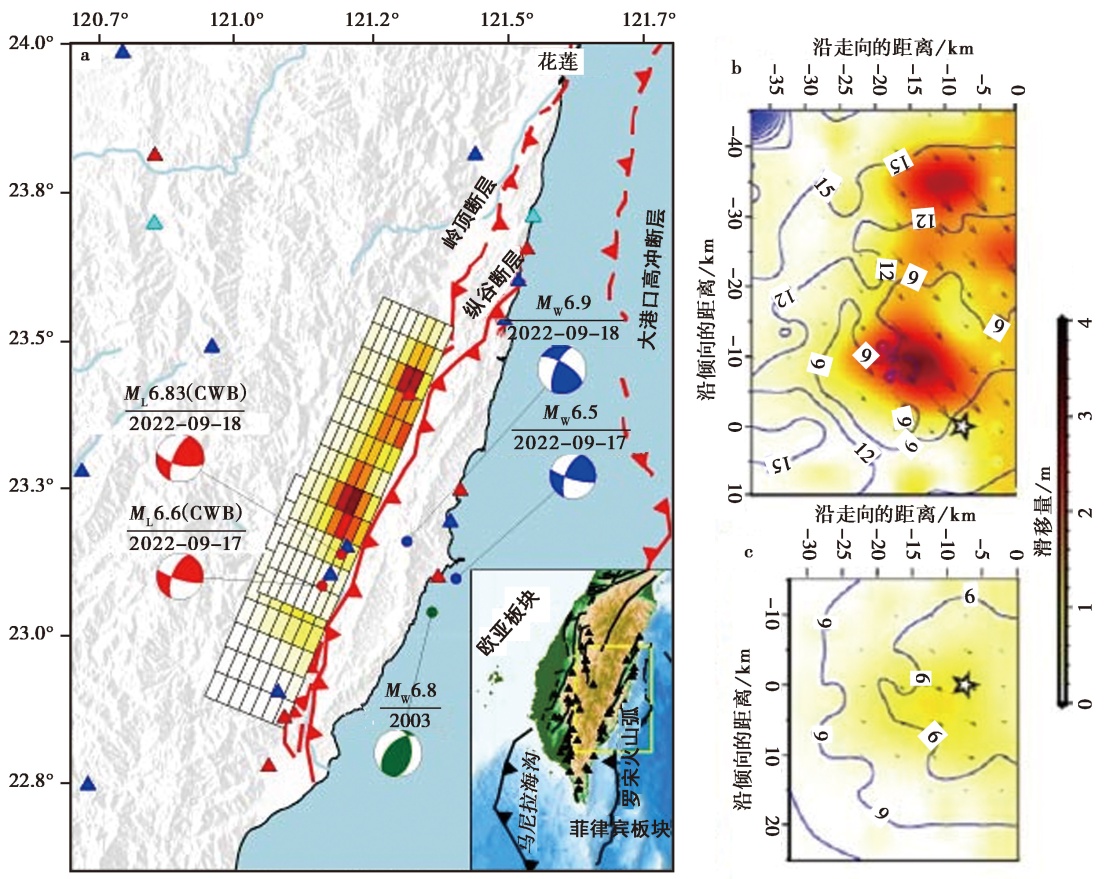
Fig. 5 Cumulative slip distribution of two earthquakes.
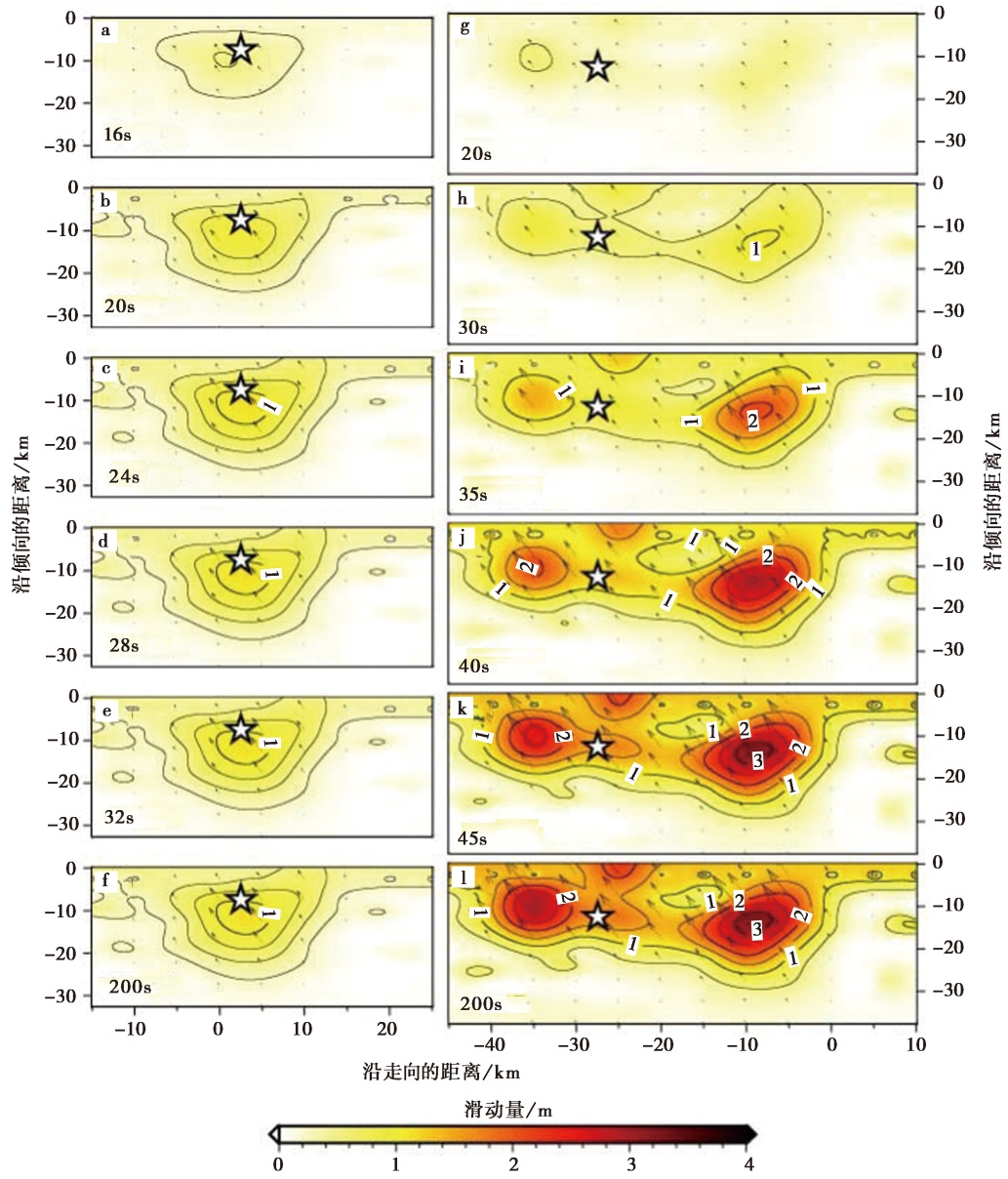
Fig. 6 Cumulative change over time of focal fault rupture process of two earthquakes.
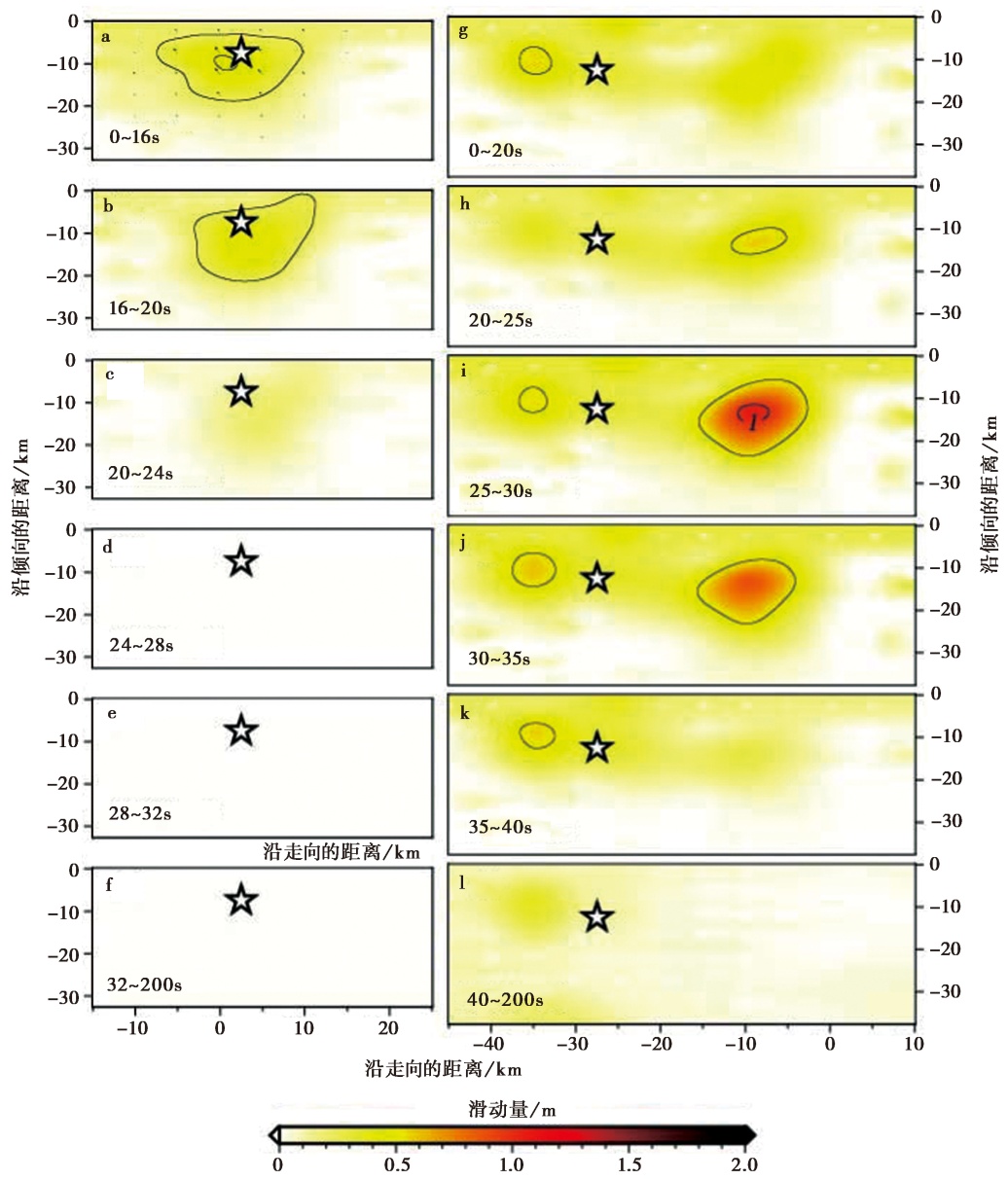
Fig. 7 The incremental change in the source rupture process of two earthquakes over time.
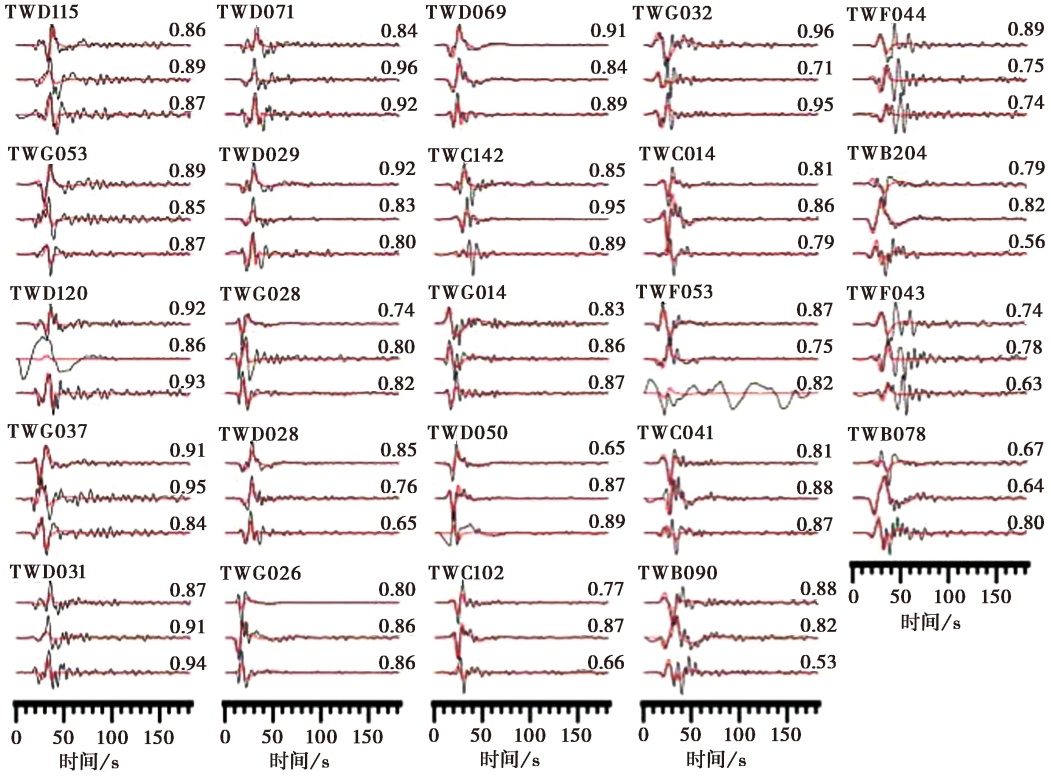
Fig. 8 Fitting results of observed and synthetic waveforms for the earthquake on September 17.
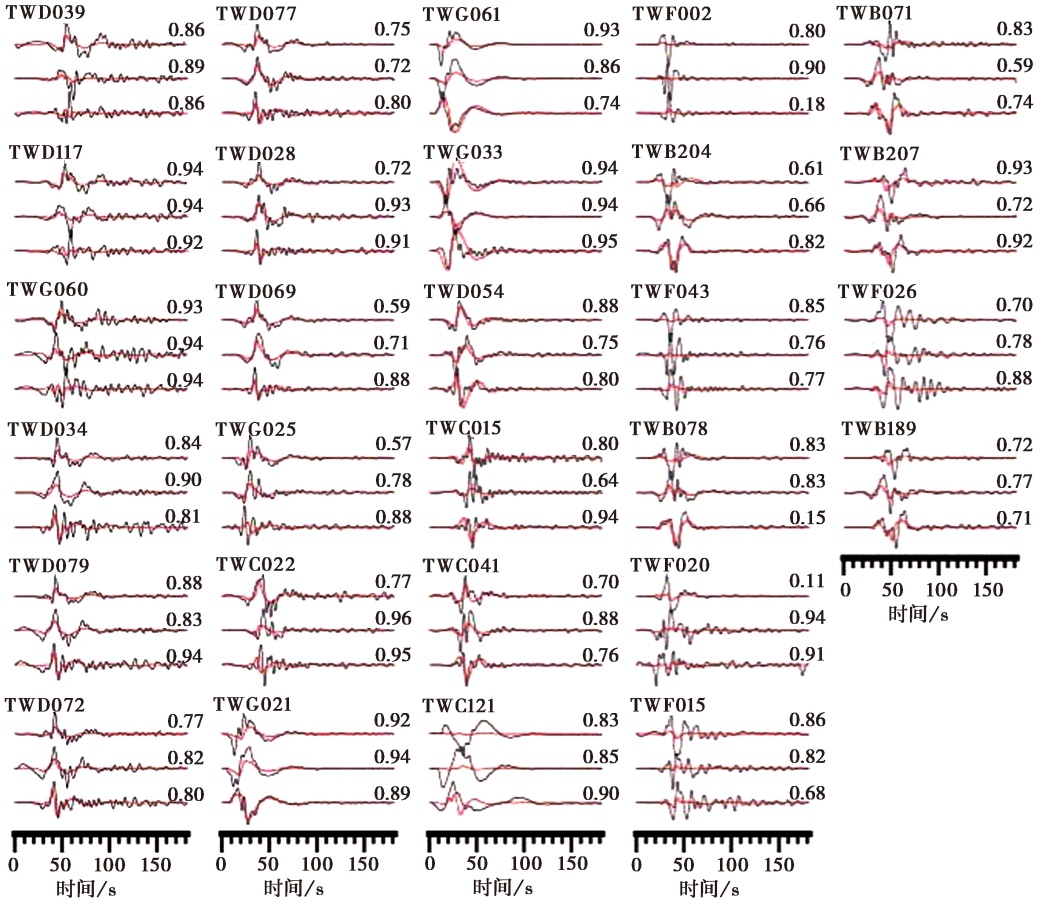
Fig. 9 Fitting results of observed and synthetic waveforms for earthquake on September 18.
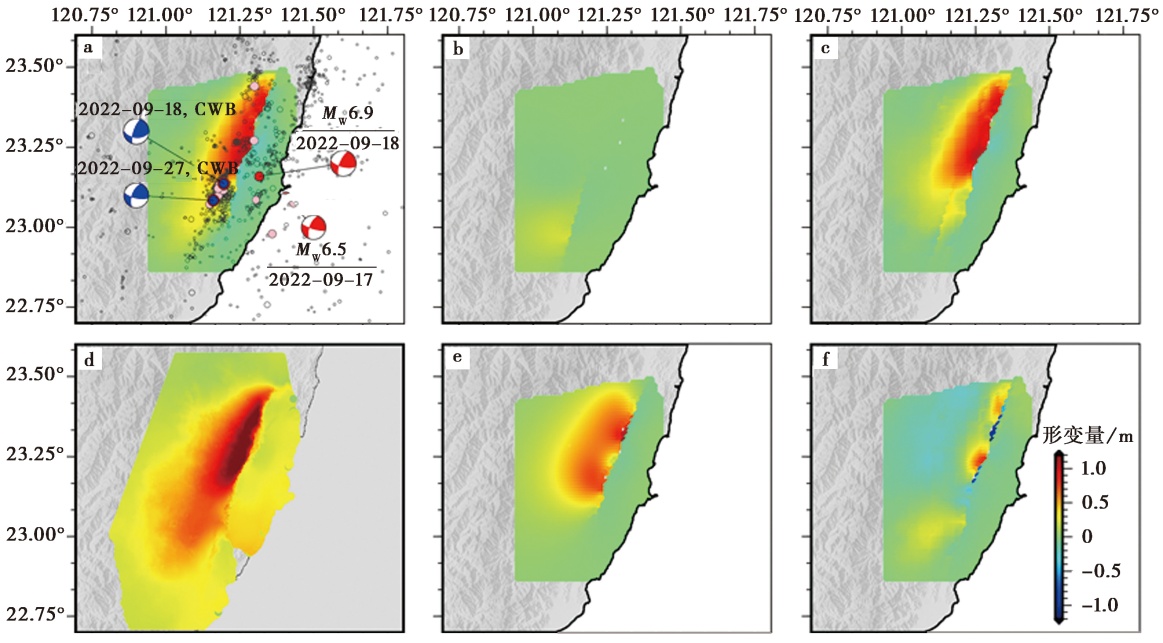
Fig. 10 InSAR deformation field of double earthquakes separated by seismic wave data.
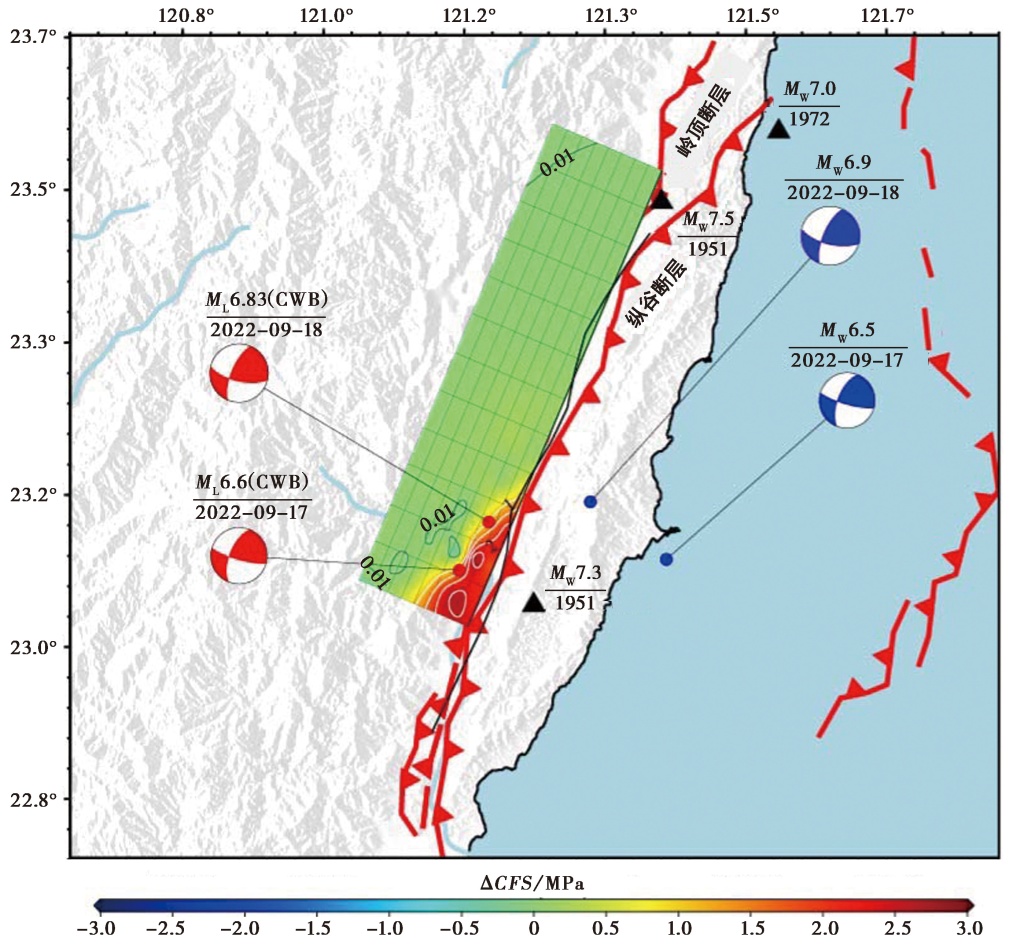
Fig. 11 Coseismic Coulomb stress changes on the fault surface of the September 18, 2022 earthquake caused by the September 17, 2022 earthquake.
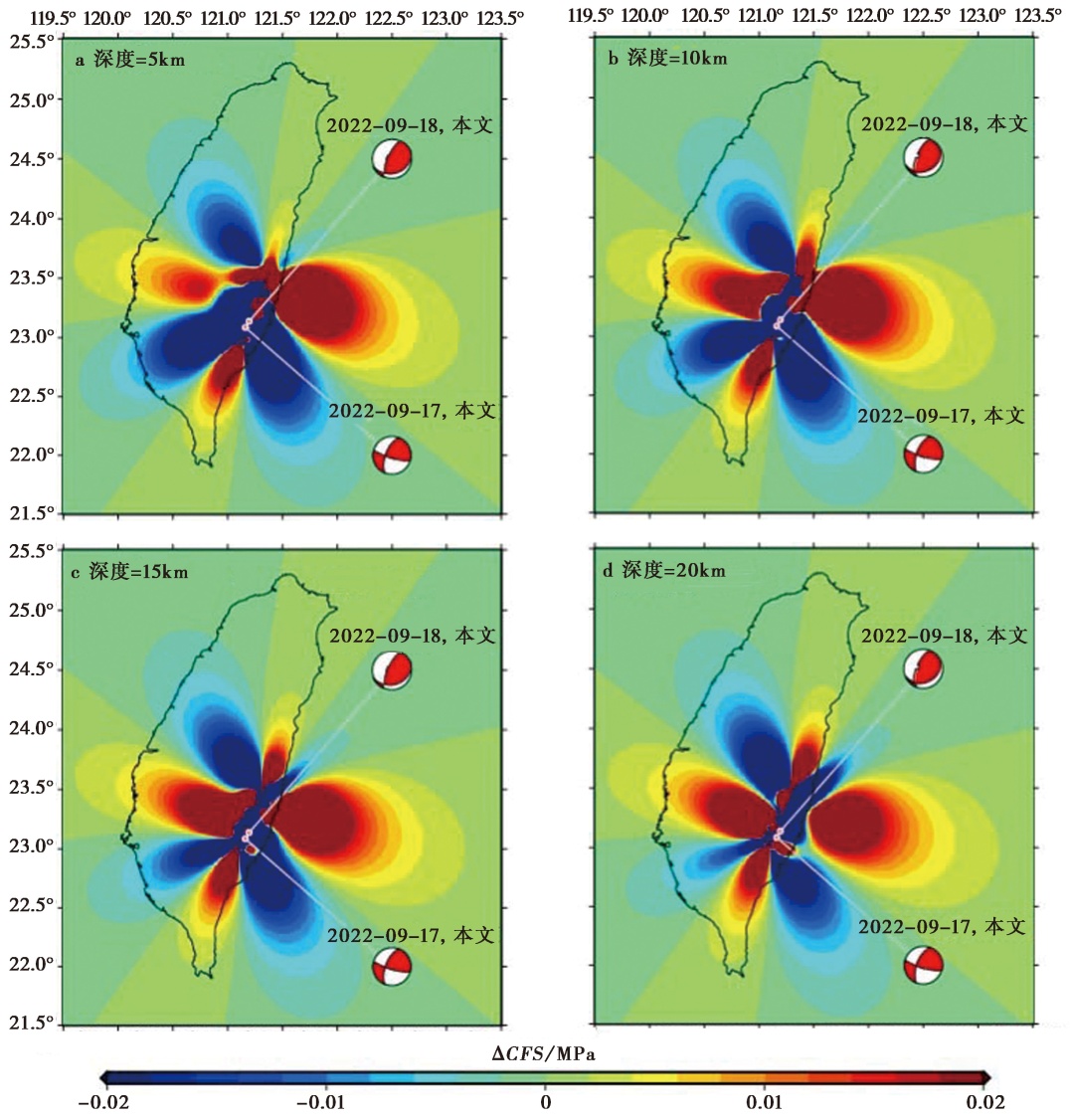
Fig. 12 Influence of the Coulomb stress on the surrounding area caused by the two earthquakes.
| [1] |
胡晓斌. 2024. GPS约束下的2022年台湾 MW6.9 地震破裂滑动分布[J]. 大地测量与地球动力学, 44(2): 173—76.
|
|
|
|
| [2] |
黄少华, 万永革, 冯淦, 等. 2023. 2022年9月17日中国台湾地震序列的触发机制及其动力学成因[J]. 地质力学学报, 29(5): 674—684.
|
|
|
|
| [3] |
张勇, 许力生, 陈运泰. 2015. 2015年尼泊尔 MW7.9 地震破裂过程: 快速反演与初步联合反演[J]. 地球物理学报, 58(5): 1804—1811.
|
|
|
|
| [4] |
DOI URL |
| [5] |
|
| [6] |
|
| [7] |
|
| [8] |
|
| [9] |
DOI URL |
| [10] |
|
| [11] |
DOI |
| [12] |
|
| [13] |
|
| [14] |
|
| [15] |
|
| [16] |
|
| [17] |
|
| [18] |
|
| [19] |
DOI PMID |
| [20] |
DOI URL |
| [21] |
|
| [22] |
|
| [1] | FAN Ji-di, WANG Xin, XIANG Jian-bin. AEROMAGNETIC INTERPRETATION OF BURIED FAULT SPATIAL DISTRIBUTION CHARACTERISTICS IN THE NORTH CHINA BASIN [J]. SEISMOLOGY AND GEOLOGY, 2026, 48(2): 475-496. |
| [2] | LIU Yue, LÜ Xiao-jian. A STUDY ON THE DURATION OF AFTERSHOCK SEQUENCES FOLLOWING SIX LARGE EARTHQUAKES IN North China [J]. SEISMOLOGY AND GEOLOGY, 2026, 48(1): 142-161. |
| [3] | HUANG Xiong-nan, YANG Xiao-ping, LIU Bao-jin, SHI Feng, ZHUANG Qi-tian, HAO Hai-jian, SHI Jin-hu, SUN Hao-yue, LU Ren-qi, HU Zong-kai, LI Kang, CAO Jun, SHU Peng, REN Guang-xue, WANG Zhen-nan. LATE-QUATERNARY ACTIVITY OF THE XUSHUI SOUTH FAULT AND NIUDONG FAULT IN THE NORTH OF THE NORTH CHINA PLAIN, EVIDENCE FROM DRILLING [J]. SEISMOLOGY AND GEOLOGY, 2026, 48(1): 19-42. |
| [4] | LI Chen, XING Hui-lin, YAO Qi, ZHONG Zhen-xiang. DYNAMIC SIMULATION OF DEFORMATION OF ACTIVE BLOCKS IN NORTH CHINA [J]. SEISMOLOGY AND GEOLOGY, 2026, 48(1): 233-256. |
| [5] | YANG Jian-wen, JIN Ming-pei, LI Qing, LI Zhen-ling, YE Beng, LI Jian, ZHANG Ying-feng. COSEISMIC DEFORMATION FIELD AND SLIP MODELS OF JANUARY 23, 2024 MS7.1 WUSHI EARTHQUAKE, XINJIANG, CHINA [J]. SEISMOLOGY AND GEOLOGY, 2025, 47(5): 1382-1395. |
| [6] | REN Jia, WANG Xiu-ying, ZHAO Guo-cun, FAN Xi-wei, GAO Peng, ZHANG Shan-shan, MA Zhi-xia. COMPARISON OF DIFFERENCES IN GROUND MOTION DATA OBTAINED BY DIFFERENT SITE CONDITIONS OF THE JISHISHAN M6.2 EARTHQUAKE [J]. SEISMOLOGY AND GEOLOGY, 2025, 47(4): 1075-1089. |
| [7] | CHEN Zi-long, LIU Gang, LI Qi, CHEN Wei, ZHAO Xin-yu, LIN Mu, TAO Long-wen, QIAO Xue-jun, NIE Zhao-sheng. INSAR COSEISMIC DEFORMATION AND SEISMOGENIC STRUCTURE OF THE 2024 MW7.0 WUSHI EARTHQUAKE [J]. SEISMOLOGY AND GEOLOGY, 2025, 47(2): 429-447. |
| [8] | YANG Jian-wen, JIN Ming-pei, YE Beng, LI Zhen-ling, LI Qing. SOURCE RUPTURE MECHANISM AND STRESS CHANGES TO THE ADJACENT AREA OF JANUARY 7, 2025, MS6.8 DINGRI EARTHQUAKE, XIZANG, CHINA [J]. SEISMOLOGY AND GEOLOGY, 2025, 47(1): 36-48. |
| [9] | FENG Shao-ying, LIU Bao-jin, ZUO Ying, JI Ji-fa, TAN Ya-li, DING Kui, WU Quan. THE STUDY OF FINE CRUSTAL STRUCTURE OF THE SOUTHERN MARGIN OF TAIHANG MOUNTAIN BY DEEP SEISMIC REFLECTION PROFILE [J]. SEISMOLOGY AND GEOLOGY, 2025, 47(1): 267-283. |
| [10] | WU Xi-yan, LU Ren-qi, ZHANG Jin-yu, SUN Xiao, XU Fang, CHEN Gui-hua. A WEB-BASED PROTOTYPE SYSTEM FOR THE THREE-DIMENSIONAL FAULT MODELS OF THE CHINA SEISMIC EXPERIMENTAL SITE [J]. SEISMOLOGY AND GEOLOGY, 2024, 46(1): 35-47. |
| [11] | ZHU Guo-jun, FENG Shao-ying, YUAN Hong-ke, HOU Li-hua, QIN Jing-jing, HAN Jian, WU Quan, ZUO Ying. RESEARCH ON SHALLOW STRUCTURAL CHARACTERISTICS OF THE ZHUMADIAN-HUAIBIN DEPRESSION IN THE SOUTHERN MARGIN OF THE NORTH CHINA BLOCK BY USING REFLECTION SEISMIC DATA [J]. SEISMOLOGY AND GEOLOGY, 2023, 45(6): 1419-1431. |
| [12] | WANG Ming-liang, ZHANG Yang, XU Shun-qiang, XU Zhi-ping. DEEP STRUCTURE IN THE MIDDLE AND SOUTH AREA OF NORTH CHINA DEPRESSION AND THE VICINITY BY MAGNETOTELLURICS [J]. SEISMOLOGY AND GEOLOGY, 2023, 45(2): 536-552. |
| [13] | WU Guo, RAN Hong-liu, ZHOU Qing, XIE Zhuo-juan. ADAPTIVELY SMOOTHED SEISMICITY MODEL FOR CHINA SEAS AND ADJACENT REGIONS [J]. SEISMOLOGY AND EGOLOGY, 2022, 44(1): 150-169. |
| [14] | XU Fang, LU Ren-qi, WANG Shuai, JIANG Guo-yan, LONG Feng, WANG Xiao-shan, SU Peng, LIU Guan-shen. STUDY ON THE SEISMOTECTONICS OF THE QINGBAIJIANG MS5.1 EARTHQUAKE IN SICHUAN PROVINCE IN 2020 BY MULTIPLE CONSTRAINT METHOD [J]. SEISMOLOGY AND EGOLOGY, 2022, 44(1): 220-237. |
| [15] | ZHANG Zhi-liang, LIU Jin-rui, ZHANG Hao-bo, ZHANG Zhong-bao, HA Guang-hao, MIN Wei, NIE Jun-sheng, REN Zhi-kun. [J]. SEISMOLOGY AND EGOLOGY, 2021, 43(6): 1351-1367. |
| Viewed | ||||||
|
Full text |
|
|||||
|
Abstract |
|
|||||
Copyright © SEISMOLOGY AND GEOLOGY, All Rights Reserved.
Tel: 010-62009049/9063 E-mail: dzdz@ies.ac.cn
Powered by Beijing Magtech Co., Ltd.