
SEISMOLOGY AND GEOLOGY ›› 2026, Vol. 48 ›› Issue (1): 257-277.DOI: 10.3969/j.issn.0253-4967.20240030
• Research pape • Previous Articles
STRESS FIELD IN SHANXI RIFT AND ITS DYNAMIC SIGNIFICANCE
WANG Xia1,2)( ), SONG Mei-qing1,2),*(), WU Hao-yu1,2), LIANG Xiang-jun1,2), LÜ Rui1,2), GUO Wen-feng1,2), ZHANG Na1,2), LI Jin3)
- 1)
Shanxi Earthquake Agency
2)Shanxi Taiyuan National Continental Rift Valley Dynamics Observation and Research Station
3)Tangshan Seismic Monitoring Central Station
-
Received:2025-03-12Revised:2025-10-10Online:2026-02-20Published:2026-03-14
山西裂谷构造应力场特征及其动力学意义
王霞1,2)(), 宋美卿1,2),*(), 吴昊昱1,2), 梁向军1,2), 吕睿1,2), 郭文峰1,2), 张娜1,2), 李金3)
- 1)
山西省地震局
2)太原大陆裂谷动力学国家野外科学观测研究站
3)唐山地震监测中心站
-
通讯作者:* 宋美卿, 女, 1968年生, 研究员, 主要从事地震综合预报研究, E-mail: smq28@126.com。 -
作者简介:王霞, 女, 1987年生, 硕士, 高级工程师, 主要从事地震活动性和综合预测研究, E-mail: 365372858@qq.com。
-
基金资助:太原大陆裂谷国家野外科学观测研究站研究课题(NORSTY2021-01); 太原大陆裂谷国家野外科学观测研究站研究课题(NORSTY2023-07); 太原大陆裂谷国家野外科学观测研究站研究课题(NORSTY2023-08); 地震预测开放基金(XH24004D); 山西省基础研究计划(产业发展类)联合项目(202503011281001); 中国地震局地震科技星火计划项目(XH200403Y); 山西省科技厅面上青年基金(201901D211548); 北京市自然科学基金(8232053); 河北省地震科技星火计划项目(DZ2023120900011)

Cite this article
WANG Xia, SONG Mei-qing, WU Hao-yu, LIANG Xiang-jun, LÜ Rui, GUO Wen-feng, ZHANG Na, LI Jin. STRESS FIELD IN SHANXI RIFT AND ITS DYNAMIC SIGNIFICANCE[J]. SEISMOLOGY AND GEOLOGY, 2026, 48(1): 257-277.
王霞, 宋美卿, 吴昊昱, 梁向军, 吕睿, 郭文峰, 张娜, 李金. 山西裂谷构造应力场特征及其动力学意义[J]. 地震地质, 2026, 48(1): 257-277.
share this article
Add to citation manager EndNote|Ris|BibTeX
URL: https://www.dzdz.ac.cn/EN/10.3969/j.issn.0253-4967.20240030
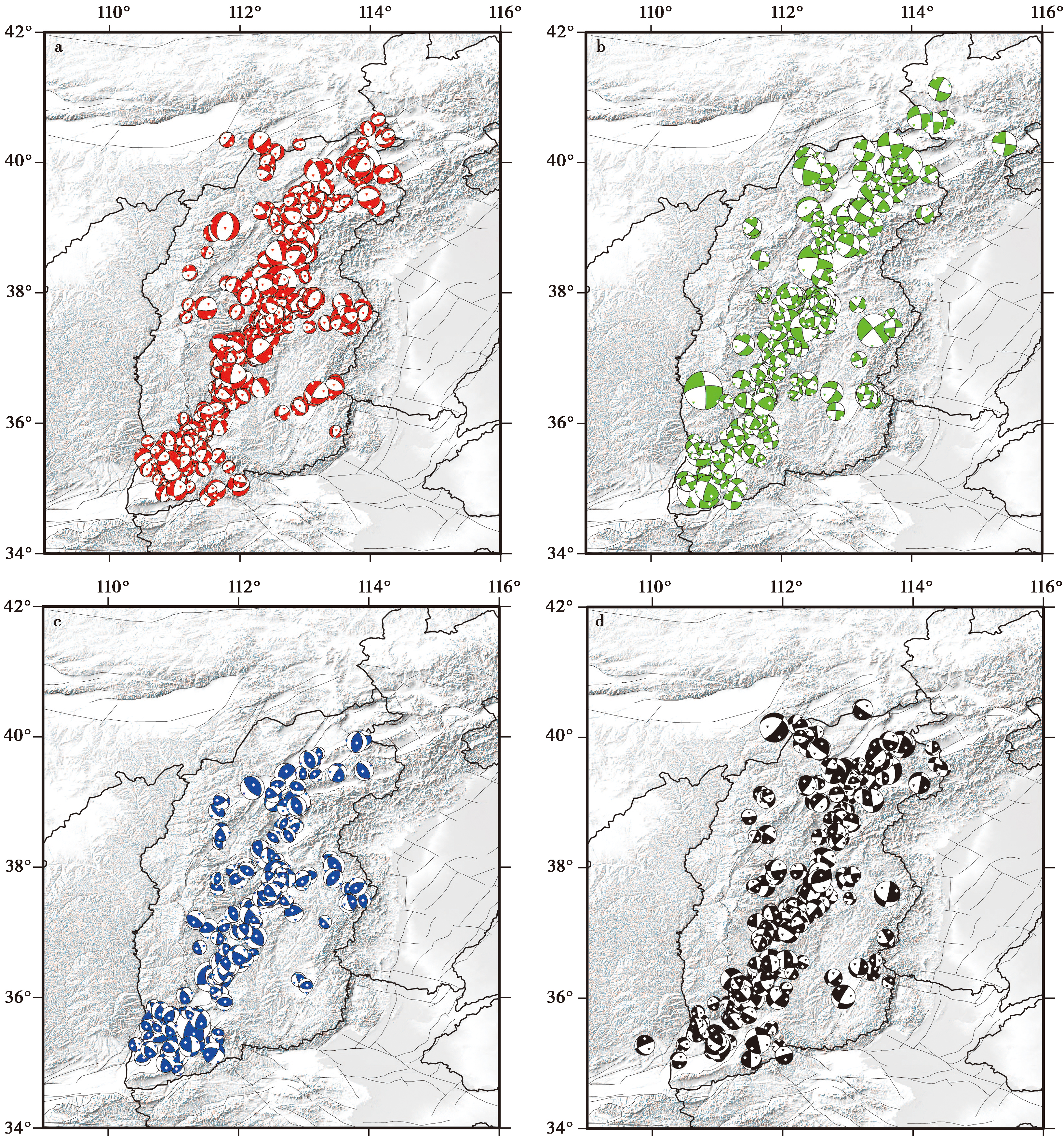
Fig. 1 The spatial distribution of focal mechanism solutions of earthquakes in Shanxi rift.
| 类别 | 正断型 | 正走滑型 | 走滑型 | 逆走滑型 | 逆断型 | 合计 | 数据 |
|---|---|---|---|---|---|---|---|
| 次数/次 | 300 | 130 | 363 | 95 | 137 | 1025 | 山西全部数据 |
| 比例 | 29.27% | 12.68% | 35.41% | 9.27% | 13.37% | 100% | |
| 次数/次 | 230 | 93 | 229 | 59 | 113 | 724 | 山西地区ML<3.0 |
| 比例 | 31.77% | 12.85% | 31.63% | 8.15% | 15.61% | 100% | |
| 次数/次 | 70 | 37 | 134 | 36 | 24 | 301 | 山西地区ML≥3.0 |
| 比例 | 23.26% | 12.29% | 44.52% | 11.96% | 7.97% | 100% |
Table1 The classification of focal mechanism solutions of small-moderate earthquakes in Shanxi rift
| 类别 | 正断型 | 正走滑型 | 走滑型 | 逆走滑型 | 逆断型 | 合计 | 数据 |
|---|---|---|---|---|---|---|---|
| 次数/次 | 300 | 130 | 363 | 95 | 137 | 1025 | 山西全部数据 |
| 比例 | 29.27% | 12.68% | 35.41% | 9.27% | 13.37% | 100% | |
| 次数/次 | 230 | 93 | 229 | 59 | 113 | 724 | 山西地区ML<3.0 |
| 比例 | 31.77% | 12.85% | 31.63% | 8.15% | 15.61% | 100% | |
| 次数/次 | 70 | 37 | 134 | 36 | 24 | 301 | 山西地区ML≥3.0 |
| 比例 | 23.26% | 12.29% | 44.52% | 11.96% | 7.97% | 100% |
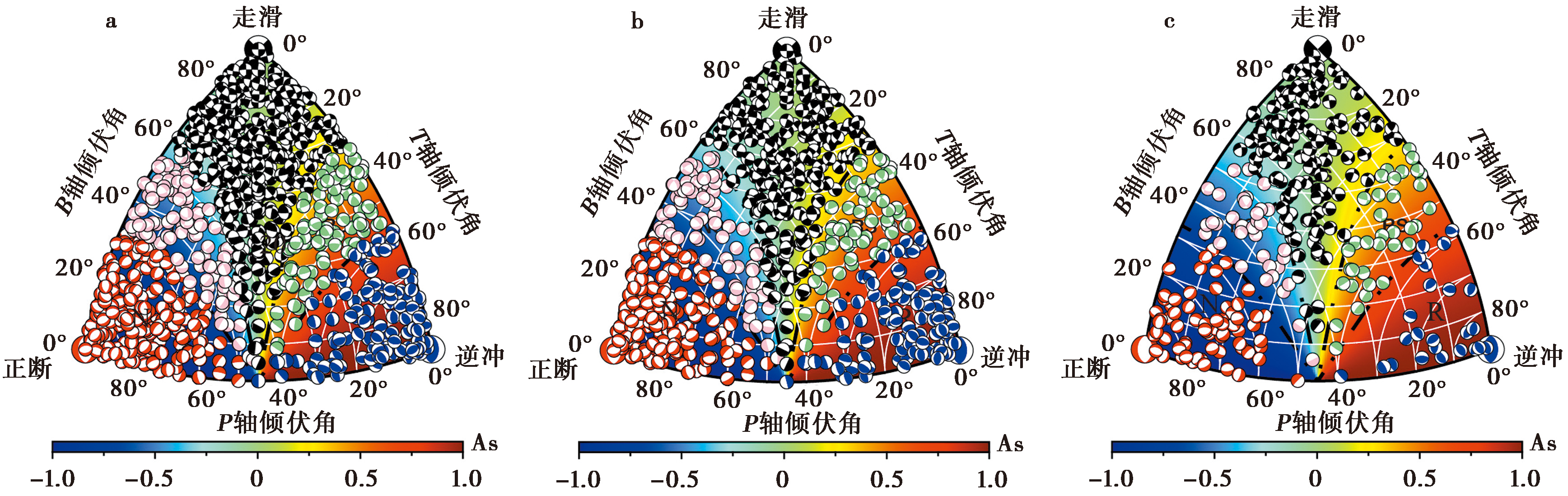
Fig. 2 The focal mechanism solution classification of small-moderate earthquakes in Shanxi rift.
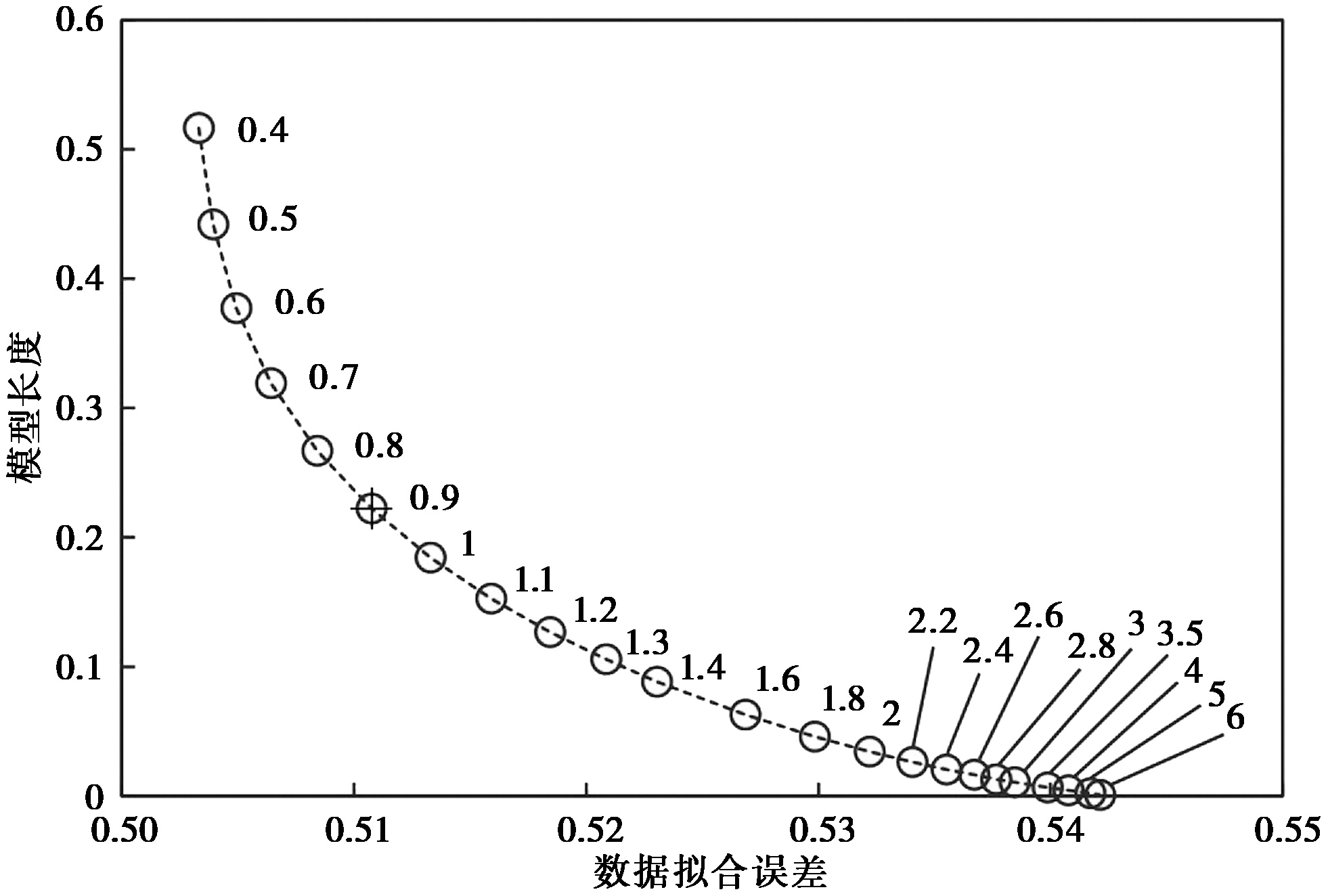
Fig. 3 The damping curve.
| 区域 | R | σ1 | σ2 | σ3 | 类型 | |||
|---|---|---|---|---|---|---|---|---|
| 方位角/(°) | 倾伏角/(°) | 方位角/(°) | 倾伏角/(°) | 方位角/(°) | 倾伏角/(°) | |||
| 山西地区所有数据 | 0.11 | 143.56 | -89.08 | 58.96 | 0.09 | 148.96 | 0.92 | NF |
| 山西地区ML≥3.0 | 0.10 | 58.83 | 14.88 | 64.67 | -75.05 | 149.22 | 1.45 | SS |
| 山西地区ML<3.0 | 0.21 | 65.89 | -82.34 | 56.95 | 7.57 | 147.11 | 1.18 | NF |
| 大同盆地 | 0.32 | 51.13 | -34.12 | 54.30 | 55.84 | 142.13 | -1.47 | SS |
| 忻定盆地 | 0.28 | 73.24 | 76.78 | 46.47 | -11.84 | 137.69 | -5.78 | NF |
| 太原盆地 | 0.34 | 56.55 | 77.80 | 72.39 | -11.75 | 161.72 | 3.24 | NF |
| 临汾盆地 | 0.06 | 59.62 | -53.26 | 53.83 | 36.60 | 145.89 | 2.78 | NF |
| 运城盆地 | 0.68 | 64.8 | 38.73 | 44.81 | -49.52 | 146.70 | -9.97 | SS |
Table2 The parameters of tectonic stress field in Shanxi rift and 5 basins
| 区域 | R | σ1 | σ2 | σ3 | 类型 | |||
|---|---|---|---|---|---|---|---|---|
| 方位角/(°) | 倾伏角/(°) | 方位角/(°) | 倾伏角/(°) | 方位角/(°) | 倾伏角/(°) | |||
| 山西地区所有数据 | 0.11 | 143.56 | -89.08 | 58.96 | 0.09 | 148.96 | 0.92 | NF |
| 山西地区ML≥3.0 | 0.10 | 58.83 | 14.88 | 64.67 | -75.05 | 149.22 | 1.45 | SS |
| 山西地区ML<3.0 | 0.21 | 65.89 | -82.34 | 56.95 | 7.57 | 147.11 | 1.18 | NF |
| 大同盆地 | 0.32 | 51.13 | -34.12 | 54.30 | 55.84 | 142.13 | -1.47 | SS |
| 忻定盆地 | 0.28 | 73.24 | 76.78 | 46.47 | -11.84 | 137.69 | -5.78 | NF |
| 太原盆地 | 0.34 | 56.55 | 77.80 | 72.39 | -11.75 | 161.72 | 3.24 | NF |
| 临汾盆地 | 0.06 | 59.62 | -53.26 | 53.83 | 36.60 | 145.89 | 2.78 | NF |
| 运城盆地 | 0.68 | 64.8 | 38.73 | 44.81 | -49.52 | 146.70 | -9.97 | SS |
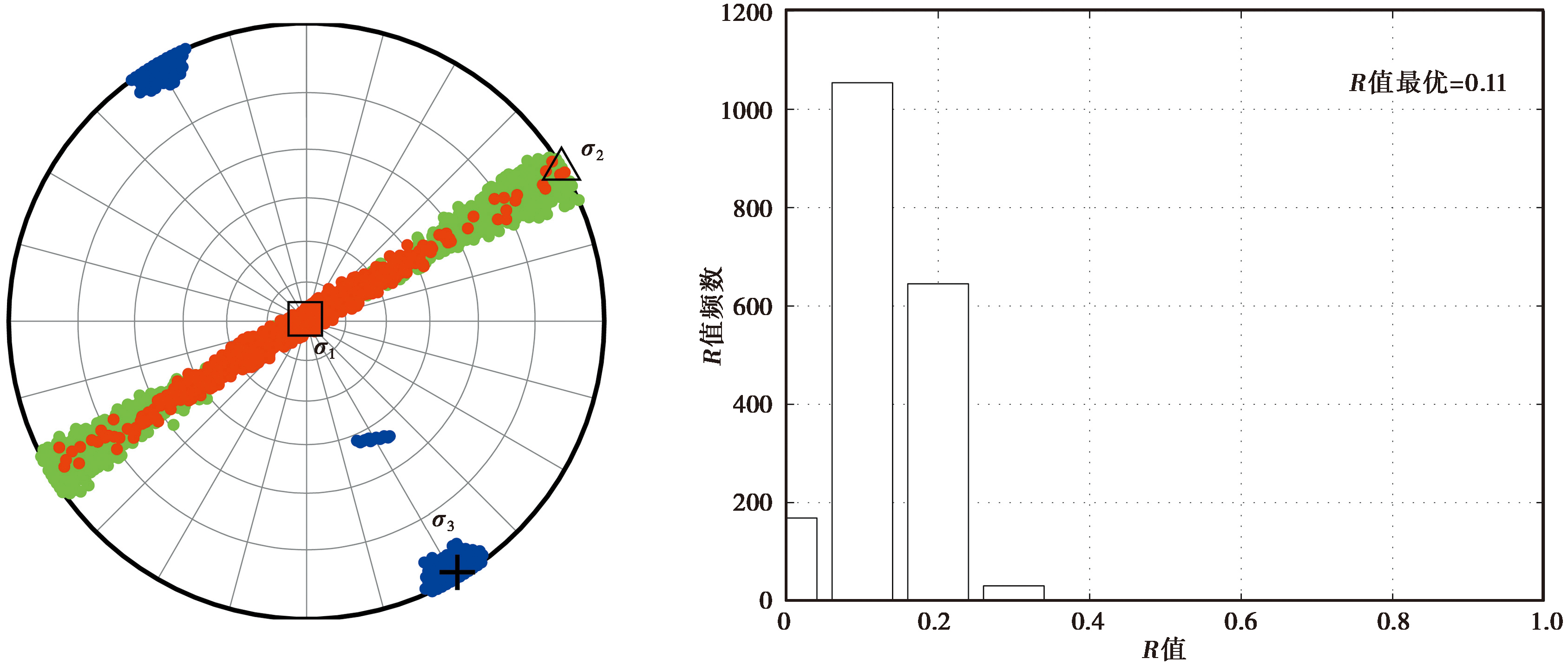
Fig. 4 The main axis of stress field and R frequency in Shanxi rift(all data).
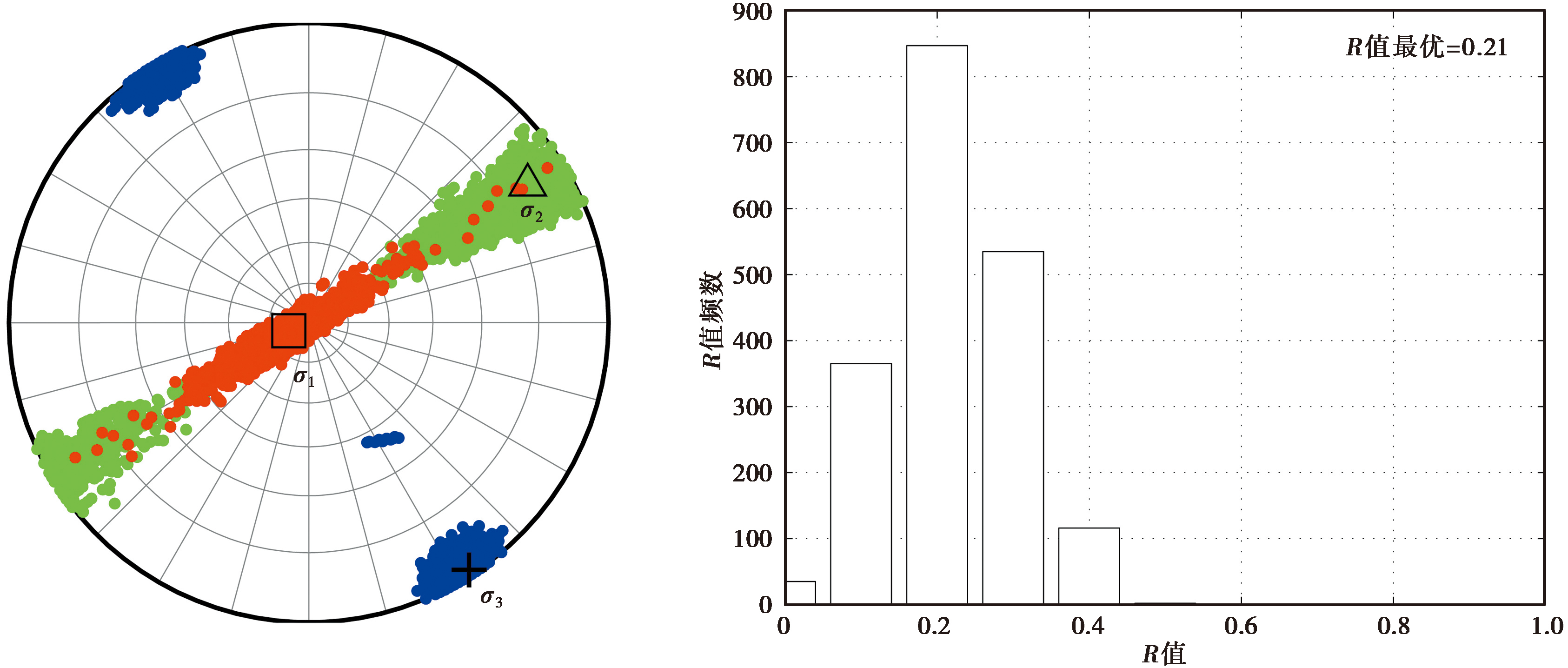
Fig. 5 The main axis of stress field and R frequency in Shanxi rift(ML<3.0 earthquakes).
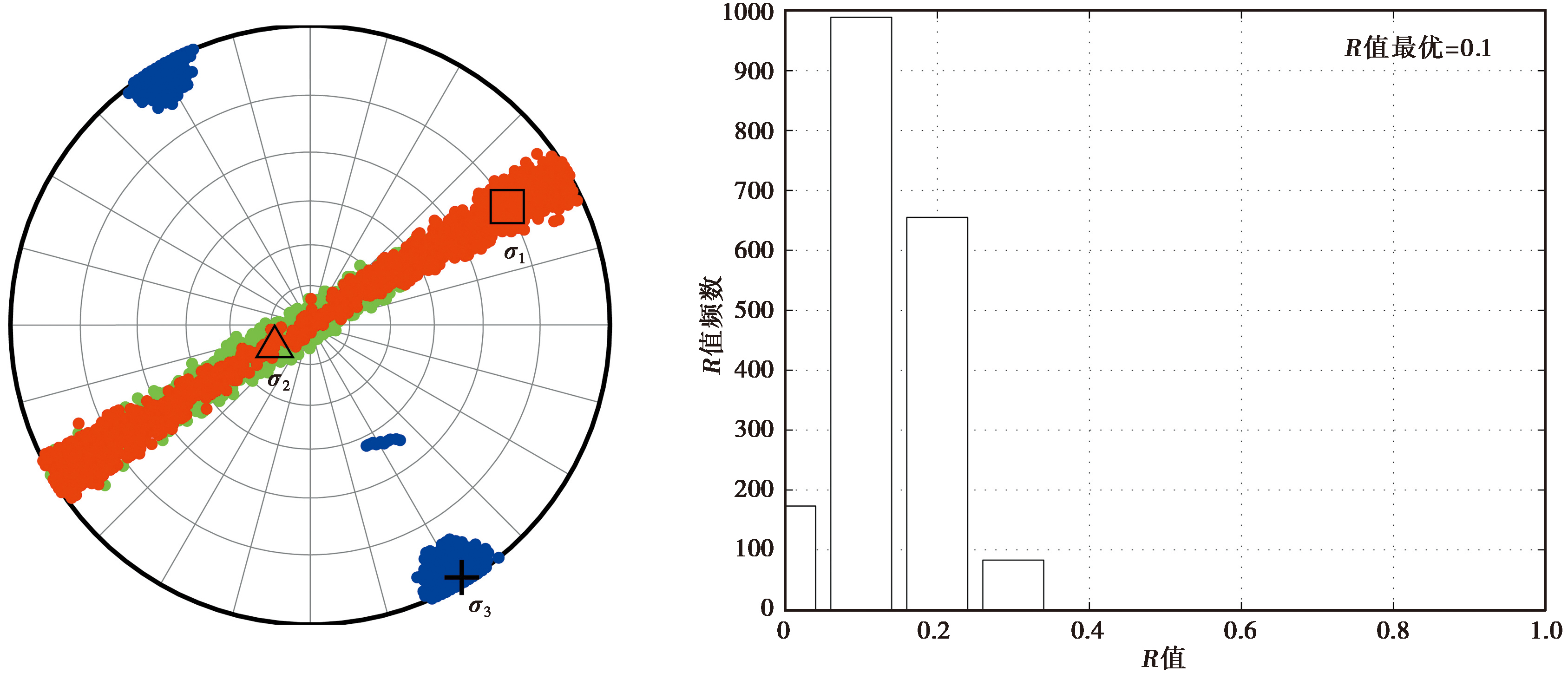
Fig. 6 The main axis of stress field and R frequency in Shanxi rift(ML≥3.0 earthquakes).
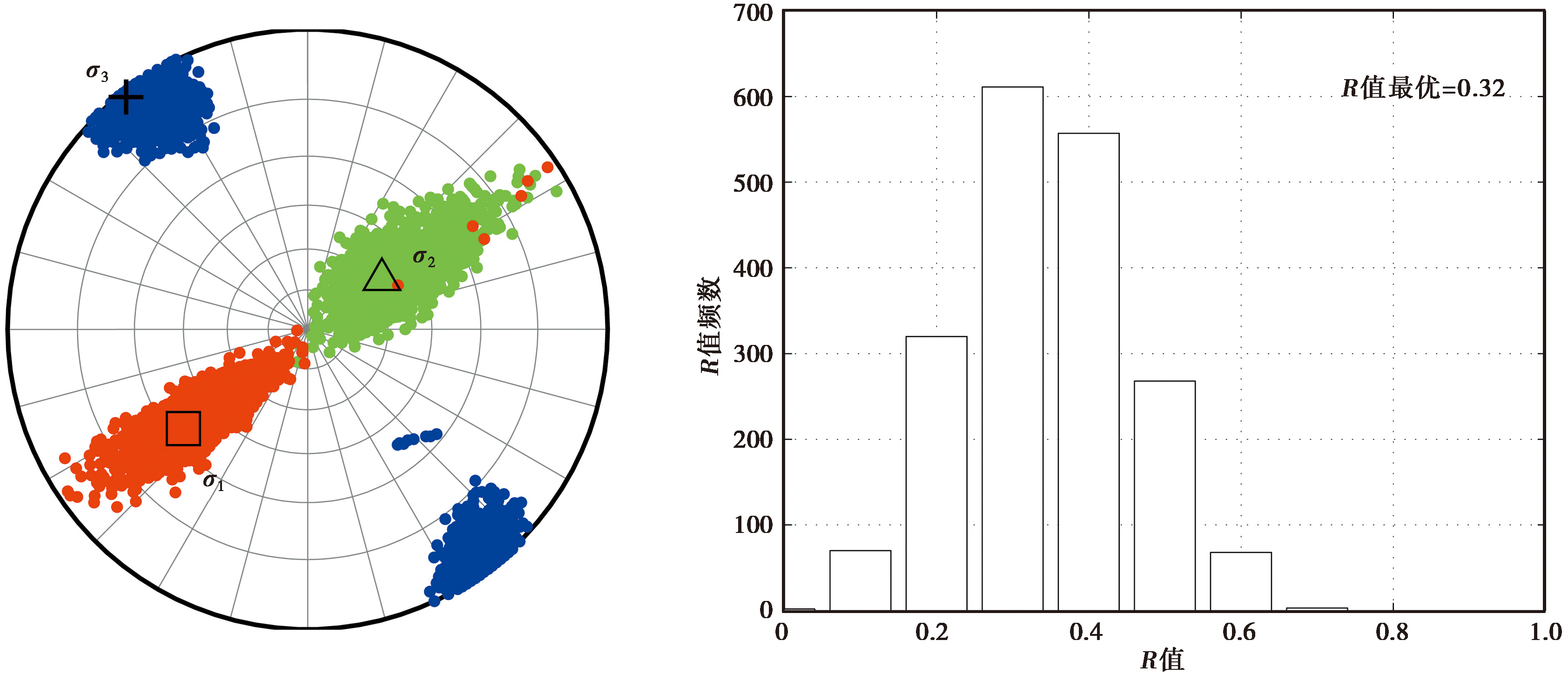
Fig. 7 The main axis of stress field and R frequency in Datong Basin, Shanxi rift.
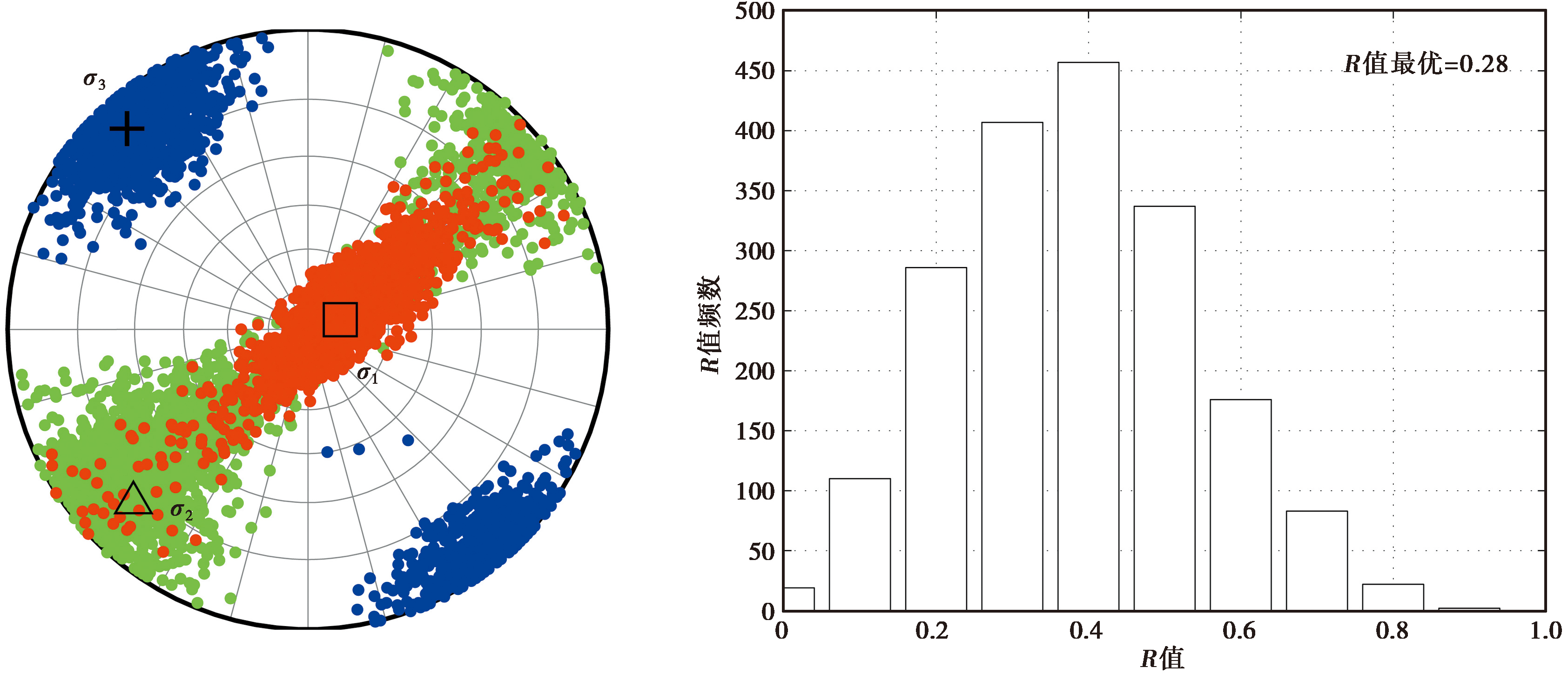
Fig. 8 The main axis of stress field and R frequency in Xinding Basin, Shanxi rift.
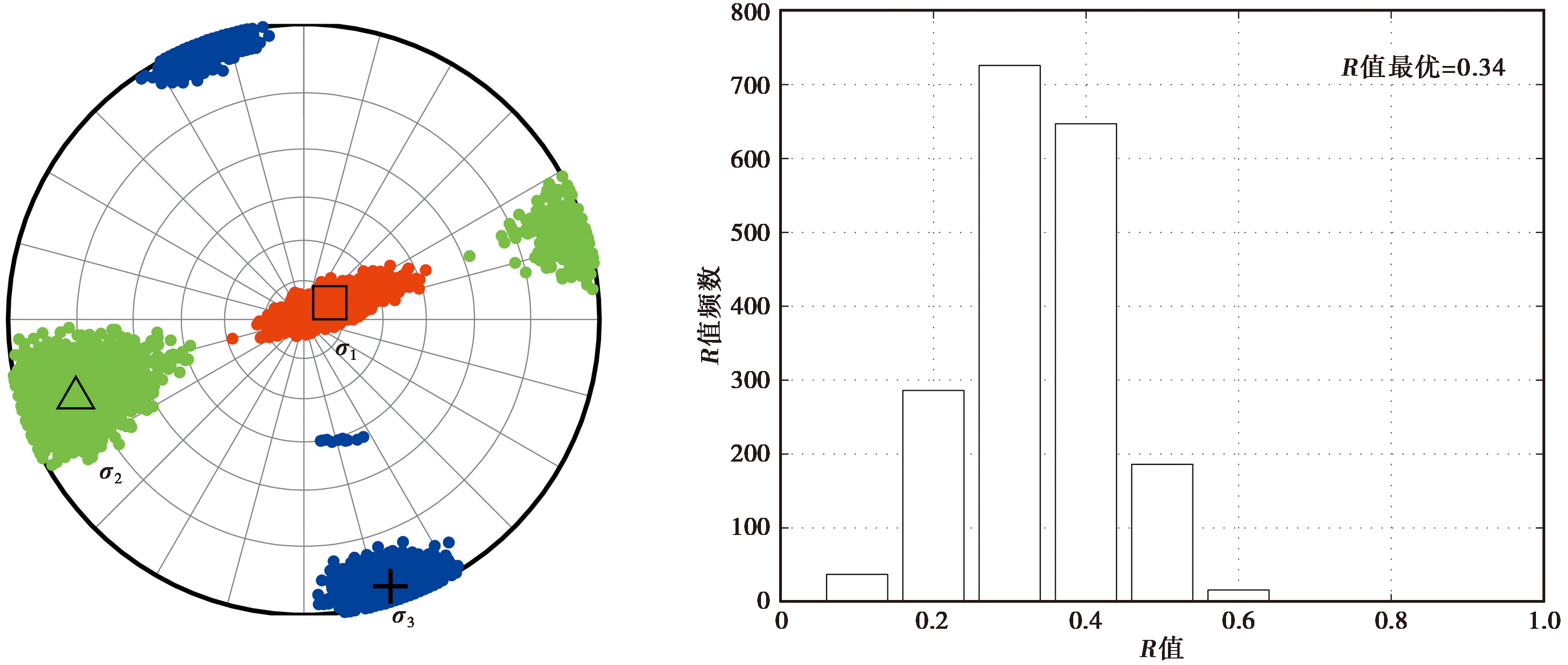
Fig. 9 The main axis of stress field and R frequency in Taiyuan Basin, Shanxi rift.
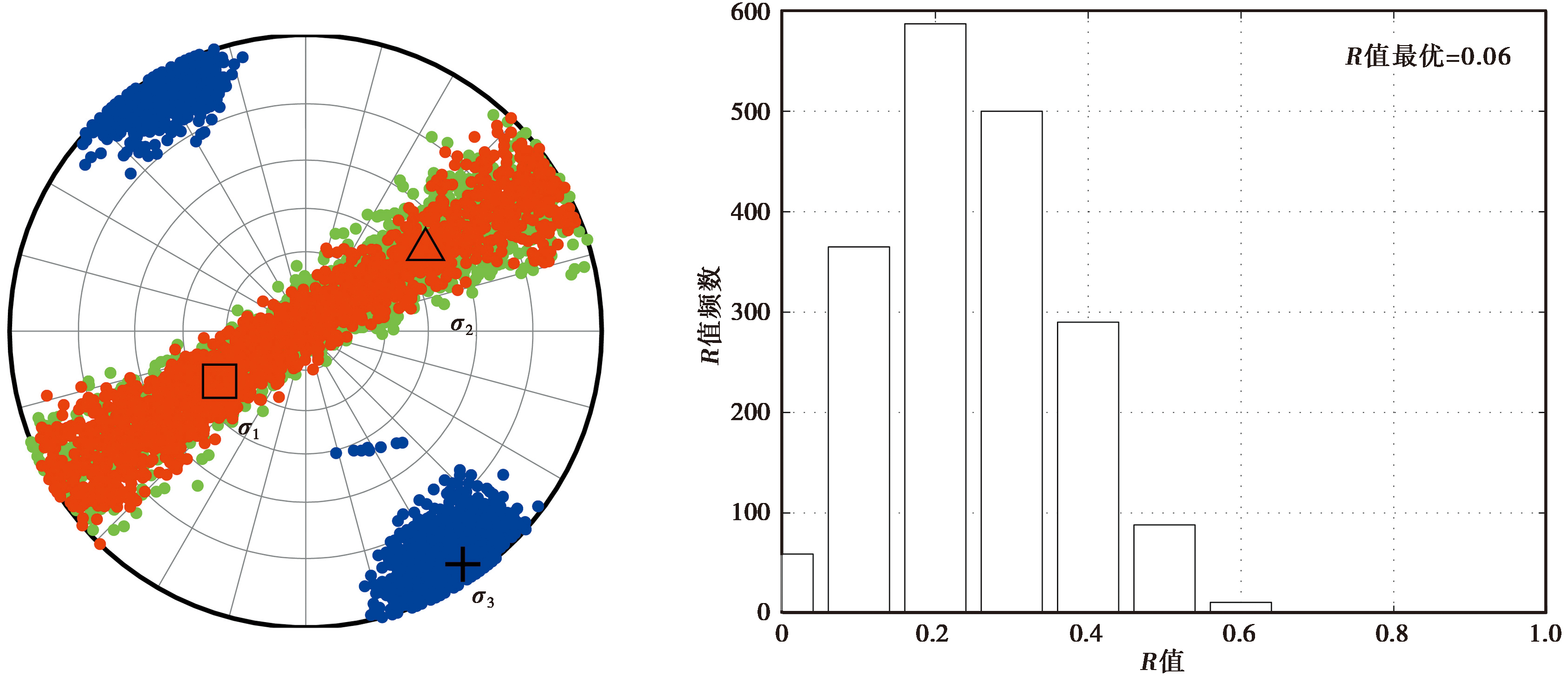
Fig. 10 The main axis of stress field and R frequency in Linfen Basin, Shanxi rift.
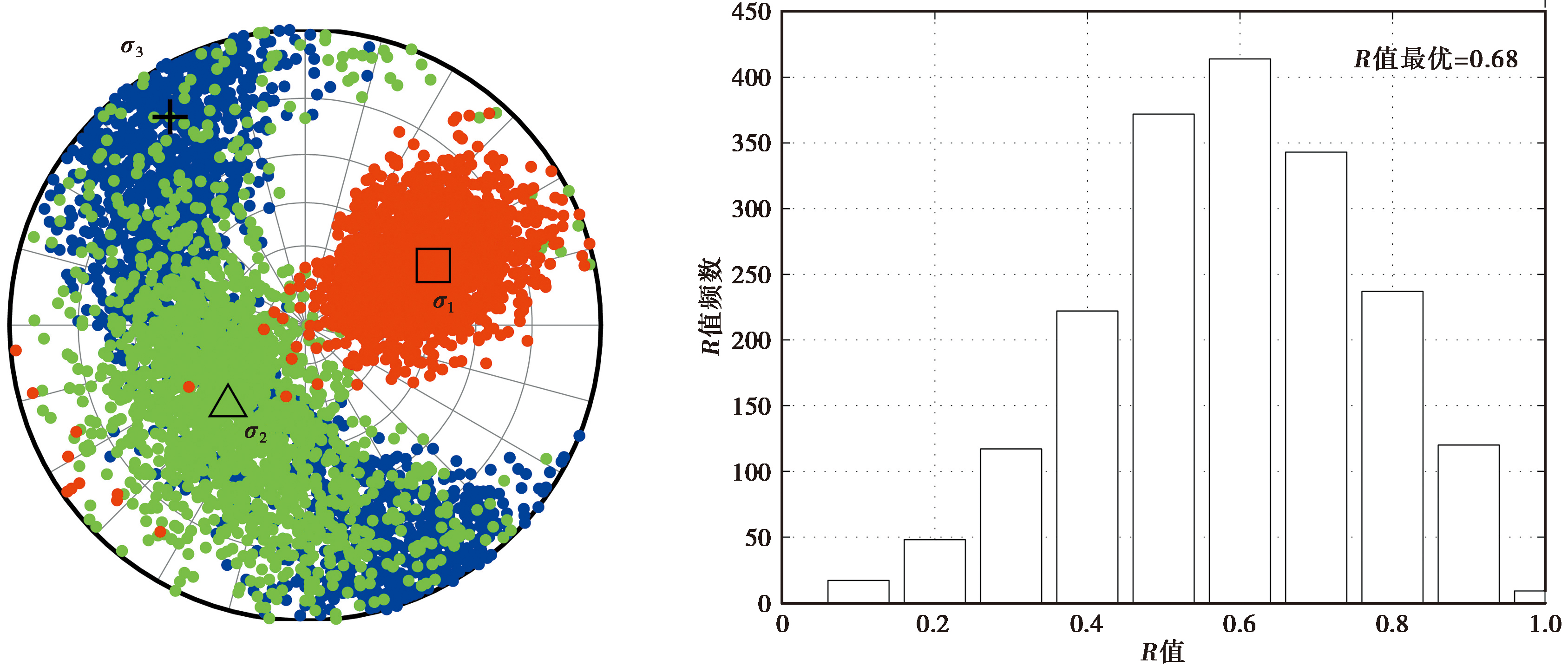
Fig. 11 The main axis of stress field and R frequency in Yuncheng Basin, Shanxi rift.
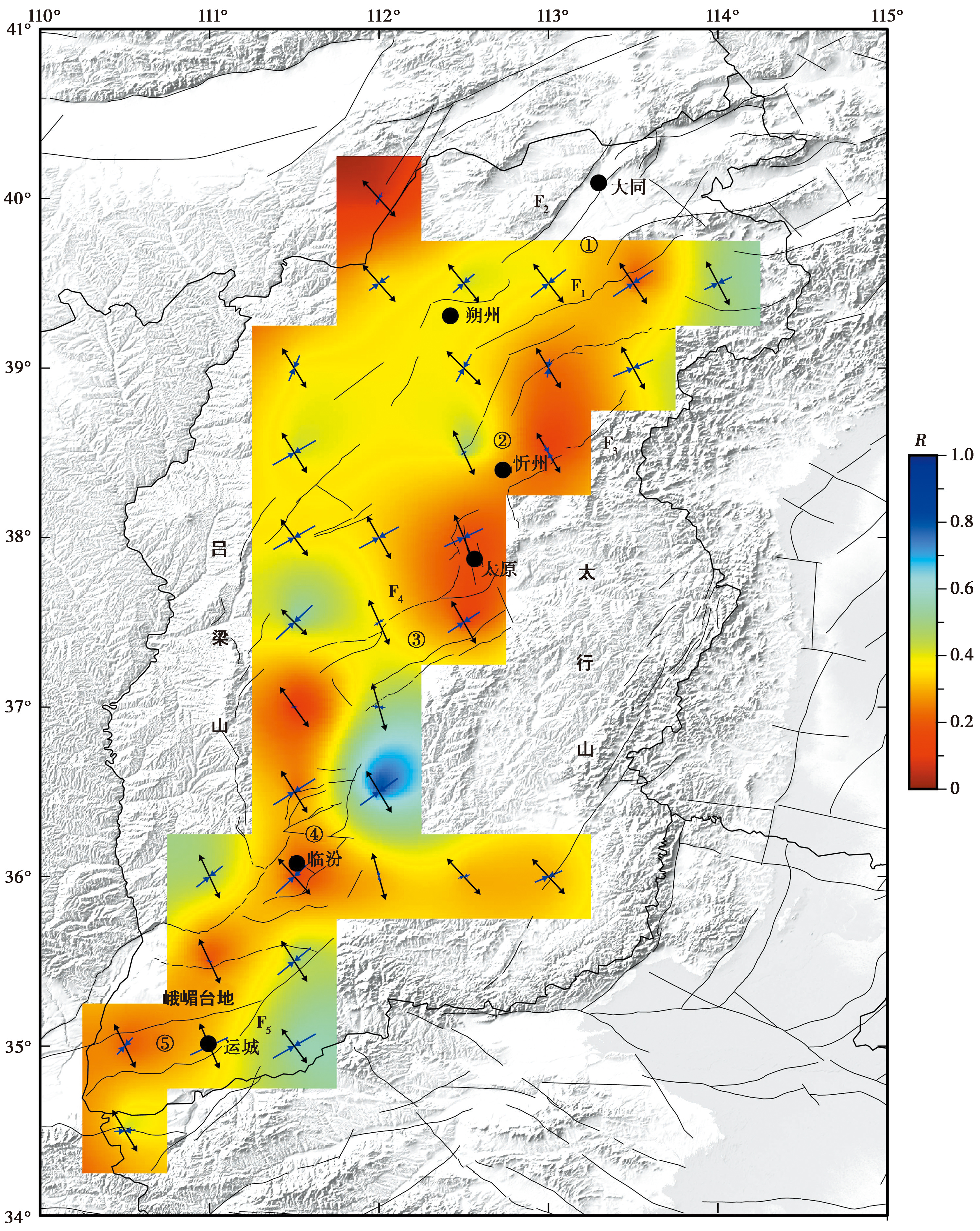
Fig. 13 The spatial distribution of stress field (σ1 and σ3)and R in Shanxi rift.
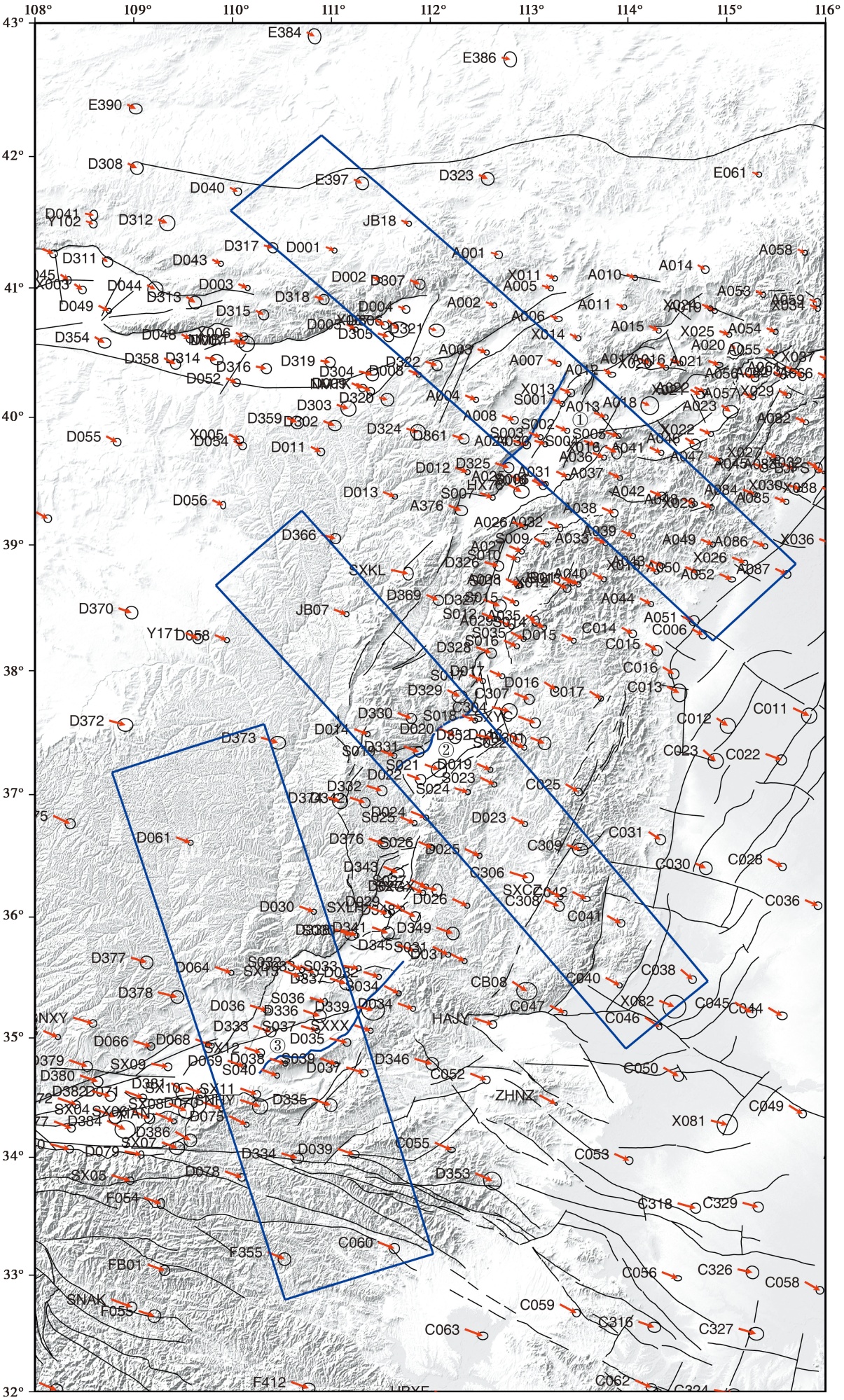
Fig. 13 The location of GPS velocity profile in the Shanxi rift.
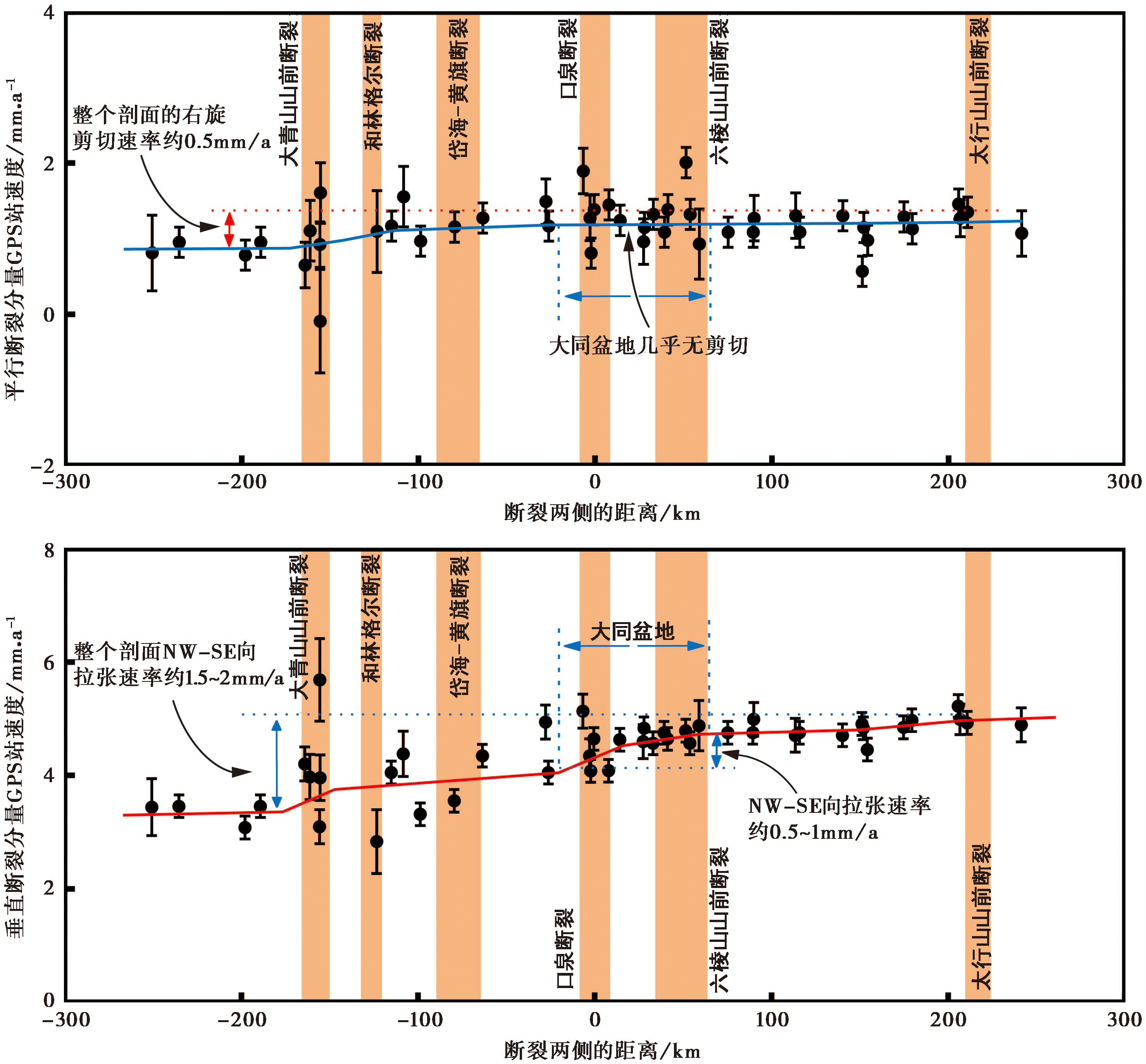
Fig. 14 The GPS velocity profile of Kouquan Fault in Datong Basin.
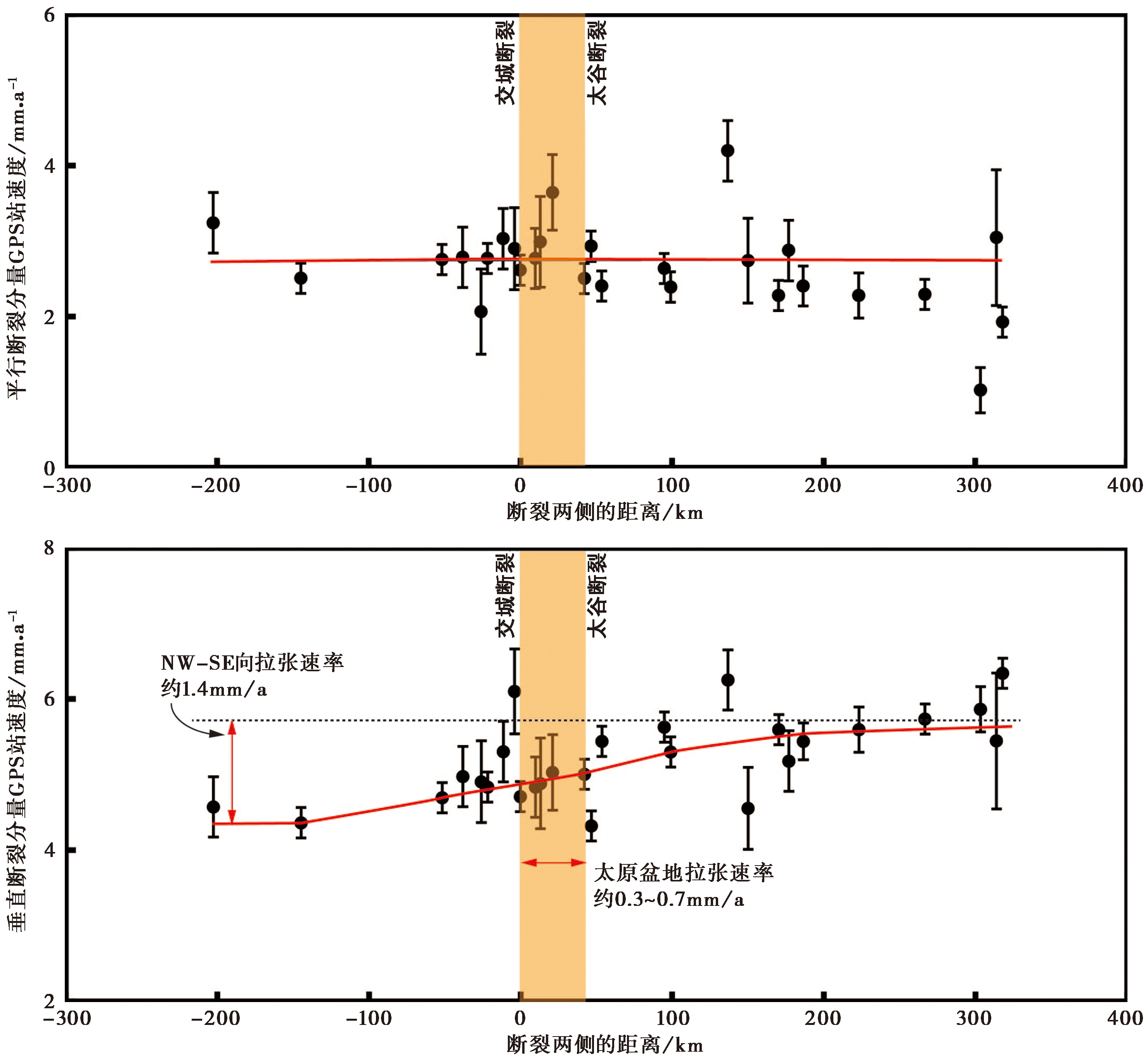
Fig. 15 The GPS velocity profile of Jiaocheng Fault in Taiyuan Basin.
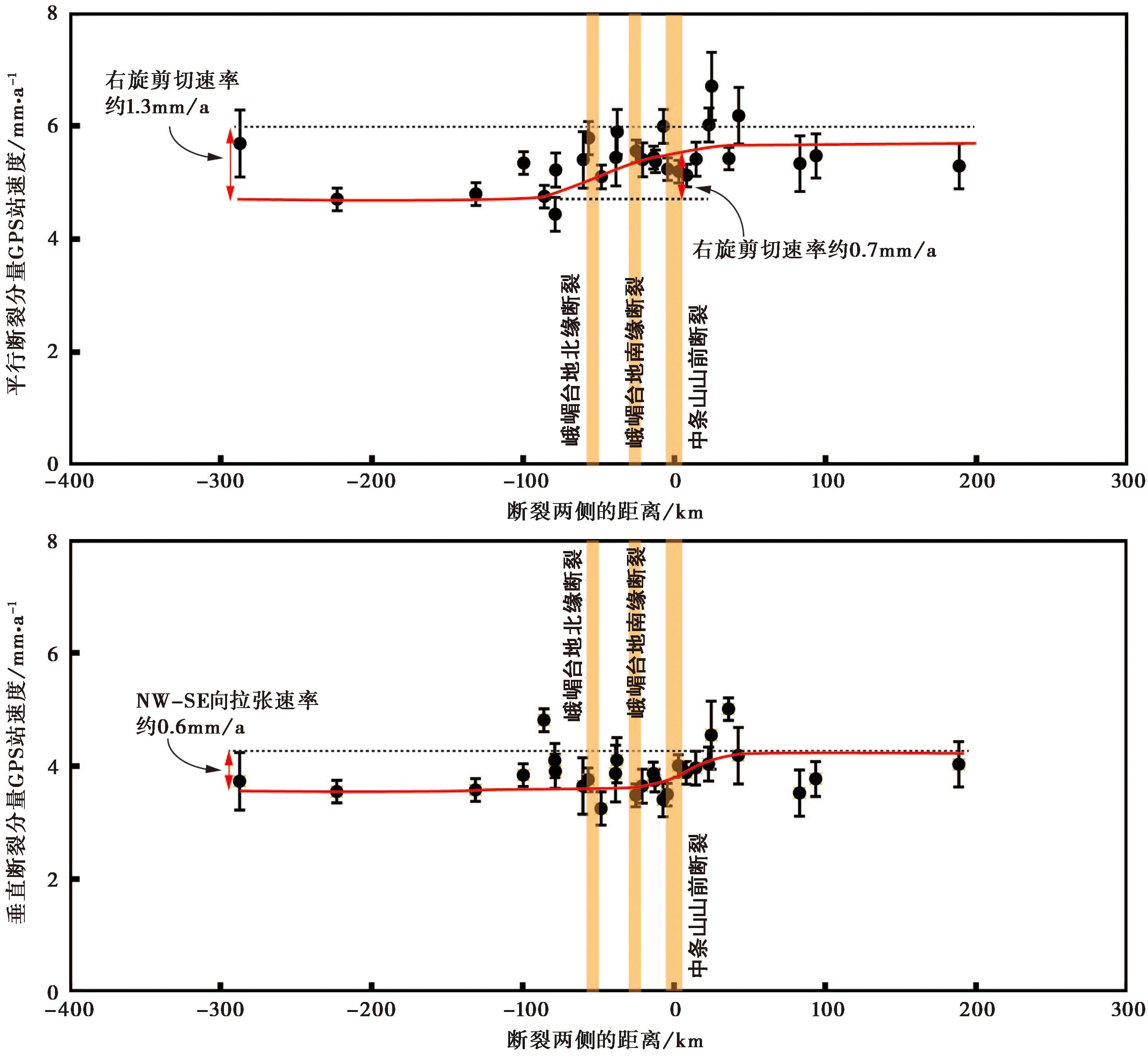
Fig. 16 The GPS velocity profile of Zhongtiaoshan Fault in Yuncheng Basin.
| [1] |
安美建, 李方全. 1998. 山西地堑系现今构造应力场[J]. 地震学报, 20(5): 461—465.
|
|
|
|
| [2] |
崔华伟, 万永革, 黄骥超, 等. 2017. 2015年3月新不列颠 MS7.4 地震震源及邻区构造应力场特征[J]. 地球物理学报, 60(3): 985—998.
|
|
|
|
| [3] |
崔华伟, 万永革, 黄骥超, 等. 2019. 帕米尔—兴都库什地区构造应力场反演及拆离板片应力形因子特征研究[J]. 地球物理学报, 62(5): 1633—1649.
|
|
|
|
| [4] |
邓起东, 程绍平, 闵伟, 等. 1999. 鄂尔多斯块体新生代构造活动和动力学的讨论[J]. 地质力学学报, 5(3): 13—21.
|
|
|
|
| [5] |
关鹏虎. 2021. 基于地震震源机制解的山西裂谷带区域构造应力场研究[D]. 太原: 太原理工大学.
|
|
|
|
| [6] |
国家地震局“鄂尔多斯周缘活动断裂系”课题组. 1988. 鄂尔多斯周缘活动断裂系[M]. 北京: 地震出版社.
|
|
The Research Group on “Active Fault System around Ordos Massif”, State Seismological Bureau. 1988. Active Fault System around Ordos Massif[M]. Seismological Press, Beijing (in Chinese).
|
|
| [7] |
李惠玲, 李冬梅, 李颖, 等. 2023. 山西活动断陷带主要断层垂直形变分段特征[J]. 中国地震, 39(4): 821—831.
|
|
|
|
| [8] |
李丽, 宋美琴, 刘素珍, 等. 2015. 山西地区震源机制一致性参数时空特征分析[J]. 地震, 35(2): 43—50.
|
|
|
|
| [9] |
李平恩, 廖力, 刘盼. 2017. 太原盆地应力场演化与强震关系的数值模拟研究[J]. 地球科学, 42(9): 1623—1636.
|
|
|
|
| [10] |
李钦祖. 1980. 华北地壳应力场的基本特征[J]. 地球物理学报, 23(4): 377—387.
|
|
|
|
| [11] |
李祥. 2016. 晋冀蒙交界地区一维速度模型及构造应力场研究[D]. 三河: 防灾科技学院:1—42.
|
|
|
|
| [12] |
李祥, 万永革, 崔华伟, 等. 2016. 2015年智利 MW8.3 地震震源区构造应力场分析[J]. 地震学报, 38(6): 847—853.
|
|
|
|
| [13] |
李泽潇, 万永革, 崔华伟, 等. 2020. 2018年9月8日墨江地震及周边地区构造应力场特征分析[J]. 地球物理学报, 63(4): 1431—1443.
|
|
|
|
| [14] |
梁光河. 2023. 贝加尔裂谷和汾渭地堑成因与印度—欧亚碰撞的远程效应[J]. 地学前缘, 30(3): 282—293.
|
|
|
|
| [15] |
林向东, 袁怀玉, 徐平, 等. 2017. 华北地区地震震源机制分区特征[J]. 地球物理学报, 60(12): 4589—4622.
|
|
|
|
| [16] |
刘巍, 赵新平, 安卫平, 等. 1993. 山西地区的地壳应力场[J]. 山西地震, (3): 3—11.
|
|
|
|
| [17] |
罗艳, 赵里, 曾祥方, 等. 2015. 芦山地震序列震源机制及其构造应力场空间变化[J]. 中国科学(地球科学), 45(4): 538—550.
|
|
|
|
| [18] |
盛书中, 胡晓辉, 王晓山, 等. 2022. 云南及邻区地壳应力场研究[J]. 地球物理学报, 65(9): 3252—3267.
|
|
|
|
| [19] |
盛书中, 万永革, 黄骥超, 等. 2015. 应用综合震源机制解法推断鄂尔多斯块体周缘现今地壳应力场的初步结果[J]. 地球物理学报, 58(2): 436—452.
|
|
|
|
| [20] |
万永革. 2024. 震源机制水平应变花面应变的地震震源机制分类方法及序列震源机制总体特征分析[J]. 地球科学, 49(7): 2675—2684.
|
|
|
|
| [21] |
万永革, 盛书中, 许雅儒, 等. 2011. 不同应力状态和摩擦系数对综合P波辐射花样影响的模拟研究[J]. 地球物理学报, 54(4): 994—1001.
|
|
|
|
| [22] |
武敏捷, 林向东, 徐平. 2011. 华北北部地区震源机制解及构造应力场特征分析[J]. 大地测量与地球动力学, 31(5): 39—43.
|
|
|
|
| [23] |
吴奇, 许立青, 李三忠, 等. 2013. 华北地块中部活动构造特征及汾渭地堑成因探讨[J]. 地学前缘, 20(4): 104—114.
|
|
|
|
| [24] |
许忠淮. 2001. 东亚地区现今构造应力图的编制[J]. 地震学报, 23(5): 492—501.
|
|
|
|
| [25] |
许忠淮, 阎明, 赵仲和. 1983. 由多个小地震推断的华北地区构造应力场的方向[J]. 地震学报, 5(3): 268—279.
|
|
|
|
| [26] |
薛宏运, 鄢家全. 1984. 鄂尔多斯地块周围的现代地壳应力场[J]. 地球物理学报, 27(2): 144—151.
|
|
|
|
| [27] |
易桂喜, 龙锋,
|
|
|
|
| [28] |
余占洋, 沈旭章, 梁浩, 等. 2022. 基于地震活动性和震源机制解研究渭河-运城盆地主要断裂带的特征及应力场分布[J]. 地震地质, 44(2): 395—413. doi: 10.3969/j.issn.0253-4967.2022.02.008.
|
|
|
|
| [29] |
张岳桥, 施炜, 董树文. 2019. 华北新构造: 印欧碰撞远场效应与太平洋俯冲地幔上涌之间的相互作用[J]. 地质学报, 93(5): 971—1001.
|
|
|
|
| [30] |
郑建常, 王鹏, 李冬梅, 等. 2013. 使用小震震源机制解研究山东地区背景应力场[J]. 地震学报, 35(6): 773—784.
|
|
|
|
| [31] |
|
| [32] |
|
| [33] |
|
| [34] |
|
| [35] |
|
| [36] |
|
| [37] |
|
| [38] |
|
| [39] |
|
| [40] |
DOI URL |
| [41] |
|
| [42] |
|
| [43] |
|
| [44] |
|
| [45] |
|
| [46] |
DOI URL |
| [47] |
DOI URL |
| [48] |
|
| [1] | LI Yan, CHEN Jun-lei, LÜ Si-yu, WANG Yu-dong, FU Lei. THE STRESS FIELD INVERSION AND TRIGGER RELATIONSHIPS OF THE JINGGU EARTHQUAKE SEQUENCE [J]. SEISMOLOGY AND GEOLOGY, 2026, 48(2): 561-581. |
| [2] | GUO Zhao-wu, LU Ren-qi, ZHANG Jin-yu, FANG Li-hua, LIU Guan-shen, WU Xi-yan, SUN Xiao, QI Shi-miao. THREE-DIMENSIONAL MODEL OF SEISMOGENIC FAULT AND SEISMIC ENVIRONMENT OF XIZANG DINGRI MS6.8 EARTHQUAKE OF JANUARY 7, 2025 [J]. SEISMOLOGY AND GEOLOGY, 2025, 47(3): 671-688. |
| [3] | XU Yue-yi, XU Bei-bei, XU Chen-yu, SHAO Zhi-gang, HU Chao-zhong. JOINT INVERSION OF THE 2025 DINGRI MS6.8 EARTHQUAKE RUPTURE PROCESS BASED ON TELESEISMIC P WAVES, STRONG-MOTION AND INSAR DATA [J]. SEISMOLOGY AND GEOLOGY, 2025, 47(3): 734-746. |
| [4] | LI Jin, DENG Ming-wen, ZHANG Zhi-guang, SUN Ye-jun, YAO Yuan, XU Kai-chi. PRELIMINARY STUDY ON THE SEISMOGENIC STRUCTURE OF THE 2024 M5 EARTHQUAKE SWARM IN YULI, TARIM BASIN [J]. SEISMOLOGY AND GEOLOGY, 2025, 47(2): 463-487. |
| [5] | XU Yong-qiang, LEI Jian-she, HU Xiao-hui. DOUBLE-DIFFERENCE RELOCATION OF YUNNAN YANGBI MS6.4 EARTHQUAKE SEQUENCE ON MAY 21, 2021 AND TECTONIC IMPLICATIONS [J]. SEISMOLOGY AND GEOLOGY, 2024, 46(5): 1066-1090. |
| [6] | GUO Xiang-yun, FANG Li-hua, HAN Li-bo, LI Zhen-yue, LI Chun-lai, SU Shan. CHARACTERISTICS OF FOCAL MECHANISM AND STRESS FIELD IN THE EASTERN BOUNDARY OF THE SICHUAN-YUNNAN BLOCK [J]. SEISMOLOGY AND GEOLOGY, 2024, 46(2): 371-396. |
| [7] | DONG Chun-li, ZHANG Guang-wei, LI Xin-wei, WANG Yue-jie, DING Da-ye, GONG Zhuo-hong. STUDY ON THE SEISMOGENIC STRUCTURE OF THE 2022 GUJIAO ML4.1 EARTHQUAKE IN SHANXI PROVINCE BASED ON FOCAL MECHANISM AND SEISMIC LOCATION [J]. SEISMOLOGY AND GEOLOGY, 2024, 46(2): 414-432. |
| [8] | WAN Yong-ge, WANG Yu-ru, JIN Zhi-tong. STUDY ON HETEROGENEITY OF THE STRESS FIELD IN THE YANGBI EARTHQUAKE FAULT ZONE [J]. SEISMOLOGY AND GEOLOGY, 2023, 45(4): 1025-1040. |
| [9] | FAN Wen-jie. CHARACTERISTICS OF TECTONIC STRESS FIELD AROUND THE YANGBI MS6.4 EARTHQUAKE AND ITS SURROUNDING AREAS ON MAY 21, 2021 AND ITS GEODYNAMIC IMPLICATION [J]. SEISMOLOGY AND GEOLOGY, 2023, 45(1): 208-230. |
| [10] | YU Zhan-yang, SHEN Xu-zhang, LIANG Hao, ZHENG Wen-jun, LIU Xu-zhou. THE CHARACTERISTICS OF MAJOR FAULTS AND STRESS FIELD IN WEIHE-YUNCHENG BASIN CONSTRAINED BY SEISMIC ACTIVITY AND FOCAL MECHANISM SOLUTIONS [J]. SEISMOLOGY AND GEOLOGY, 2022, 44(2): 395-413. |
| [11] | ZHANG Zhi-wei, LONG Feng, ZHAO Xiao-yan, WANG Di. STUDY ON FOCAL MECHANISM SOLUTION AND STRESS FIELD CHARACTERISTICS IN SICHUAN AND YUNNAN AREA [J]. SEISMOLOGY AND GEOLOGY, 2022, 44(1): 170-187. |
| [12] | ZHAO Tao, WANG Ying, MA Ji, SHAO Ruo-tong, XU Yi-fei, HU Jing. RELOCATION AND FOCAL MECHANISM SOLUTIONS OF THE 2021 MADUO, QINGHAI MS7.4 EARTHQUAKE SEQUENCE [J]. SEISMOLOGY AND EGOLOGY, 2021, 43(4): 790-805. |
| [13] | WANG Ying, ZHAO Tao, HU Jing, LIU Chun. RELOCATION AND FOCAL MECHANISM SOLUTIONS OF THE 2021 YANGBI, YUNNAN MS6.4 EARTHQUAKE SEQUENCE [J]. SEISMOLOGY AND EGOLOGY, 2021, 43(4): 847-863. |
| [14] | LI Jin, JIANG Hai-kun, WEI Yun-yun, SUN Zhao-jie. PRELIMINARY STUDY FOR SEISMOGENIC STRUCTURE OF THE MS6.4 JIASHI EARTHQUAKE ON JANUARY 19, 2020 [J]. SEISMOLOGY AND GEOLOGY, 2021, 43(2): 357-376. |
| [15] | LIANG Shan-shan, XU Zhi-guo, SHENG Shu-zhong, ZHANG Guang-wei, ZHAO-Bo, ZOU Li-ye. FOCAL MECHANISM SOLUTIONS AND STRESS FIELD OF THE 2019 CHANGNING, SICHUAN MAINSHOCK AND ITS MODERATE-STRONG AFTERSHOCKS(MS≥4.0) [J]. SEISMOLOGY AND GEOLOGY, 2020, 42(3): 547-561. |
| Viewed | ||||||
|
Full text |
|
|||||
|
Abstract |
|
|||||
Copyright © SEISMOLOGY AND GEOLOGY, All Rights Reserved.
Tel: 010-62009049/9063 E-mail: dzdz@ies.ac.cn
Powered by Beijing Magtech Co., Ltd.