地震地质 ›› 2026, Vol. 48 ›› Issue (5): 1214-1230.DOI: 10.3969/j.issn.0253-4967.20260034
李彦宝1)( ), 李正芳1),*(), 周本刚1), 马骏1), 韩明明2)
收稿日期:2026-03-13
修回日期:2026-05-12
出版日期:2026-11-11
发布日期:2026-11-11
通讯作者:
李正芳
作者简介:李彦宝, 男, 1981年生, 2013年于中国地震局地质研究所获构造地质学专业博士学位, 现主要从事活动断裂与古地震、地震构造判别与地震安全性评价等方面的研究和工作, E-mail: liyanbao@ies.ac.cn。
基金资助:
LI Yan-bao1)(), LI Zheng-fang1),*(), ZHOU Ben-gang1), MA Jun1), HAN Ming-ming2)
Received:2026-03-13
Revised:2026-05-12
Online:2026-11-11
Published:2026-11-11
Contact:
LI Zheng-fang
摘要:
华北平原北部被巨厚沉积层覆盖, 厘清该区隐伏活动断裂精细结构及深浅构造耦合机制, 对揭示其强震孕育规律、保障区域城市群抗震安全具有重要意义。传统认识认为北京平原东南部大兴凸起东缘断裂晚第四纪已停止活动, 而最新物探-钻探-槽探联合探测证实其为全新世活动断裂。文中综合深、浅部多源探测数据, 分析表明该断裂深部为切穿莫霍面的陡倾角断层, 中-浅部倾角略变缓, 并向上延伸而错断早期缓倾的断层组, 深、浅部均为走滑性质, 呈现出典型深-浅构造耦合特征。该断裂深-浅构造样式、动力耦合机制等方面与曾发生1679年三河-平谷8级地震的夏垫断裂高度相似, 推断其亦具备孕育大地震的能力。鉴于探槽及14C测年揭示该断裂最近一次地表破裂型地震的离逝时间已超6 000a, 亟需针对其开展大地震风险评估与防控。文中研究结果可为华北巨厚沉积区大地震构造识别、隐伏活动断裂地震危险性评价等提供参考和实例。
李彦宝, 李正芳, 周本刚, 马骏, 韩明明. 北京南部大兴凸起东缘断裂深-浅构造耦合关系[J]. 地震地质, 2026, 48(5): 1214-1230.
LI Yan-bao, LI Zheng-fang, ZHOU Ben-gang, MA Jun, HAN Ming-ming. COUPLING RELATIONSHIP BETWEEN SHALLOW AND DEEP STRUCTURES ALONG THE EASTERN MARGIN FAULT OF THE DAXING UPLIFT, SOUTHERN BEIJING[J]. SEISMOLOGY AND GEOLOGY, 2026, 48(5): 1214-1230.
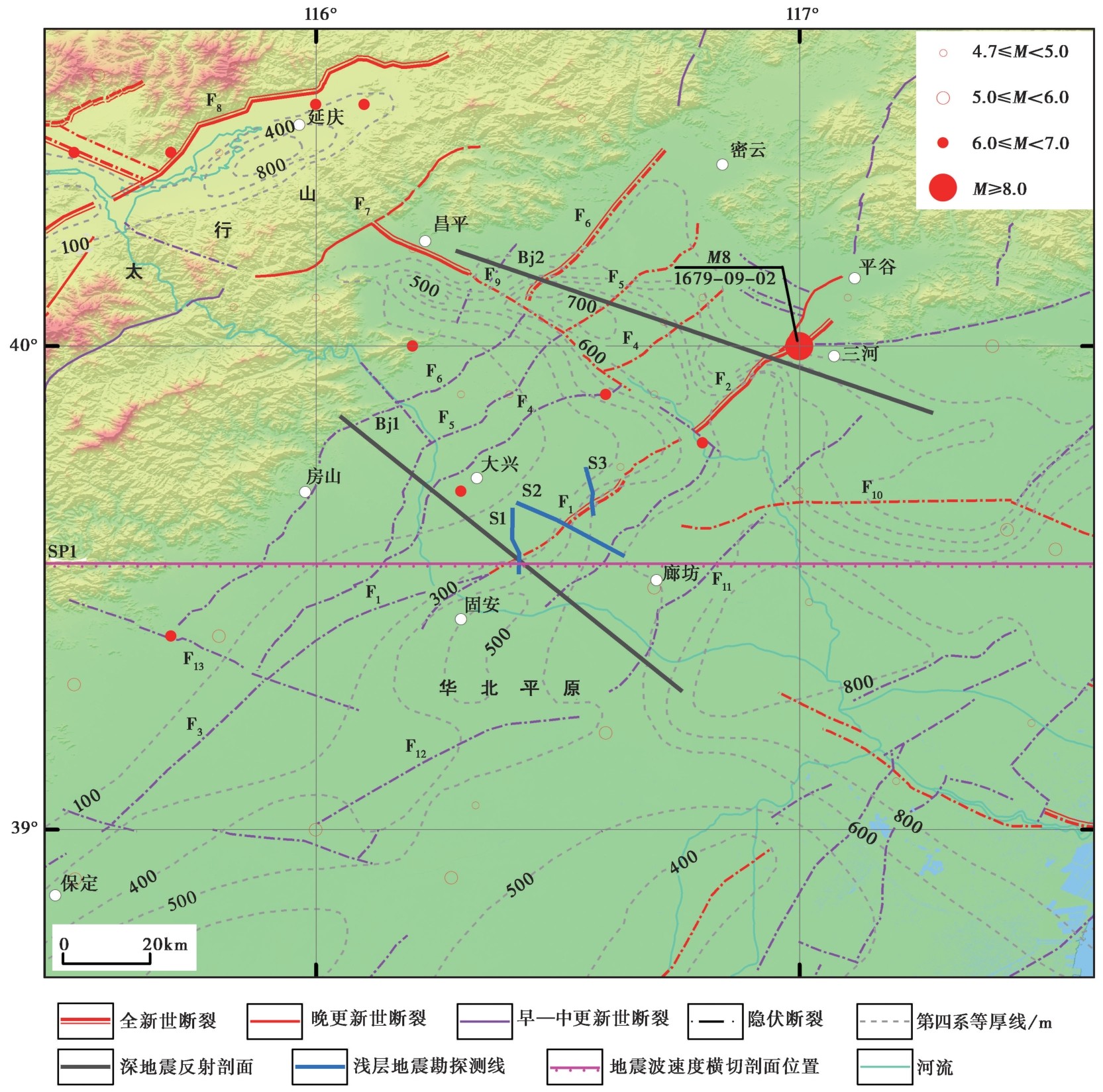
图1 北京平原及邻区地震构造简图 活动断裂分布和历史地震震中位置据邓起东等(2007)、Li Z F等(2024)和Li Y B等(2025)。Bj1、Bj2分别为深地震反射剖面, S1、S2、S3为浅层地震勘探测线, SP1为地震波速度剖面(图1范围有限, 仅展示了剖面与断裂局部的空间关系)。F1大兴凸起东缘断裂; F2夏垫断裂; F3保定-石家庄断裂; F4南苑-通县断裂; F5顺义-良乡断裂; F6黄庄-高丽营断裂; F7南口山前断裂; F8延矾盆地北缘断裂; F9南口-孙河断裂; F10宝坻断裂; F11河西务断裂; F12牛驼凸起南缘断裂; F13涞水断裂
Fig. 1 Seismotectonic map of the Beijing Plain and its adjacent area.
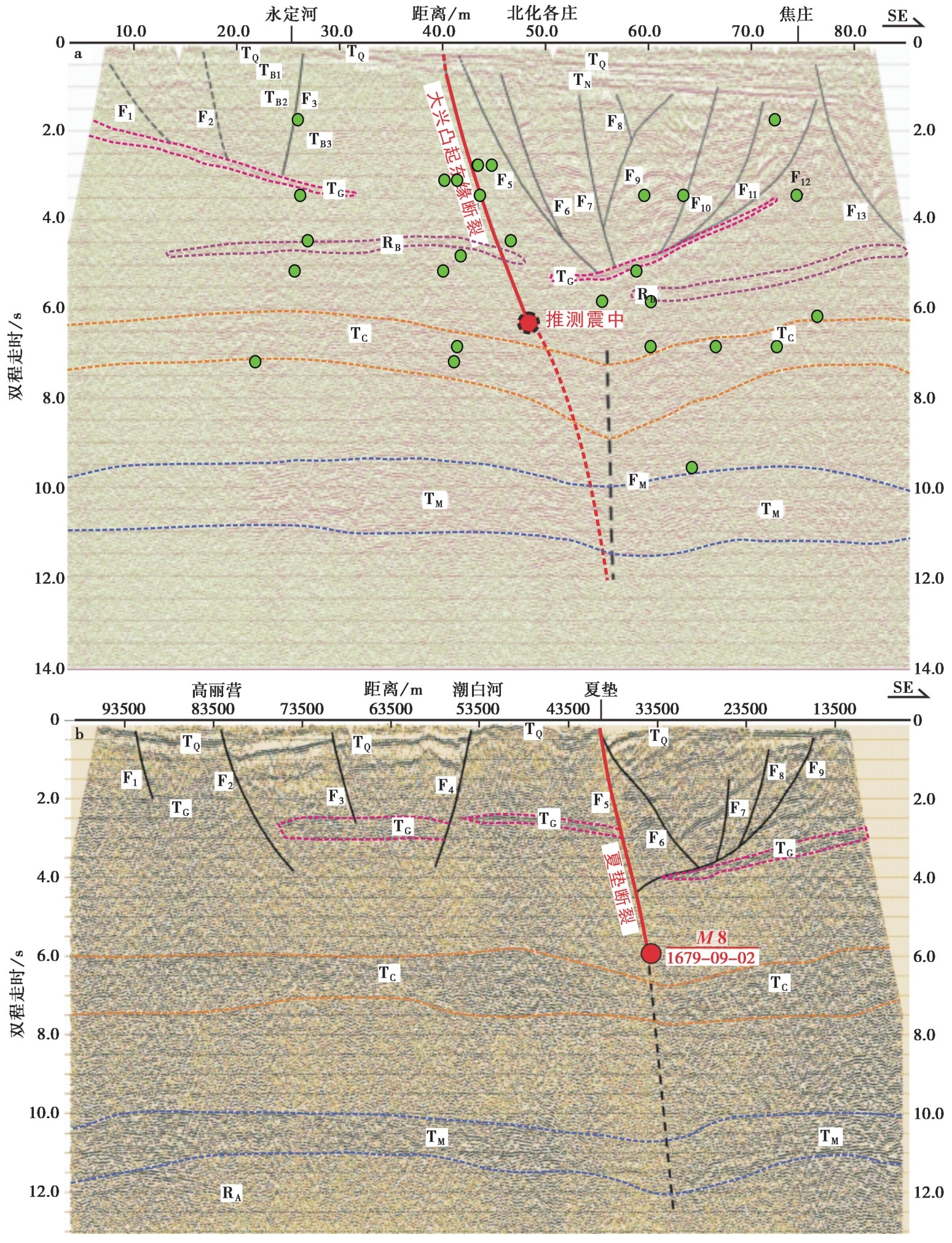
图2 深地震反射叠加时间剖面Bj1(a)和Bj2(b)及其地质解释图 剖面位置见图1。图a剖面Bj1据刘保金等(2009)修改, 其中绿色圆点指示现今中小地震(M2.0~4.5) (数据源自国家地震科学数据中心网站 ① ), 地震在大兴凸起东缘断裂附近呈明显的条带状分布; 图b剖面Bj2据赵成彬等(2013)修改。TG基底与盖层界面; TC上、下地壳界面; TM莫霍面; 红色线条分别指示大兴凸起东缘断裂和夏垫断裂
Fig. 2 Stacked time sections and their interpretation along the deep seismic reflection profiles Bj1(a) and Bj2(b).
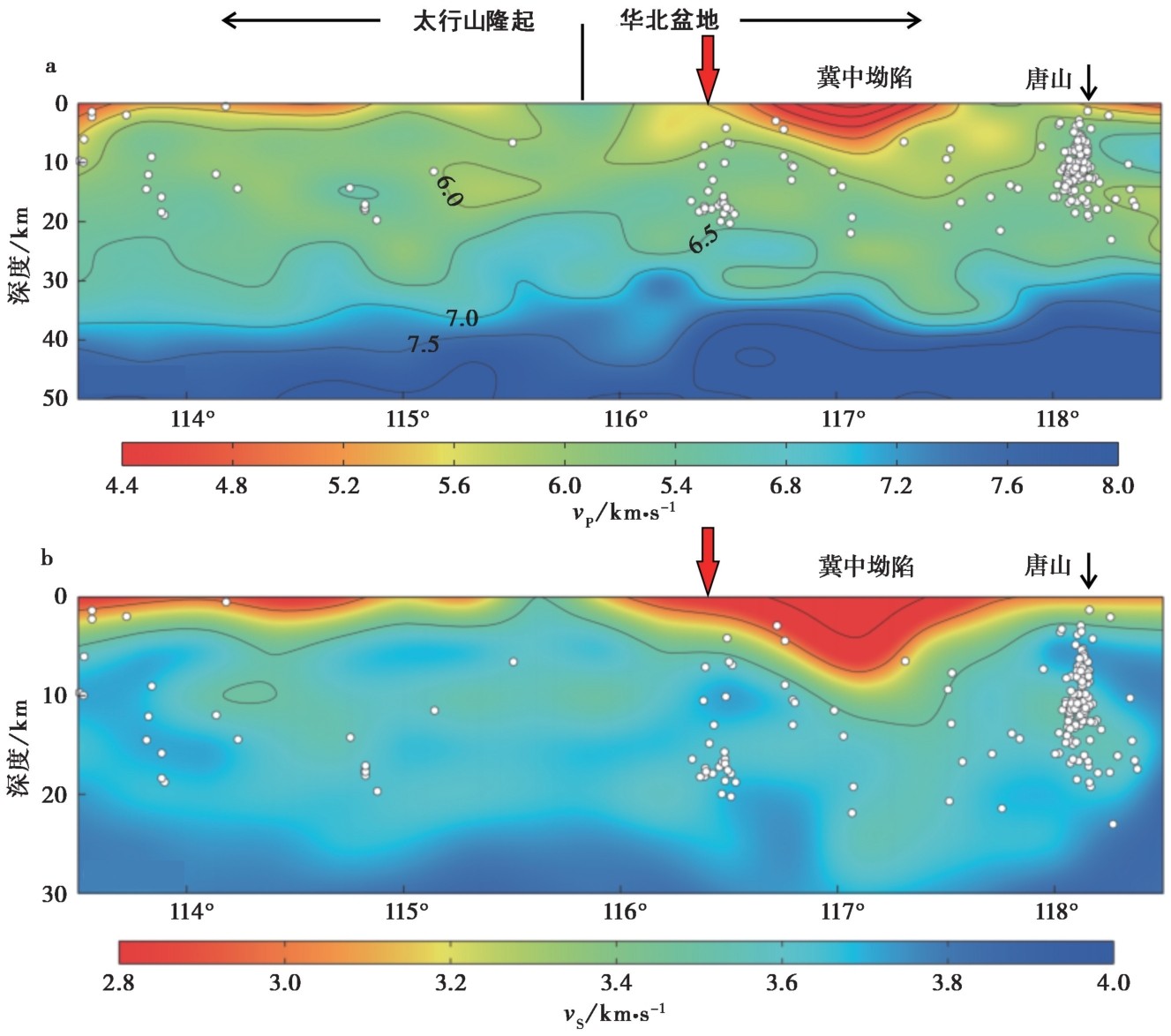
图3 P波(a)和S波(b)速度横切剖面图(据马梦丹等(2021)修改) 剖面位置见图1所示SP1。红色箭头指示大兴凸起东缘断裂位置, 白色圆点为经重定位后的地震震中(马梦丹等, 2021)
Fig. 3 Cross-sectional profiles of P-wave(a) and S-wave(b)velocity structures.
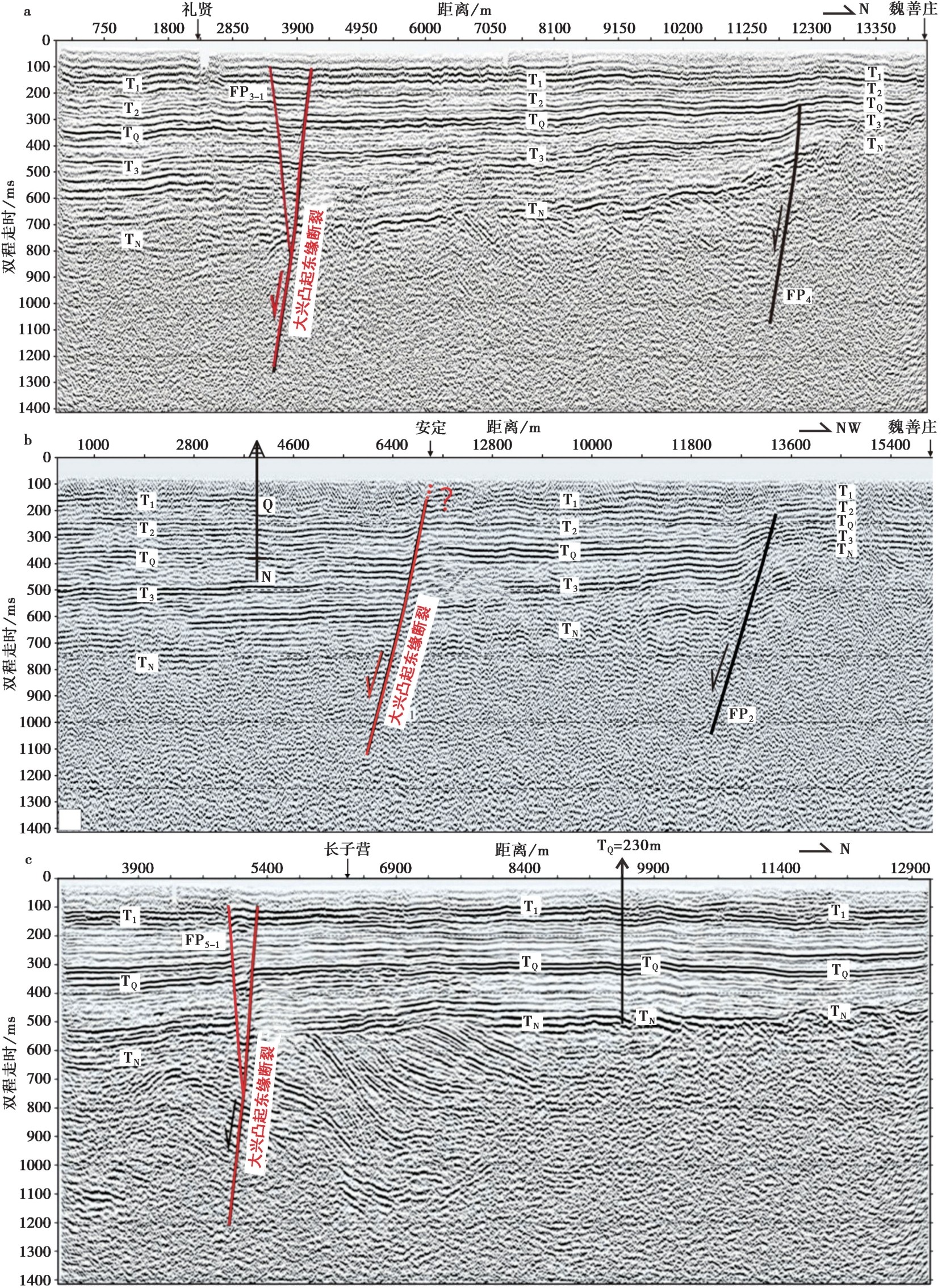
图4 浅层地震勘探剖面及其解释图(据Li等(2024)修改) a测线S1; b测线S2; c测线S3; 测线位置参见图1。 T1上更新统底界; T2中更新统底界; TQ下更新统底界; T3新近系底界; TN古近系底界
Fig. 4 Shallow seismic exploration profile and its interpretation(modified from Li et al., 2024).
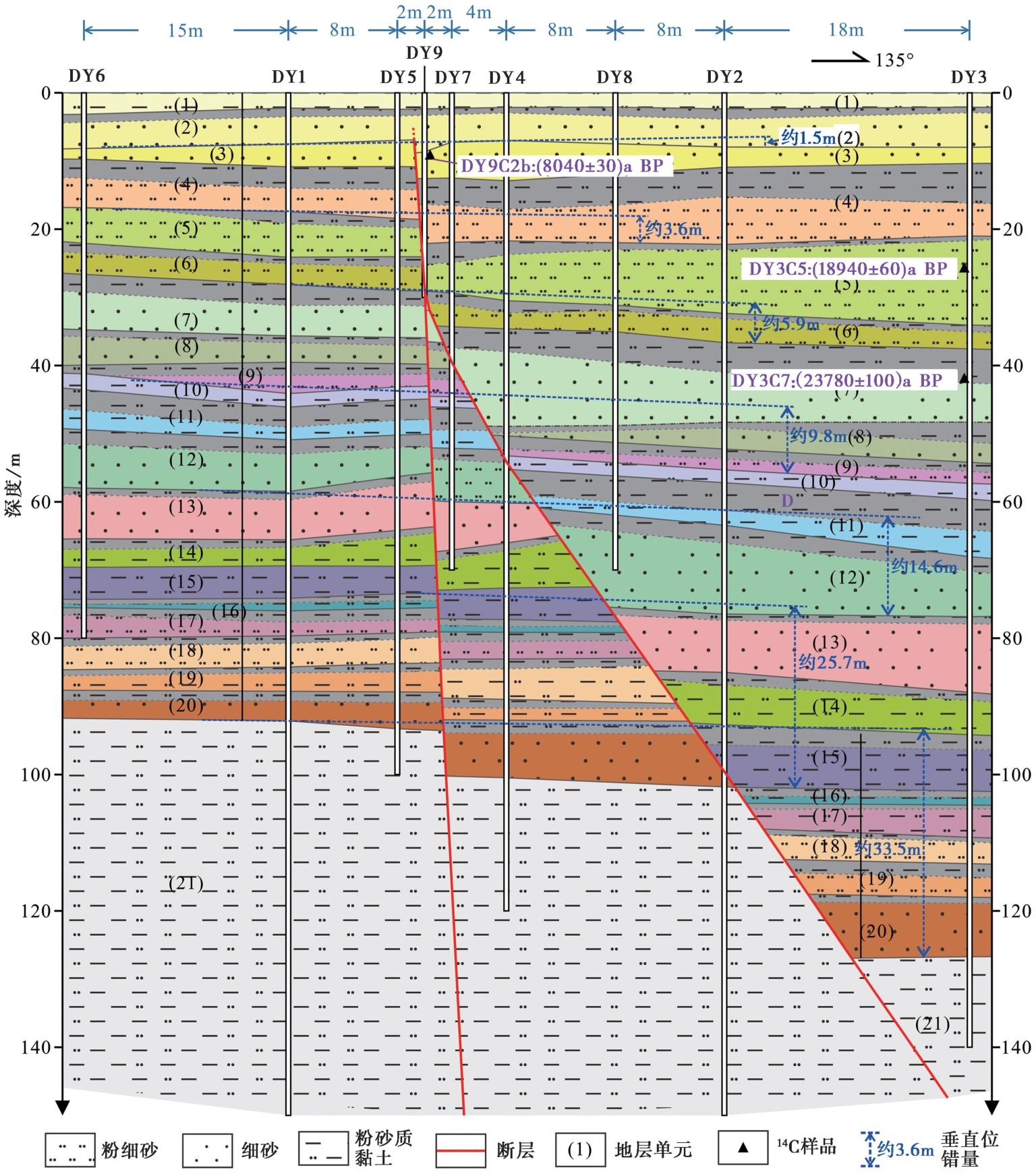
图5 跨大兴凸起东缘断裂的钻孔联合剖面图(据Li等(2025)修改)
Fig. 5 Map showing the combined borehole profile across the eastern margin fault of the Daxing uplift(modified from Li et al., 2025).
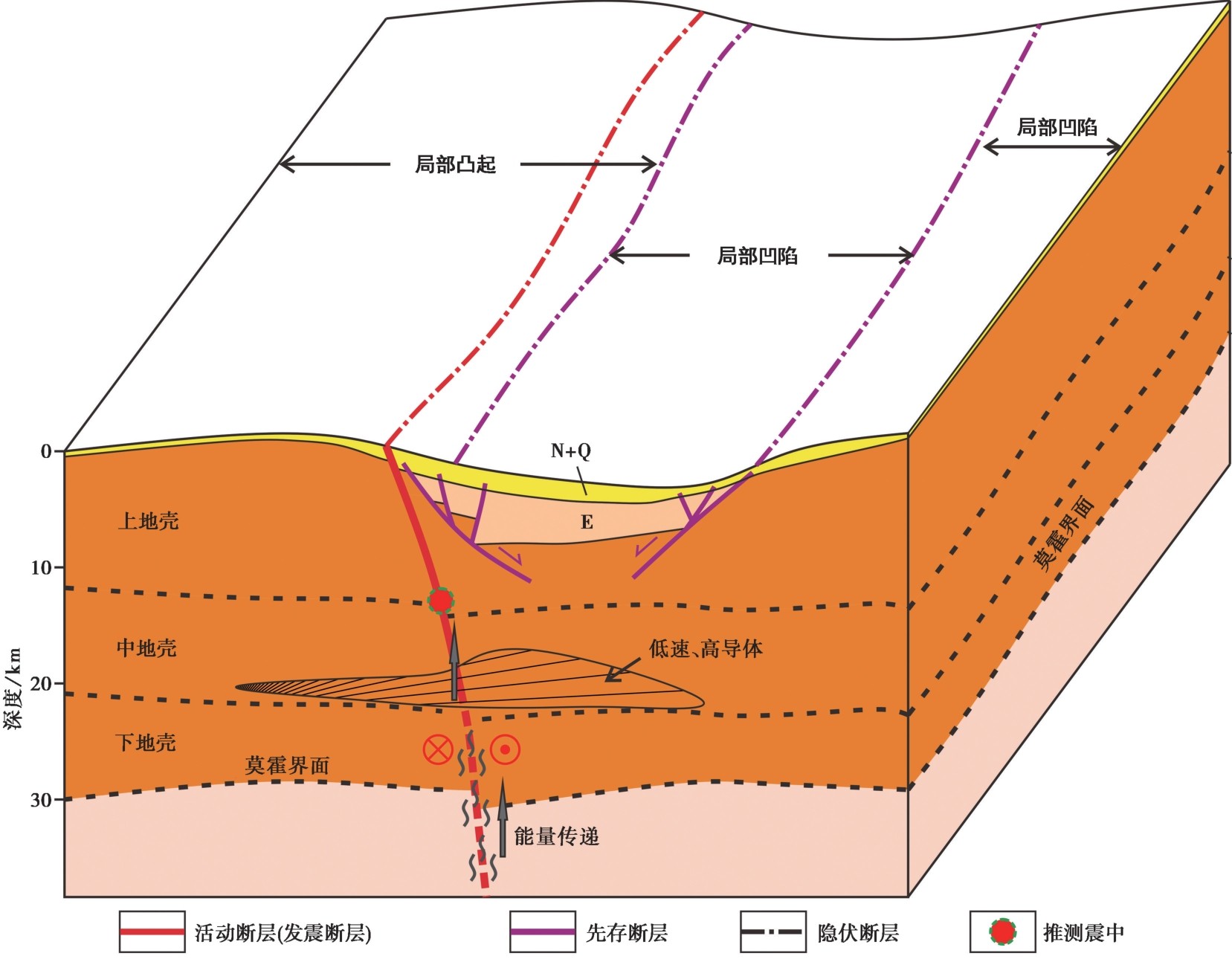
图6 深-浅构造耦合关系示意图
Fig. 6 Schematic diagram of the coupling relationship between deep and shallow structures.
| [21] |
|
| [22] |
冉勇康, 邓起东, 杨晓平, 等. 1997. 1679年三河-平谷8级地震发震断层的古地震及其重复间隔[J]. 地震地质, 19(3): 193-201.
|
|
|
|
| [23] |
王椿镛, 段永红, 吴庆举, 等. 2016. 华北强烈地震深部构造环境的探测与研究[J]. 地震学报, 38(4): 511-549.
|
|
|
|
| [24] |
王峻, 刘启元, 陈九辉, 等. 2009. 根据接收函数反演得到的首都圈地壳上地幔三维S波速度结构[J]. 地球物理学报, 52(10): 2472-2482.
|
|
|
|
| [25] |
徐锡伟, 计凤桔, 于贵华, 等. 2000. 用钻孔地层剖面记录恢复古地震序列: 河北夏垫断裂古地震研究[J]. 地震地质, 22(1): 9-19.
|
|
|
|
| [26] |
徐锡伟, 李峰, 程佳, 等. 2023. 活动断层研究进展及其科学前沿问题讨论[J]. 煤田地质与勘探, 51(12): 1-16.
|
|
|
|
| [27] |
徐锡伟, 吴卫民, 张先康, 等. 2002. 首都圈地区地壳最新构造变动与地震[M]. 北京: 科学出版社.
|
|
|
|
| [28] |
于传海, 刘思青, 高维, 等. 2025. 莫克兰俯冲带巨厚沉积层速度结构及含水量分布特征[J]. 地球物理学报, 68(3): 1054-1068.
|
|
|
|
| [29] |
张先康, 赵金仁, 刘国华, 等. 2002. 三河-平谷8.0级大震区震源细结构的深地震反射探测研究[J]. 中国地震, 18(4): 326-336.
|
|
|
|
| [30] |
张雅静, 李正芳, 周本刚, 等. 2024. 大兴凸起东缘断裂的三维建模及其最大潜在地震评估[J]. 地震地质, 46(4): 802-820. doi: 10.3969/j.issn.0253-4967.2024.04.003.
|
| [1] |
曹朋军, 夏方华, 李世斌, 等. 2021. 夏垫断裂东北段地震勘探资料研究[J]. 地震工程学报, 43(1): 56-62.
|
|
|
|
| [2] |
陈国光, 徐杰, 高战武. 2003. 华北渤海湾盆地大震的构造特征[J]. 华北地震科学, 21(2): 7-15.
|
|
|
|
| [3] |
邓起东, 冉勇康, 杨晓平, 等. 2007. 中国活动构造图[CM]. 北京: 地震出版社.
|
|
|
|
| [4] |
邓起东, 闻学泽. 2008. 活动构造研究: 历史、进展与建议[J]. 地震地质, 30(1): 1-30.
|
|
|
|
| [5] |
高景华, 徐明才, 荣立新, 等. 2008. 利用地震剖面研究夏垫断裂西南段的活动性[J]. 地震地质, 30(2): 497-504.
|
|
|
|
| [30] |
DOI |
| [31] |
张岳桥, 施炜, 董树文. 2019. 华北新构造: 印欧碰撞远场效应与太平洋俯冲地幔上涌之间的相互作用[J]. 地质学报, 93(5): 971-1001.
|
|
|
|
| [32] |
赵成彬, 刘保金, 姬计法, 等. 2013. 北京南部地壳精细结构深地震反射探测研究[J]. 地球物理学报, 56(4): 1168-1176.
|
|
|
|
| [33] |
赵红格, 刘池洋. 2003. 廊固凹陷的拆离滑脱构造[J]. 西北大学学报(自然科学版), 33(3): 315-319.
|
|
|
|
| [34] |
赵金仁, 张先康, 张成科, 等. 2004. 利用宽角反射/折射和深反射探测剖面揭示三河-平谷大震区深部结构特征[J]. 地球物理学报, 47(4): 646-653.
|
|
|
|
| [35] |
赵帅, 李占飞, 贾启超, 等. 2023. 基于古地震探槽的南口-孙河断裂最新走滑变形证据研究[J]. 震灾防御技术, 18(4): 736-744.
|
| [6] |
高文学, 马瑾. 1993. 首都圈地震地质环境与地震灾害[M]. 北京: 地震出版社.
|
|
|
|
| [7] |
顾梦林, 刘保金, 赵成斌, 等. 2000. 邢台地区深浅构造耦合关系的探测研究和几个值得思考的问题[J]. 地震学报, 22(4): 385-394.
|
|
|
|
| [8] |
桂宝玲, 何登发, 闫福旺, 等. 2012. 大兴断层的三维几何学与运动学及其对廊固凹陷成因机制的约束[J]. 地学前缘, 19(5): 86-99.
|
|
|
|
| [9] |
何付兵, 白凌燕, 王继明, 等. 2013. 夏垫断裂带深部构造特征与第四纪活动性讨论[J]. 地震地质, 35(3): 490-505. doi: 10.3969/j.issn.0253-4967.2013.03.004.
|
|
DOI |
|
| [10] |
何付兵, 徐锡伟, 何振军, 等. 2020. 利用浅层地震反射剖面探测研究大兴断裂北段新近纪-第四纪的构造特征[J]. 地震地质, 42(4): 893-908.
DOI |
|
DOI |
|
| [35] |
|
| [36] |
朱可馨, 唐新功, 余俊虎. 2025. 首都圈及其邻区的电性莫霍面探测[J]. 地震学报, 47(4): 526-540.
|
|
|
|
| [37] |
朱日祥, 徐义刚, 朱光, 等. 2012. 华北克拉通破坏[J]. 中国科学(地球科学), 42(8): 1135-1159.
|
|
|
|
| [38] |
朱守彪, 张培震, 石耀霖. 2010. 华北盆地强震孕育的动力学机制研究[J]. 地球物理学报, 53(6): 1409-1417.
|
|
|
|
| [39] |
|
| [40] |
DOI URL |
| [11] |
侯贺晟, 高锐, 贺日政, 等. 2012. 西南天山-塔里木盆地结合带浅深构造关系: 深地震反射剖面的初步揭露[J]. 地球物理学报, 55(12): 4116-4125.
|
|
|
|
| [12] |
黄金莉, 赵大鹏. 2005. 首都圈地区地壳三维P波速度细结构与强震孕育的深部构造环境[J]. 科学通报, 50(4): 348-355.
|
|
|
|
| [13] |
黄兴富, 酆少英, 高锐, 等. 2016. 银川盆地构造发展: 深地震反射剖面揭示浅部地质与深部构造的联系[J]. 地质科学, 51(1): 53-66.
|
|
|
|
| [14] |
李正芳, 李彦宝, 周本刚, 等. 2021. 北京平原大兴凸起东缘断裂全新世活动的新认识[J]. 地震地质, 43(6): 1671-1681. doi: 10.3969/j.issn.0253-4967.2021.06.018.
|
|
DOI |
|
| [15] |
李志义, 康来迅, 李祥根. 1985. 河北平原及其周围地区新构造图说明书[M]. 北京: 地震出版社.
|
|
|
|
| [41] |
|
| [42] |
DOI URL |
| [43] |
DOI URL |
| [44] |
|
| [45] |
DOI |
| [46] |
|
| [47] |
|
| [48] |
|
| [49] |
DOI URL |
| [16] |
刘保金, 胡平, 孟勇奇, 等. 2009. 北京地区地壳精细结构的深地震反射剖面探测研究[J]. 地球物理学报, 52(9): 2264-2272.
|
|
|
|
| [17] |
刘保金, 张先康, 陈颙, 等. 2011. 三河-平谷8.0级地震区地壳结构和活动断裂研究: 利用单次覆盖深反射和浅层地震剖面[J]. 地球物理学报, 54(5): 1251-1259.
|
|
|
|
| [18] |
刘亢, 李海兵, 王长在, 等. 2018. 阿尔金断裂带东段地区深浅部构造综合分析[J]. 岩石学报, 35(6): 1833-1847.
|
|
DOI URL |
|
| [19] |
鲁人齐, 徐锡伟, 何登发, 等. 2017. 龙门山南段芦山震区浅层沉积与构造变形: 对深部发震构造的约束[J]. 地球物理学报, 60(8): 2924-2934.
DOI |
|
|
|
| [20] |
马梦丹, 赵爱华. 2021. 华北地区地壳P波和S波速度结构的双差层析成像[J]. 地震学报, 43(1): 13-33.
|
|
|
|
| [21] |
孟立朋, 彭远黔, 冉志杰, 等. 2019. 浅层人工地震探测揭示的夏垫断裂西南段特征[J]. 地震工程学报, 41(1): 155-161.
|
| [50] |
DOI URL |
| [51] |
|
| [52] |
DOI URL |
| [53] |
DOI |
| [1] | 张雅静, 李正芳, 周本刚, 肖海波. 大兴凸起东缘断裂的三维建模及其最大潜在地震评估[J]. 地震地质, 2024, 46(4): 802-820. |
| [2] | 沈军, 戴训也, 肖淳, 焦轩凯, 白其乐格尔, 邓梅, 刘泽众, 夏方华, 刘玉, 刘明. 夏垫西断裂的晚第四纪活动性[J]. 地震地质, 2022, 44(4): 909-924. |
| [3] | 李正芳, 李彦宝, 周本刚, 朱国军, 刘保金, 吴健. 北京平原大兴凸起东缘断裂全新世活动的新认识[J]. 地震地质, 2021, 43(6): 1671-1681. |
| [4] | 李乐, 陈棋福. 利用重复地震估算北京平原地区隐伏断裂深部的活动速率[J]. 地震地质, 2010, 32(3): 508-519. |
| [5] | 江娃利, 侯治华, 肖振敏, 谢新生. 北京平原夏垫断裂齐心庄探槽古地震事件分析[J]. 地震地质, 2000, 22(4): 413-422. |
| [6] | 赵成斌, 孙振国, 刘保金, 顾梦林, 冷欣荣, 李长法, 李德庆. 邢台地震区浅部构造特征及其与深部构造的耦合关系[J]. 地震地质, 1999, 21(4): 417-424. |
| 阅读次数 | ||||||
|
全文 |
|
|||||
|
摘要 |
|
|||||