地震地质 ›› 2026, Vol. 48 ›› Issue (5): 1319-1338.DOI: 10.3969/j.issn.0253-4967.20260028
李帅1)( ), 房立华2), 杨婷1),*(), 万永革3), 张龙1), 张苏祥4), 王世广1), 范莉苹1)
收稿日期:2026-03-13
修回日期:2026-05-15
出版日期:2026-11-11
发布日期:2026-11-11
通讯作者:
杨婷
作者简介:李帅, 男, 1998年生, 现为中国地震局地球物理研究所固体地球物理专业在读博士研究生, 主要从事人工智能地震学研究, E-mail: l1559293003@163.com。
基金资助:
LI Shuai1)(), FANG Li-hua2), YANG Ting1),*(), WAN Yong-ge3), ZHANG Long1), ZHANG Su-xiang4), WANG Shi-guang1), FAN Li-ping1)
Received:2026-03-13
Revised:2026-05-15
Online:2026-11-11
Published:2026-11-11
Contact:
YANG Ting
摘要:
京西北地区位于太行山隆起与华北裂陷盆地的构造转换部位, 多组断裂交会叠加, 构造格局复杂。受限于台网密度和小地震震源机制解数量, 该区深、浅部地壳应力场的精细空间结构长期以来缺乏有效约束。文中利用2006-2023年固定台网和流动台阵地震观测数据, 使用FocMech-Flow2.0震源机制反演流程, 通过质量筛选, 获得445个中小地震的震源机制解, 并采用阻尼反演法分区分层反演地壳应力场。研究区整体受近NEE-SWW向水平主压应力控制, 以走滑型破裂为主, 但在小尺度应力体系上呈现出显著的“水平分区、垂向分层”的空间非均匀性。水平方向上, 张家口-怀来山区至大厂凹陷的应力体系由走滑型向正断型连续过渡; 垂向上, 大厂凹陷周边应力体系具有明显的深度依赖性, 浅部受铲形断裂几何形态控制, 表现为正断型应力体系, 而深部受区域板块动力驱动, 转变为走滑型应力体系。文中研究为理解京西北地区的断裂运动学转换机制及区域地震危险性评估提供了新的高分辨率地球物理约束。
李帅, 房立华, 杨婷, 万永革, 张龙, 张苏祥, 王世广, 范莉苹. 京西北地区地壳应力场空间分布特征及其构造含义[J]. 地震地质, 2026, 48(5): 1319-1338.
LI Shuai, FANG Li-hua, YANG Ting, WAN Yong-ge, ZHANG Long, ZHANG Su-xiang, WANG Shi-guang, FAN Li-ping. SPATIAL DISTRIBUTION OF THE CRUSTAL STRESS FIELD IN THE NORTHWESTERN BEIJING REGION AND ITS TECTONIC IMPLICATIONS[J]. SEISMOLOGY AND GEOLOGY, 2026, 48(5): 1319-1338.
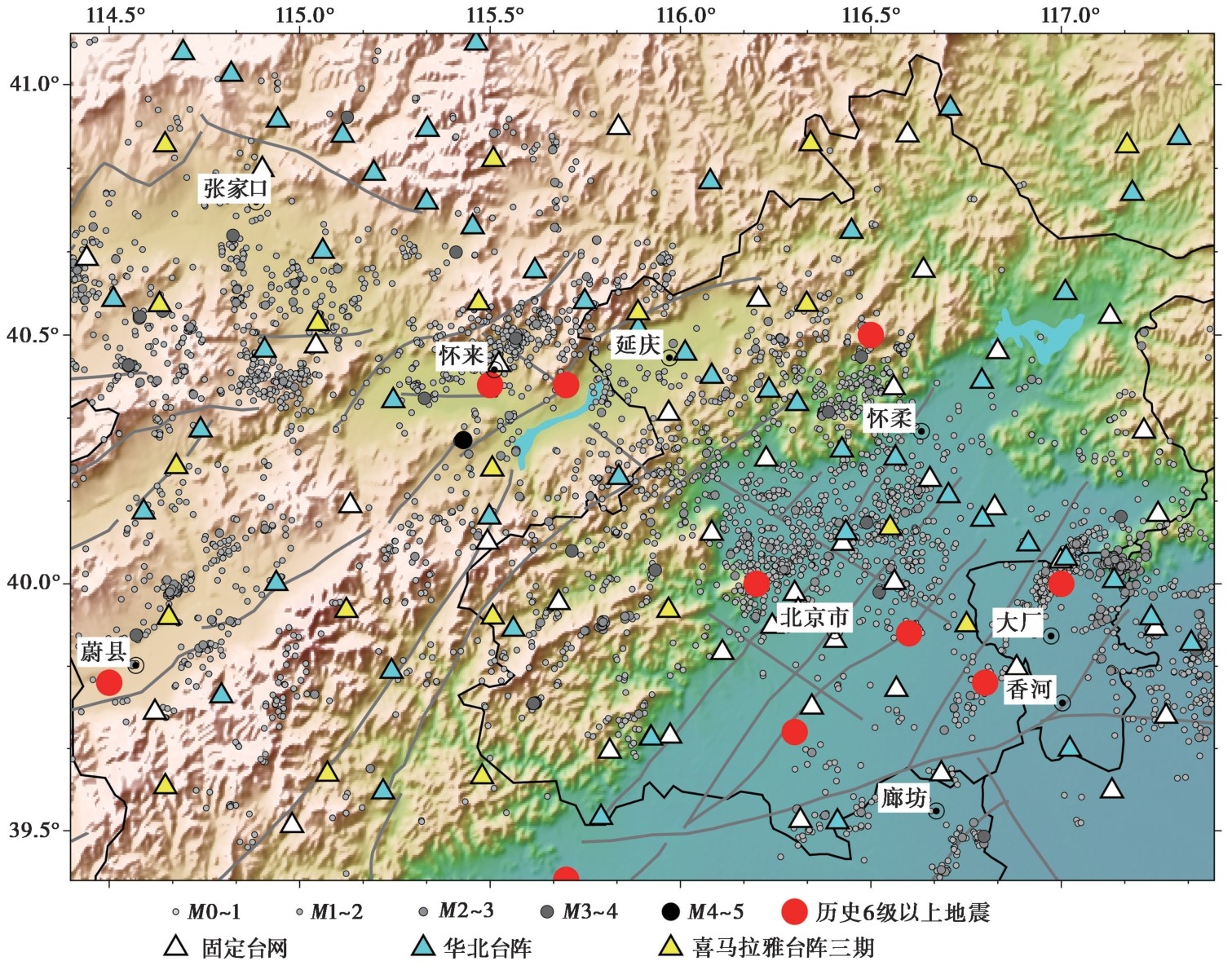
图1 研究区台站及地震分布 震级区间为左闭右开形式
Fig. 1 Distribution of seismic stations and relocated earthquakes in the study area.
| 时间 | 数据来源 | 台站个数 |
|---|---|---|
| 2006-2023年 | 区域固定台网 | 131 |
| 2006-2009年 | 华北地下精细结构探查 | 137 |
| 2016-2020年 | 喜马拉雅台阵三期 | 78 |
表1 地震波形数据来源
Table1 Sources of seismic waveform data
| 时间 | 数据来源 | 台站个数 |
|---|---|---|
| 2006-2023年 | 区域固定台网 | 131 |
| 2006-2009年 | 华北地下精细结构探查 | 137 |
| 2016-2020年 | 喜马拉雅台阵三期 | 78 |
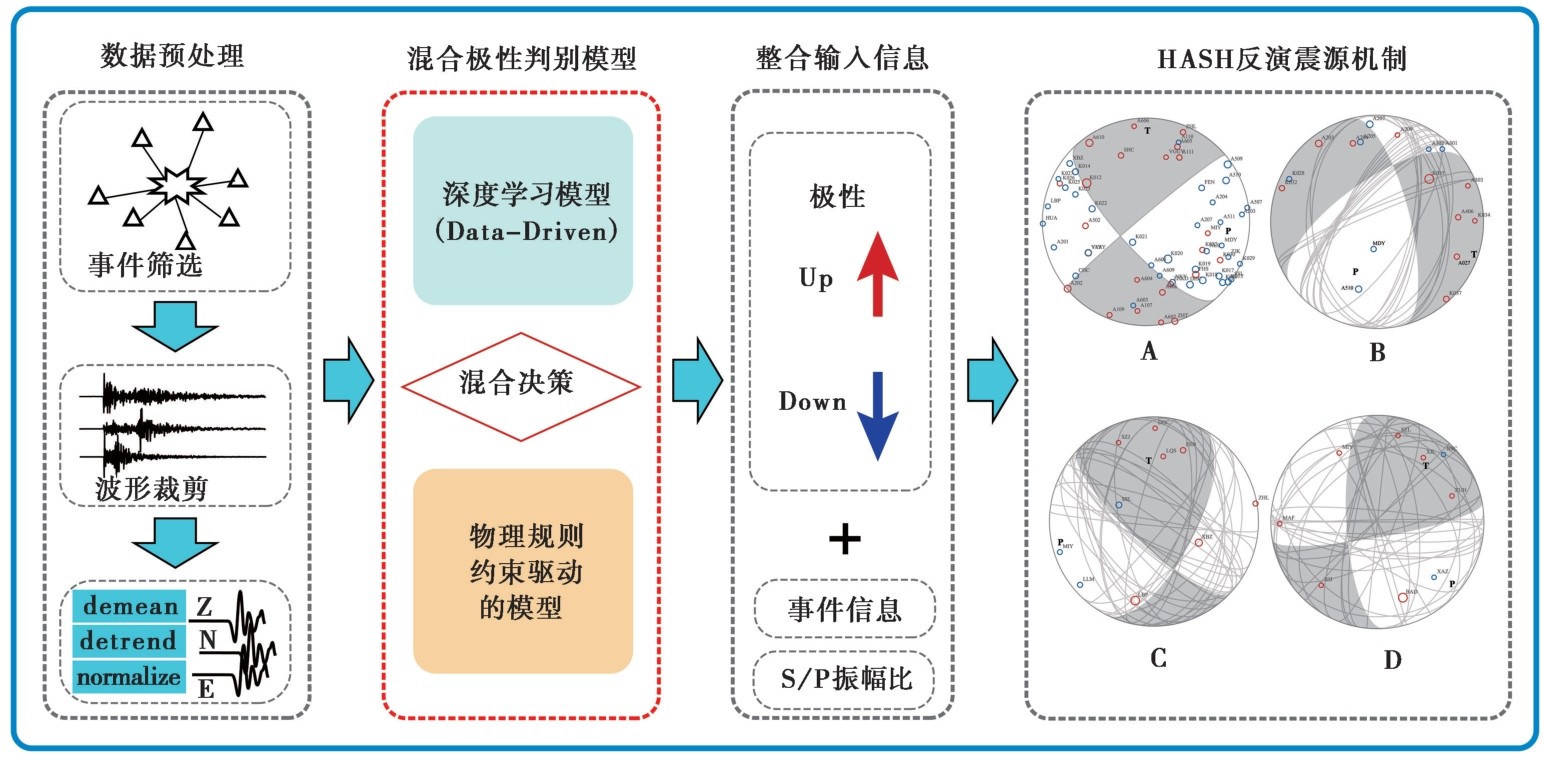
图2 FocMech-Flow2.0流程
Fig. 2 Flowchart of FocMech-Flow2.0.
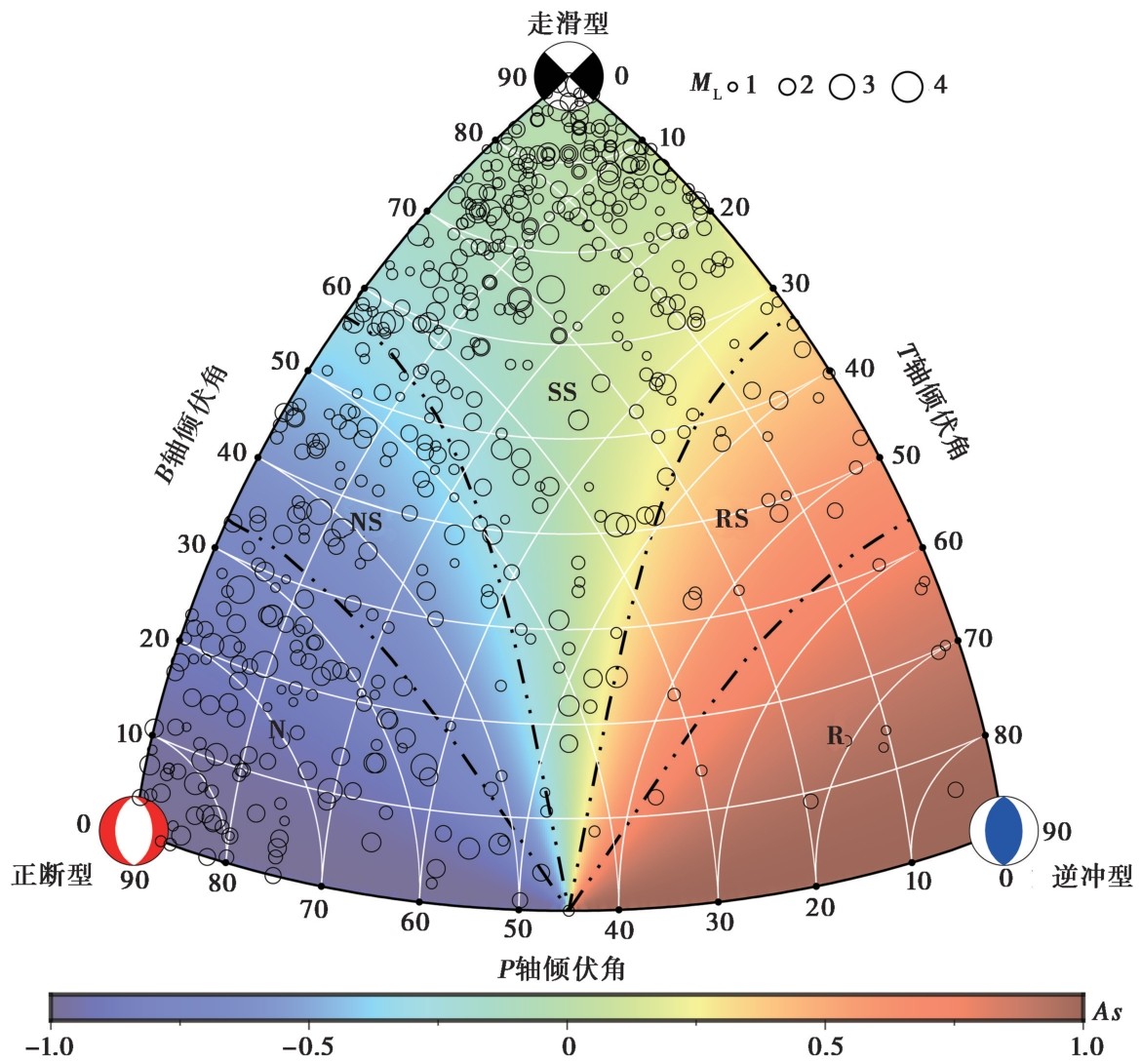
图3 震源机制分类图 SS走滑; NS正走滑; N正断; RS逆走滑; R逆断
Fig. 3 Classification diagram of focal mechanism solutions.
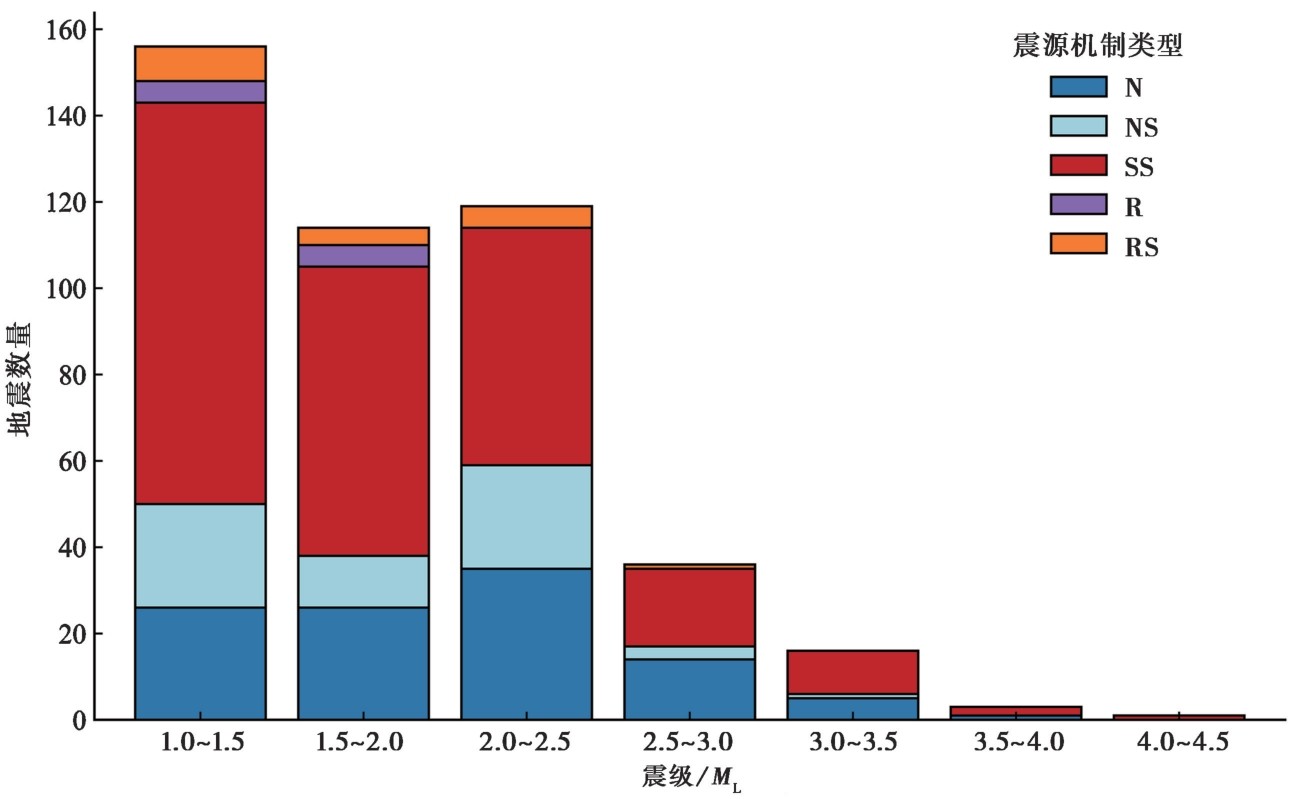
图4 不同震级段震源机制类型数量分布 SS走滑; NS正走滑; N正断; RS逆走滑; R逆断。震级区间为左闭右开形式
Fig. 4 Distribution of focal mechanism types by magnitude range.
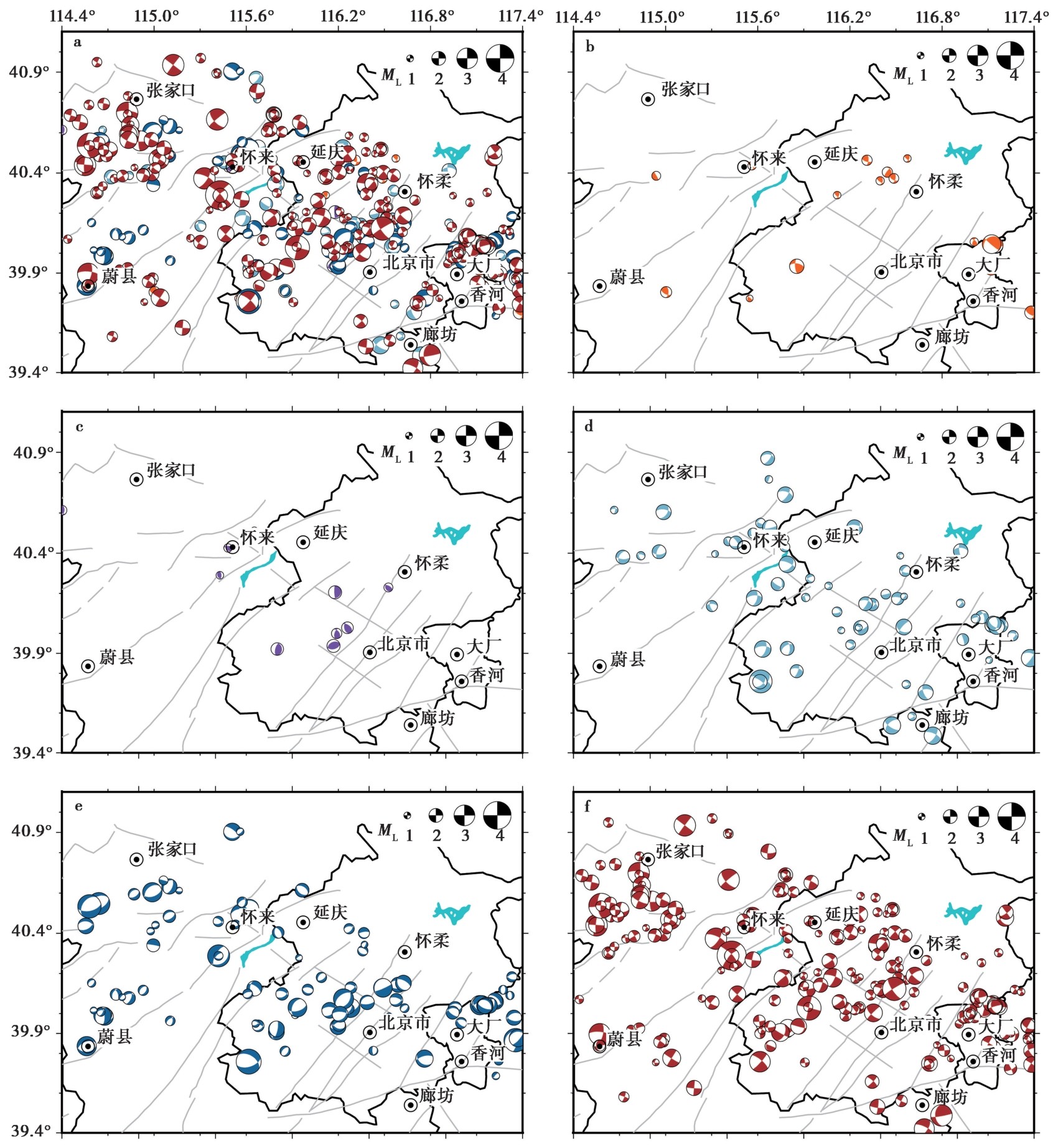
图5 震源机制类型的空间分布 a全类型震源机制; b逆走滑; c逆冲; d正走滑; e正断; f走滑
Fig. 5 Spatial distribution of different types of focal mechanism solutions.
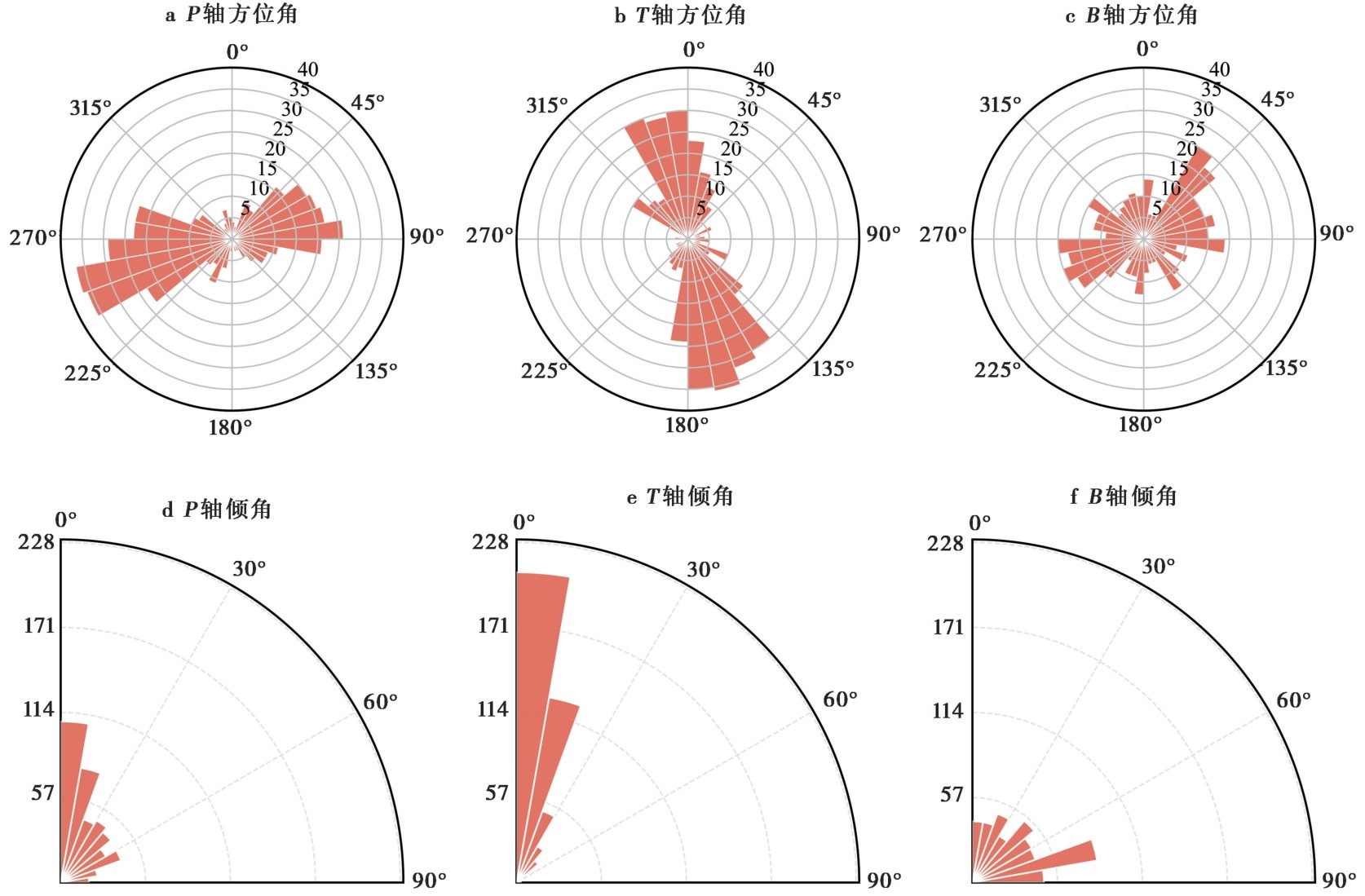
图6 震源机制P、T和B轴方位角和倾角分布统计图
Fig. 6 Statistical distribution of azimuths and plunges for P, T, and B axes.
| 深度范围/km | 正断 | 正走滑 | 走滑 | 逆走滑 | 逆冲 |
|---|---|---|---|---|---|
| 0~7 | 9(28.1%) | 4(12.5%) | 18(56.2%) | 1(3.1%) | 0(0.0%) |
| 7~14 | 53(27.2%) | 30(15.4%) | 96(49.2%) | 10(5.1%) | 6(3.1%) |
| 14~21 | 34(21.2%) | 22(13.8%) | 94(58.8%) | 6(3.8%) | 4(2.5%) |
| 21~28 | 11(19.0%) | 8(13.8%) | 38(65.5%) | 1(1.7%) | 0(0.0%) |
表2 不同深度段震源机制类型数量与占比统计
Table2 Statistics of the number and proportion of focal mechanism types at different depth ranges
| 深度范围/km | 正断 | 正走滑 | 走滑 | 逆走滑 | 逆冲 |
|---|---|---|---|---|---|
| 0~7 | 9(28.1%) | 4(12.5%) | 18(56.2%) | 1(3.1%) | 0(0.0%) |
| 7~14 | 53(27.2%) | 30(15.4%) | 96(49.2%) | 10(5.1%) | 6(3.1%) |
| 14~21 | 34(21.2%) | 22(13.8%) | 94(58.8%) | 6(3.8%) | 4(2.5%) |
| 21~28 | 11(19.0%) | 8(13.8%) | 38(65.5%) | 1(1.7%) | 0(0.0%) |
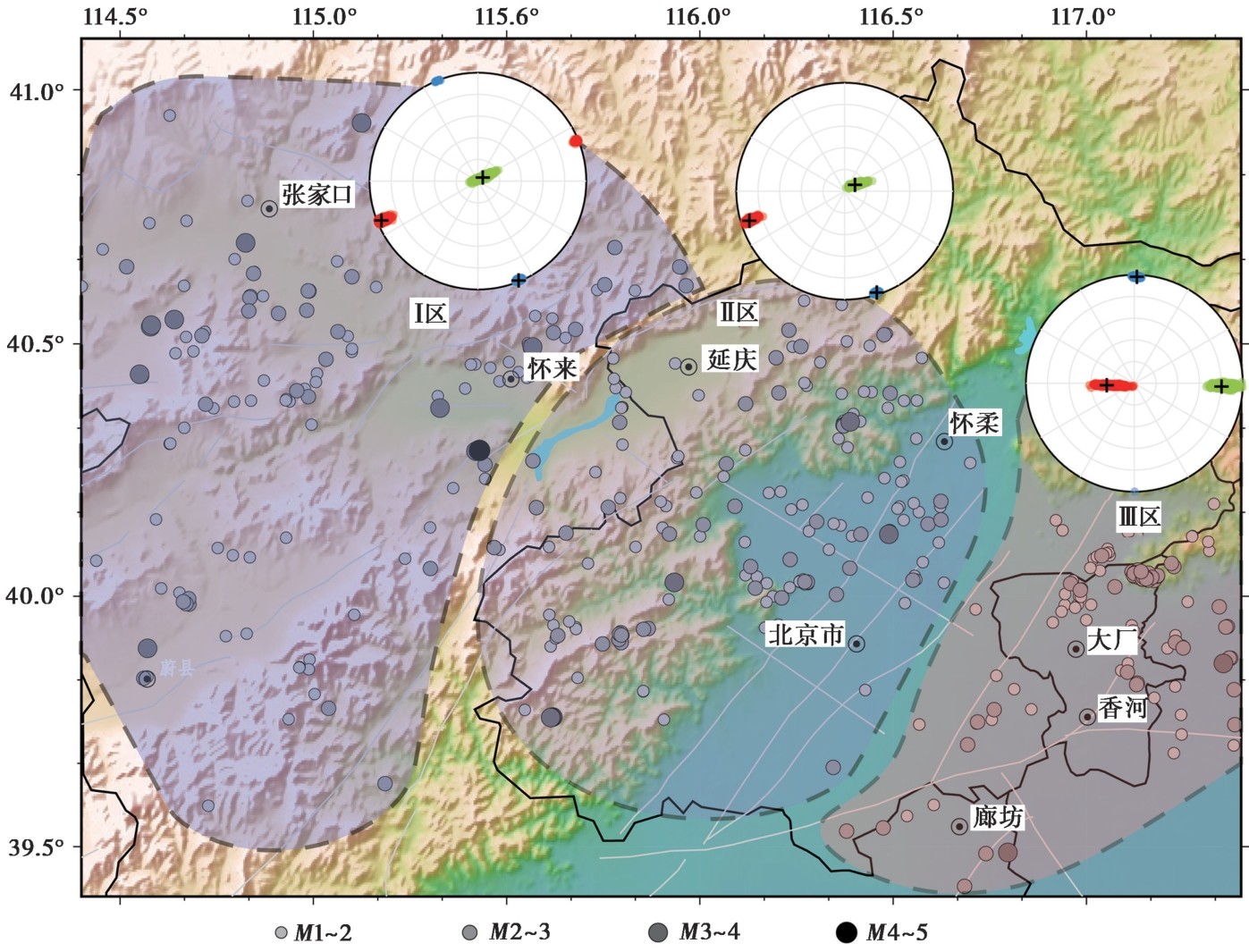
图7 震源机制及主应力轴95%置信区间分布图 震级区间为左闭右开形式
Fig. 7 Spatial distribution of focal mechanism solutions and the 95% confidence intervals of principal stress axes.
| 区域 | N | R(95%CI) | AΦ(95%CI) | σ1Az/Pl(Err) | σ2Az/Pl(Err) | σ3Az/Pl(Err) |
|---|---|---|---|---|---|---|
| Ⅰ | 118 | 0.23[0.17~0.32] | 1.23[1.17~1.32] | 68/04(±8) | 053/85(±8) | 158/01(±2) |
| Ⅱ | 190 | 0.30[0.26~0.36] | 1.30[1.26~1.36] | 73/09(±7) | 058/81(±7) | 162/02(±2) |
| Ⅲ | 137 | 0.35[0.30~0.43] | 0.65[0.57~0.70] | 86/69(±12) | 092/21(±12) | 001/02(±2) |
表3 不同分区应力场反演结果
Table3 Inversion results of the tectonic stress field in different sub-regions
| 区域 | N | R(95%CI) | AΦ(95%CI) | σ1Az/Pl(Err) | σ2Az/Pl(Err) | σ3Az/Pl(Err) |
|---|---|---|---|---|---|---|
| Ⅰ | 118 | 0.23[0.17~0.32] | 1.23[1.17~1.32] | 68/04(±8) | 053/85(±8) | 158/01(±2) |
| Ⅱ | 190 | 0.30[0.26~0.36] | 1.30[1.26~1.36] | 73/09(±7) | 058/81(±7) | 162/02(±2) |
| Ⅲ | 137 | 0.35[0.30~0.43] | 0.65[0.57~0.70] | 86/69(±12) | 092/21(±12) | 001/02(±2) |
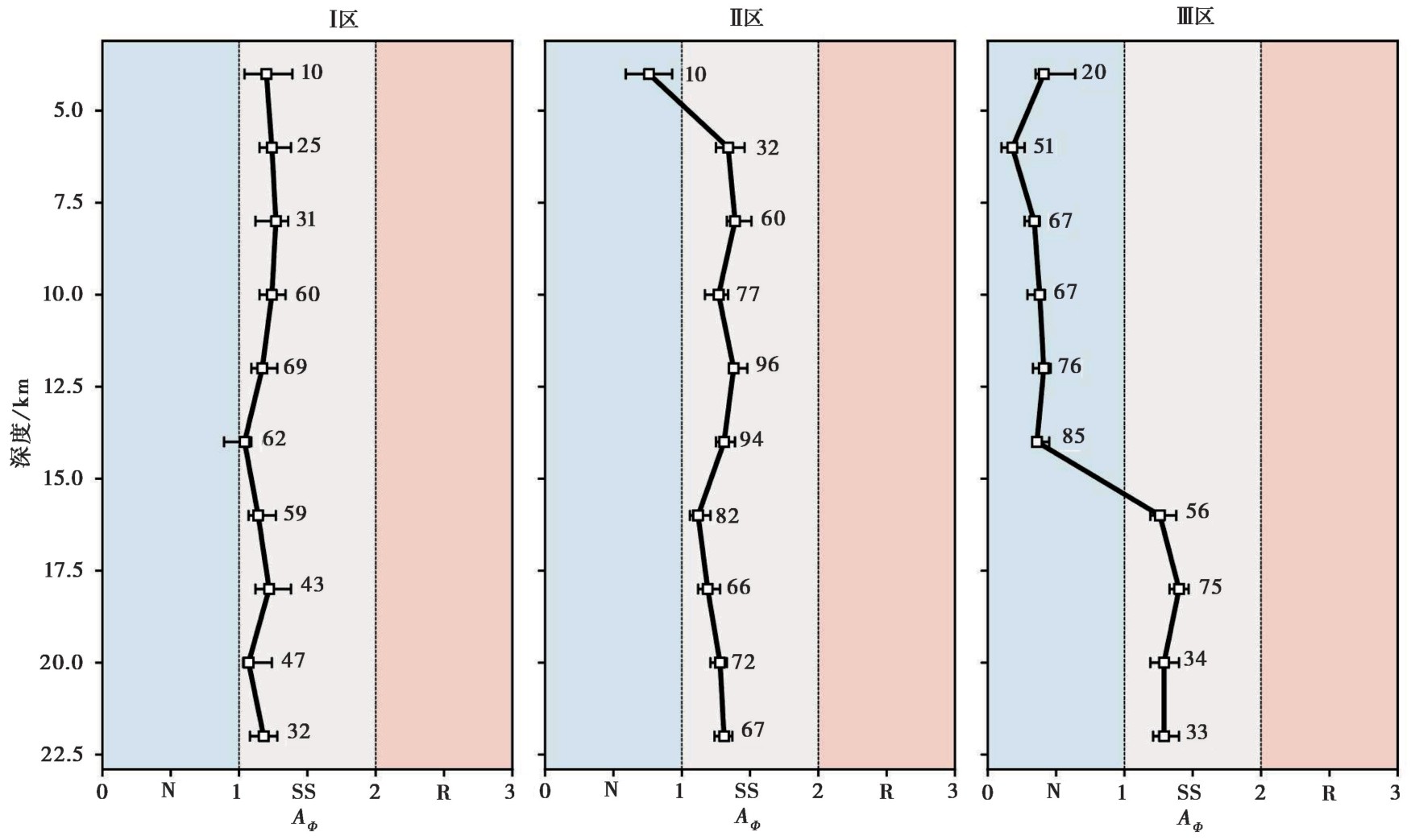
图8 Ⅰ-Ⅲ区AΦ不同深度的变化 误差棒表示95%置信区间, 数字表示每层震源机制的个数
Fig. 8 Variations of AΦ with depth in Zones Ⅰ to Ⅲ.
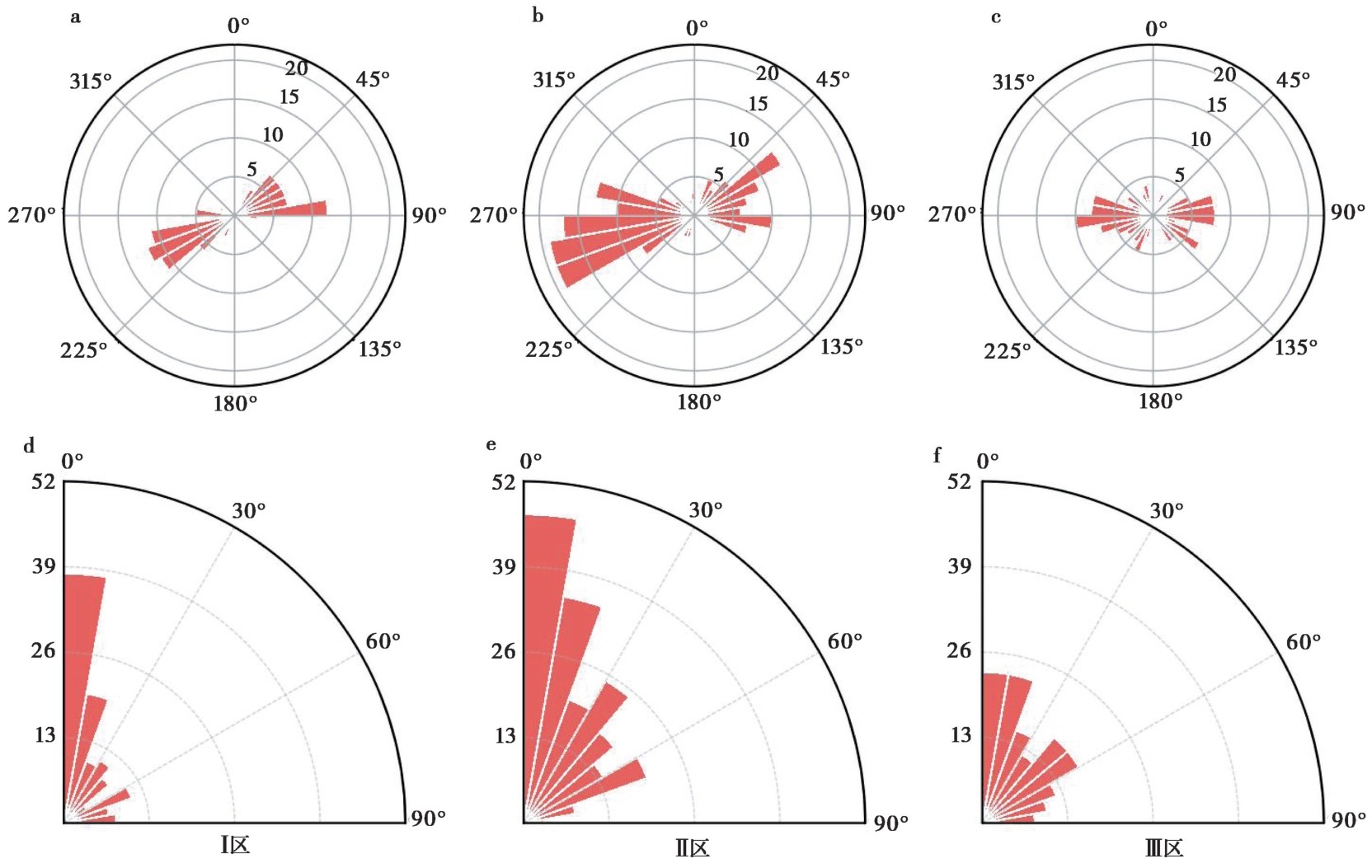
图9 Ⅰ-Ⅲ区震源机制P轴的方位角和倾角分布统计图
Fig. 9 Statistical distribution of P-axis azimuths and plunges in Zones Ⅰ to Ⅲ.
| [1] |
段永红, 王夫运, 张先康, 等. 2016. 华北克拉通中东部地壳三维速度结构模型(HBCrust1.0)[J]. 中国科学(D辑), 46(6): 845-856.
|
|
|
|
| [2] |
樊文杰, 崔效锋, 胡幸平, 等. 2019. 首都圈地区震源机制解及现今构造应力场时空变化特征研究[J]. 地震学报, 41(1): 33-45.
|
|
|
|
| [3] |
付真, 张旭, 郭祥云, 等. 2025. 川滇地区构造应力场的三维空间分布特征[J]. 地球物理学报, 68(7): 2498-2514.
|
|
|
|
| [4] |
黄骥超, 万永革. 2015. 利用小震与强震震源机制解反演首都圈现今构造应力场[J]. 地震, 35(1): 17-27.
|
|
|
|
| [5] |
嘉世旭, 张成科, 赵金仁, 等. 2009. 华北东北部裂陷盆地与燕山隆起地壳结构[J]. 地球物理学报, 52(1): 99-110.
|
|
|
|
| [6] |
李钦祖, 靳雅敏, 于新昌. 1982. 华北地区的震源机制与地壳应力场[J]. 地震学报, 4(1): 55-61.
|
|
|
|
| [7] |
李瑞莎, 崔效锋, 刁桂苓, 等. 2008. 华北北部地区现今应力场时空变化特征研究[J]. 地震学报, 30(6): 570-580.
|
|
|
|
| [8] |
李振月, 李俊伦, 姚华建, 等. 2023. 2021年5月漾濞MS6.4地震序列发震机理的应力分析[J]. 地球物理学报, 66(4): 1448-1459.
|
|
|
|
| [9] |
刘保金, 胡平, 孟勇奇, 等. 2009. 北京地区地壳精细结构的深地震反射剖面探测研究[J]. 地球物理学报, 52(9): 2264-2272.
|
|
|
|
| [10] |
刘峡, 马瑾, 傅容珊, 等. 2010. 华北地区现今地壳运动动力学初步研究[J]. 地球物理学报, 53(6): 1418-1427.
|
|
|
|
| [11] |
罗艳, 崇加军, 倪四道, 等. 2008. 首都圈地区莫霍面起伏及沉积层厚度[J]. 地球物理学报, 51(4): 1135-1145.
|
|
|
|
| [12] |
罗艳, 赵里, 曾祥方, 等. 2015. 芦山地震序列震源机制及其构造应力场空间变化[J]. 中国科学(地球科学), 45(4): 538-550.
|
|
|
|
| [13] |
茅远哲, 曹筠, 高晨, 等. 2019. 京西北地区地应变观测与小震震源机制解一致性研究[J]. 中国地震, 35(4): 709-717.
|
|
|
|
| [14] |
秦向辉, 张鹏, 丰成君, 等. 2014. 北京地区地应力测量与主要断裂稳定性分析[J]. 地球物理学报, 57(7): 2165-2180.
DOI |
|
|
|
| [15] |
盛书中, 李振月, 万永革, 等. 2025. 从应力莫尔圆视角探讨3种典型应力场作用下的震源机制解类型[J]. 地球物理学报, 68(11): 4157-4168.
|
|
|
|
| [16] |
苏培臻, 罗艳, 赵里. 2025. 川滇地区地壳三维应力场模型的构建[J]. 地球物理学报, 68(5): 1730-1750.
|
|
|
|
| [17] |
万永革. 2024. 震源机制水平应变花面应变的地震震源机制分类方法及序列震源机制总体特征分析[J]. 地球科学, 49(7): 2675-2684.
|
|
|
|
| [18] |
王椿镛, 吴庆举, 段永红, 等. 2017. 华北地壳上地幔结构及其大地震深部构造成因[J]. 中国科学(地球科学), 47(6): 684-719.
|
|
|
|
| [19] |
王晓山, 冯向东, 赵英萍. 2020. 京津冀地区地壳应力场特征[J]. 地震研究, 43(4): 610-619.
|
|
|
|
| [20] |
武敏捷, 郭祥云, 武安绪, 等. 2019. 京西北地区震源机制解及构造应力场特征分析[J]. 国际地震动态, (8): 51-52.
|
|
|
|
| [21] |
武敏捷, 林向东, 武安绪, 等. 2022. 北京及邻区震源机制解及应力场特征[J]. 地震地磁观测与研究, 43(S1): 33-35.
|
|
|
|
| [22] |
吴萍萍, 丁志峰, 谭捍东, 等. 2021. 基于VP/VS波速比模型约束的张渤地震带深部电性结构研究[J]. 地球物理学报, 64(8): 2716-2732.
DOI |
|
|
|
| [23] |
谢富仁, 崔效锋, 赵建涛, 等. 2004. 中国大陆及邻区现代构造应力场分区[J]. 地球物理学报, 47(4): 654-662.
|
|
|
|
| [24] |
徐杰, 宋长青, 楚全芝. 1998. 张家口-蓬莱断裂带地震构造特征的初步探讨[J]. 地震地质, 20(2): 146-154.
|
|
|
|
| [25] |
徐锡伟, 冉勇康, 周本刚, 等. 1998. 张北-尚义地震的地震构造环境与宏观破坏特征[J]. 地震地质, 20(2): 135-145.
|
|
|
|
| [26] |
张红艳, 谢富仁, 荆振杰. 2009. 京西北盆岭构造区现代构造应力场的非均匀特征[J]. 地球物理学报, 52(12): 3061-3071.
|
|
|
|
| [27] |
张先康, 王椿镛, 刘国栋, 等. 1996. 延庆-怀来地区地壳细结构: 利用深地震反射剖面[J]. 地球物理学报, 39(3): 356-364.
|
|
|
|
| [28] |
赵成彬, 刘保金, 姬计法, 等. 2013. 北京南部地壳精细结构深地震反射探测研究[J]. 地球物理学报, 56(4): 1168-1176.
|
|
|
|
| [29] |
赵金仁, 张先康, 张成科, 等. 2004. 利用宽角反射/折射和深反射探测剖面揭示三河-平谷大震区深部结构特征[J]. 地球物理学报, 47(4): 646-653.
|
|
|
|
| [30] |
朱日祥, 徐义刚, 朱光, 等. 2012. 华北克拉通破坏[J]. 中国科学(地球科学), 42(8): 1135-1159.
|
|
|
|
| [31] |
DOI URL |
| [32] |
|
| [33] |
|
| [34] |
DOI URL |
| [35] |
|
| [36] |
DOI URL |
| [37] |
DOI URL |
| [38] |
|
| [39] |
|
| [40] |
|
| [41] |
DOI URL |
| [42] |
DOI URL |
| [43] |
|
| [44] |
DOI |
| [45] |
|
| [46] |
|
| [47] |
DOI URL |
| [48] |
DOI URL |
| [49] |
DOI URL |
| [50] |
DOI URL |
| [51] |
|
| [52] |
DOI URL |
| [53] |
|
| [54] |
|
| [55] |
|
| [56] |
DOI URL |
| [57] |
DOI URL |
| [58] |
DOI |
| [59] |
DOI URL |
| [60] |
|
| [61] |
|
| [1] | 王瑛奎, 吴熙彦, 任俊杰. 基于大语言模型的文献驱动构建活动断层知识库的方法--以京西北为例[J]. 地震地质, 2026, 48(5): 1552-1569. |
| [2] | 李岩, 陈俊磊, 吕思宇, 王宇栋, 傅磊. 景谷地震序列触发关系及应力场反演[J]. 地震地质, 2026, 48(2): 561-581. |
| [3] | 常金龙, 甘卫军, 周晨, 朱成林, 刘长生, 姚程越. 依兰-伊通断裂北段应变状态及发震机制讨论[J]. 地震地质, 2026, 48(1): 200-216. |
| [4] | 王霞, 宋美卿, 吴昊昱, 梁向军, 吕睿, 郭文峰, 张娜, 李金. 山西裂谷构造应力场特征及其动力学意义[J]. 地震地质, 2026, 48(1): 257-277. |
| [5] | 戴宗辉, 曲均浩, 徐宁, 李翠芹, 李冬梅, 尹玉振. 2023年微山震群震源区三维速度结构与发震构造[J]. 地震地质, 2025, 47(6): 1649-1666. |
| [6] | 李婷婷, 缪发军, 孙业君, 范文华, 宫杰, 顾勤平, 杜航, 孙小航, 张岑, 李子烨. 江苏江都震群震源区速度结构及构造特征[J]. 地震地质, 2025, 47(5): 1343-1363. |
| [7] | 唐茂云, 李翠平, 黄世源, 董蕾, 高见, 李勇. 泸县—荣昌地区地震活动时空演化与构造应力场特征[J]. 地震地质, 2025, 47(4): 1183-1203. |
| [8] | 许月怡, 徐贝贝, 徐晨雨, 邵志刚, 胡朝忠. 基于远震P波、 强震波形和InSAR联合反演2025年西藏定日MS6.8地震破裂过程[J]. 地震地质, 2025, 47(3): 734-746. |
| [9] | 尹欣欣, 左可桢, 赵翠萍, 蔡润. 西藏定日 MS6.8 地震重定位及前震序列识别[J]. 地震地质, 2025, 47(3): 850-868. |
| [10] | 李金, 邓明文, 张治广, 孙业君, 姚远, 徐凯驰. 2024年塔里木盆地尉犁5级震群发震构造[J]. 地震地质, 2025, 47(2): 463-487. |
| [11] | 盛书中, 王倩茹, 李振月, 李红星, 张小娟, 葛坤朋, 宫猛. 基于构造应力场研究2025年西藏定日6.8级地震的发震构造[J]. 地震地质, 2025, 47(1): 49-63. |
| [12] | 许永强, 雷建设, 胡晓辉. 2021年5月21日云南漾濞MS6.4地震序列双差重定位及其构造意义[J]. 地震地质, 2024, 46(5): 1066-1090. |
| [13] | 宋冬梅, 王浩, 冯家兴, 单新建, 王斌. 基于RS-Conv的多尺度神经网络LiDAR点云断裂带提取方法[J]. 地震地质, 2024, 46(3): 739-755. |
| [14] | 刘鑫, 王诗柔, 石许华, 苏程, 鲁晨妍, 钱晓园, 孙侨阳, 邓洪旦, 杨蓉, 程晓敢. 深度学习在活动构造与地貌研究中的应用[J]. 地震地质, 2024, 46(2): 277-296. |
| [15] | 董春丽, 张广伟, 李欣蔚, 王跃杰, 丁大业, 宫卓宏. 基于震源机制和地震定位研究2022年山西古交ML4.1地震的发震构造[J]. 地震地质, 2024, 46(2): 414-432. |
| 阅读次数 | ||||||
|
全文 |
|
|||||
|
摘要 |
|
|||||