地震地质 ›› 2026, Vol. 48 ›› Issue (5): 1513-1534.DOI: 10.3969/j.issn.0253-4967.20260026
储著畅1),2)( ), 袁杰2),*(), 李玉江2)
收稿日期:2026-02-27
修回日期:2026-05-19
出版日期:2026-11-11
发布日期:2026-11-11
通讯作者:
袁杰
作者简介:储著畅, 男, 2002年, 现为中国科学院大学应急管理科学与工程学院计算机应用技术专业在读硕士研究生, 主要从事工程地震、固体地球物理学研究, E-mail: gzjl072802@126.com。
基金资助:
CHU Zhu-chang1),2)(), YUAN Jie2),*(), LI Yu-jiang2)
Received:2026-02-27
Revised:2026-05-19
Online:2026-11-11
Published:2026-11-11
Contact:
YUAN Jie
摘要:
近地表沉积层是控制场地地震动放大效应的关键因素之一, 其厚度变化对地震动幅值、能量及持续时间具有重要影响。为定量分析沉积层厚度对地震动响应特征的调控规律, 文中构建了概念化三维有限元模型, 引入黏弹性人工边界模拟半无限空间, 以沉积层厚度为核心变量(0~500m), 在同一地震动输入条件下系统分析不同厚度沉积层对峰值类参数(PGA、PGV、PGD)、能量与持时类参数(HRMSA、显著持时)的影响, 并进一步探讨输入地震动频谱特性、地形等因素对地震动放大效应的影响。结果表明: 1)沉积层是控制盆地内强放大与持时延长的决定性因素, 其影响显著强于单纯的盆地地形效应。随着厚度增加, 地震动峰值放大系数呈现“加速度>速度>位移”的阶次递减特征, 而能量与持时参数则表现出“增长-饱和波动”的非线性规律, 且水平向的放大效应显著强于竖向。2)沉积场地的放大效应并非单纯由厚度单调控制, 其本质受控于场地基频与输入地震动卓越频率的耦合机制。当沉积层厚度对应的场地基频与输入波频率接近时, 共振效应会导致异常放大, 这解释了单一厚度变量下响应的复杂波动特征。文中研究结果为认识沉积层控制下的场地放大机理及其在地震危险性评估中的合理表征提供了定量依据。
储著畅, 袁杰, 李玉江. 沉积层厚度对场地地震动放大效应的影响机理[J]. 地震地质, 2026, 48(5): 1513-1534.
CHU Zhu-chang, YUAN Jie, LI Yu-jiang. MECHANISMS OF SITE GROUND MOTION AMPLIFICATION INDUCED BY SEDIMENTARY LAYER THICKNESS[J]. SEISMOLOGY AND GEOLOGY, 2026, 48(5): 1513-1534.
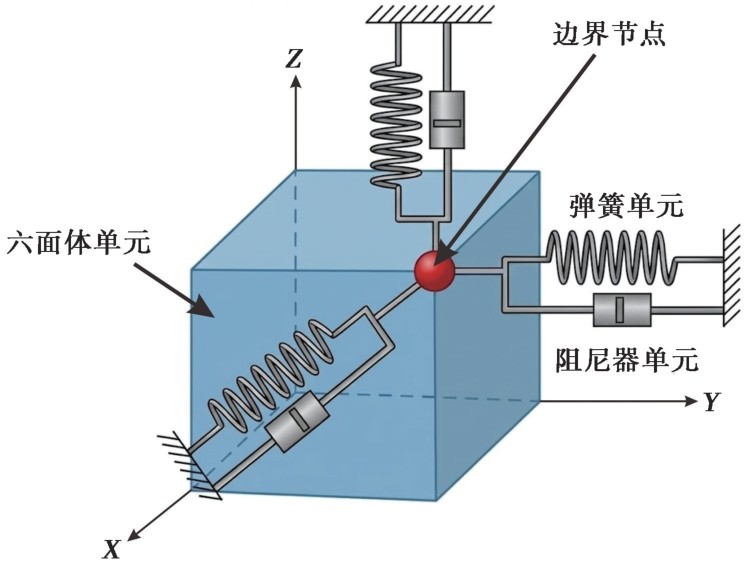
图1 三维模型黏弹性人工边界施加示意图
Fig. 1 Schematic of viscoelastic artificial boundaries applied to the 3D model.
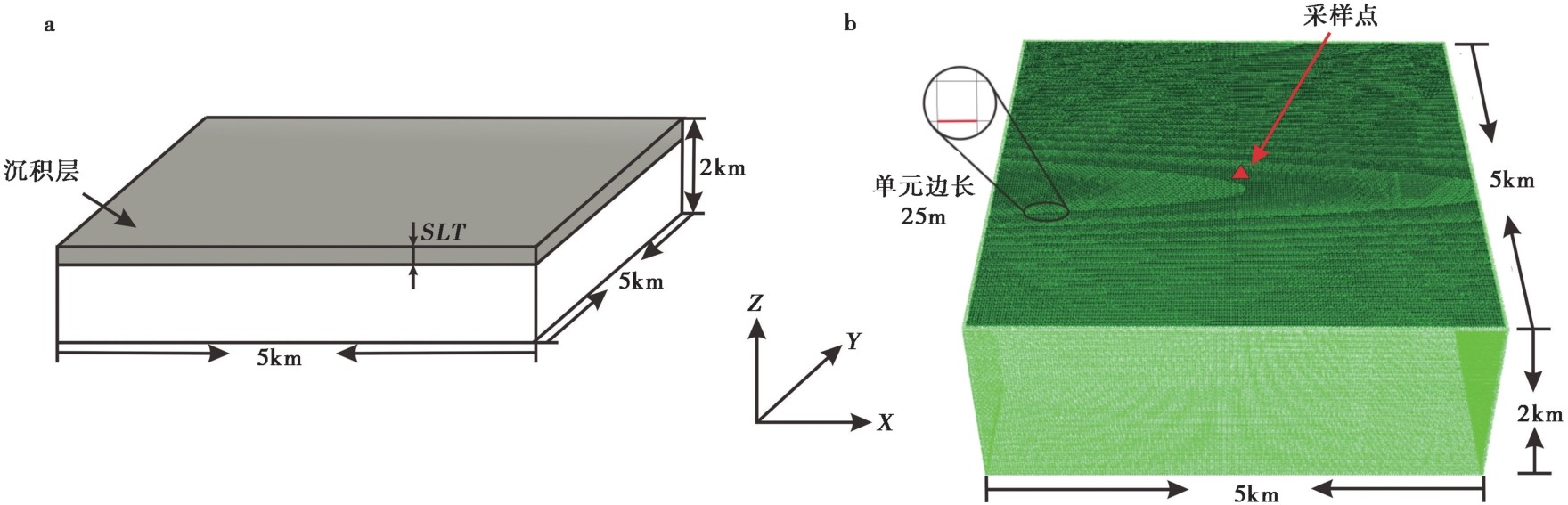
图2 三维数值模型 a几何模型; b有限元模型
Fig. 2 Three-dimensional numerical model.
| 参数 | 沉积层 | 基岩 |
|---|---|---|
| 密度/kg·m-3 | 2600 | |
| 杨氏模量/Pa | 4×10⁹ | 4×10¹⁰ |
| 泊松比 | 0.25 | |
| 剪切波速/m·s-1 | 784.5 | 2480.7 |
| 压缩波速/m·s-1 | 1358.7 | 4296.7 |
表1 基岩与沉积层材料参数
Table1 Bedrock and sedimentary layer material parameters
| 参数 | 沉积层 | 基岩 |
|---|---|---|
| 密度/kg·m-3 | 2600 | |
| 杨氏模量/Pa | 4×10⁹ | 4×10¹⁰ |
| 泊松比 | 0.25 | |
| 剪切波速/m·s-1 | 784.5 | 2480.7 |
| 压缩波速/m·s-1 | 1358.7 | 4296.7 |
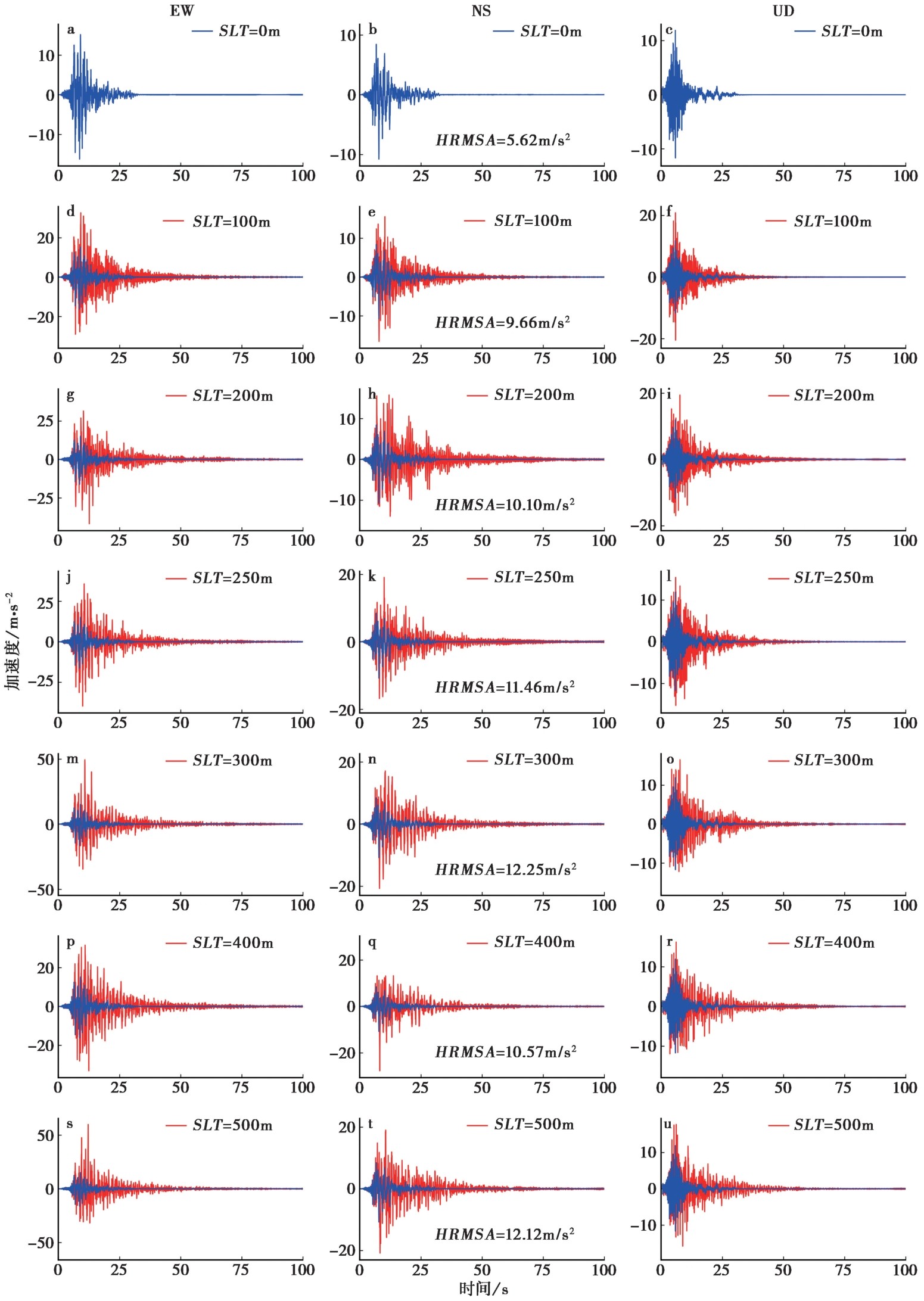
图3 不同模型下地表加速度的时程曲线 a-c基岩基准模型(SLT=0)的地表加速度时程曲线(蓝线); d-u含沉积层模型(SLT>0)的地表加速度时程曲线(红线)
Fig. 3 Surface acceleration time histories for different models.
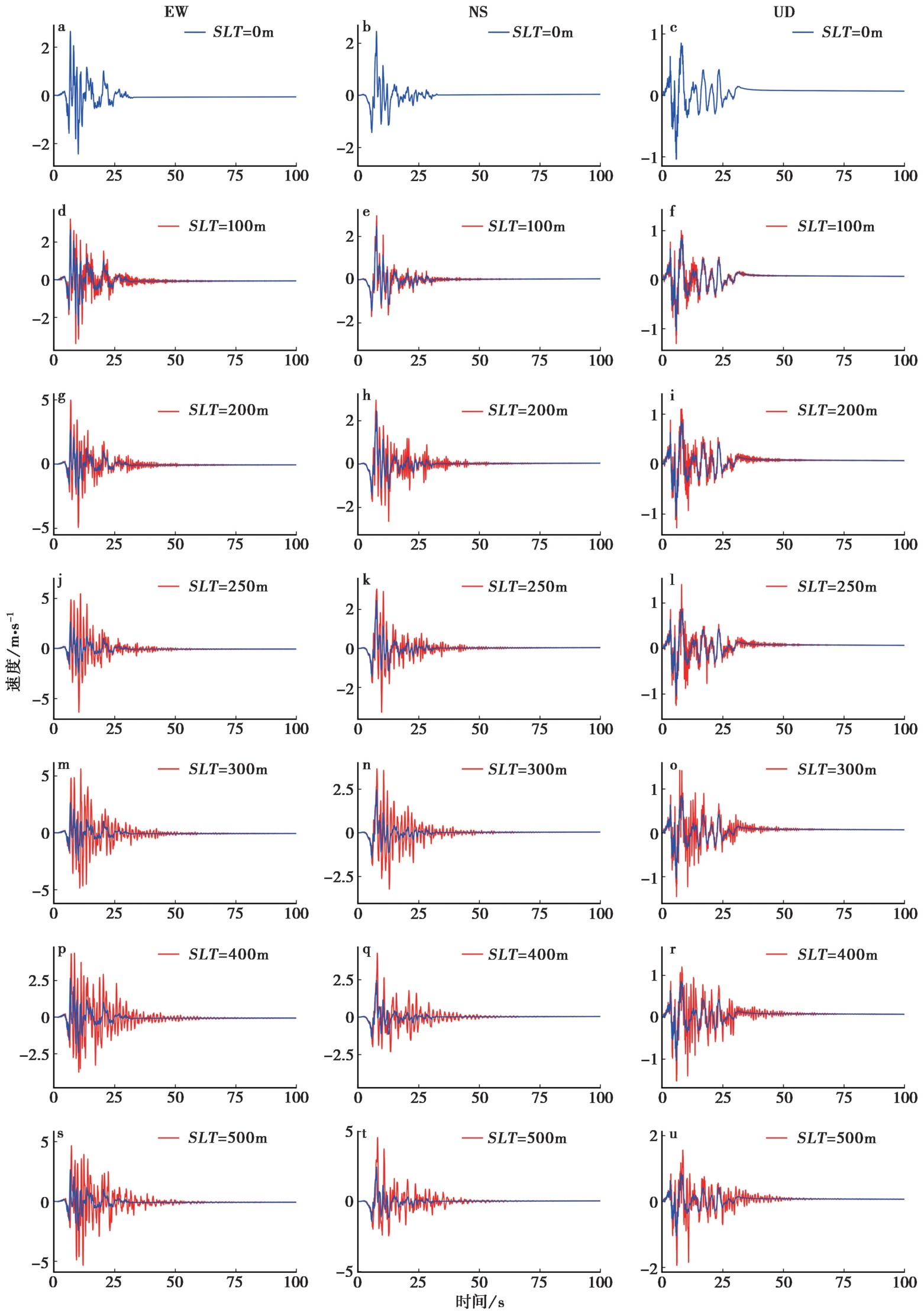
图4 不同模型下地表速度的时程曲线 a-c基岩基准模型(SLT=0)的地表速度时程曲线(蓝线); d-u含沉积层模型(SLT>0)的地表速度时程曲线(红线)
Fig. 4 Surface-velocity time histories for different models.
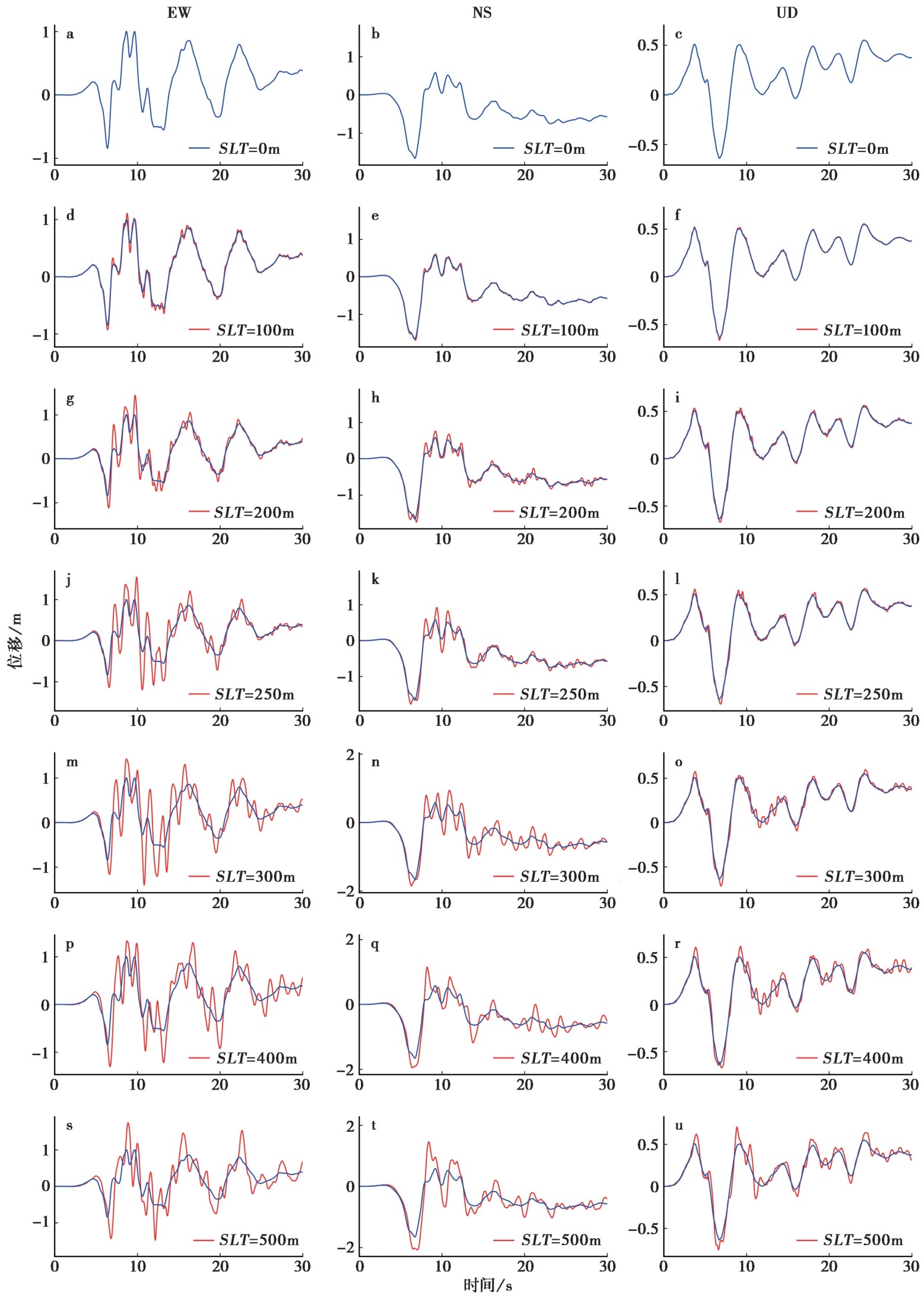
图5 不同模型下地表位移的时程曲线 a-c基岩基准模型(SLT=0)的地表位移时程曲线(蓝线); d-u含沉积层模型(SLT>0)的地表位移时程曲线(红线)
Fig. 5 Surface displacement time histories for different models.
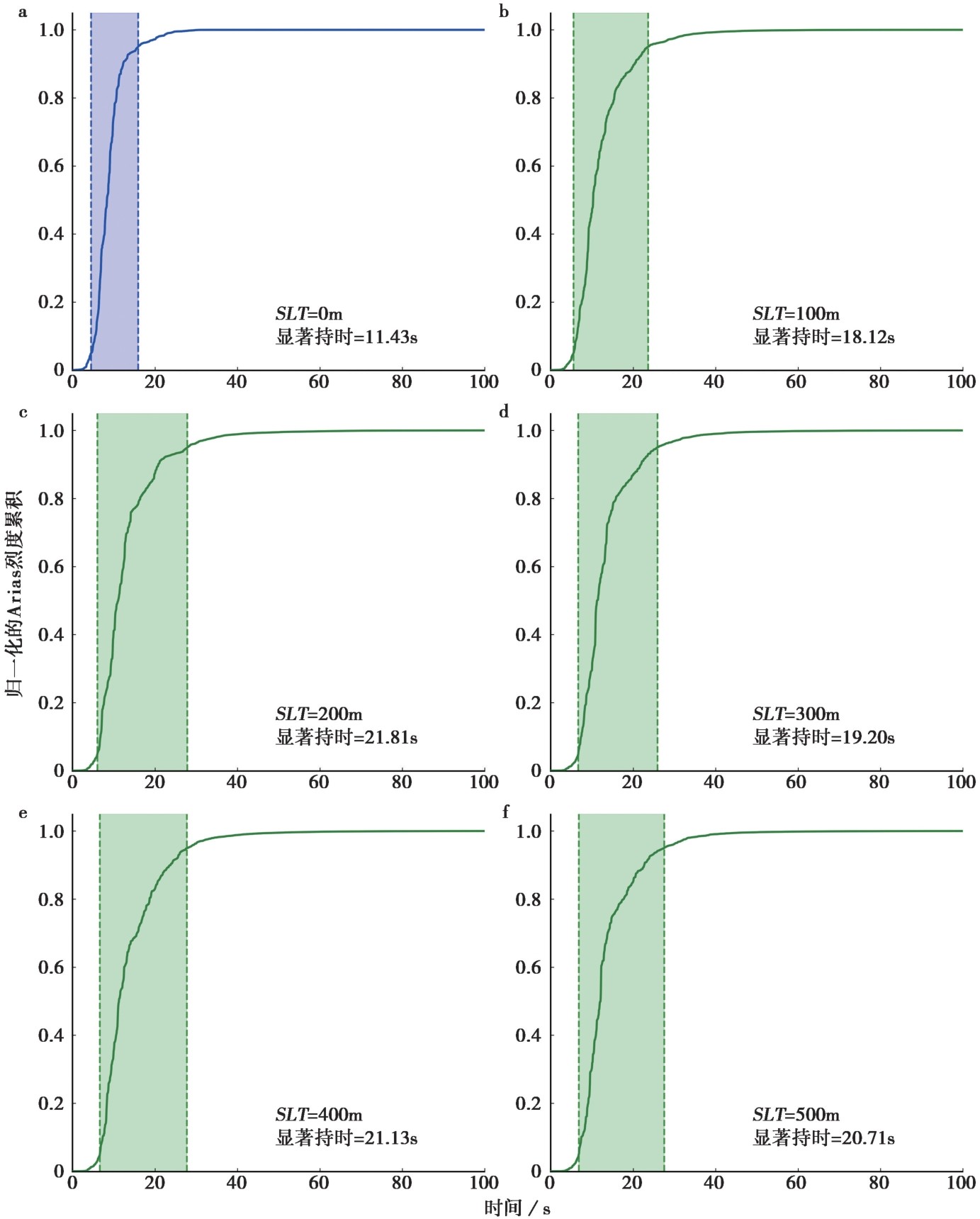
图6 不同模型下归一化Arias烈度累积时程曲线 a基岩基准模型(SLT=0)时归一化Arias烈度累积曲线(蓝线); b-f含沉积层模型(SLT>0)时归一化Arias烈度累积曲线(绿线)
Fig. 6 Normalized Arias Intensity cumulative time histories across different models.
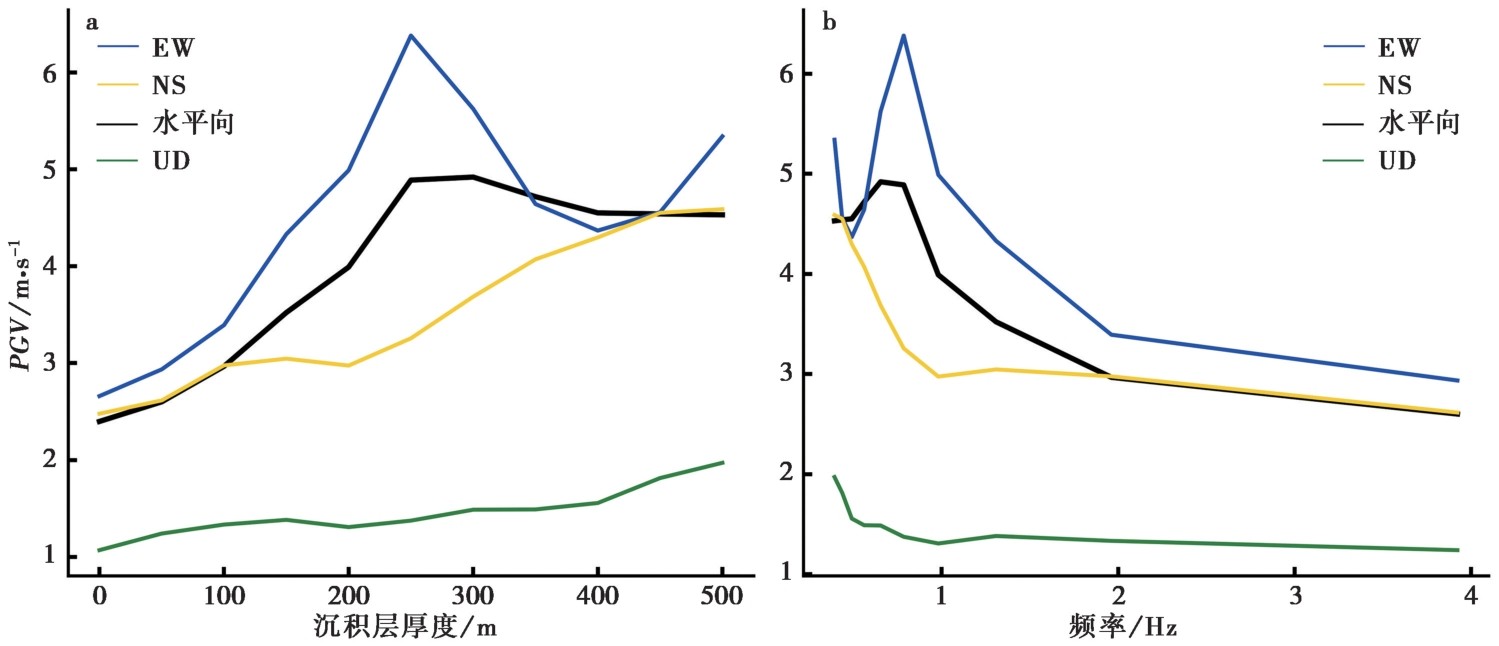
图7 地表中心点的PGV变化规律 a随沉积层厚度变化; b随场地基频变化
Fig. 7 Variation patterns of PGV at the surface center point.
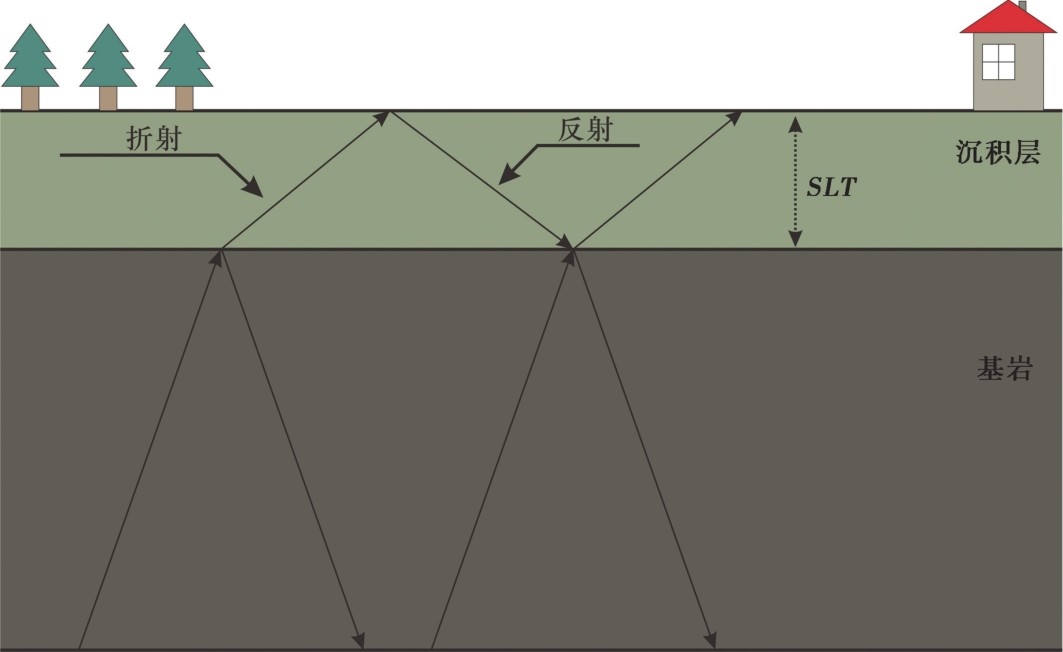
图8 沉积层内地震波传播机制示意图(折射、反射及叠加)
Fig. 8 Schematic of seismic wave propagation mechanisms within the sedimentary layer(refraction, reflection, and superposition).
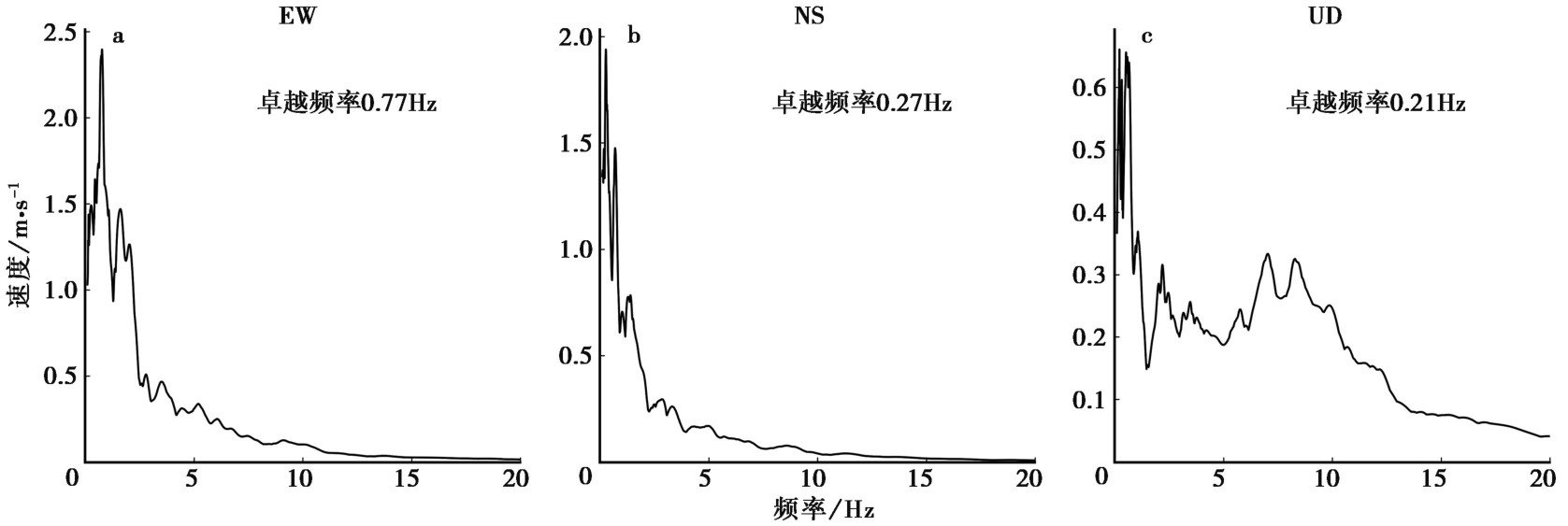
图9 基岩处输入地震动的速度频谱 a EW向速度频谱; b NS向速度频谱; c UD向速度频谱
Fig. 9 Velocity spectra of the input ground motion at the bedrock.
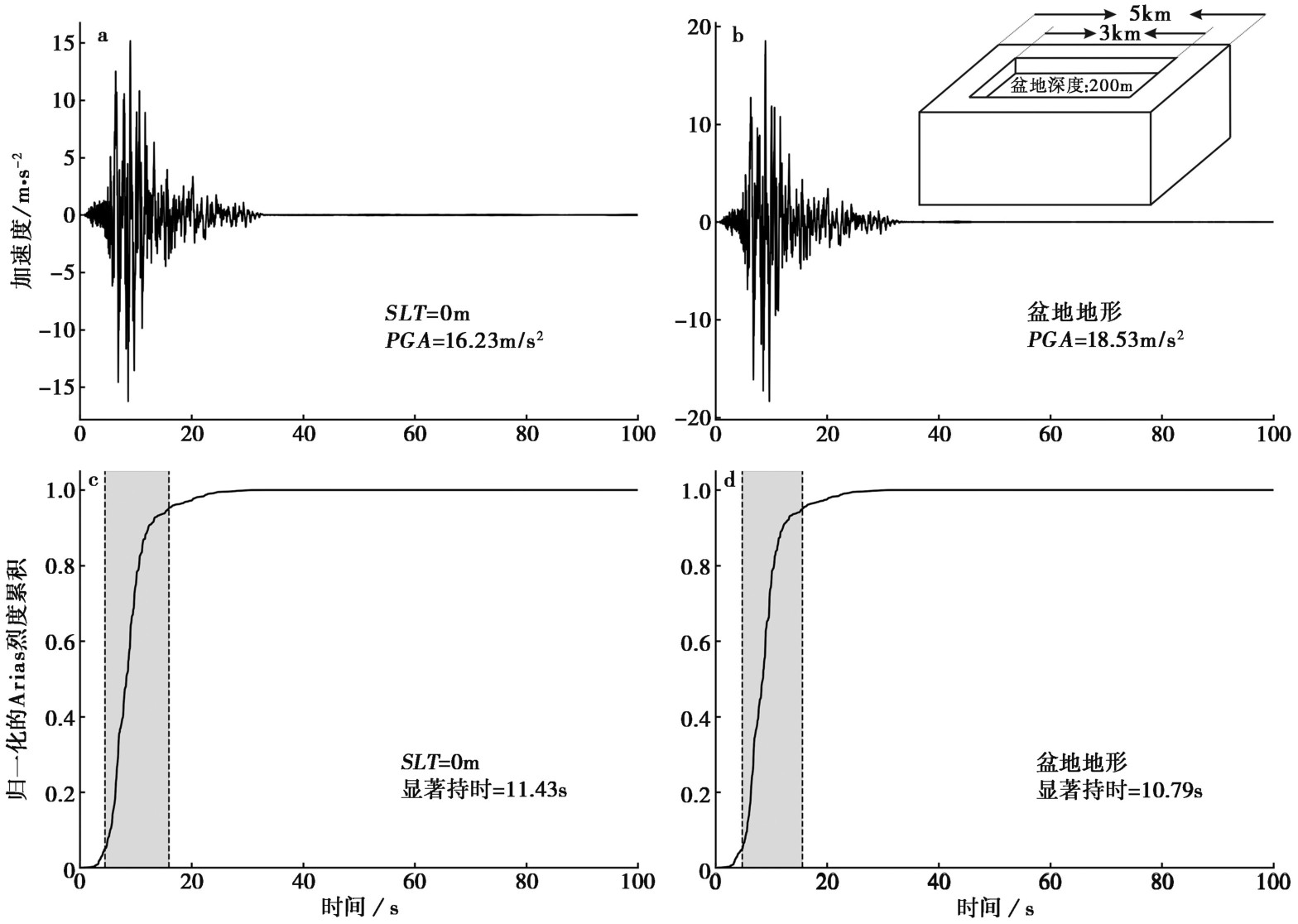
图10 各模型EW向加速度时程与归一化Arias烈度累积曲线 a无沉积层模型的EW向加速度时程曲线; b纯盆地模型的EW向加速度时程曲线; c无沉积层模型的归一化Arias烈度累积曲线; d纯盆地模型的归一化Arias烈度累积曲线
Fig. 10 EW acceleration time histories and normalized Arias intensity cumulative curves for various models.
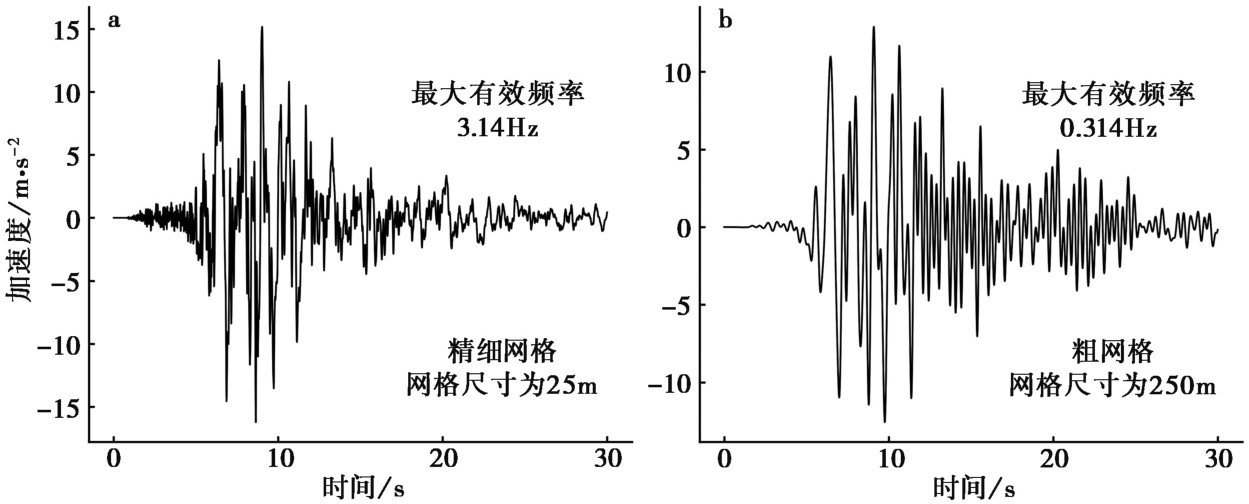
图11 网格尺寸对EW向加速度的影响 a精细网格模型的EW向加速度时程曲线; b粗网格模型地表中心点处的EW向加速度时程曲线
Fig. 11 Effect of mesh size on EW acceleration.
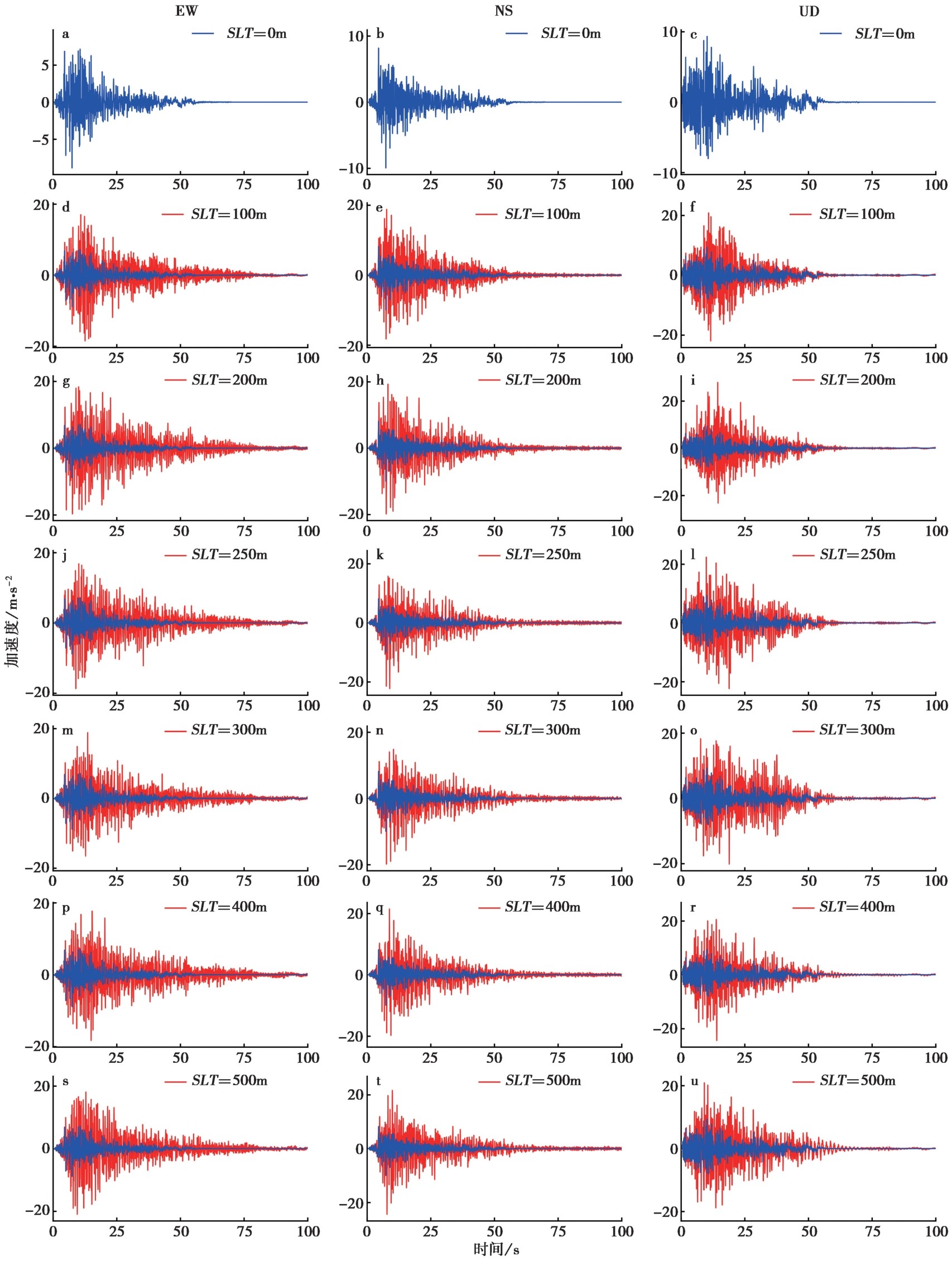
图12 Taft波输入下不同模型地表的加速度时程曲线 a-c基岩基准模型(SLT=0)的地表加速度时程曲线(蓝线); d-u含沉积层模型(SLT>0)的地表加速度时程曲线(红线)
Fig. 12 Surface acceleration time histories for different models under Taft wave input.
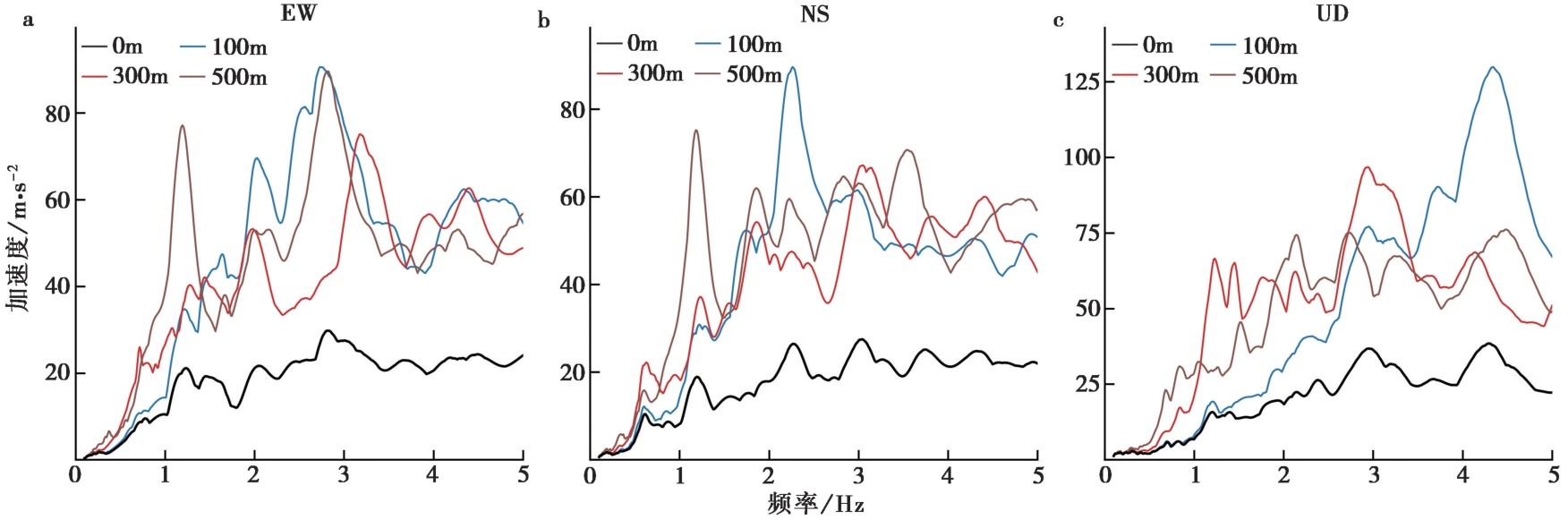
图13 Taft波输入下不同沉积层厚度模型的加速度反应谱
Fig. 13 Acceleration response spectra of sedimentary layer models with varying thicknesses under Taft wave input.
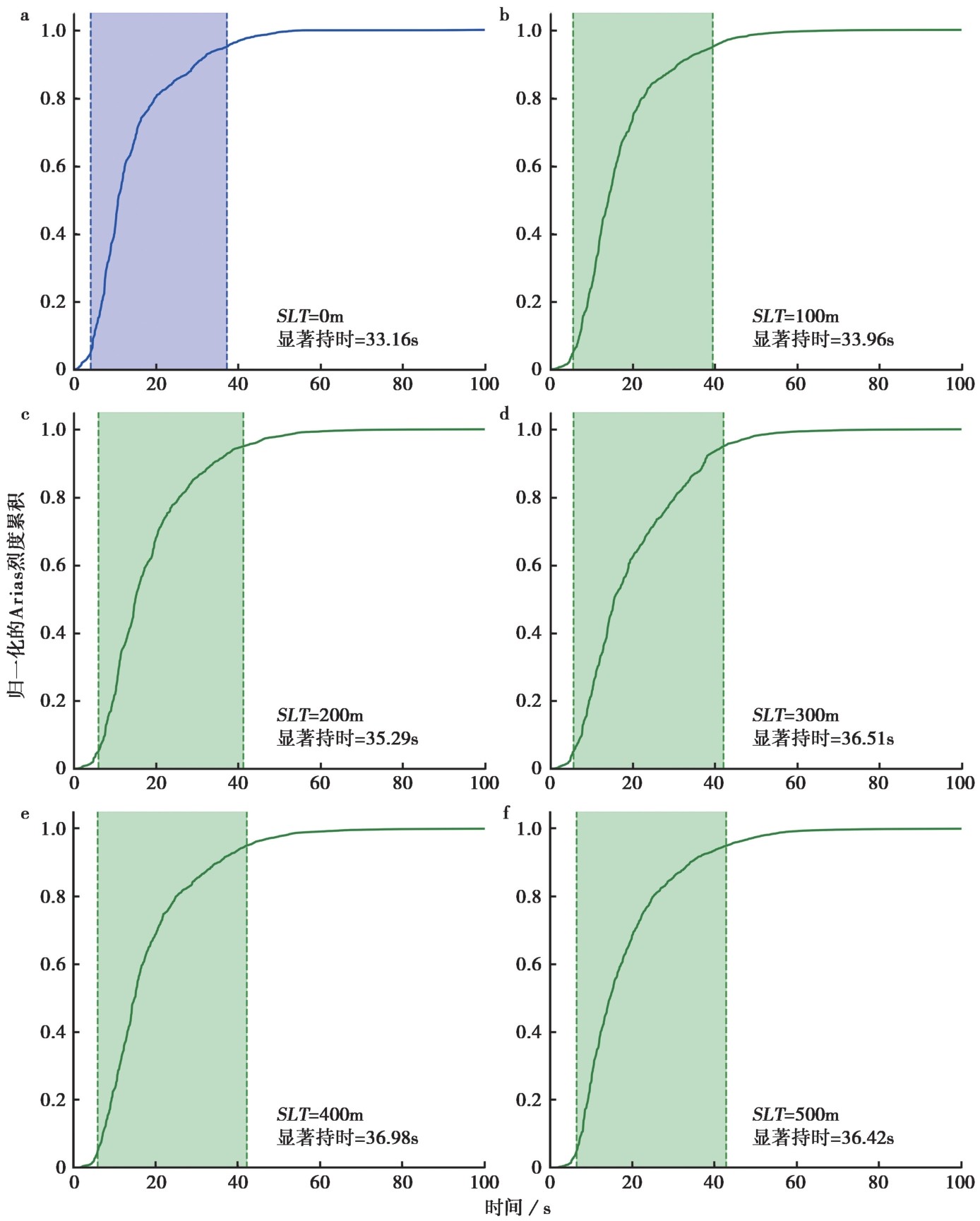
图14 Taft波输入下不同模型的归一化Arias烈度累积时程曲线 a基岩基准模型(SLT=0)的归一化Arias烈度累积曲线(蓝线); b-f含沉积层模型(SLT>0)的归一化Arias烈度累积曲线(绿线)
Fig. 14 Normalized Arias intensity cumulative time histories for different models under Taft wave input.
| [1] |
杜修力, 赵密, 王进廷. 2006. 近场波动模拟的人工应力边界条件[J]. 力学学报, 38(1): 49-56.
DOI |
|
DOI |
|
| [2] |
刘中宪, 尚策, 王小燕, 等. 2017. 三维沉积盆地对地震动的放大效应间接边界元法模拟[J]. 地震学报, 39(1): 111-131.
|
|
|
|
| [3] |
王勖成. 2003. 有限单元法[M]. 北京: 清华大学出版社有限公司.
|
|
|
|
| [4] |
赵茗, 张齐, 彭刚, 等. 2023. 深厚沉积层对地震动持时影响的初步分析[J]. 防灾减灾工程学报, 43(4): 692-700.
|
|
|
|
| [5] |
|
| [6] |
|
| [7] |
|
| [8] |
|
| [9] |
|
| [10] |
|
| [11] |
|
| [12] |
|
| [13] |
DOI URL |
| [14] |
DOI URL |
| [15] |
DOI URL |
| [16] |
DOI URL |
| [17] |
DOI URL |
| [18] |
|
| [19] |
|
| [20] |
|
| [21] |
|
| [22] |
|
| [23] |
DOI URL |
| [24] |
|
| [25] |
DOI URL |
| [26] |
DOI URL |
| [27] |
|
| [28] |
|
| [29] |
|
| [30] |
DOI URL |
| [31] |
|
| [32] |
|
| [33] |
|
| [34] |
|
| [35] |
|
| [36] |
|
| [37] |
DOI URL |
| [38] |
|
| [39] |
|
| [40] |
DOI URL |
| [41] |
|
| [42] |
DOI URL |
| [43] |
|
| [44] |
|
| [45] |
|
| [46] |
DOI URL |
| [47] |
|
| [48] |
|
| [49] |
|
| [50] |
|
| [51] |
|
| [52] |
|
| [53] |
|
| [1] | 禹振江, 赵帅, 潘黎黎, 张耀虎, 谭晓迪, 潘磊, 陈晓非, 陈举庆, 强生银. 融合浅层高精度速度结构的巨厚沉积盆地效应--以南口-孙河断裂为例[J]. 地震地质, 2026, 48(5): 1497-1512. |
| [2] | 阮明明, 田晓峰, 郑成龙, 宋向辉, 王亮, 何长勋, 王帅军. 利用短周期密集台阵HVSR法揭示渭河盆地西缘浅层沉积层结构[J]. 地震地质, 2026, 48(2): 403-422. |
| [3] | 尹晓菲, 强生银, 张伟, 邵志刚, 王武星, 袁小祥, 李永生, 刘浩. 基于不同震源模型的西藏定日 MS6.8 地震强地面运动模拟研究[J]. 地震地质, 2025, 47(3): 897-916. |
| [4] | 沈朱悦, 赵顺, 孙耀充, 徐杜远, 余厚云, 臧楠, 王春静. 大型低角度断层和巨厚沉积盆地对强地面运动的影响——以新疆喀什地区的逆断层为例[J]. 地震地质, 2025, 47(2): 610-626. |
| [5] | 阮明明, 刘巧霞, 段永红, 王帅军, 郑成龙, 王亮. 地震背景噪声HVSR法探测雄安地区场地响应和浅层沉积结构[J]. 地震地质, 2024, 46(5): 1106-1122. |
| [6] | 李丹丹, 唐新功, 熊治涛. 青藏高原东缘地壳密度结构及其地球动力学意义[J]. 地震地质, 2023, 45(4): 936-951. |
| [7] | 宗健业, 孙新蕾, 张鹏. 利用HVSR方法研究广州地区的场地效应及估算地震灾害特征[J]. 地震地质, 2020, 42(3): 628-639. |
| [8] | 黄蓓, 张培震, 张冬丽, 李小军. 汶川8.0级特大地震的断裂特性与强地面运动的关系[J]. 地震地质, 2015, 37(4): 1055-1069. |
| [9] | 张冬丽, 黄蓓, 张献兵, 徐锡伟, 郑文俊. 基于有限断层模型的芦山"4·20"7.0级强烈地震强地面运动特征[J]. 地震地质, 2013, 35(2): 423-435. |
| [10] | 缪卫东, 周国兴, 冯金顺, 高立, 鄂建. 二维地震勘探方法在南通区调工作中的应用[J]. 地震地质, 2010, 32(3): 520-531. |
| [11] | 朱桂芝, 石耀霖, 祝意青, 王庆良. 遗传有限元法反演西安地区的地层密度变化[J]. 地震地质, 2008, 30(2): 544-552. |
| [12] | 陶玮, 洪汉净, 刘培洵, 于泳, 郑秀珍. 中国大陆东部大洋板块俯冲的三维黏弹性有限元模型[J]. 地震地质, 2003, 25(1): 39-51. |
| [13] | 张大海, 徐世浙. 二维MT快速曲线对比反演方法的可行性研究[J]. 地震地质, 2001, 23(2): 232-237. |
| [14] | 卢良玉, 李平, 潘科, 卢造勋, 徐心同. 海城7.3级地震震源环境的力学分析[J]. 地震地质, 1997, 19(2): 141-147. |
| [15] | 魏东平, 周蕙兰. 渤海唐山地区的地下热结构及地表热流分布的数值模拟[J]. 地震地质, 1991, 13(3): 283-288. |
| 阅读次数 | ||||||
|
全文 |
|
|||||
|
摘要 |
|
|||||