地震地质 ›› 2026, Vol. 48 ›› Issue (5): 1457-1478.DOI: 10.3969/j.issn.0253-4967.20260031
王宏伟( ), 刘巧霞*(), 林吉焱, 张允涛, 范振宇
收稿日期:2026-03-13
修回日期:2026-05-26
出版日期:2026-11-11
发布日期:2026-11-11
通讯作者:
刘巧霞
作者简介:王宏伟, 男, 1988年生, 硕士, 工程师, 主要从事背景噪声成像、反射地震研究, E-mail: wanghw_job@sina.com。
基金资助:
WANG Hong-wei(), LIU Qiao-xia*(), LIN Ji-yan, ZHANG Yun-tao, FAN Zhen-yu
Received:2026-03-13
Revised:2026-05-26
Online:2026-11-11
Published:2026-11-11
Contact:
LIU Qiao-xia
摘要:
为查明北京地区隐伏断裂空间展布与浅层地壳结构, 文中利用研究区2条深地震反射探测剖面数据, 基于初至波层析成像方法, 构建了沿测线下方2km以浅的地壳精细速度模型, 并结合重力剖面、深地震反射剖面与钻孔等资料开展综合分析。研究结果显示: 北京地区呈现“两隆、两凹”的沉积构造格局, 凹陷与隆起以断裂为界, 精细的速度模型为隐伏断裂定位与上断点研判提供科学依据。2条探测剖面的对比研究显示, 北京凹陷的空间展布形态表现为北宽南窄、第四系北厚南薄的构造特征; 大厂-廊固凹陷呈相反特征, 即北窄南宽、沉积北薄南厚。结合重力资料分析可知, 大兴隆起表现为高重力、高速的物性特征, 而北京凹陷与大厂-廊固凹陷受巨厚松散沉积层控制, 呈现低重力、低速的物性特征。文中研究结果为区域地壳结构研究与地震灾害防御等提供了可靠的速度模型参考依据。
王宏伟, 刘巧霞, 林吉焱, 张允涛, 范振宇. 初至波层析成像揭示的北京地区浅层地壳结构[J]. 地震地质, 2026, 48(5): 1457-1478.
WANG Hong-wei, LIU Qiao-xia, LIN Ji-yan, ZHANG Yun-tao, FAN Zhen-yu. SHALLOW CRUSTAL VELOCITY STRUCTURE OF THE BEIJING AREA REVEALED BY FIRST-ARRIVAL SEISMIC TOMOGRAPHY[J]. SEISMOLOGY AND GEOLOGY, 2026, 48(5): 1457-1478.
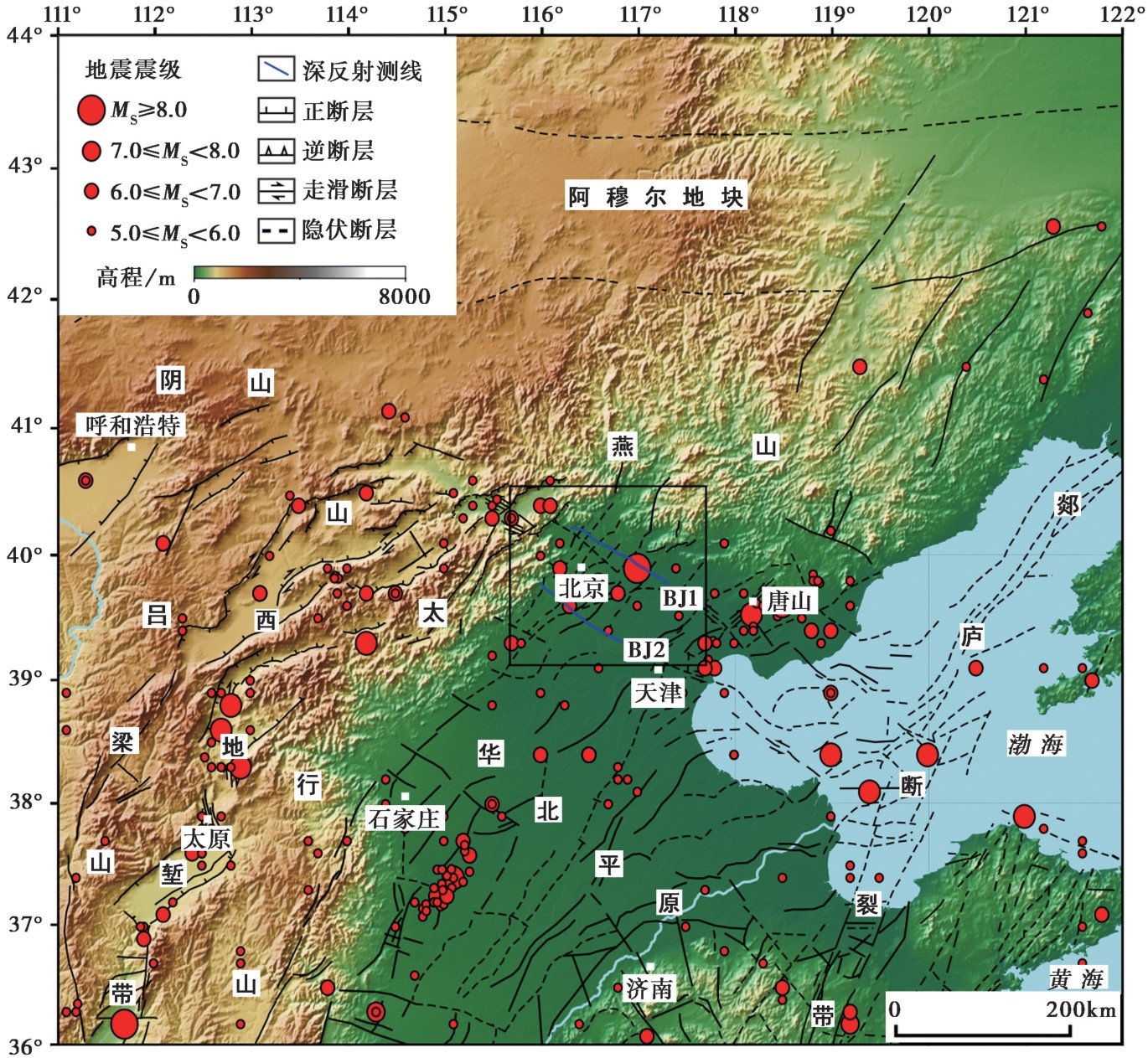
图1 研究区地质构造与深反射地震测线位置图(断裂改自李峰等,2022) 黑色方框表示研究区
Fig. 1 Geological map of the study area showing the geological structure of the area and the location of the deep seismic reflection profile(the faults modified from LI Feng et al., 2022).
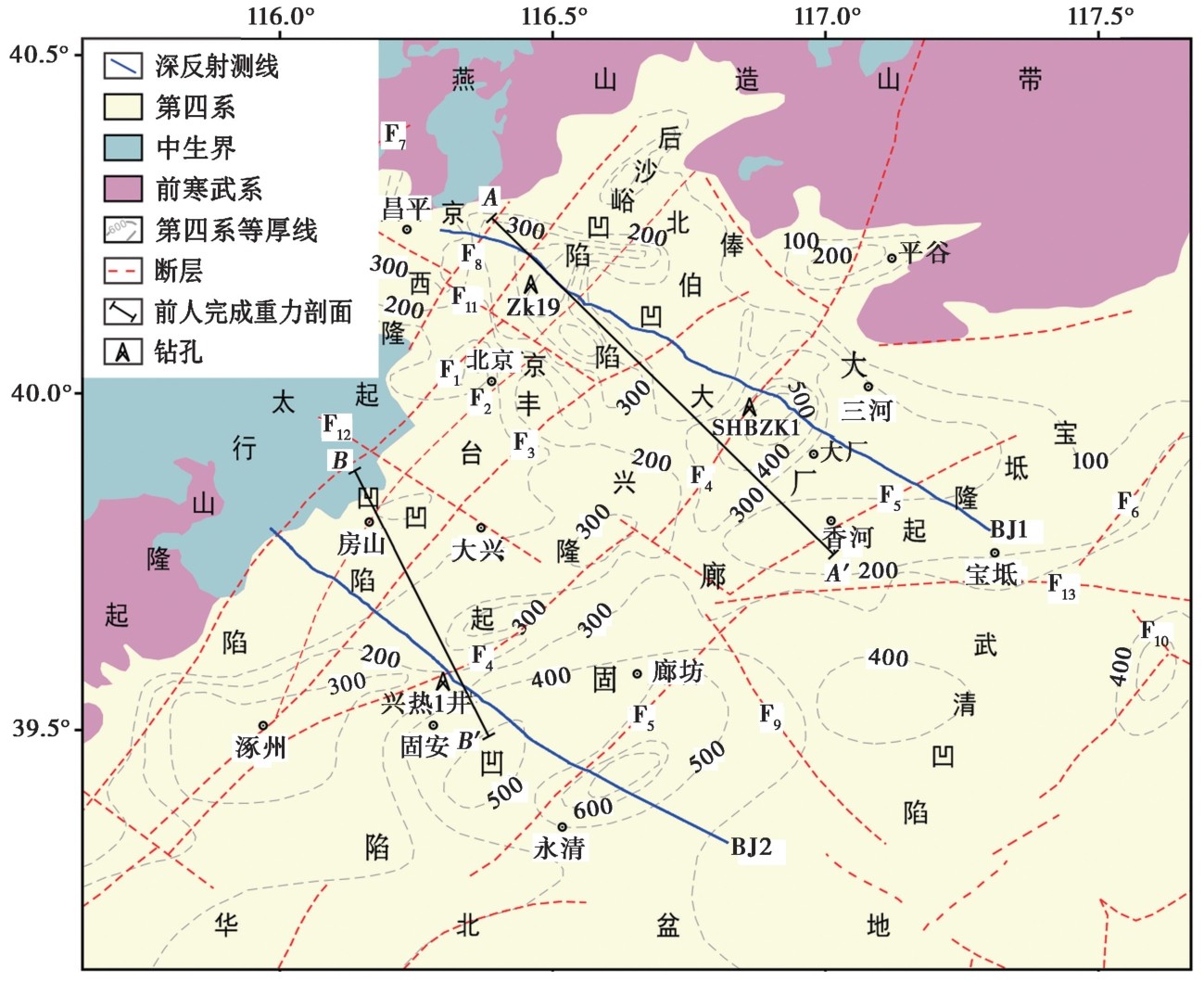
图2 北京地区地质(断裂改自刘保金等(2011)与中国断层数据CN-faults)与深地震反射剖面位置图 黑色直线为雷晓东等(2021)完成的重力剖面。F1黄庄-高丽营断裂; F2顺义-良乡断裂; F3南苑-通县断裂; F4夏垫断裂; F5河西务断裂; F6新安镇断裂; F7南口山前断裂; F8小汤山-东北旺断裂; F9廊坊盆地东缘断裂; F10蓟运河断裂; F11南口-孙河断裂; F12永定河断裂; F13宝坻断裂
Fig. 2 Geological map of Beijing area(the faults modified from LIU Bao-jin et al., 2011 and CN-faults) and location of deep seismic reflection profiles in research region.
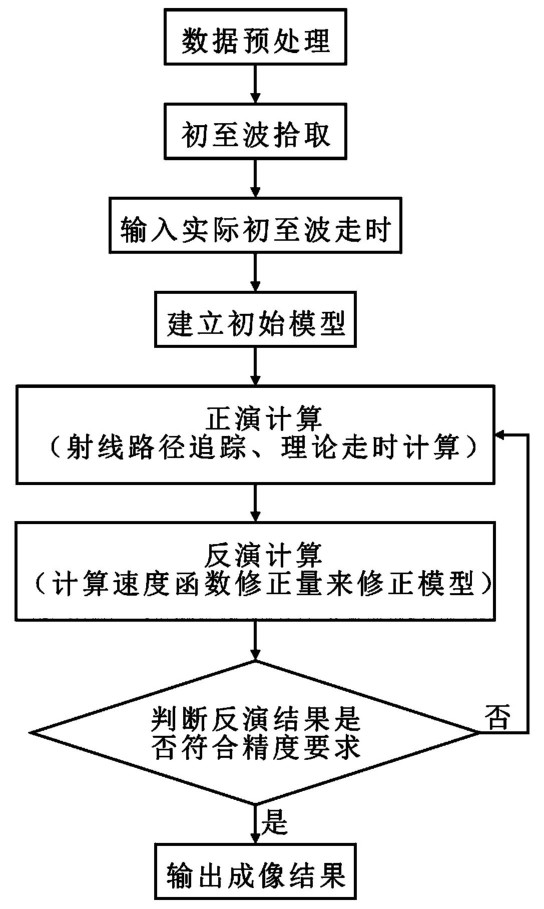
图3 初至波走时层析成像数据处理的基本流程图
Fig. 3 Workflow of 2D Pg tomography processing.
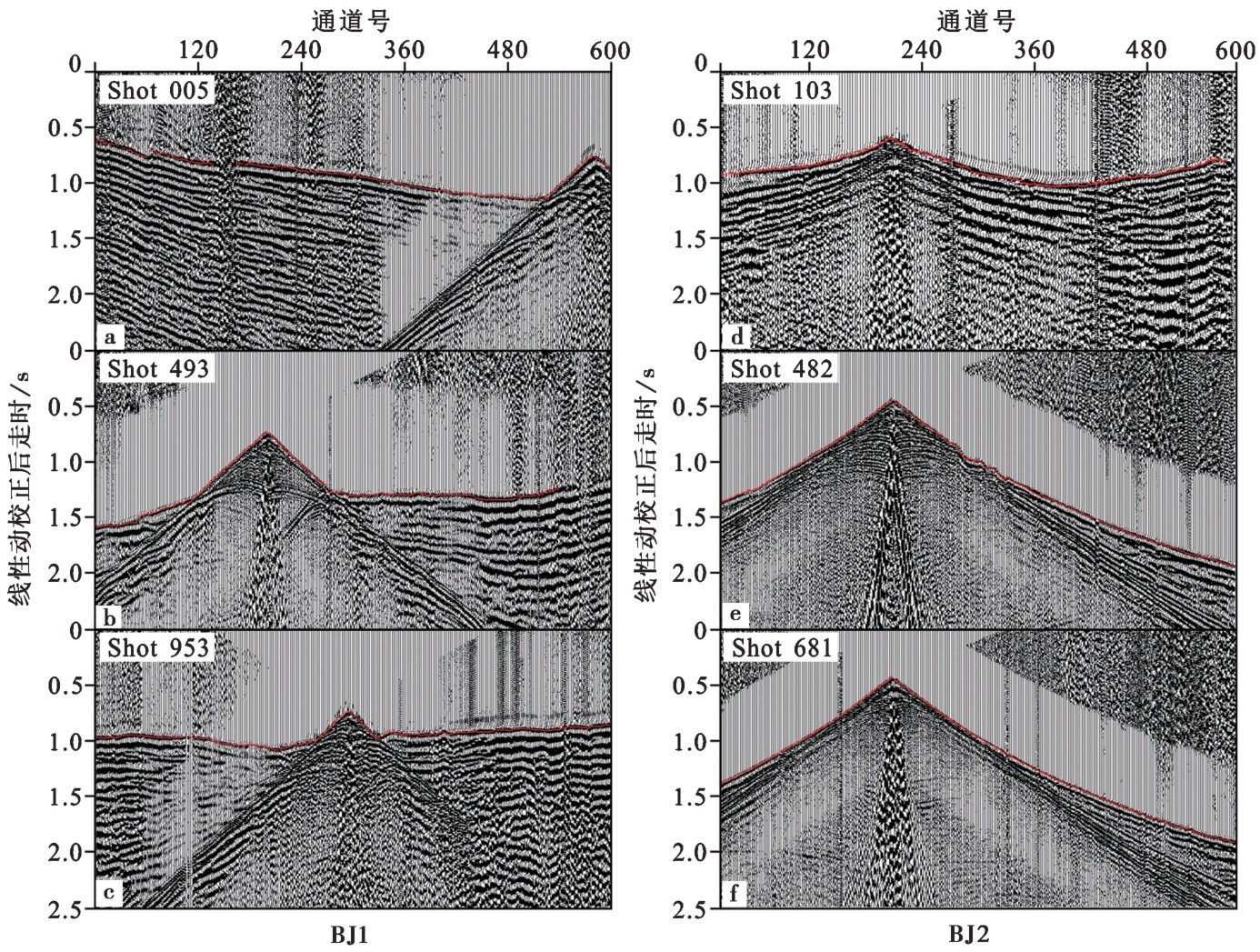
图4 单炮记录初至拾取 红色曲线为拾取的初至震相
Fig. 4 First-arrival pickup of single shot records.
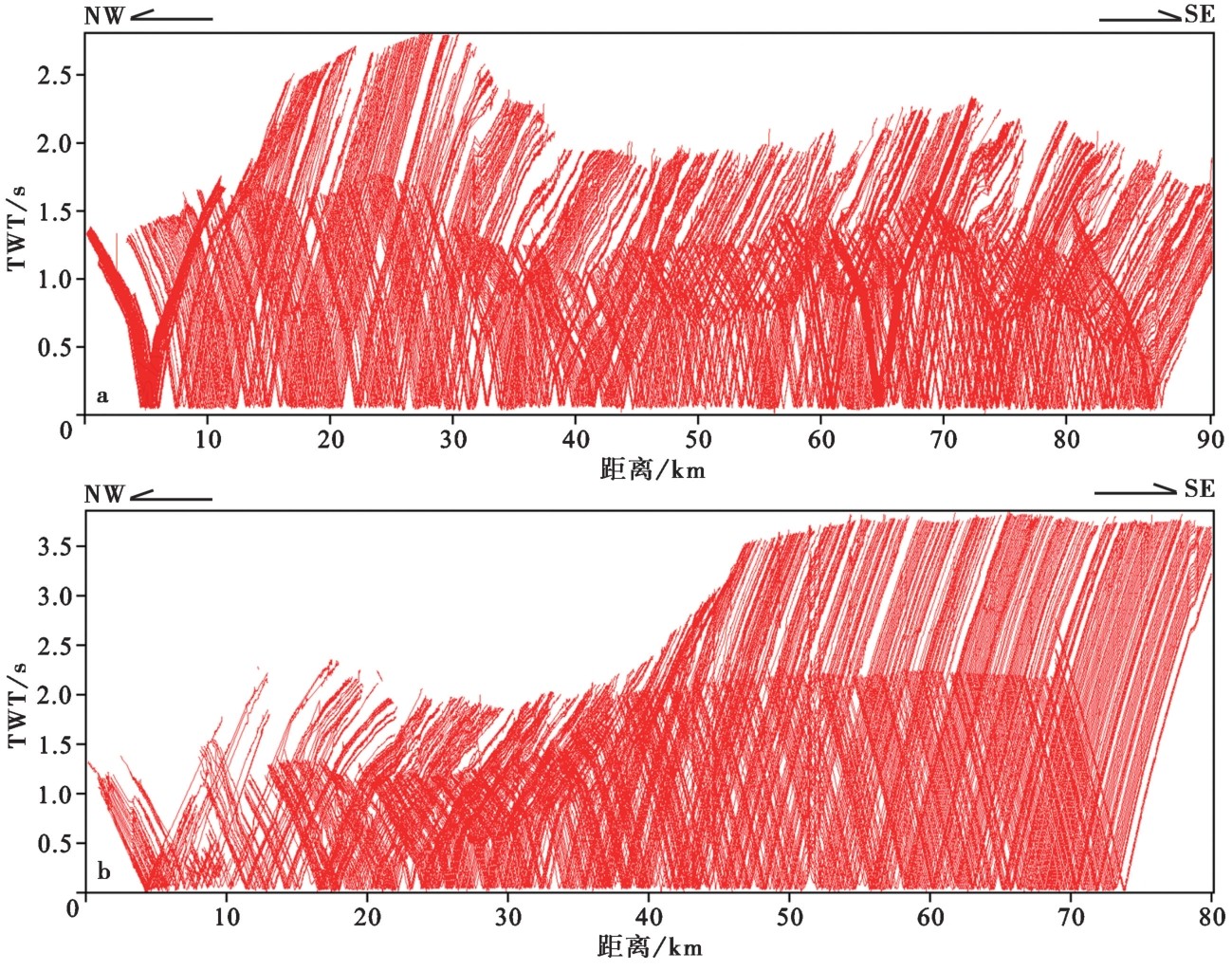
图5 BJ1测线(a)与BJ2测线(b)全剖面初至拾取结果
Fig. 5 First-arrival pickup results of all single-shot records for BJ1(a) and BJ2(b).
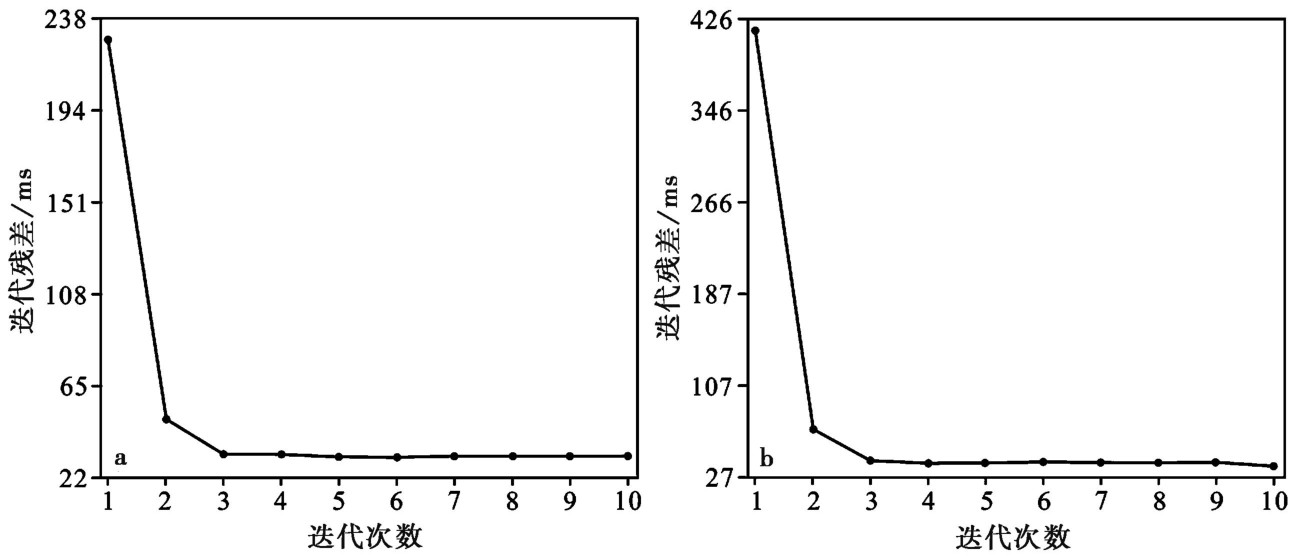
图6 BJ1测线(a)与BJ2测线(b)层析反演的迭代收敛曲线
Fig. 6 The iterative convergence curves of tomographic inversion for BJ1(a) and BJ2(b).
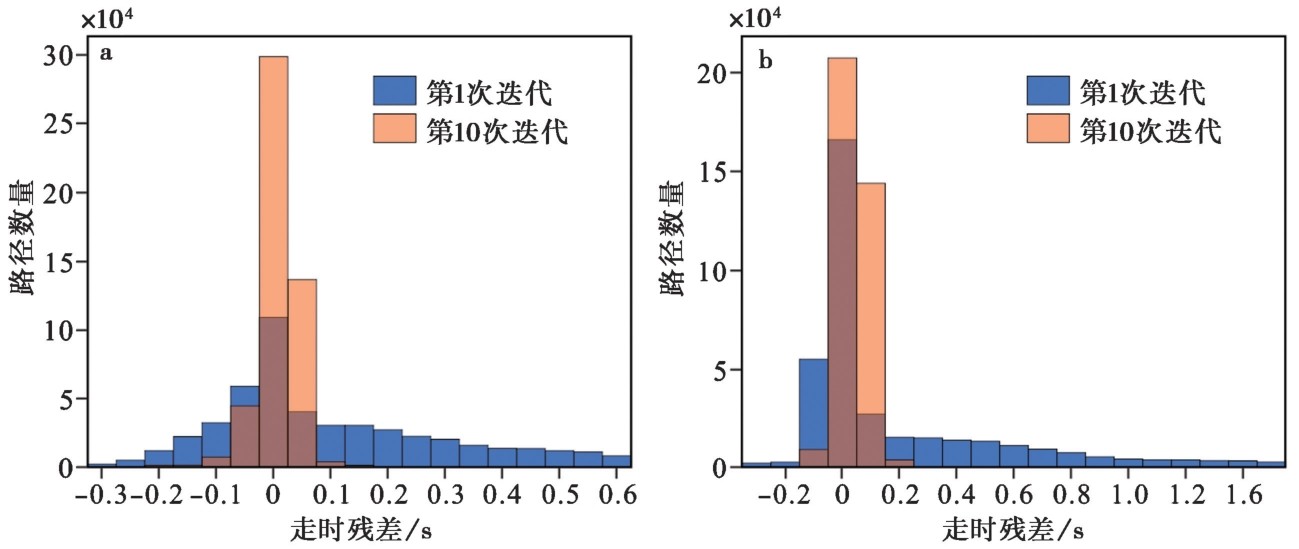
图7 BJ1测线(a)与BJ2测线(b)走时残差分布图
Fig. 7 The travel time residuals distribution of BJ1(a) and BJ2(b).
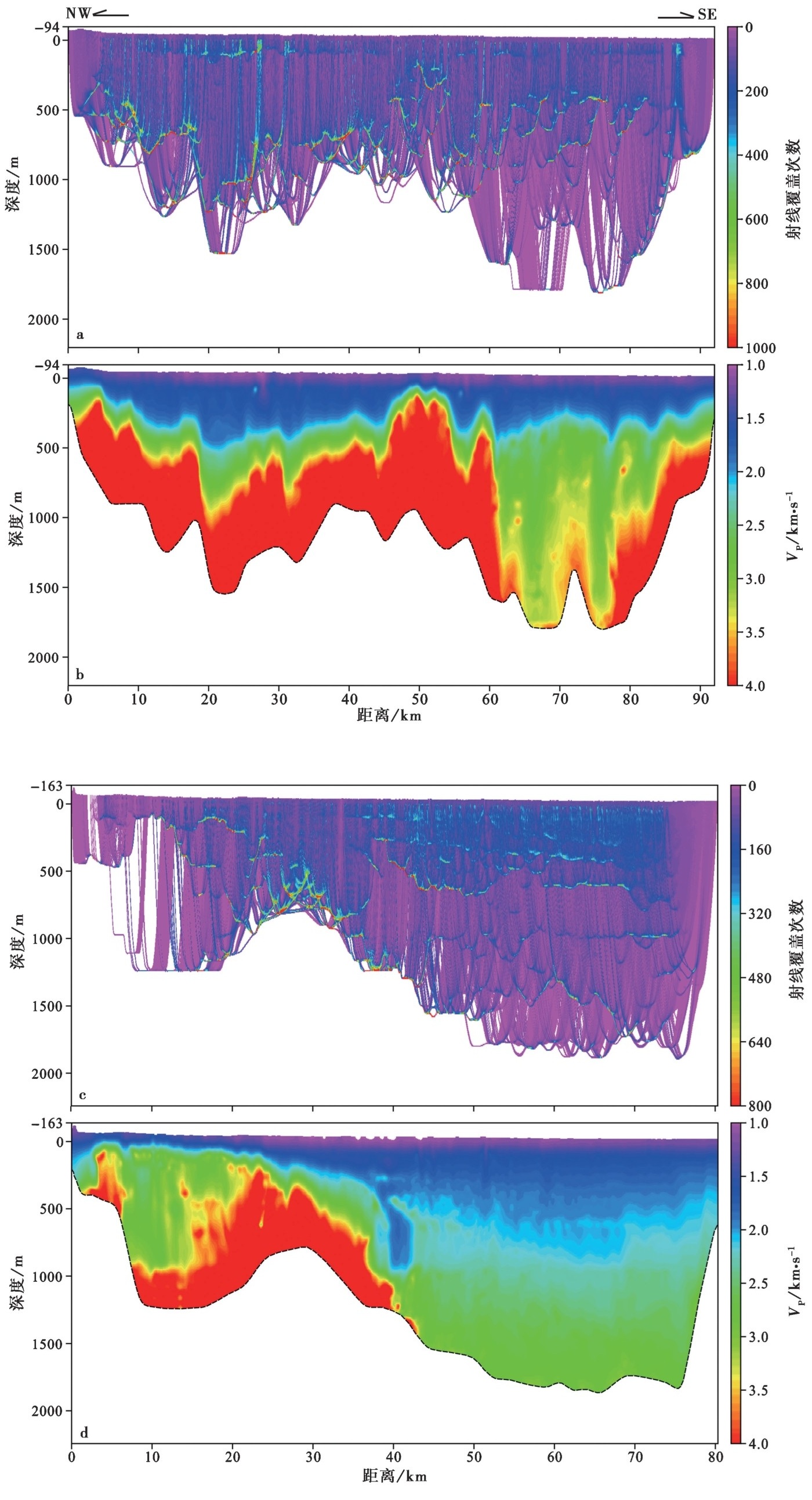
图8 BJ1、BJ2测线层析射线路径与反演结果 a BJ1测线射线密度分布图; b BJ1测线层析反演的速度结构; c BJ2测线射线密度分布图; d BJ2测线层析反演的速度结构
Fig. 8 The ray density distribution map and velocity structure of the BJ1 and BJ2.
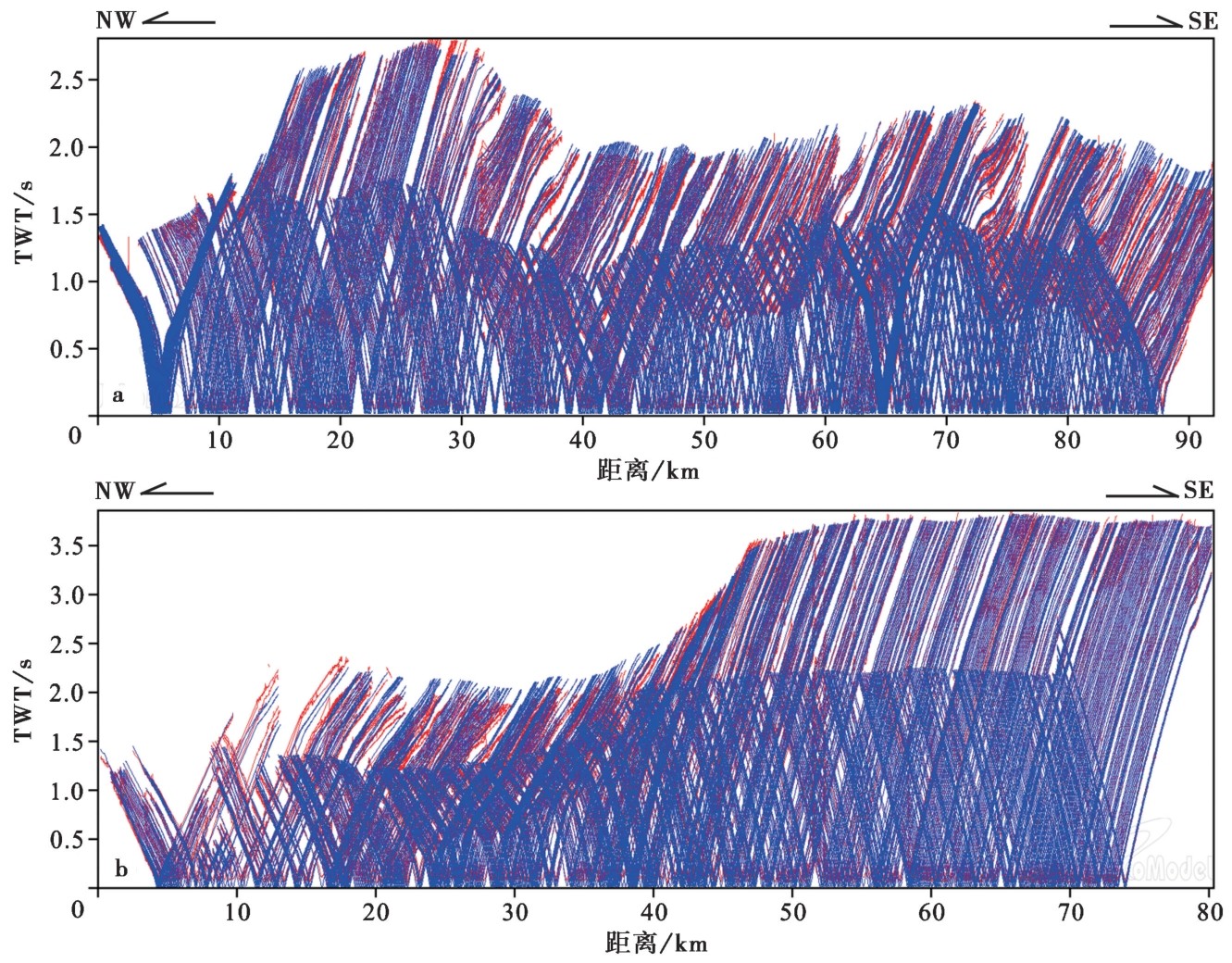
图9 BJ1测线(a)、BJ2测线(b)实际走时(红线)与理论走时(蓝线)对比图
Fig. 9 The comparison of the first-arrival travel-time(red line) and the tomographic results(blue line) for BJ1(a) and BJ2(b).
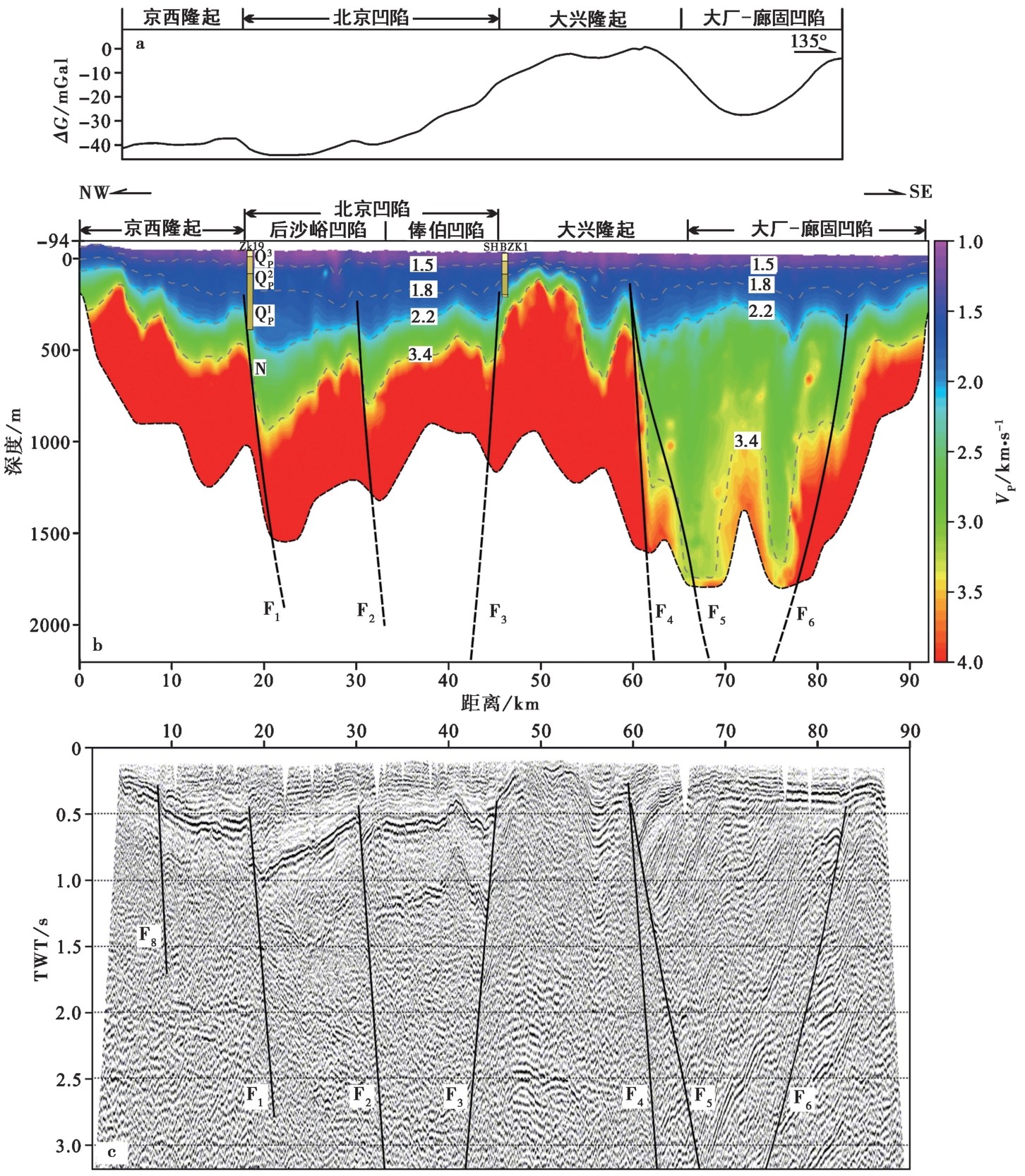
图10 BJ1测线附近的重力剖面图及BJ1测线的解释结果 a BJ1测线附近重力剖面(改自雷晓东等, 2021); b BJ1测线速度剖面解释图; c BJ1测线反射叠加剖面解释图(改自刘保金等, 2011)。F1黄庄-高丽营断裂; F2顺义-良乡断裂; F3南苑-通县断裂; F4夏垫西断裂; F5夏垫东断裂; F6河西务断裂; F8小汤山-东北旺断裂
Fig. 10 Gravity profile near survey line BJ1 and interpretation results of the BJ1 survey line.
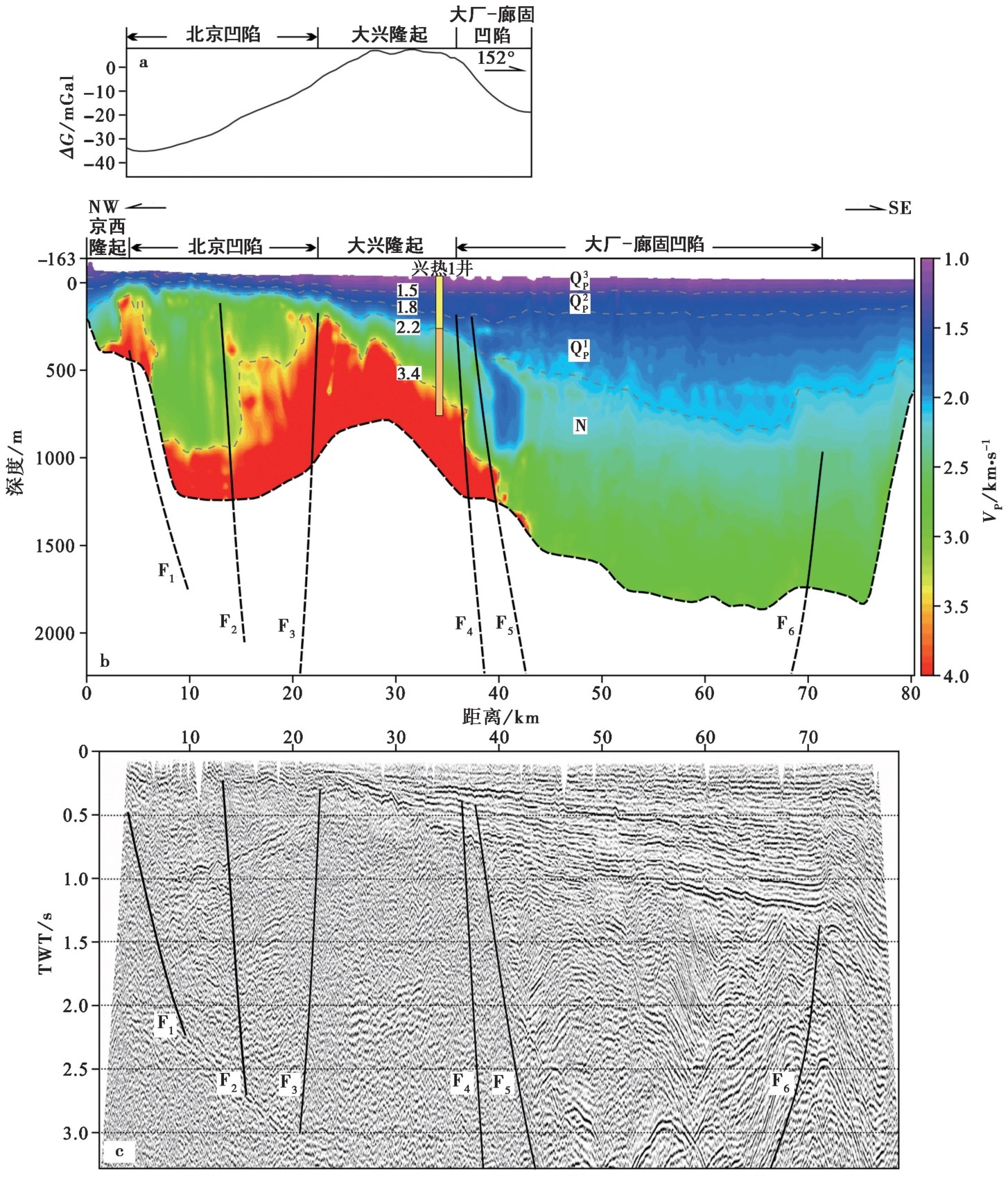
图11 BJ2测线附近的重力剖面图及BJ2测线的解释结果 a BJ2测线附近重力剖面(改自雷晓东等, 2021); b BJ2测线速度剖面解释图; c BJ2测线反射叠加剖面解释图(改自赵成彬等, 2013)。 F1黄庄-高丽营断裂; F2顺义-良乡断裂; F3南苑-通县断裂; F4夏垫西断裂; F5夏垫东断裂; F6河西务断裂
Fig. 11 Gravity profile near survey line BJ2 and interpretation results of the BJ2 survey line.
| [1] |
陈世军, 张建中. 2006. 初至波射线层析成像在复杂区静校正中的应用[J]. 石油物探, 45(1): 34-39.
|
|
|
|
| [2] |
邓梅. 2018. 北京平原区夏垫隐伏断裂几何展布与古地震研究[D]. 北京: 防灾科技学院.
|
|
|
|
| [3] |
邓起东. 2002. 城市活动断裂探测和地震危险性评价问题[J]. 地震地质, 24(4): 601-605.
|
|
|
|
| [4] |
段永红, 王夫运, 张先康, 等. 2016. 华北克拉通中东部地壳三维速度结构模型(HBCrust1.0)[J]. 中国科学(地球科学), 46(6): 845-856.
|
|
|
|
| [5] |
高景华, 徐明才, 荣立新, 等. 2008. 利用地震剖面研究夏垫断裂西南段的活动性[J]. 地震地质, 30(2): 497-504.
|
|
|
|
| [6] |
高战武, 陈棋福, 黄金莉, 等. 2010. 北京地区主要活动断裂深部速度结构特征及强震构造分析[J]. 震灾防御技术, 5(3): 271-280.
|
|
|
|
| [7] |
顾勤平, 许汉刚, 晏云翔, 等. 2020. 郯庐断裂带新沂段地壳浅部结构和断裂活动性探测[J]. 地震地质, 42(4): 825-843. doi: 10.3969/j.issn.0253-4967.2020.04.004.
|
|
DOI |
|
| [8] |
何付兵, 徐锡伟, 何振军, 等. 2020. 利用浅层地震反射剖面探测研究大兴断裂北段新近纪-第四纪的构造特征[J]. 地震地质, 42(4): 893-908. doi: 10.3969/j.issn.0253-4967.2020.04.008.
|
|
DOI |
|
| [9] |
侯贺晟, 高锐, 卢占武, 等. 2010. 庐枞铁多金属矿集区龙桥铁矿反射地震初至波层析成像与隐伏矿床预测[J]. 岩石学报, 26(9): 2623-2629.
|
|
|
|
| [10] |
胡平, 罗华春, 孟勇琦, 等. 2000. 从顺义地表破裂带分析顺义-良乡断裂北段的活动性[J]. 地震地质, 22(2): 123-128.
|
|
|
|
| [11] |
嘉世旭, 张成科, 赵金仁, 等. 2009. 华北东北部裂陷盆地与燕山隆起地壳结构[J]. 地球物理学报, 52(1): 99-110.
|
|
|
|
| [12] |
雷晓东, 裴艳东, 关伟, 等. 2020. 北京地区岩石地层密度特征及界面划分[J]. 地球物理学进展, 35(3): 836-844.
|
|
|
|
| [13] |
雷晓东, 戚帮申, 关伟, 等. 2021. 北京平原区断裂构造重力异常识别研究[J]. 地球物理学报, 64(4): 1253-1265.
DOI |
|
|
|
| [14] |
李峰, 张杰汉, 卢巍, 等. 2022. 黄河中下游活动断层分布及其对古河道变迁的影响[J]. 震灾防御技术, 17(2): 197-207.
|
|
|
|
| [15] |
李辉峰, 邹强, 金文昱. 2006. 基于边缘检测的初至波自动拾取方法[J]. 石油地球物理勘探, 41(2): 150-159.
|
|
|
|
| [16] |
刘保金, 胡平, 孟勇奇, 等. 2009. 北京地区地壳精细结构的深地震反射剖面探测研究[J]. 地球物理学报, 52(9): 2264-2272.
|
|
|
|
| [17] |
刘保金, 张先康, 陈颙, 等. 2011. 三河-平谷8.0级地震区地壳结构和活动断裂研究: 利用单次覆盖深反射和浅层地震剖面[J]. 地球物理学报, 54(5): 1251-1259.
|
|
|
|
| [18] |
刘振东, 吕庆田, 严加永, 等. 2012. 庐枞盆地浅表地壳速度成像与隐伏矿靶区预测[J]. 地球物理学报, 55(12): 3910-3922.
|
|
|
|
| [19] |
罗省贤, 李录明. 2004. 地面地震初至波层析反演复杂表层速度结构方法[J]. 地球科学进展, 19(S1): 30-34.
|
|
|
|
| [20] |
吕恒茹, 王伟君, 闫坤, 等. 2025. DAS和节点地震仪联合探测北京黄庄-高丽营断裂[J]. 地球物理学报, 68(6): 2201-2215.
|
|
|
|
| [21] |
吕金波, 李良景, 丁长顺, 等. 2008. 北京城南平原区钻孔中发现太古宙片麻岩[J]. 城市地质, 3(2): 28-32.
|
|
|
|
| [22] |
牛文治, 何付兵, 刘振华, 等. 2023. 北京南苑-通县断裂北东段结构特征及第四纪活动性研究[J]. 地质力学学报, 29(6): 879-887.
|
|
|
|
| [23] |
牛文治, 何付兵, 沙春梅, 等. 2024. 北京平原区南苑-通县断裂南西段结构特征和活动性[J]. 科学技术与工程, 24(18): 7552-7562.
|
|
|
|
| [24] |
戚帮申, 潘智锋, 丰成君, 等. 2020. 北京顺义断裂第四纪活动性地球物理及钻孔综合探测证据[J]. 地质学报, 94(4): 1315-1329.
|
|
|
|
| [25] |
秦晶晶, 石金虎, 张毅, 等. 2018. 郯庐断裂带合肥段五河-合肥断裂构造特征[J]. 地球物理学报, 61(11): 4475-4485.
DOI |
|
|
|
| [26] |
沈军, 戴训也, 肖淳, 等. 2022. 夏垫西断裂的晚第四纪活动性[J]. 地震地质, 44(4): 909-924. doi: 10.3969/j.issn.0253-4967.2022.04.006.
|
|
DOI |
|
| [27] |
田晓峰. 2011. 主动源宽角反射/折射地震成像研究及其在华北地区的应用[D]. 合肥: 中国科学技术大学.
|
|
|
|
| [28] |
王椿镛, 吴庆举, 段永红, 等. 2017. 华北地壳上地幔结构及其大地震深部构造成因[J]. 中国科学(地球科学), 47(6): 681-719.
|
|
|
|
| [29] |
王冠, 熊小松, 卢占武, 等. 2024. 二维初至波层析成像揭示的兰坪盆地-扬子西缘浅层地壳结构[J]. 地球学报, 45(6): 989-1001.
|
|
|
|
| [30] |
王文静, 王健, 周红. 2023. 基于多破裂方式的三河-平谷地震震级研究[J]. 地震学报, 45(5): 903-918.
|
|
|
|
| [31] |
王新胜, 方剑, 许厚泽, 等. 2012. 华北克拉通岩石圈三维密度结构[J]. 地球物理学报, 55(4): 1154-1160.
|
|
|
|
| [32] |
吴国炜, 熊小松, 高锐, 等. 2022. 二维初至波层析成像揭示的北祁连-阿拉善南缘浅层地壳结构[J]. 地球学报, 43(6): 843-857.
|
|
|
|
| [33] |
吴晶, 高原, 陈运泰, 等. 2007. 首都圈西北部地区地壳介质地震各向异性特征初步研究[J]. 地球物理学报, 50(1): 209-220.
|
|
|
|
| [34] |
谢樊, 王海燕, 侯贺晟, 等. 2021. 中亚造山带东段浅表构造速度结构: 深地震反射剖面初至波层析成像的揭露[J]. 吉林大学学报(地球科学版), 51(2): 584-596.
|
|
|
|
| [35] |
徐锡伟. 2006. 活动断层、地震灾害与减灾对策问题[J]. 震灾防御技术, 1(1): 7-14.
|
|
|
|
| [36] |
徐锡伟, 白鸾曦, 魏雷鸣, 等. 2019. 华北克拉通破坏区最新构造运动起始时间讨论[J]. 地球科学, 44(5): 1647-1660.
|
|
|
|
| [37] |
徐锡伟, 计凤桔, 于贵华, 等. 2000. 用钻孔地层剖面记录恢复古地震序列: 河北夏垫断裂古地震研究[J]. 地震地质, 22(1): 9-19.
|
|
|
|
| [38] |
曾融生, 朱露培, 何正勤, 等. 1991. 华北盆地强震的震源模型兼论强震和盆地的成因[J]. 地球物理学报, 34(3): 288-301.
|
|
|
|
| [39] |
翟明国, 樊祺诚, 张宏福, 等. 2005. 华北东部岩石圈减薄中的下地壳过程: 岩浆底侵、置换与拆沉作用[J]. 岩石学报, 21(6): 1509-1526.
|
|
|
|
| [40] |
张磊, 何静, 白凌燕, 等. 2016. 北京凹陷北缘第四纪凹陷盆地沉积速率变化特征与顺义断裂活动性的响应关系[J]. 中国地质, 43(2): 511-519.
|
|
|
|
| [41] |
张磊, 张晓亮, 白凌燕, 等. 2017. 北京地区黄庄-高丽营断裂北段活动性研究与灾害效应分析[J]. 地质力学学报, 23(4): 548-557.
|
|
|
|
| [42] |
张明辉, 申重阳, 杨光亮, 等. 2025. 三河-平谷8级震区地壳三维密度结构反演研究[J]. 地球物理学报, 68(3): 882-897.
|
|
|
|
| [43] |
张群伟, 朱守彪. 2019. 华北地区主要断裂带上的库仑应力变化及地震活动性分析[J]. 地震地质, 41(3): 649-669. doi: 10.3969/j.issn.0253-4967.2019.03.008.
|
|
DOI |
|
| [44] |
张世民, 刘旭东, 任俊杰, 等. 2005. 顺义地裂缝成因与顺义-良乡断裂北段第四纪活动性讨论[J]. 中国地震, 21(1): 84-92.
|
|
|
|
| [45] |
张先康, 嘉世旭, 赵金仁, 等. 2008. 西秦岭-东昆仑及邻近地区地壳结构: 深地震宽角反射/折射剖面结果[J]. 地球物理学报, 51(2): 439-450.
|
|
|
|
| [46] |
张先康, 赵金仁, 刘国华, 等. 2002. 三河-平谷8.0级大震区震源细结构的深地震反射探测研究[J]. 中国地震, 18(4): 326-336.
|
|
|
|
| [47] |
张晓亮, 张磊, 蔡向民, 等. 2016. 北京平原区黄庄-高丽营断裂北段结构特征及活动特点研究[J]. 中国地质, 43(4): 1258-1265.
|
|
|
|
| [48] |
张雅静, 李正芳, 周本刚, 等. 2024. 大兴凸起东缘断裂的三维建模及其最大潜在地震评估[J]. 地震地质, 46(4): 802-820. doi: 10.3969/j.issn.0253-4967.2024.04.003.
|
|
DOI |
|
| [49] |
赵成彬, 刘保金, 姬计法, 等. 2013. 北京南部地壳精细结构深地震反射探测研究[J]. 地球物理学报, 56(4): 1168-1176.
|
|
|
|
| [50] |
钟世军, 王治国, 司政亚, 等. 2022. 北京地区小震精定位结果初步探讨[J]. 中国地震, 38(3): 513-525.
|
|
|
|
| [51] |
朱日祥, 徐义刚, 朱光, 等. 2012. 华北克拉通破坏[J]. 中国科学(地球科学), 42(8): 1135-1159.
|
|
|
|
| [52] |
朱日祥, 郑天愉. 2009. 华北克拉通破坏机制与古元古代板块构造体系[J]. 科学通报, 54(14): 1950-1961.
|
|
|
|
| [53] |
|
| [54] |
|
| [55] |
|
| [56] |
|
| [57] |
|
| [58] |
|
| [1] | 赵申, 江国明, 李信富, 赵大鹏. 北京地区三维地壳P波速度精细结构与孕震环境探讨[J]. 地震地质, 2026, 48(5): 1438-1456. |
| [2] | 田建慧, 赵帅, 郭文斌, 李大虎, 李占飞. 基于密集台阵F-J方法的京西北平原区浅部速度结构特征[J]. 地震地质, 2026, 48(5): 1479-1496. |
| [3] | 江宁波, 李大虎, 左洪, 王朝亮, 高咪, 易桂喜, 陈学芬. 川南荣县—威远—资中地区三维S波速度结构与地震活动特征[J]. 地震地质, 2026, 48(3): 830-852. |
| [4] | 李细兵, 陶小三, 顾勤平, 彭小波, 王宇, 朱峰. 郯庐断裂带中南段地壳上地幔顶部P波速度结构及其构造意义[J]. 地震地质, 2026, 48(2): 423-441. |
| [5] | 钱婷, 陈昊, 何奕成, 江昊琳, 杜航, 倪昊琦. 郯庐断裂带中南段高分辨率地壳速度结构与地震活动空间差异特征分析[J]. 地震地质, 2026, 48(2): 442-459. |
| [6] | 潘纪顺, 张允涛, 王夫运, 酆少英, 姬计法, 戚慧, 唐一帆, 王鑫宇. 初至波与反射波联合层析成像及其在呼包盆地地下结构探测中的应用[J]. 地震地质, 2026, 48(2): 582-596. |
| [7] | 戴宗辉, 曲均浩, 徐宁, 李翠芹, 李冬梅, 尹玉振. 2023年微山震群震源区三维速度结构与发震构造[J]. 地震地质, 2025, 47(6): 1649-1666. |
| [8] | 李婷婷, 缪发军, 孙业君, 范文华, 宫杰, 顾勤平, 杜航, 孙小航, 张岑, 李子烨. 江苏江都震群震源区速度结构及构造特征[J]. 地震地质, 2025, 47(5): 1343-1363. |
| [9] | 张天继, 秦敏, 党文杰, 金明培, 李凤英, 杨黎薇. 接收函数与瑞利波相速度联合反演腾冲-保山地区的S波速度结构[J]. 地震地质, 2025, 47(5): 1364-1381. |
| [10] | 李若豪, 雷建设, 宋晓燕. 大同火山群及邻区三维地壳S波速度结构: 来自背景噪声面波直接成像约束[J]. 地震地质, 2025, 47(4): 1090-1112. |
| [11] | 杨建文, 金明培, 叶泵, 茶文剑, 黑贺堂. 基于背景噪声成像方法研究滇西北中上地壳三维速度结构及孕震环境[J]. 地震地质, 2025, 47(4): 1113-1131. |
| [12] | 宫猛, 邹献昆, 王晓山, 李广, 盛书中, 李红星, 徐荣华, 路昌胜. 京西北地区地壳速度结构与地震重新定位联合反演[J]. 地震地质, 2025, 47(4): 1132-1151. |
| [13] | 吉宇, 张广伟, 任俊杰, 何静, 王肖薇. 基于背景噪声成像研究北京地区三维S波速度结构[J]. 地震地质, 2025, 47(1): 306-324. |
| [14] | 冯策, 宋秀青, 王仁涛, 刘昊岚. 基于背景噪声层析成像反演上海及邻区S波速度结构[J]. 地震地质, 2024, 46(6): 1374-1390. |
| [15] | 侯颉, 吴庆举, 余大新, 叶庆东. 阿尔山火山群面波层析成像[J]. 地震地质, 2024, 46(4): 893-915. |
| 阅读次数 | ||||||
|
全文 |
|
|||||
|
摘要 |
|
|||||