地震地质 ›› 2026, Vol. 48 ›› Issue (5): 1380-1399.DOI: 10.3969/j.issn.0253-4967.20260004
郭文峰1),2)( ), 石富强3),*(), 王霞1),2), 宋美琴1),2), 郝宇琦1),2)
收稿日期:2026-01-07
修回日期:2026-06-22
出版日期:2026-11-11
发布日期:2026-11-11
通讯作者:
石富强
作者简介:郭文峰, 男, 1987年生, 2015年于太原理工大学获地球探测与信息技术专业硕士学位, 高级工程师, 主要从事地震学、构造应力场及地球动力学方面的研究工作, E-mail: 750864634@qq.com。
基金资助:
GUO Wen-feng1),2)(), SHI Fu-qiang3),*(), WANG Xia1),2), SONG Mei-qin1),2), HAO Yu-qi1),2)
Received:2026-01-07
Revised:2026-06-22
Online:2026-11-11
Published:2026-11-11
Contact:
SHI Fu-qiang
摘要:
鄂尔多斯块体东南缘地处中国大陆西部碰撞挤压与东部伸展拉张动力学转换的关键区, 特殊的构造环境导致该区域构造活动强烈。文中在密集GPS观测约束的基础上, 利用有限元数值模拟讨论了鄂尔多斯块体东南缘主要活动断裂的介质物理性质对区域地壳运动的影响。最后, 基于最优模型给出鄂尔多斯块体东南缘主要活动断裂的应力状态, 并据此讨论了区域地震危险性。结果显示: 中条山断裂、罗云山-韩城断裂及霍山断裂等深大断裂参与调控了鄂尔多斯块体东南缘现今的地壳变形。其中, 中条山断裂的介质剪切模量可能较高, 而罗云山-韩城断裂与霍山断裂的剪切模量相对较低。应力率计算表明, 中条山断裂东段及罗云山断裂中段当前的应力率水平较高, 且与前人基于古地震序列、现代小地震活动给出的高离逝率段和低b值区吻合, 其地震危险性值得关注。综合分析认为, 鄂尔多斯块体东南缘现今的地壳变形主要源于由秦岭山地的E向逃逸与鄂尔多斯-华北地块逆时针旋转共同作用所形成的似三联点构造, 相关研究可为进一步认识鄂尔多斯块体东南缘构造变形机制及区域动力学过程提供参考依据。
郭文峰, 石富强, 王霞, 宋美琴, 郝宇琦. 鄂尔多斯块体东南缘断层应力状态模拟及地震危险性分析[J]. 地震地质, 2026, 48(5): 1380-1399.
GUO Wen-feng, SHI Fu-qiang, WANG Xia, SONG Mei-qin, HAO Yu-qi. SIMULATION OF FAULT STRESS STATE AND SEISMIC HAZARD STUDY ON THE SOUTHEAST MARGIN OF THE ORDOS BLOCK[J]. SEISMOLOGY AND GEOLOGY, 2026, 48(5): 1380-1399.
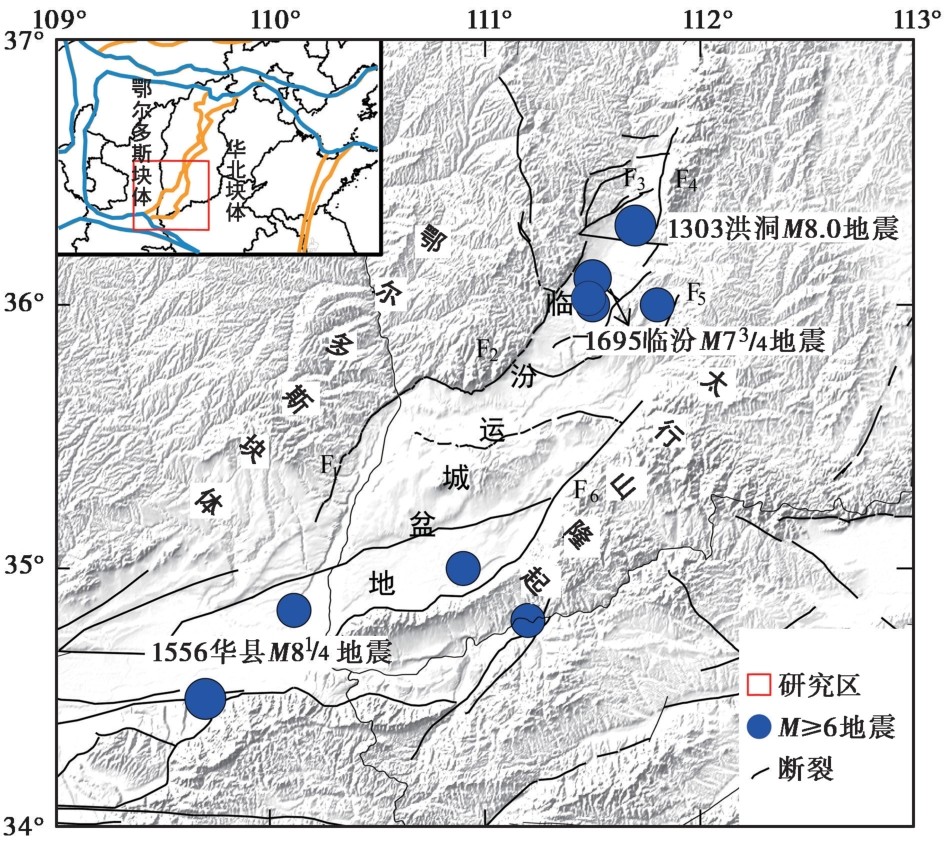
图1 鄂尔多斯块体东南缘区域构造图 F1韩城断裂; F2罗云山断裂; F3什林断裂; F4霍山断裂; F5浮山断裂; F6中条山山前断裂
Fig. 1 Regional tectonic map of the southeastern margin of the Ordos Block.
| 地层 | 密度/kg·m-3 | 速度VP/km·s-1 | 速度VS/km·s-1 | 黏滞系数/Pa·s |
|---|---|---|---|---|
| 上地壳 | 2750 | 5.80 | 3.35 | |
| 中地壳 | 2800 | 6.35 | 3.67 | |
| 下地壳 | 3200 | 6.74 | 3.89 | 3.0×10²⁰ |
表1 基本材料参数
Table1 Basic material parameters
| 地层 | 密度/kg·m-3 | 速度VP/km·s-1 | 速度VS/km·s-1 | 黏滞系数/Pa·s |
|---|---|---|---|---|
| 上地壳 | 2750 | 5.80 | 3.35 | |
| 中地壳 | 2800 | 6.35 | 3.67 | |
| 下地壳 | 3200 | 6.74 | 3.89 | 3.0×10²⁰ |
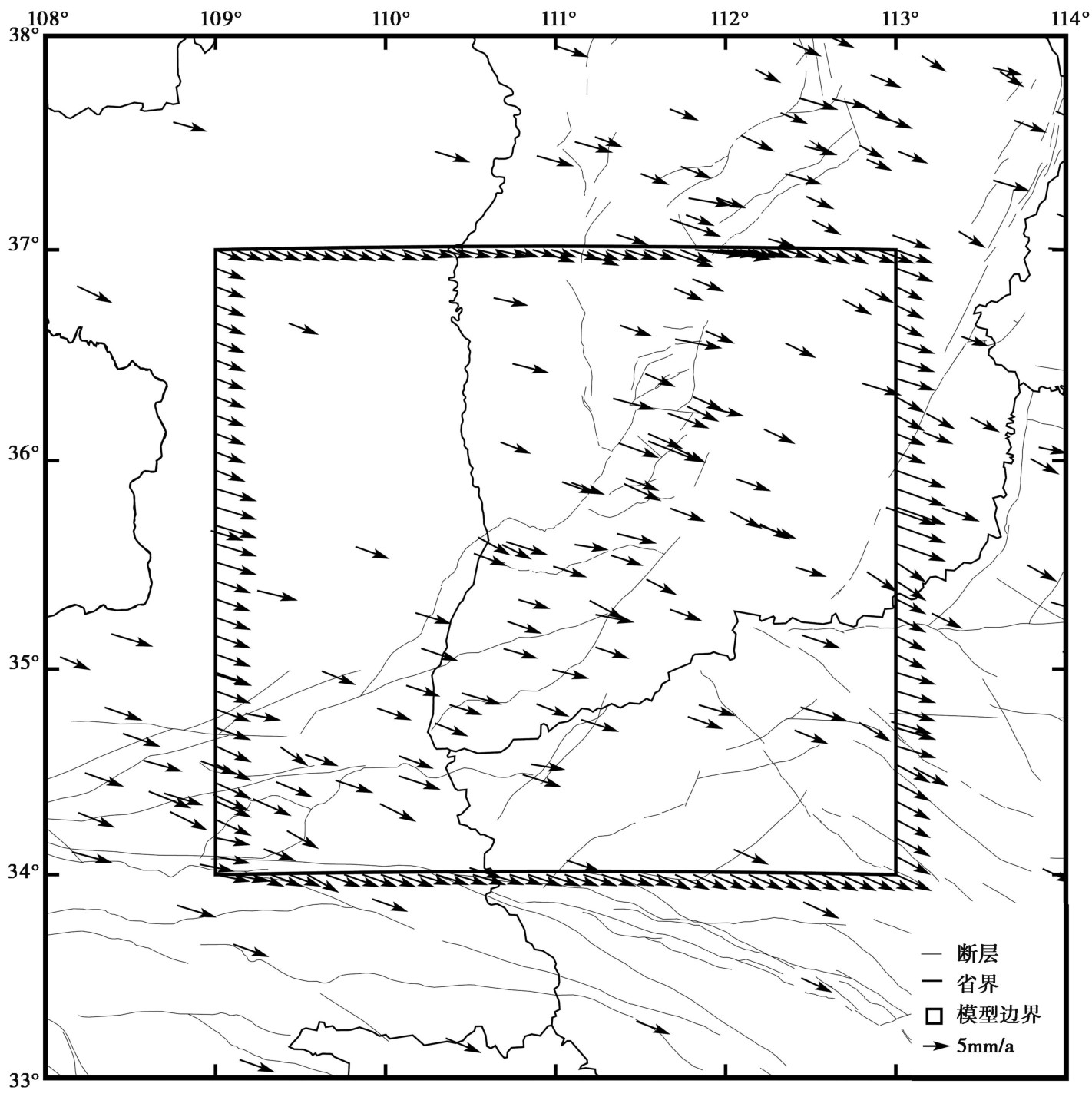
图2 鄂尔多斯块体东南缘的GPS速度场及模型边界条件
Fig. 2 GPS velocity field and model boundary conditions of the southeastern margin of the Ordos Block.
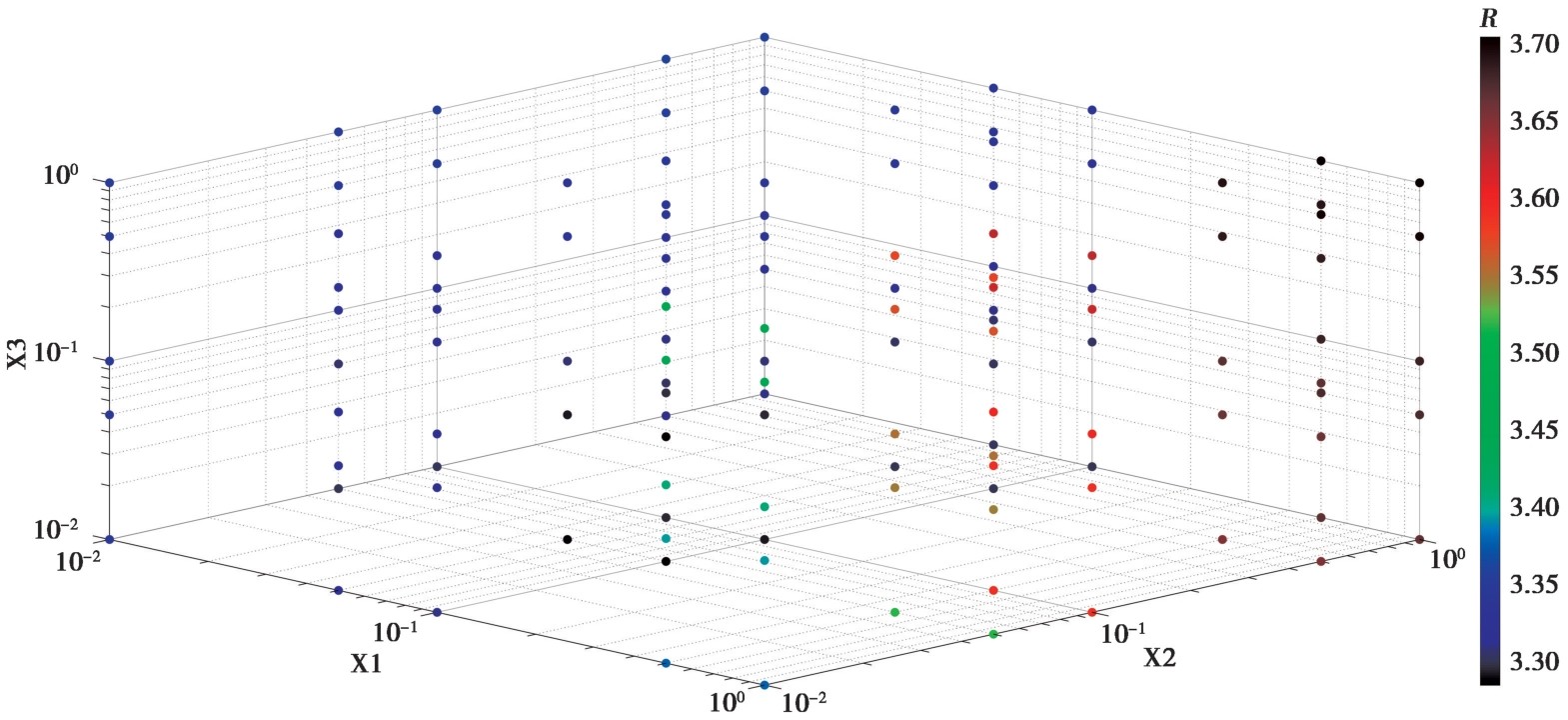
图3 断裂不同剪切模量对观测与模拟残差的影响
Fig. 3 Effect of varying shear moduli of faults on residuals between observations and simulations.
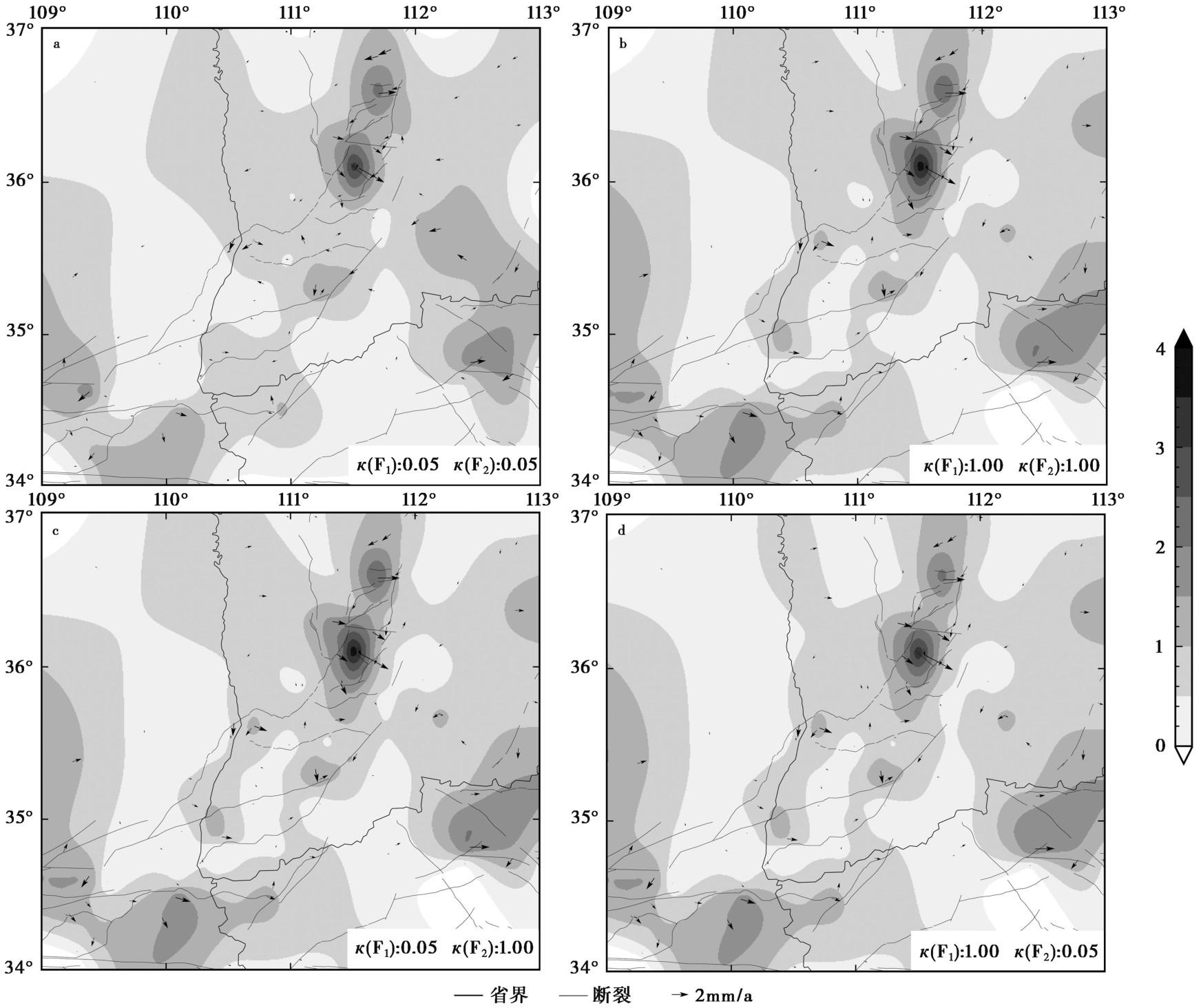
图4 韩城断裂与罗云山断裂在不同剪切模量下的模拟残差空间分布
Fig. 4 Spatial distribution of simulation residuals under different shear moduli for the Hancheng Fault and the Luoyunshan Fault.
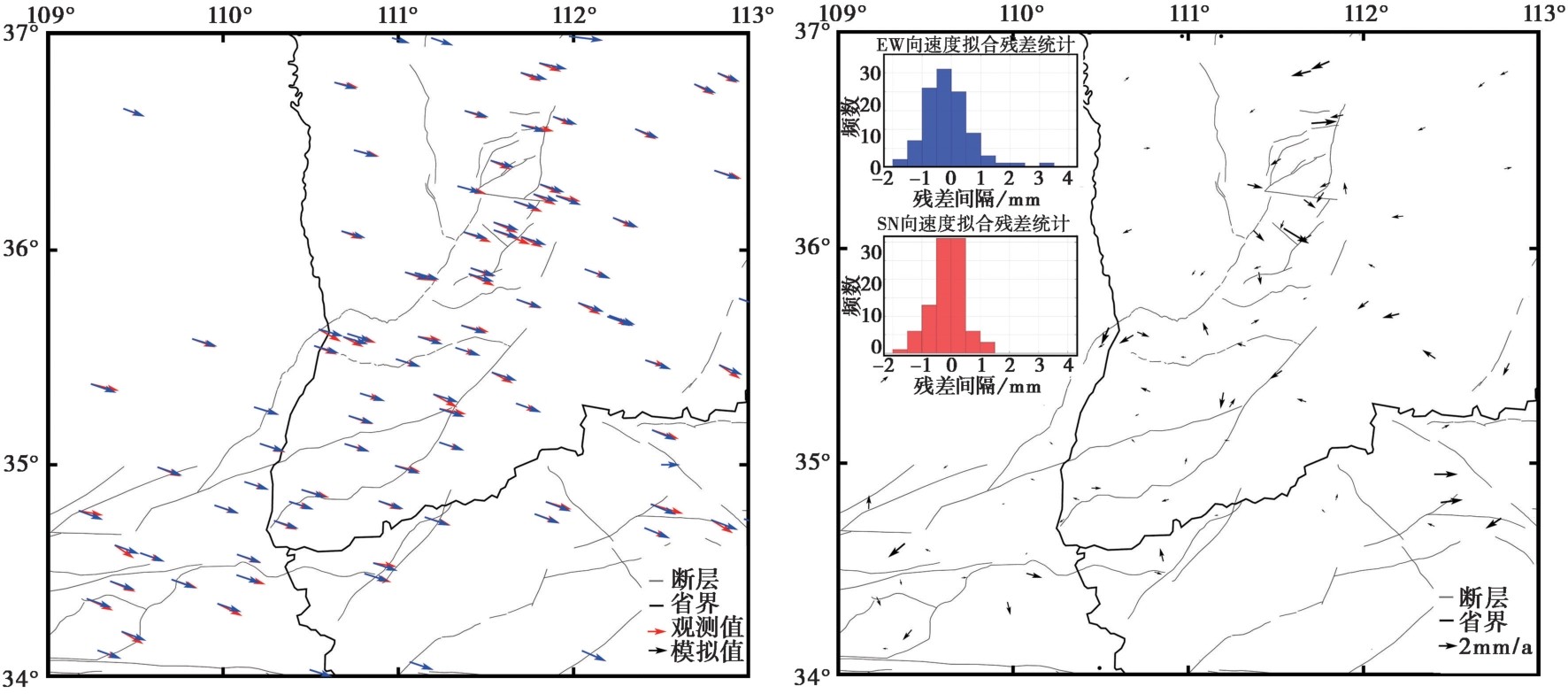
图5 数值模拟与实际观测速度场对比图
Fig. 5 Comparison between numerical simulation and observed velocity fields.
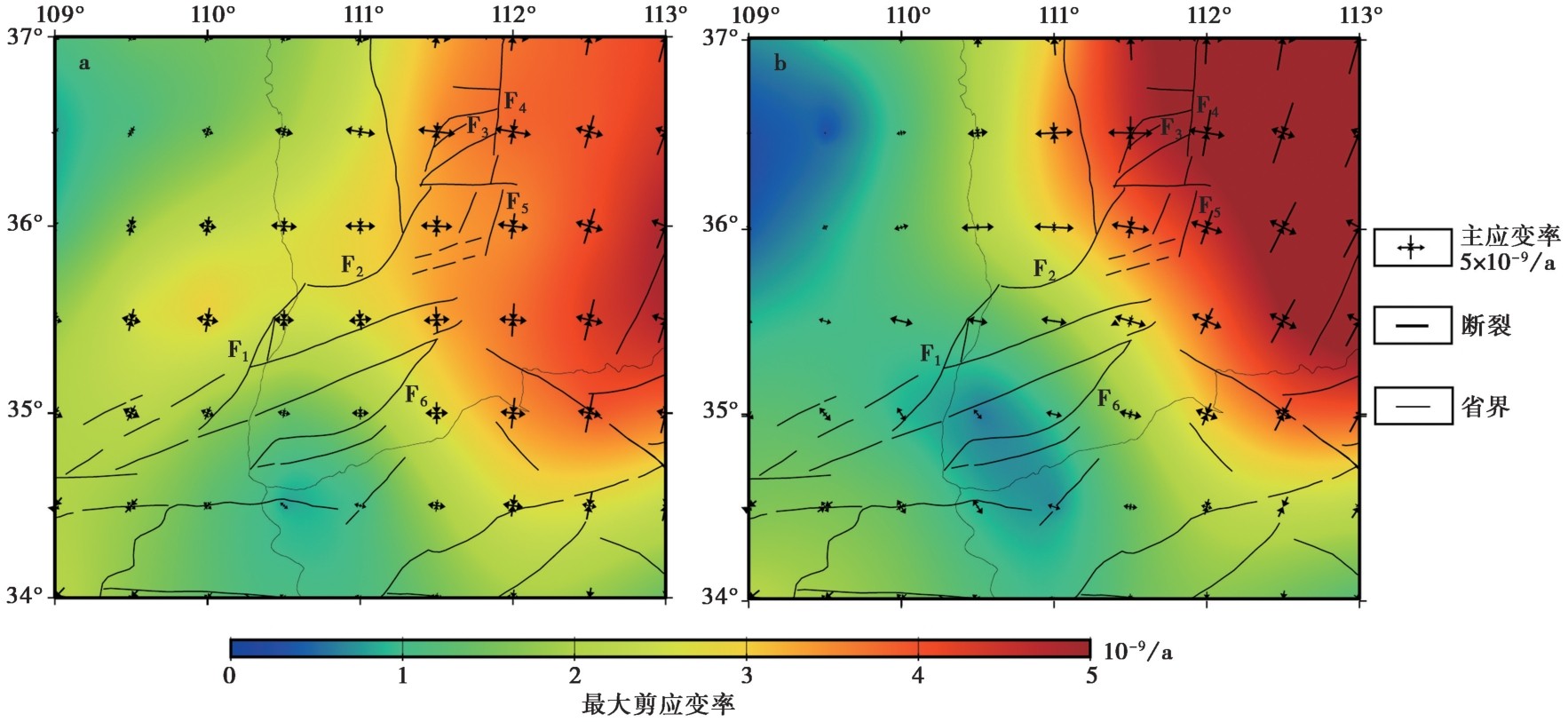
图6 实际观测(a)与数值模拟(b)应变率对比图
Fig. 6 Comparison of strain rates between observed(a) and simulated(b)results.
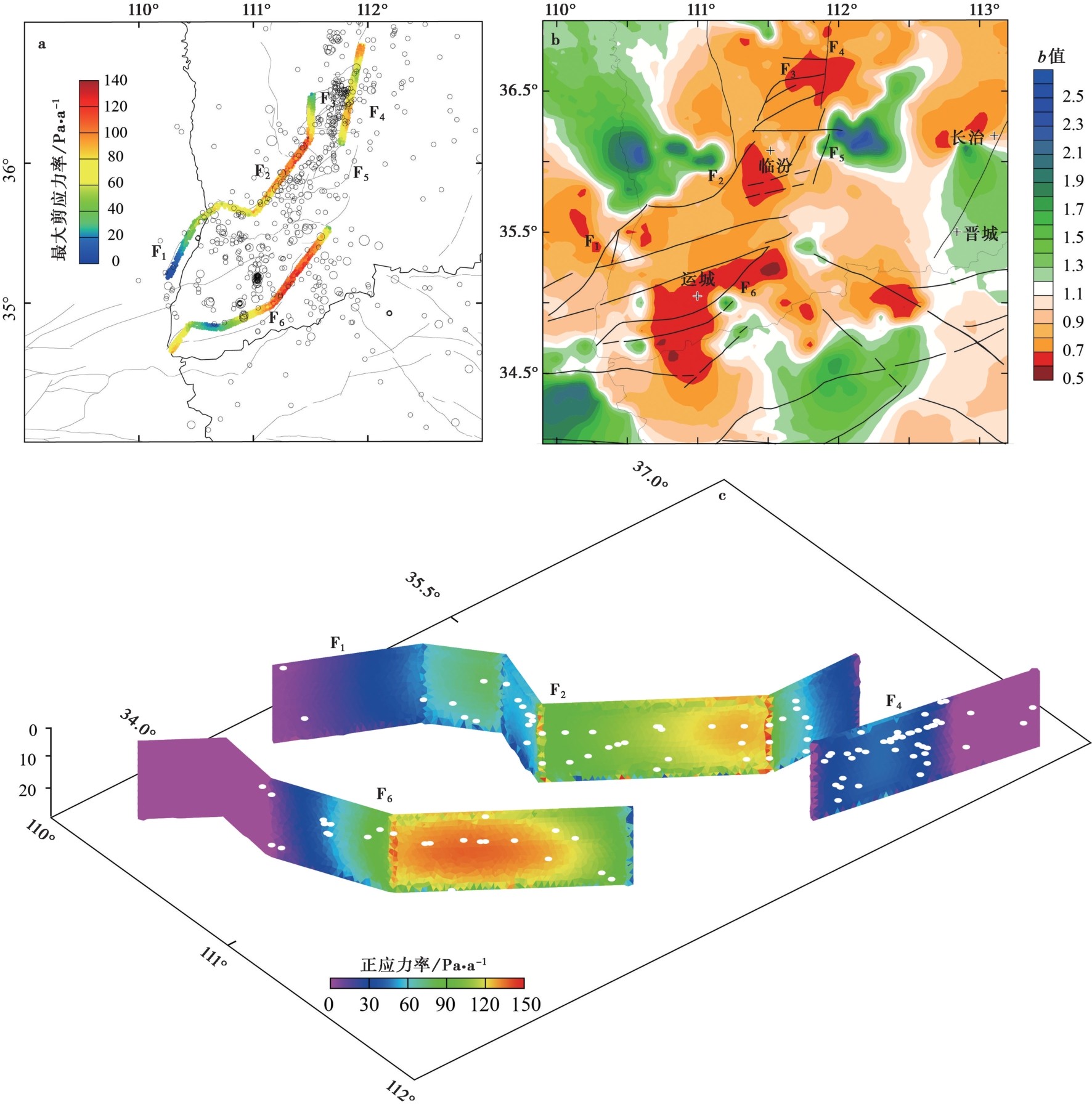
图7 最优模型模拟的应力状态及地震活动分析 a模拟的最大剪应力率场及地震精定位; b b值空间扫描结果; c模拟的正应力率场及小地震稀疏段
Fig. 7 Analysis of stress state based on optimal model simulation and seismic activity.
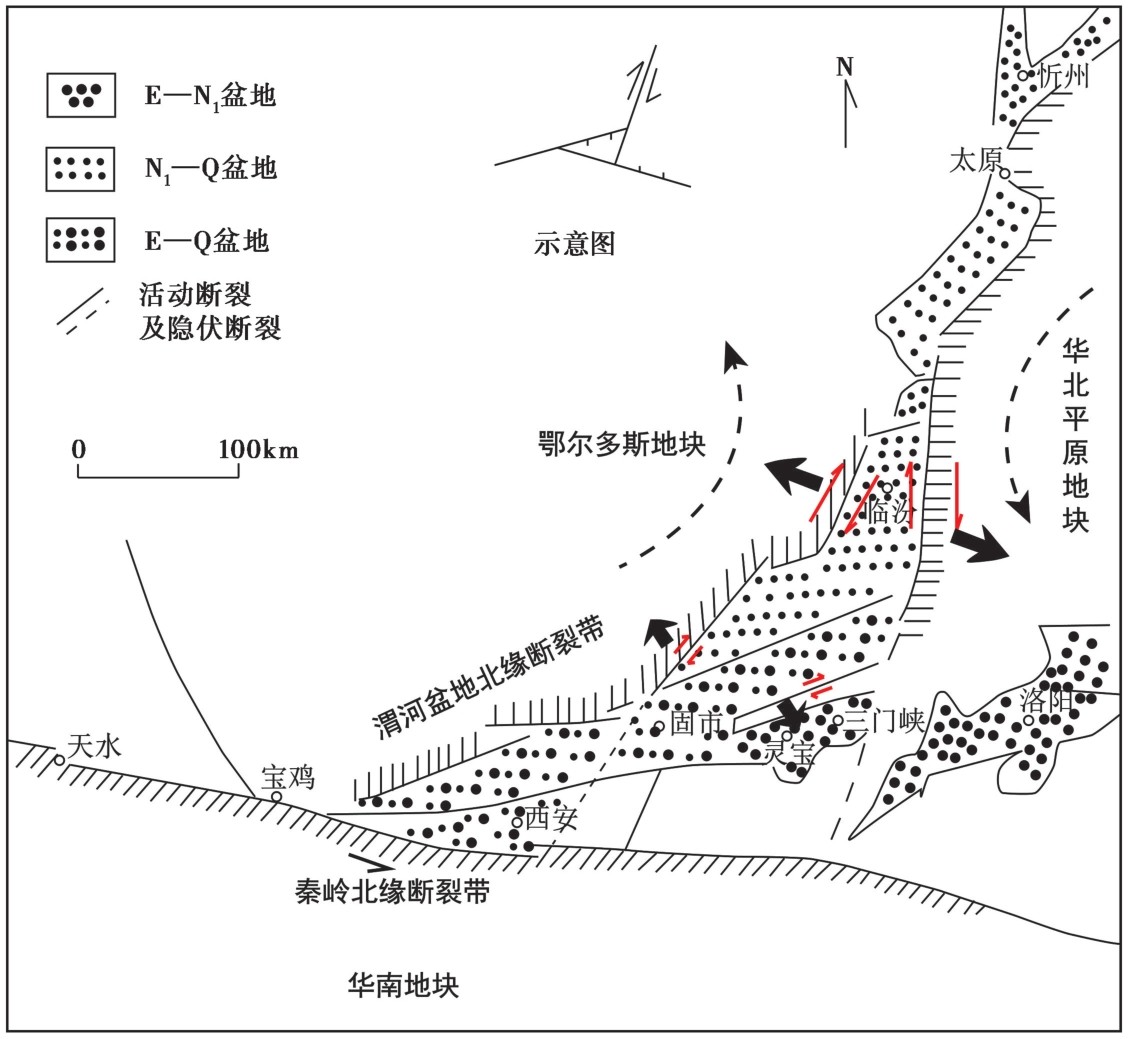
图8 鄂尔多斯块体东南缘的应力示意图 底图框架源于田勤俭等(1998)和刘瑞春等(2021a)
Fig. 8 Schematic Diagram of Stress in the Southeastern Margin of the Ordos Block.
| [24] |
宋美琴, 郑勇, 葛粲, 等. 2012. 山西地震带中小震精确位置及其显示的山西地震构造特征[J]. 地球物理学报, 55(2): 513-525.
|
|
|
|
| [25] |
孙昌斌, 谢新生, 许建红. 2011. 罗云山山前断裂带阶地调查研究及其构造意义[J]. 中国地震, 27(2): 126-135.
|
|
|
|
| [26] |
唐有彩, 冯永革, 陈永顺, 等. 2010. 山西断陷带地壳结构的接收函数研究[J]. 地球物理学报, 53(9): 2102-2109.
|
|
|
|
| [27] |
田勤俭, 丁国瑜. 1998. 青藏高原东北隅似三联点构造特征[J]. 中国地震, 14(4): 27-35.
|
|
|
|
| [28] |
王芃, 邵志刚, 刘晓霞, 等. 2022. 中国陆区活动地块边界带主要断层10年尺度强震发生概率[J]. 地球物理学报, 65(10): 3829-3843.
|
|
|
|
| [29] |
王霞, 宋美卿, 吕坚, 等. 2025. 山西南部历史地震的深部孕震环境[J]. 大地测量与地球动力学, 45(8): 823-828, 857.
|
|
|
|
| [30] |
闻学泽. 1999. 中国大陆活动断裂的段破裂地震复发行为[J]. 地震学报, 21(4): 411-418.
|
|
|
|
| [31] |
吴琼, 李海兵,
|
|
DOI URL |
|
| [32] |
谢富仁. 2006. “中国大陆地壳应力环境基础数据库”项目成果介绍[J]. 国际地震动态, 27(9): 20-25.
|
|
|
|
| [33] |
徐岳仁. 2014. 山西霍山山前断裂带晚第四纪活动特征研究[J]. 国际地震动态, (6): 37-39.
|
|
|
|
| [34] |
杨树新, 姚瑞, 李玉江, 等. 2025. 地应力与地震研究进展及展望[J]. 地质力学学报, 31(6): 1127-1145.
|
| [1] |
崔笃信, 郝明, 李煜航, 等. 2016. 鄂尔多斯块体周缘地区现今地壳水平运动与应变[J]. 地球物理学报, 59(10): 3646-3661.
DOI |
|
|
|
| [2] |
董春丽, 李乐, 李冬梅, 等. 2021. 临汾地区重复微震的识别及其断裂带深部滑动速率估算[J]. 中国地震, 37(4): 878-887.
|
|
|
|
| [3] |
郭春杉, 李文巧, 田勤俭, 等. 2019. 中条山北麓断裂解州段晚更新世滑动速率研究[J]. 地震, 39(4): 13-26.
|
|
|
|
| [4] |
胡勐乾, 邓志辉, 陆远忠, 等. 2014. 三维数值模拟在华北地区现今构造变形分析中的应用[J]. 地震地质, 36(1): 148-165.
DOI |
|
DOI |
|
| [5] |
蒋锋云, 季灵运, 赵强, 等. 2021. 海原-六盘山断裂带现今地震危险性的数值模拟分析[J]. 地质力学学报, 27(2): 230-240.
|
| [34] |
|
| [35] |
臧绍先, 李昶, 宁杰远, 等. 2002. 华北岩石圈三维流变结构的一种初步模型[J]. 中国科学(D辑), 32(7): 588-597.
|
|
|
|
| [36] |
张蕾, 李海兵, 王焕, 等. 2024. 青藏高原大型地震断裂带的变形机制[J]. 地球学报, 45(6): 854-870.
|
|
|
|
| [37] |
张培震, 邓起东, 张国民, 等. 2003a. 中国大陆的强震活动与活动地块[J]. 中国科学(D辑), 33(S1): 12-20.
|
|
|
|
| [38] |
张培震, 王敏, 甘卫军, 等. 2003b. GPS观测的活动断裂滑动速率及其对现今大陆动力作用的制约[J]. 地学前缘, 10(S1): 81-92.
|
|
|
|
| [39] |
张世民. 2000. 汾渭地堑系盆地发育进程的差异及其控震作用[J]. 地质力学学报, (2): 30-37.
|
|
|
|
| [40] |
张希, 蒋锋云, 唐红涛, 等. 2011. 汾渭断裂带近10年GPS观测获得的剖面变形与应变积累分析[J]. 地震研究, 34(4): 504-510.
|
|
|
|
| [41] |
张学民, 刁桂苓, 束沛镒. 2004. 鄂尔多斯块体及其东南缘剪切波速度结构与波速比研究[J]. 中国地震, 20(1): 53-63.
|
|
|
|
| [42] |
张岳桥, 施炜, 董树文. 2019. 华北新构造: 印欧碰撞远场效应与太平洋俯冲地幔上涌之间的相互作用[J]. 地质学报, 93(5): 3-33.
|
|
|
|
| [43] |
郑文俊, 彭慧, 刘兴旺, 等. 2024a. 鄂尔多斯活动地块边界带15 000年以来强震活动与现今大地震空区[J]. 科学通报, 69(18): 2632-2647.
|
|
|
|
| [5] |
|
| [6] |
李四光. 1977. 论地震[M]. 北京: 地质出版社: 1-173.
|
|
|
|
| [7] |
李玉江, 陈连旺, 刘少峰, 等. 2014. 芦山地震的发生对周围断层影响的数值模拟[J]. 地球学报, 35(5): 627-634.
|
|
|
|
| [8] |
李长军, 柴旭超, 甘卫军, 等. 2020. 基于GPS观测的鄂尔多斯地块及其周缘现今的运动学特征[J]. 地震地质, 42(2): 316-332. doi: 10.3969/j.issn.0253-4967.2020.02.005.
|
|
DOI |
|
| [9] |
李自红. 2014. 临汾盆地地壳精细结构探测与孕震构造研究[D]. 太原: 太原理工大学: 131-139.
|
|
|
|
| [10] |
李自红, 刘保金, 袁洪克, 等. 2014. 临汾盆地地壳精细结构和构造: 地震反射剖面结果[J]. 地球物理学报, 57(5): 1487-1497.
|
|
|
|
| [44] |
郑文俊, 孙鑫, 雷启云, 等. 2024b. 鄂尔多斯活动地块边界带第四纪晚期构造活动特征及强震孕育机制[J]. 地质力学学报, 30(2): 206-224.
|
|
|
|
| [45] |
周永胜. 2019. 基岩区断层黏滑与蠕滑的地质标志和岩石力学实验证据[J]. 地震地质, 41(5): 1266-1272. doi: 10.3969/j.issn.0253-4967.2019.05.013.
|
|
DOI |
|
| [46] |
祝爱玉, 张东宁, 蒋长胜. 2015a. 安宁河-则木河-小江断裂带应力状态分段特征的数值模拟研究[J]. 中国科学(地球科学), 45(12): 1839-1852.
|
|
|
|
| [47] |
祝爱玉, 张东宁, 蒋长胜, 等. 2015b. 川滇地区地壳应变能密度变化率与强震复发间隔的数值模拟[J]. 地震地质, 37(3): 906-927.
|
|
|
|
| [48] |
DOI URL |
| [49] |
|
| [11] |
柳畅, 石耀霖, 郑亮, 等. 2012. 三维黏弹性数值模拟华北盆地地震空间分布与构造应力积累关系[J]. 地球物理学报, 55(12): 3942-3957.
|
|
|
|
| [12] |
刘瑞春, 张锦, 郭文峰, 等. 2021a. 鄂尔多斯块体东南缘现今的变形特征与构造模式探讨[J]. 地震地质, 43(3): 540-558. doi: 10.3969/j.issn.0253-4967.2021.03.005.
|
|
|
|
| [13] |
刘瑞春, 张锦, 郭文峰, 等. 2021b. 利用GPS观测研究山西断陷带现今构造应力场变化与地震活动[J]. 地震工程学报, 43(2): 251-258.
|
|
|
|
| [14] |
刘峡, 马瑾, 傅容珊, 等. 2010. 华北地区现今地壳运动动力学初步研究[J]. 地球物理学报, 53(6): 1418-1427.
|
|
|
|
| [15] |
陆一锋, 徐鸣洁, 王良书, 等. 2012. 鄂尔多斯东南缘地区的地壳结构[J]. 科学通报, 57(1): 59-64.
|
| [50] |
DOI |
| [51] |
|
| [52] |
|
| [53] |
DOI URL |
| [54] |
DOI URL |
| [55] |
DOI URL |
| [56] |
|
| [57] |
DOI URL |
| [58] |
DOI URL |
| [15] |
|
| [16] |
罗纲, 宋建, 张琦, 等. 2025. 华北地区断裂带地震时空活动的有限元数值模拟[J]. 地球物理学报, 68(9): 3415-3432.
|
|
|
|
| [17] |
M7专项工作组. 2012. 中国大陆大地震中-长期危险性研究[M]. 北京: 地震出版社: 156-183.
|
|
M7 Special Working Group. 2012. Research on the Medium-Long Term Hazard of Large Earthquakes in Mainland China[M]. Seismological Press, Beijing: 156-183 (in Chinese).
|
|
| [18] |
邵志刚, 傅容珊, 薛霆虓, 等. 2007. 以Burgers体模型模拟震后黏弹性松弛效应[J]. 大地测量与地球动力学, 27(5): 31-37.
|
|
|
|
| [19] |
邵志刚, 王武星, 刘琦, 等. 2025. 中国陆区未来10年地震危险性预测与地震风险评估研究[J]. 地震, 45(3): 193-218.
|
|
|
|
| [20] |
邵志刚, 武艳强, 季灵运, 等. 2022. 中国大陆活动地块边界带主要断层的强震震间晚期综合判定[J]. 地球物理学报, 65(12): 4643-4658.
|
|
|
|
| [21] |
石富强, 邵志刚, 占伟, 等. 2018. 青藏高原东北缘活动断裂剪切模量及应力状态数值模拟[J]. 地球物理学报, 61(9): 3651-3663.
DOI |
|
|
|
| [22] |
石富强, 张辉, 邵志刚, 等. 2020. 华北地区库仑应力演化与强震活动关系[J]. 地球物理学报, 63(9): 3338-3354.
DOI |
|
|
|
| [23] |
司苏沛, 李有利, 吕胜华, 等. 2014. 山西中条山北麓断裂盐池段全新世古地震事件和滑动速率研究[J]. 中国科学(地球科学), 44(9): 1958-1967.
|
|
|
|
| [59] |
DOI |
| [60] |
|
| [61] |
|
| [62] |
|
| [63] |
DOI URL |
| [1] | 曹筠, 刘书峰, 高晨, 李彦宝, 陈杨. 阳原盆地北缘断裂全新世活动证据及其构造意义[J]. 地震地质, 2026, 48(5): 1253-1266. |
| [2] | 贾宏达, 石峰, 赵家豪. 鄂尔多斯东北角岱海南缘断裂带全新世活动证据[J]. 地震地质, 2026, 48(5): 1297-1318. |
| [3] | 程佳, 王启欣, 王子月, 徐锡伟, 蔡军涛, 徐志萍, 杨彦兵, 陈小斌, 刘巧霞. 淮安盐矿三维构造模型及其注水诱发地震机制分析[J]. 地震地质, 2026, 48(4): 959-980. |
| [4] | 刘超, 任治坤, 刘金瑞, 计昊旻, 武治群, 余思汗, 雷启云, 杜鹏. 烟筒山断裂北段全新世活动证据[J]. 地震地质, 2026, 48(3): 724-740. |
| [5] | 常金龙, 甘卫军, 周晨, 朱成林, 刘长生, 姚程越. 依兰-伊通断裂北段应变状态及发震机制讨论[J]. 地震地质, 2026, 48(1): 200-216. |
| [6] | 李晨, 邢会林, 姚琪, 钟祯祥. 华北地区活动地块运动变形的动力学模拟[J]. 地震地质, 2026, 48(1): 233-256. |
| [7] | 秦友森, 徐小波, 李彦川, 张迎峰, 连达军, 杨朝辉, 陈凯, 荣欣悦. 基于时序InSAR的海原断裂带震间形变监测[J]. 地震地质, 2025, 47(6): 1688-1707. |
| [8] | 陈倩, 张竹琪. 太原盆地地壳形变特征及其反映的强震危险性[J]. 地震地质, 2025, 47(1): 189-213. |
| [9] | 张琰, 纪志伟, 翟鸿宇, 伍纯昊. 考虑速度频散的地震动场模拟及其对地震危险性分析的意义[J]. 地震地质, 2024, 46(6): 1408-1425. |
| [10] | 孙晓, 鲁人齐, 张金玉, 王伟, 苏鹏. 川滇实验场地区活动地块边界新划分参考方案[J]. 地震地质, 2024, 46(5): 1027-1047. |
| [11] | 李树鹏, 胡敏章, 祝意青, 郝洪涛, 殷海涛, 贾媛, 崔华伟, 陆汉鹏, 张刚, 王锋吉, 刘洪良. 2023年山东平原MS5.5地震前重力变化[J]. 地震地质, 2024, 46(5): 1172-1191. |
| [12] | 徐晶, 季灵运, 刘传金. 2022年泸定MS6.8地震震前区域变形背景及同震形变特征[J]. 地震地质, 2024, 46(3): 645-664. |
| [13] | 庞桢辉, 徐皓婷, 石许华, 葛进, 李丰. 陡坎地貌定年理论及其在活动构造与地貌学研究中的应用[J]. 地震地质, 2024, 46(2): 251-276. |
| [14] | 姚琪, 鲁人齐, 苏鹏, 王辉, 朱亚玲, 王力维. 三维地质建模为地震数值预测带来的机遇[J]. 地震地质, 2024, 46(1): 1-18. |
| [15] | 李浩峰, 徐岳仁, 郭雅丽, 刘晗, 赵昕雨, 陆玲玉, 唐嘉诚. 滇西南1976年龙陵MS7.3、MS7.4 双强震触发滑坡遥感解译及其构造意义[J]. 地震地质, 2024, 46(1): 117-140. |
| 阅读次数 | ||||||
|
全文 |
|
|||||
|
摘要 |
|
|||||