地震地质 ›› 2026, Vol. 48 ›› Issue (5): 1339-1361.DOI: 10.3969/j.issn.0253-4967.20260033
杨承伟1)( ), 王成虎1),*(), 代向前2), 黄晓盼1)
收稿日期:2026-03-13
修回日期:2026-05-15
出版日期:2026-11-11
发布日期:2026-11-11
通讯作者:
王成虎
作者简介:杨承伟, 男, 1992年生, 2020年于中国地质大学(北京)获构造地质学博士学位, 助理研究员, 主要从事活动构造与构造应力场研究, E-mail: 455546044@qq.com。
基金资助:
YANG Cheng-wei1)(), WANG Cheng-hu1),*(), DAI Xiang-qian2), HUANG Xiao-pan1)
Received:2026-03-13
Revised:2026-05-15
Online:2026-11-11
Published:2026-11-11
Contact:
WANG Cheng-hu
摘要:
构造应力是构造运动和强震的驱动力, 晚更新世以来构造应力场的方向、性质及时空分布特征的研究能够为大地震震源识别和强震危险性分析提供基础数据支撑。京西北张家口-渤海地震带的怀来-昌平段晚新生代以来构造活动显著, 历史地震频发, 是中国大陆内部强震频发的关键构造单元之一, 其地震活动性严重影响着首都圈地区安全。基于活动断裂擦痕的应力反演结果显示, 在晚更新世, 研究区断裂带内的最小水平主应力方向以NE-SW向为主, 南口山前断裂南西段和黄土窑-土木断裂的最小水平主应力方向则以NW-SE向为主; 断裂带内的应力结构以伸展为主, 在断裂带的边缘或2条断裂带交会处易发生突变, 表明晚更新世时期研究区的构造活动以地壳抬升或沉降为主, 水平活动较弱。在断裂交会点, 应力方向和应力结构往往会发生突变, 可能与深部断裂结构交织和断裂应力叠加作用有关。全新世时期, 研究区断裂带内的最小主应力方向以NW-SE向为主, 兼有NE-SW向和近SN向。在应力结构方面, 延矾盆地北缘断裂和新保安-沙城断裂皆以伸展为主, 怀涿盆地北缘断裂以走滑和挤压为主。受太平洋板块和印度板块的影响, 晚更新世以来, 研究区内活动断裂带的主应力方向与应力结构均发生改变。对于同一构造事件, 不同断裂带、同一断裂带的不同段落皆表现出不同的响应特征, 可能受到断裂带的几何特征、深部结构、岩石特性等因素控制。
杨承伟, 王成虎, 代向前, 黄晓盼. 京西北活动断裂带晚更新世以来的应力场时空分布特征[J]. 地震地质, 2026, 48(5): 1339-1361.
YANG Cheng-wei, WANG Cheng-hu, DAI Xiang-qian, HUANG Xiao-pan. SPATIOTEMPORAL CHARACTERISTICS OF STRESS FIELDS OF THE ACTIVE FAULT ZONE IN THE NORTHWESTERN BEIJING SINCE THE LATE PLEISTOCENE[J]. SEISMOLOGY AND GEOLOGY, 2026, 48(5): 1339-1361.
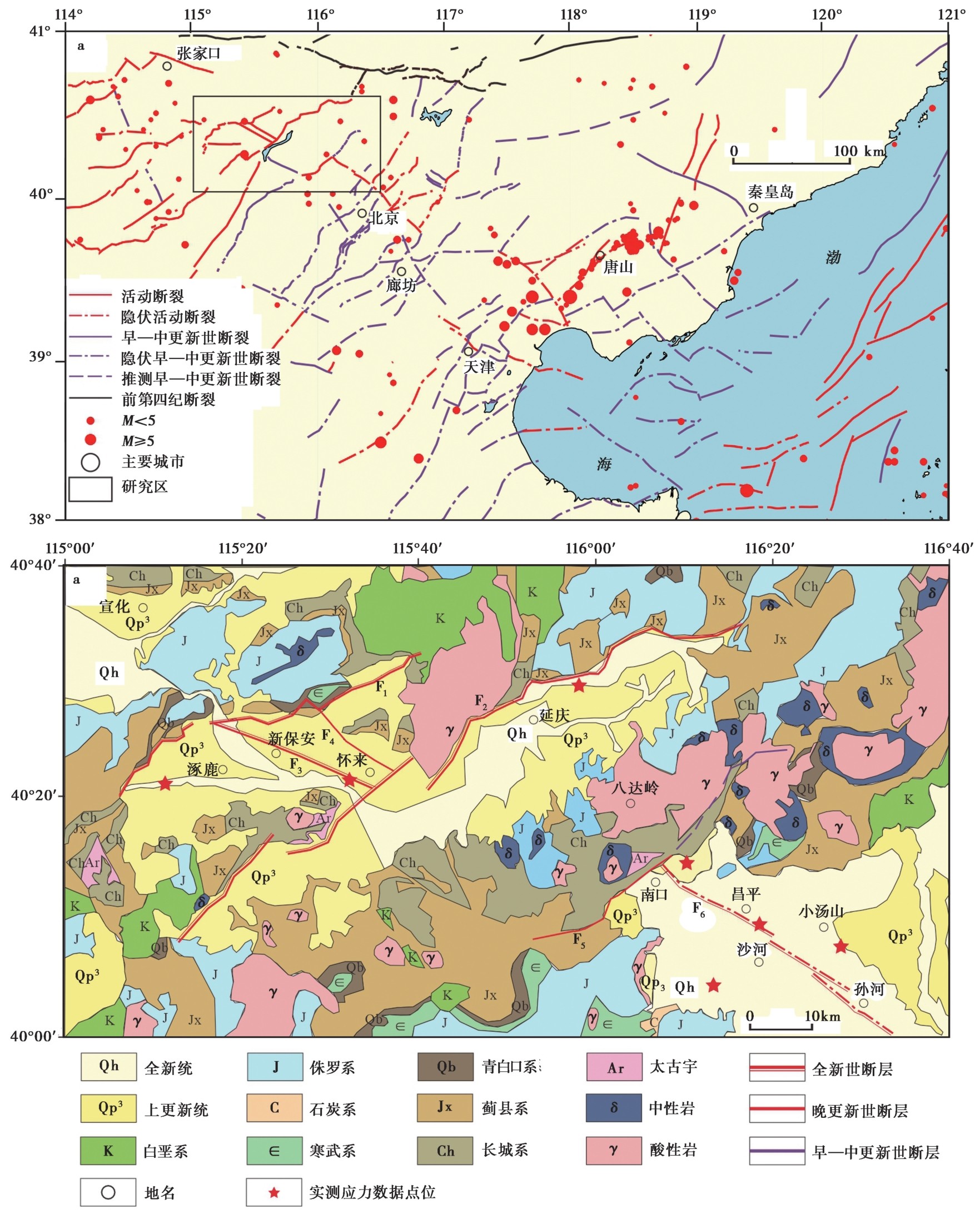
图1 张家口-渤海地震带活动断裂、历史地震分布及研究区地质图 a张家口-渤海地震带活动断裂及历史地震分布; b研究区地质图。F1怀涿盆地北缘断裂; F2延矾盆地北缘断裂; F3新保安-沙城断裂; F4黄土窑-土木断裂; F5南口山前断裂; F6南口-孙河断裂
Fig. 1 Geology map with the distribution of active faults and historical earthquakes of the study region.
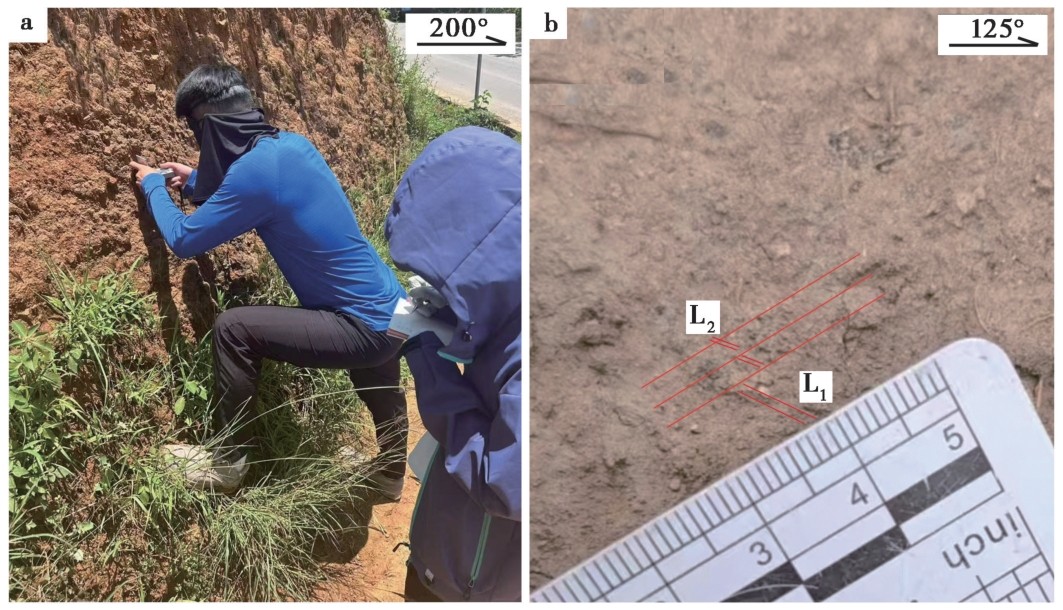
图2 不同期次擦痕的交切关系 a远景照; b露头照
Fig. 2 Cross relationships of striations at different stages.
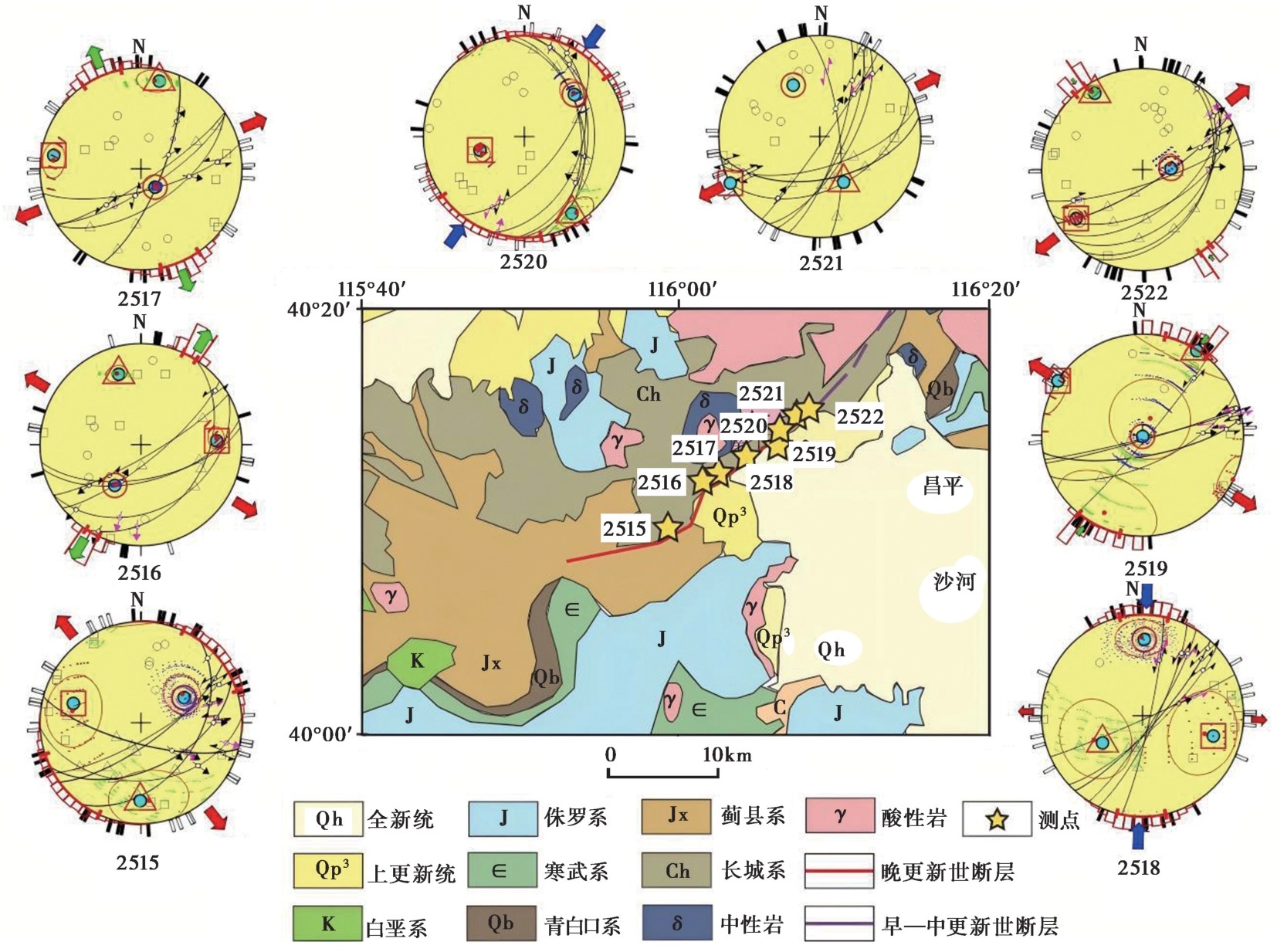
图3 南口山前断裂晚更新世应力反演结果
Fig. 3 Results of the Late Pleistocene stress inversion of the Nankou Piedmont fault.
| 点号 | 擦痕 组数 | 应力轴方位 | R | 应力结构 | |||||
|---|---|---|---|---|---|---|---|---|---|
| σ1 | σ2 | σ3 | |||||||
| 倾伏向/(°) | 倾伏角/(°) | 倾伏向/(°) | 倾伏角/(°) | 倾伏向/(°) | 倾伏角/(°) | ||||
| 2515 | 11 | 60 | 49 | 181 | 24 | 286 | 31 | 0.14 | 径向伸展 |
| 2516 | 6 | 213 | 50 | 342 | 28 | 87 | 26 | 0.04 | 径向伸展 |
| 2517 | 6 | 143 | 71 | 12 | 12 | 279 | 14 | 0.06 | 径向伸展 |
| 2518 | 7 | 1 | 26 | 236 | 50 | 106 | 28 | 0.08 | 挤压走滑 |
| 2519 | 6 | 179 | 89 | 33 | 1 | 303 | 1 | 0.90 | 走滑伸展 |
| 2520 | 6 | 50 | 36 | 148 | 11 | 253 | 52 | 0.47 | 单向挤压 |
| 2521 | 9 | 333 | 42 | 152 | 48 | 243 | 0 | 0.52 | 单向伸展 |
| 2522 | 8 | 88 | 67 | 328 | 12 | 234 | 19 | 0.73 | 走滑伸展 |
表1 南口山前断裂晚更新世应力反演结果
Table1 Results of the Late Pleistocene stress inversion of the Nankou Piedmont Fault
| 点号 | 擦痕 组数 | 应力轴方位 | R | 应力结构 | |||||
|---|---|---|---|---|---|---|---|---|---|
| σ1 | σ2 | σ3 | |||||||
| 倾伏向/(°) | 倾伏角/(°) | 倾伏向/(°) | 倾伏角/(°) | 倾伏向/(°) | 倾伏角/(°) | ||||
| 2515 | 11 | 60 | 49 | 181 | 24 | 286 | 31 | 0.14 | 径向伸展 |
| 2516 | 6 | 213 | 50 | 342 | 28 | 87 | 26 | 0.04 | 径向伸展 |
| 2517 | 6 | 143 | 71 | 12 | 12 | 279 | 14 | 0.06 | 径向伸展 |
| 2518 | 7 | 1 | 26 | 236 | 50 | 106 | 28 | 0.08 | 挤压走滑 |
| 2519 | 6 | 179 | 89 | 33 | 1 | 303 | 1 | 0.90 | 走滑伸展 |
| 2520 | 6 | 50 | 36 | 148 | 11 | 253 | 52 | 0.47 | 单向挤压 |
| 2521 | 9 | 333 | 42 | 152 | 48 | 243 | 0 | 0.52 | 单向伸展 |
| 2522 | 8 | 88 | 67 | 328 | 12 | 234 | 19 | 0.73 | 走滑伸展 |
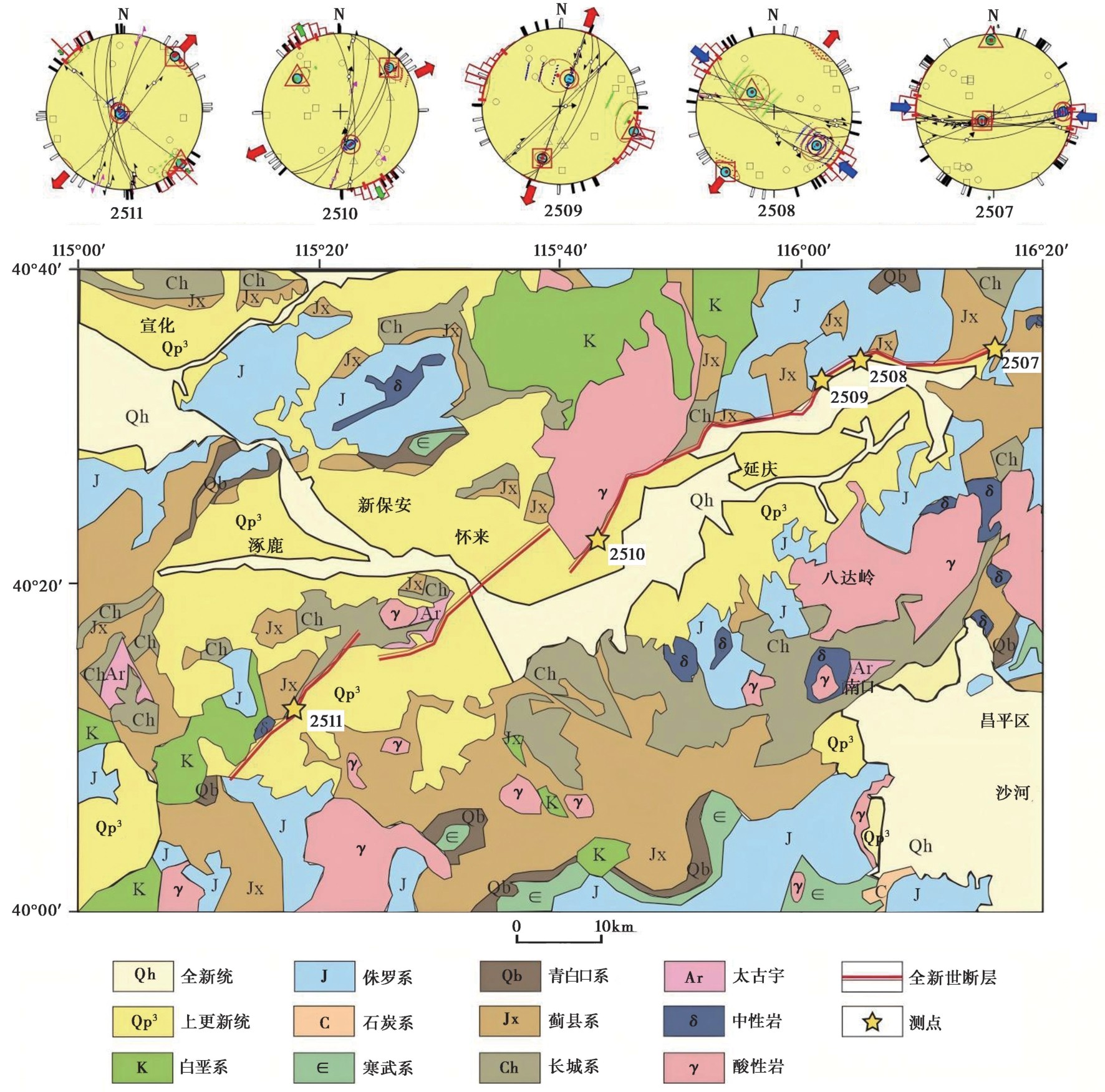
图4 延矾盆地北缘断裂晚更新世应力反演结果
Fig. 4 Results of the Late Pleistocene stress inversion of the northern margin fault of the Yanfan Basin.
| 点号 | 擦痕 组数 | 应力轴方位 | R | 应力结构 | |||||
|---|---|---|---|---|---|---|---|---|---|
| σ1 | σ2 | σ3 | |||||||
| 倾伏向/(°) | 倾伏角/(°) | 倾伏向/(°) | 倾伏角/(°) | 倾伏向/(°) | 倾伏角/(°) | ||||
| 2507 | 8 | 90 | 12 | 358 | 9 | 233 | 75 | 0.58 | 单向挤压 |
| 2508 | 6 | 128 | 31 | 311 | 59 | 219 | 1 | 0.44 | 走滑 |
| 2509 | 6 | 19 | 60 | 109 | 0 | 199 | 30 | 0.56 | 单向伸展 |
| 2510 | 6 | 163 | 54 | 307 | 31 | 48 | 17 | 0.19 | 径向伸展 |
| 2511 | 7 | 243 | 85 | 133 | 2 | 43 | 5 | 0.79 | 走滑伸展 |
表2 延矾盆地北缘断裂晚更新世应力反演结果
Table2 Results of the Late Pleistocene stress inversion of the northern margin fault of the Yanfan Basin
| 点号 | 擦痕 组数 | 应力轴方位 | R | 应力结构 | |||||
|---|---|---|---|---|---|---|---|---|---|
| σ1 | σ2 | σ3 | |||||||
| 倾伏向/(°) | 倾伏角/(°) | 倾伏向/(°) | 倾伏角/(°) | 倾伏向/(°) | 倾伏角/(°) | ||||
| 2507 | 8 | 90 | 12 | 358 | 9 | 233 | 75 | 0.58 | 单向挤压 |
| 2508 | 6 | 128 | 31 | 311 | 59 | 219 | 1 | 0.44 | 走滑 |
| 2509 | 6 | 19 | 60 | 109 | 0 | 199 | 30 | 0.56 | 单向伸展 |
| 2510 | 6 | 163 | 54 | 307 | 31 | 48 | 17 | 0.19 | 径向伸展 |
| 2511 | 7 | 243 | 85 | 133 | 2 | 43 | 5 | 0.79 | 走滑伸展 |
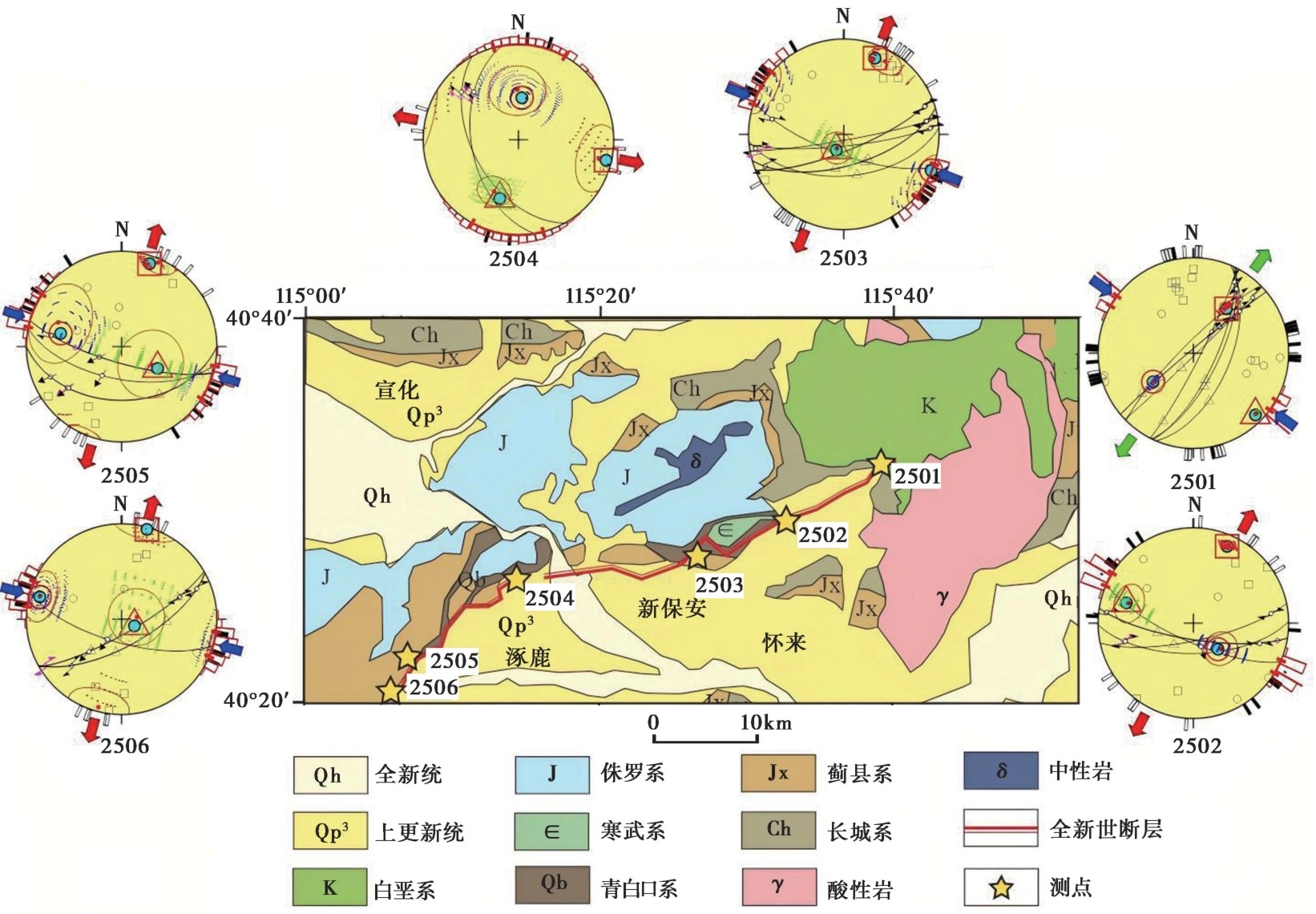
图5 怀涿盆地北缘断裂晚更新世应力反演结果
Fig. 5 Results of the Late Pleistocene stress inversion of the northern margin fault of the Huaizhuo Basin.
| 点号 | 擦痕 组数 | 应力轴方位 | R | 应力结构 | |||||
|---|---|---|---|---|---|---|---|---|---|
| σ1 | σ2 | σ3 | |||||||
| 倾伏向/(°) | 倾伏角/(°) | 倾伏向/(°) | 倾伏角/(°) | 倾伏向/(°) | 倾伏角/(°) | ||||
| 2501 | 8 | 235 | 47 | 135 | 9 | 37 | 42 | 0.92 | 径向挤压 |
| 2502 | 5 | 137 | 59 | 287 | 27 | 24 | 13 | 0.59 | 单向伸展 |
| 2503 | 8 | 112 | 1 | 206 | 75 | 22 | 15 | 0.49 | 走滑 |
| 2504 | 2 | 5 | 54 | 198 | 36 | 103 | 6 | 0.50 | 单向伸展 |
| 2505 | 5 | 282 | 35 | 121 | 54 | 19 | 9 | 0.62 | 走滑 |
| 2506 | 5 | 285 | 12 | 118 | 78 | 16 | 3 | 0.56 | 走滑 |
表3 怀涿盆地北缘断裂晚更新世应力反演结果
Table3 Results of the Late Pleistocene stress inversion of the northern margin fault of the Huaizhuo Basin
| 点号 | 擦痕 组数 | 应力轴方位 | R | 应力结构 | |||||
|---|---|---|---|---|---|---|---|---|---|
| σ1 | σ2 | σ3 | |||||||
| 倾伏向/(°) | 倾伏角/(°) | 倾伏向/(°) | 倾伏角/(°) | 倾伏向/(°) | 倾伏角/(°) | ||||
| 2501 | 8 | 235 | 47 | 135 | 9 | 37 | 42 | 0.92 | 径向挤压 |
| 2502 | 5 | 137 | 59 | 287 | 27 | 24 | 13 | 0.59 | 单向伸展 |
| 2503 | 8 | 112 | 1 | 206 | 75 | 22 | 15 | 0.49 | 走滑 |
| 2504 | 2 | 5 | 54 | 198 | 36 | 103 | 6 | 0.50 | 单向伸展 |
| 2505 | 5 | 282 | 35 | 121 | 54 | 19 | 9 | 0.62 | 走滑 |
| 2506 | 5 | 285 | 12 | 118 | 78 | 16 | 3 | 0.56 | 走滑 |
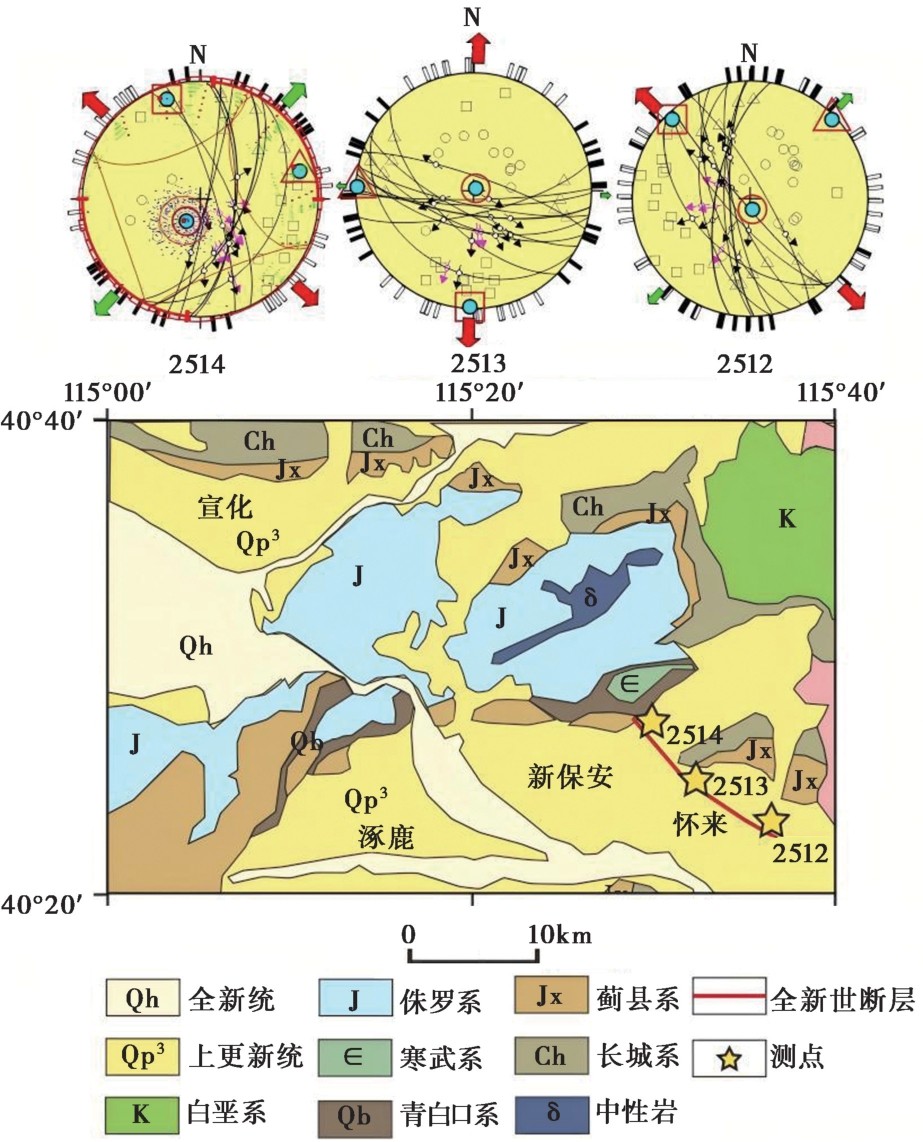
图6 黄土窑-土木断裂晚更新世应力反演结果
Fig. 6 Results of the Late Pleistocene stress inversion of the Huangtuyao-Tumu Fault.
| 点号 | 擦痕 组数 | 应力轴方位 | R | 应力结构 | |||||
|---|---|---|---|---|---|---|---|---|---|
| σ1 | σ2 | σ3 | |||||||
| 倾伏向/(°) | 倾伏角/(°) | 倾伏向/(°) | 倾伏角/(°) | 倾伏向/(°) | 倾伏角/(°) | ||||
| 2512 | 12 | 135 | 87 | 39 | 0 | 309 | 3 | 0.22 | 径向伸展 |
| 2513 | 11 | 108 | 85 | 270 | 5 | 0 | 1 | 0.37 | 径向伸展 |
| 2514 | 10 | 207 | 68 | 72 | 15 | 338 | 15 | 0.03 | 径向伸展 |
表4 黄土窑-土木断裂晚更新世应力反演结果
Table4 Results of the Late Pleistocene stress inversion of the Huangtuyao-Tumu Fault
| 点号 | 擦痕 组数 | 应力轴方位 | R | 应力结构 | |||||
|---|---|---|---|---|---|---|---|---|---|
| σ1 | σ2 | σ3 | |||||||
| 倾伏向/(°) | 倾伏角/(°) | 倾伏向/(°) | 倾伏角/(°) | 倾伏向/(°) | 倾伏角/(°) | ||||
| 2512 | 12 | 135 | 87 | 39 | 0 | 309 | 3 | 0.22 | 径向伸展 |
| 2513 | 11 | 108 | 85 | 270 | 5 | 0 | 1 | 0.37 | 径向伸展 |
| 2514 | 10 | 207 | 68 | 72 | 15 | 338 | 15 | 0.03 | 径向伸展 |
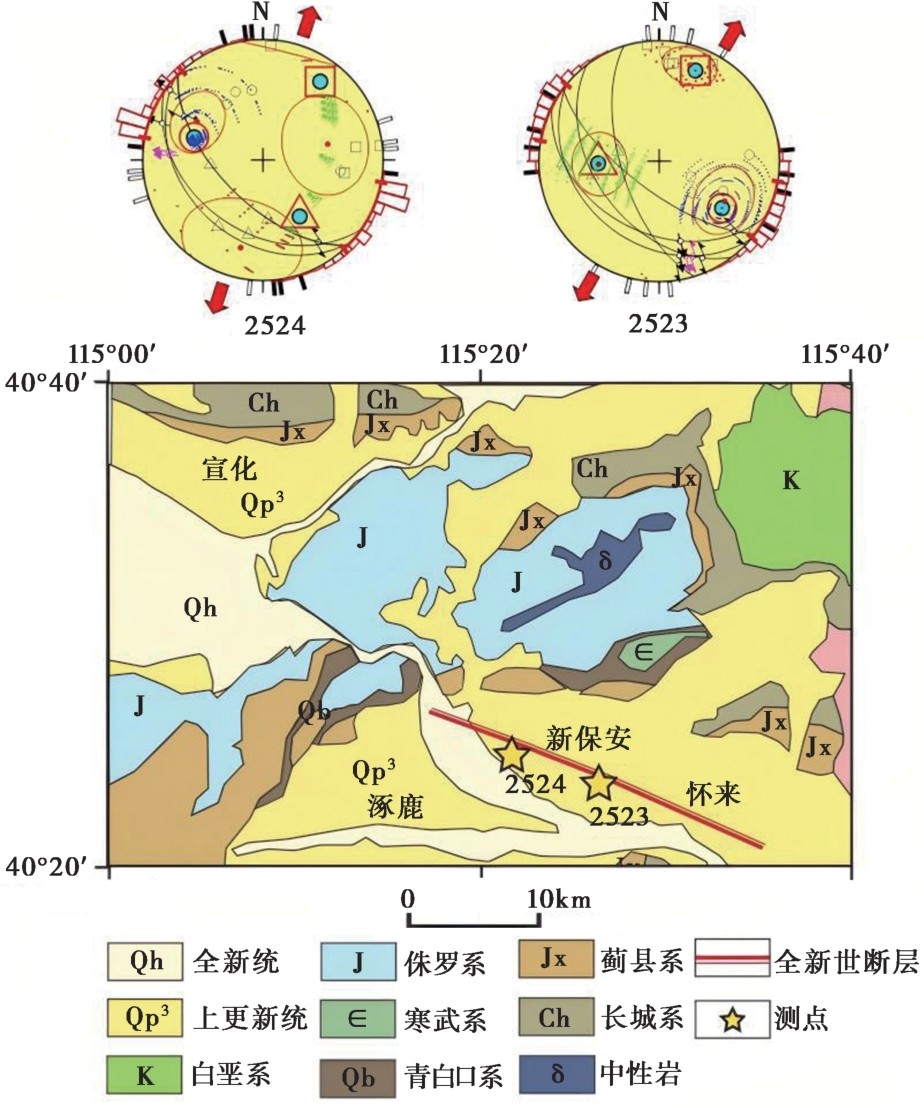
图7 新保安-沙城断裂晚更新世应力反演结果
Fig. 7 Results of the Late Pleistocene stress inversion of the Xinbaoan-Shacheng Fault.
| 点号 | 擦痕 组数 | 应力轴方位 | R | 应力结构 | |||||
|---|---|---|---|---|---|---|---|---|---|
| σ1 | σ2 | σ3 | |||||||
| 倾伏向/(°) | 倾伏角/(°) | 倾伏向/(°) | 倾伏角/(°) | 倾伏向/(°) | 倾伏角/(°) | ||||
| 2523 | 5 | 127 | 35 | 268 | 48 | 22 | 20 | 0.44 | 单向伸展 |
| 2524 | 4 | 288 | 39 | 147 | 43 | 36 | 21 | 0.02 | 径向伸展 |
表5 新保安-沙城断裂晚更新世应力反演结果
Table5 Results of the Late Pleistocene stress inversion of the Xinbaoan-Shacheng Fault
| 点号 | 擦痕 组数 | 应力轴方位 | R | 应力结构 | |||||
|---|---|---|---|---|---|---|---|---|---|
| σ1 | σ2 | σ3 | |||||||
| 倾伏向/(°) | 倾伏角/(°) | 倾伏向/(°) | 倾伏角/(°) | 倾伏向/(°) | 倾伏角/(°) | ||||
| 2523 | 5 | 127 | 35 | 268 | 48 | 22 | 20 | 0.44 | 单向伸展 |
| 2524 | 4 | 288 | 39 | 147 | 43 | 36 | 21 | 0.02 | 径向伸展 |
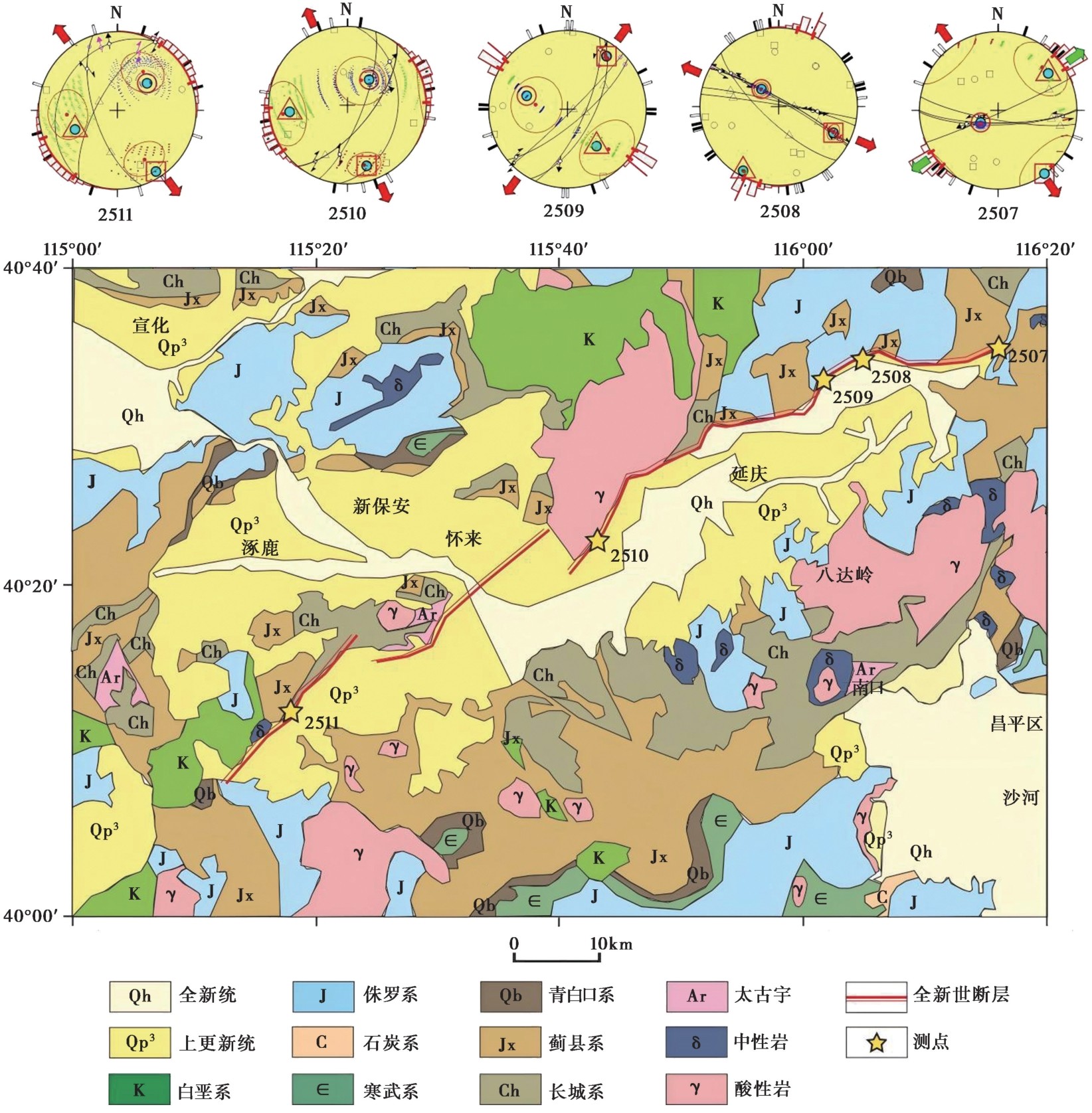
图8 延矾盆地北缘断裂全新世应力反演结果
Fig. 8 Results of the Holocene stress inversion of the northern margin fault of the Yanfan Basin.
| 点号 | 擦痕 组数 | 应力轴方位 | R | 应力结构 | |||||
|---|---|---|---|---|---|---|---|---|---|
| σ1 | σ2 | σ3 | |||||||
| 倾伏向/(°) | 倾伏角/(°) | 倾伏向/(°) | 倾伏角/(°) | 倾伏向/(°) | 倾伏角/(°) | ||||
| 2507 | 4 | 235 | 68 | 54 | 22 | 144 | 1 | 0.01 | 径向伸展 |
| 2508 | 6 | 315 | 65 | 209 | 8 | 116 | 24 | 0.58 | 单向伸展 |
| 2509 | 4 | 288 | 45 | 142 | 40 | 36 | 18 | 0.94 | 走滑伸展 |
| 2510 | 4 | 40 | 55 | 263 | 27 | 163 | 20 | 0.61 | 单向伸展 |
| 2511 | 3 | 47 | 48 | 246 | 41 | 148 | 9 | 0.50 | 单向伸展 |
表6 延矾盆地北缘断裂全新世应力反演结果
Table6 Results of the Holocene stress inversion of the northern margin fault of the Yanfan Basin
| 点号 | 擦痕 组数 | 应力轴方位 | R | 应力结构 | |||||
|---|---|---|---|---|---|---|---|---|---|
| σ1 | σ2 | σ3 | |||||||
| 倾伏向/(°) | 倾伏角/(°) | 倾伏向/(°) | 倾伏角/(°) | 倾伏向/(°) | 倾伏角/(°) | ||||
| 2507 | 4 | 235 | 68 | 54 | 22 | 144 | 1 | 0.01 | 径向伸展 |
| 2508 | 6 | 315 | 65 | 209 | 8 | 116 | 24 | 0.58 | 单向伸展 |
| 2509 | 4 | 288 | 45 | 142 | 40 | 36 | 18 | 0.94 | 走滑伸展 |
| 2510 | 4 | 40 | 55 | 263 | 27 | 163 | 20 | 0.61 | 单向伸展 |
| 2511 | 3 | 47 | 48 | 246 | 41 | 148 | 9 | 0.50 | 单向伸展 |
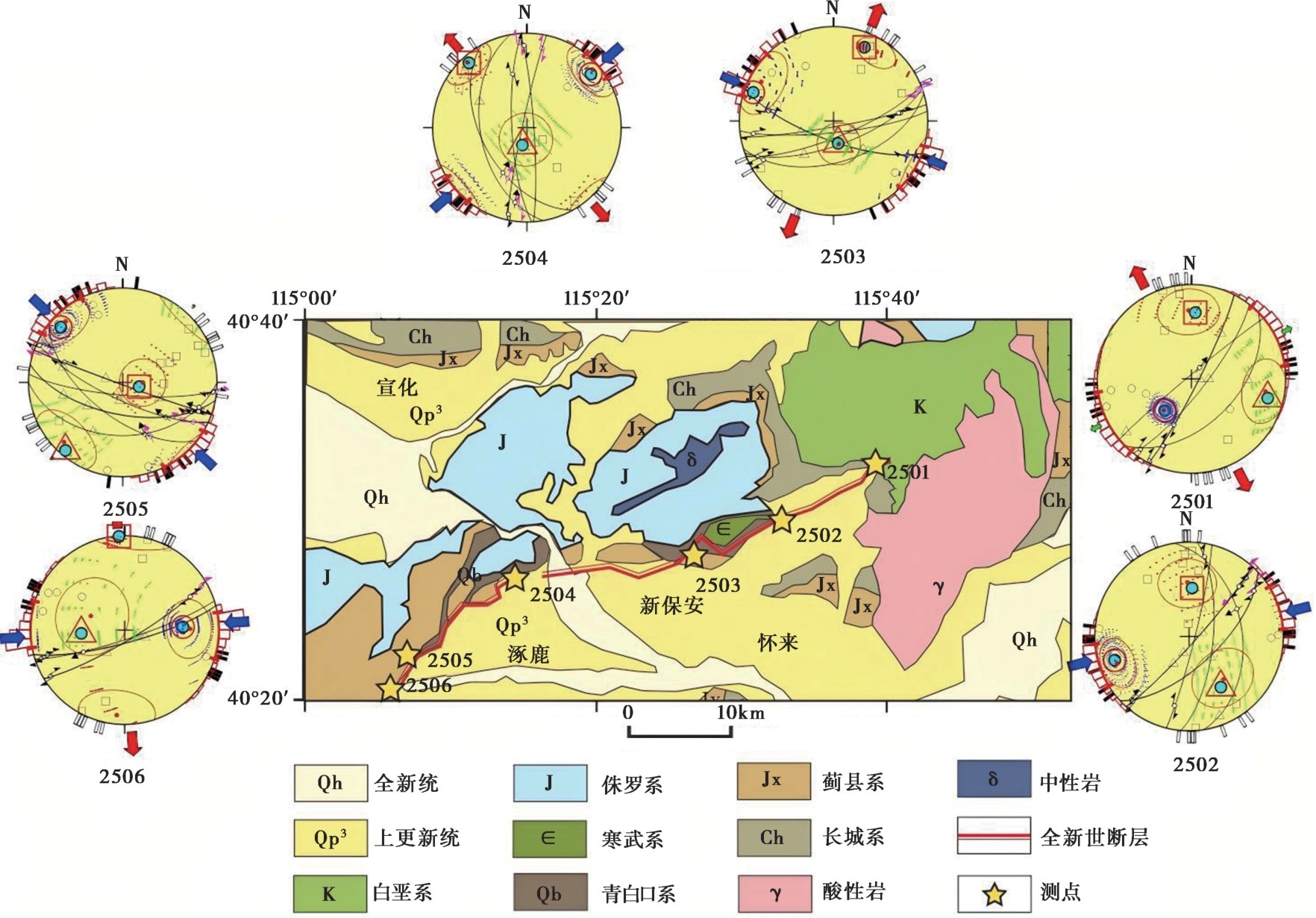
图9 怀涿盆地北缘断裂全新世应力反演结果
Fig. 9 Results of the Holocene stress inversion of the northern margin fault of the Huaizhuo Basin.
| 点号 | 擦痕 组数 | 应力轴方位 | R | 应力结构 | |||||
|---|---|---|---|---|---|---|---|---|---|
| σ1 | σ2 | σ3 | |||||||
| 倾伏向/(°) | 倾伏角/(°) | 倾伏向/(°) | 倾伏角/(°) | 倾伏向/(°) | 倾伏角/(°) | ||||
| 2501 | 5 | 220 | 54 | 104 | 18 | 3 | 30 | 0.28 | 径向伸展 |
| 2502 | 8 | 252 | 18 | 148 | 37 | 4 | 47 | 0.34 | 单向挤压 |
| 2503 | 7 | 290 | 11 | 168 | 70 | 23 | 17 | 0.66 | 走滑 |
| 2504 | 5 | 50 | 13 | 195 | 75 | 318 | 9 | 0.40 | 走滑 |
| 2505 | 8 | 312 | 13 | 220 | 6 | 105 | 75 | 0.35 | 走滑挤压 |
| 2506 | 5 | 87 | 38 | 266 | 52 | 356 | 1 | 0.49 | 走滑 |
表7 怀涿盆地北缘断裂全新世应力反演结果
Table7 Results of the Holocene stress inversion of the northern margin fault of the Huaizhuo Basin
| 点号 | 擦痕 组数 | 应力轴方位 | R | 应力结构 | |||||
|---|---|---|---|---|---|---|---|---|---|
| σ1 | σ2 | σ3 | |||||||
| 倾伏向/(°) | 倾伏角/(°) | 倾伏向/(°) | 倾伏角/(°) | 倾伏向/(°) | 倾伏角/(°) | ||||
| 2501 | 5 | 220 | 54 | 104 | 18 | 3 | 30 | 0.28 | 径向伸展 |
| 2502 | 8 | 252 | 18 | 148 | 37 | 4 | 47 | 0.34 | 单向挤压 |
| 2503 | 7 | 290 | 11 | 168 | 70 | 23 | 17 | 0.66 | 走滑 |
| 2504 | 5 | 50 | 13 | 195 | 75 | 318 | 9 | 0.40 | 走滑 |
| 2505 | 8 | 312 | 13 | 220 | 6 | 105 | 75 | 0.35 | 走滑挤压 |
| 2506 | 5 | 87 | 38 | 266 | 52 | 356 | 1 | 0.49 | 走滑 |
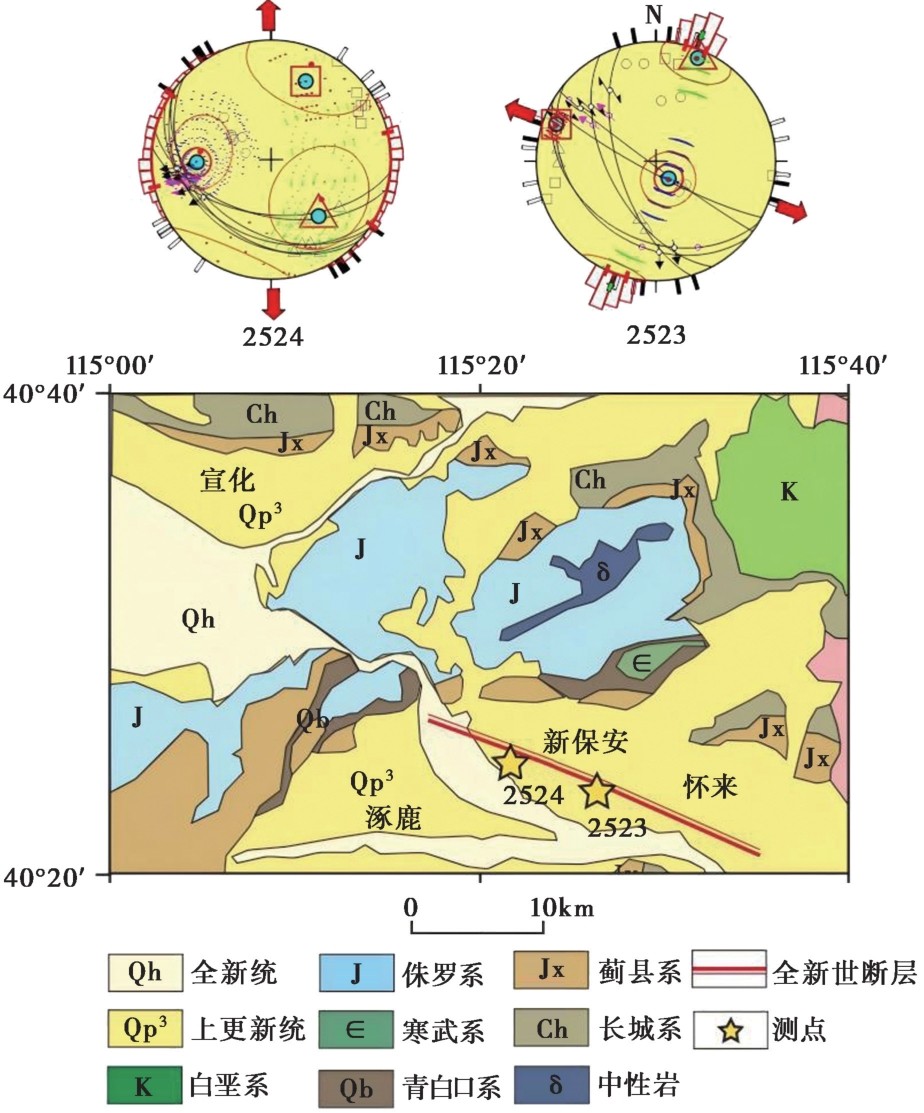
图10 新保安-沙城断裂全新世应力反演结果
Fig. 10 Results of the Holocene stress inversion of the Xinbaoan-Shacheng Fault.
| 点号 | 擦痕 组数 | 应力轴方位 | R | 应力结构 | |||||
|---|---|---|---|---|---|---|---|---|---|
| σ1 | σ2 | σ3 | |||||||
| 倾伏向/(°) | 倾伏角/(°) | 倾伏向/(°) | 倾伏角/(°) | 倾伏向/(°) | 倾伏角/(°) | ||||
| 2523 | 6 | 144 | 75 | 22 | 8 | 290 | 12 | 0.82 | 走滑伸展 |
| 2524 | 6 | 268 | 38 | 140 | 38 | 24 | 29 | 0.03 | 径向伸展 |
表8 新保安-沙城断裂全新世应力反演结果
Table8 Results of the Holocene stress inversion of the Xinbaoan-Shacheng Fault
| 点号 | 擦痕 组数 | 应力轴方位 | R | 应力结构 | |||||
|---|---|---|---|---|---|---|---|---|---|
| σ1 | σ2 | σ3 | |||||||
| 倾伏向/(°) | 倾伏角/(°) | 倾伏向/(°) | 倾伏角/(°) | 倾伏向/(°) | 倾伏角/(°) | ||||
| 2523 | 6 | 144 | 75 | 22 | 8 | 290 | 12 | 0.82 | 走滑伸展 |
| 2524 | 6 | 268 | 38 | 140 | 38 | 24 | 29 | 0.03 | 径向伸展 |
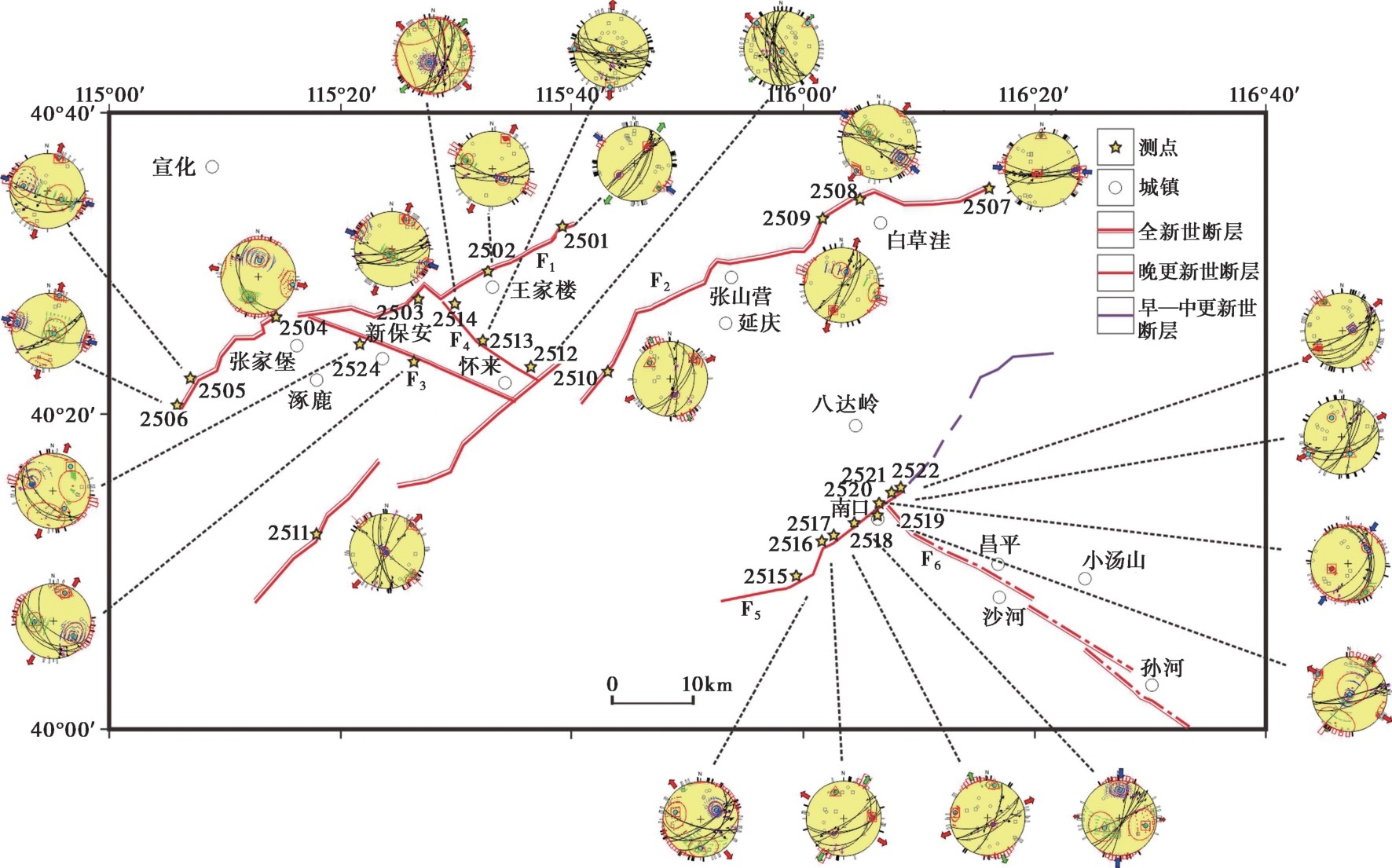
图11 京西北主要活动断裂晚更新世应力场分布 F1怀涿盆地北缘断裂; F2延矾盆地北缘断裂; F3新保安-沙城断裂; F4黄土窑-土木断裂; F5南口山前断裂; F6南口-孙河断裂
Fig. 11 Distribution of the Late Pleistocene stress field of major active faults in northwestern Beijing.
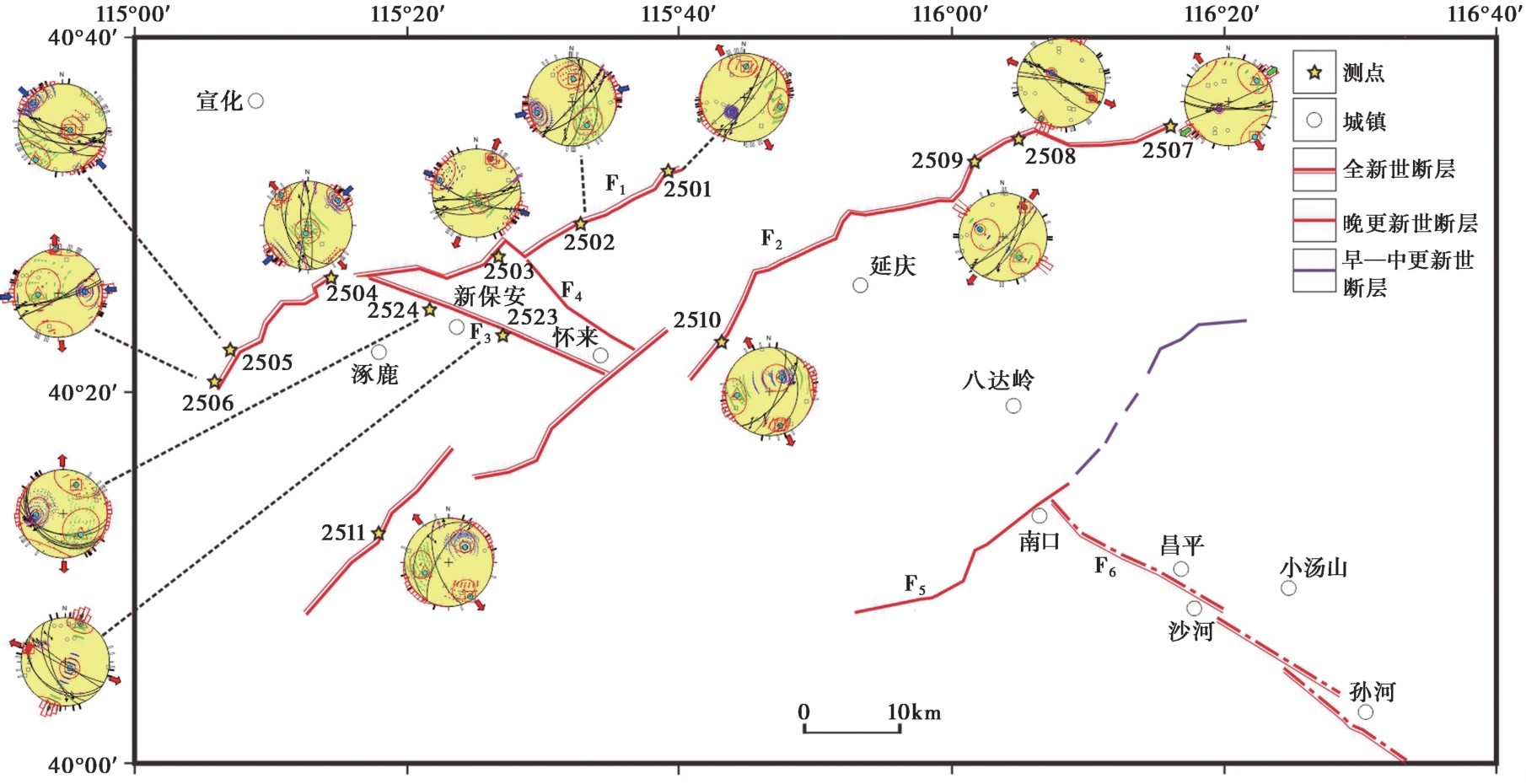
图12 京西北主要活动断裂全新世应力场分布 F1怀涿盆地北缘断裂; F2延矾盆地北缘断裂; F3新保安-沙城断裂; F4黄土窑-土木断裂; F5南口山前断裂; F6南口-孙河断裂
Fig. 12 Distribution of the Holocene stress field of major active faults in northwestern Beijing.
| [1] |
毕金孟, 宋程, 马永. 2025. 张家口-渤海构造带地震活动特征的分段研究[J]. 地震工程学报, 47(5): 1232-1242.
|
|
|
|
| [2] |
陈长云. 2016. 张家口-渤海断裂带分段运动变形特征分析[J]. 地震, 36(1): 1-11.
|
|
|
|
| [3] |
陈鹏, 施炜. 2015. 古构造应力场反演的理论与实践: 基于断层滑动矢量分析[J]. 地质论评, 61(3): 536-546.
|
|
|
|
| [4] |
丰成君, 张鹏, 孙炜锋, 等. 2014. 北京昌平十三陵钻孔地应力测量与实时监测在断层活动危险性分析中的应用探讨[J]. 地球学报, 35(3): 345-354.
|
|
|
|
| [5] |
高战武, 徐杰, 赵铁虎, 等. 2016. 渤海海域主要新构造活动断裂带[J]. 中国地震, 32(4): 595-606.
|
|
|
|
| [6] |
何书, 赵奎, 朱忠, 等. 2012. 基于断层擦痕侧伏角公式的构造应力张量反演[J]. 岩土力学, 33(11): 3414-3418.
|
|
|
|
| [7] |
李红, 邢成起, 朱红彬, 等. 2022. 张家口-渤海地震带断层地震危险性分析[J]. 地震地磁观测与研究, 43(S1): 283-285.
|
|
|
|
| [8] |
李涛, 王宗秀. 2009. 华北上地壳构造单元划分[J]. 地学前缘, 16(4): 215-224.
|
|
|
|
| [9] |
秦向辉, 张鹏, 丰成君, 等. 2014. 北京地区地应力测量与主要断裂稳定性分析[J]. 地球物理学报, 57(7): 2165-2180.
DOI |
|
|
|
| [10] |
冉勇康. 1997. 我国几个典型地点的古地震细研究和大地震重复行为探讨[D]. 北京: 中国地震局地质研究所.
|
|
|
|
| [11] |
王若柏, 顾国华, 徐杰, 等. 2004. 张家口渤海地震构造带的地壳形变研究[J]. 地震地质, 26(4): 586-596.
|
|
|
|
| [12] |
武敏捷, 林向东, 徐平. 2011. 华北北部地区震源机制解及构造应力场特征分析[J]. 大地测量与地球动力学, 31(5): 39-43.
|
|
|
|
| [13] |
谢富仁, 张红艳, 崔效锋, 等. 2007. 延怀盆地活动断裂运动与现代构造应力场[J]. 地震地质, 29(4): 693-705.
DOI |
|
DOI |
|
| [14] |
邢晓琴, 杨肖肖, 丰成君, 等. 2022. 延怀盆地黄土窑-土木断裂土木镇隐伏段活动特征及物探钻探证据[J]. 城市地质, 17(4): 468-476.
|
|
|
|
| [15] |
徐锡伟, 吴卫民, 张先康, 等. 2002. 首都圈地区地壳最新构造变动与地震[M]. 北京: 科学出版社.
|
|
|
|
| [16] |
徐峥, 郑永飞. 2019. 中国东部新生代玄武岩记录古太平洋俯冲带壳幔相互作用[J]. 地球科学, 44(12): 4135-4143.
|
|
|
|
| [17] |
翟明国. 2019. 华北克拉通构造演化[J]. 地质力学学报, 25(5): 722-745.
|
|
|
|
| [18] |
张红艳, 谢富仁, 崔效锋, 等. 2009. 张渤带陆地段现代构造应力场的非均匀特征[J]. 中国地震, 25(3): 314-324.
|
|
|
|
| [19] |
张仲培, 王清晨. 2004. 断层滑动分析与古应力恢复研究综述[J]. 地球科学进展, 19(4): 605-613.
DOI |
|
DOI |
|
| [20] |
赵帅, 李占飞, 贾启超, 等. 2023. 基于古地震探槽的南口-孙河断裂最新走滑变形证据研究[J]. 震灾防御技术, 18(4): 736-744.
|
|
|
|
| [21] |
DOI |
| [22] |
DOI URL |
| [23] |
DOI URL |
| [24] |
DOI URL |
| [25] |
DOI URL |
| [26] |
DOI |
| [27] |
DOI URL |
| [28] |
DOI URL |
| [29] |
DOI URL |
| [30] |
|
| [31] |
DOI URL |
| [32] |
DOI URL |
| [33] |
DOI URL |
| [34] |
|
| [35] |
DOI URL |
| [36] |
DOI URL |
| [37] |
DOI URL |
| [38] |
DOI |
| [39] |
DOI URL |
| [40] |
DOI URL |
| [41] |
|
| [1] | 李帅, 房立华, 杨婷, 万永革, 张龙, 张苏祥, 王世广, 范莉苹. 京西北地区地壳应力场空间分布特征及其构造含义[J]. 地震地质, 2026, 48(5): 1319-1338. |
| [2] | 王瑛奎, 吴熙彦, 任俊杰. 基于大语言模型的文献驱动构建活动断层知识库的方法--以京西北为例[J]. 地震地质, 2026, 48(5): 1552-1569. |
| [3] | 包任锴, 周庆, 吴果. 东北地震区的边界修订[J]. 地震地质, 2026, 48(4): 1158-1175. |
| [4] | 李岩, 陈俊磊, 吕思宇, 王宇栋, 傅磊. 景谷地震序列触发关系及应力场反演[J]. 地震地质, 2026, 48(2): 561-581. |
| [5] | 李晨, 邢会林, 姚琪, 钟祯祥. 华北地区活动地块运动变形的动力学模拟[J]. 地震地质, 2026, 48(1): 233-256. |
| [6] | 王霞, 宋美卿, 吴昊昱, 梁向军, 吕睿, 郭文峰, 张娜, 李金. 山西裂谷构造应力场特征及其动力学意义[J]. 地震地质, 2026, 48(1): 257-277. |
| [7] | 唐茂云, 李翠平, 黄世源, 董蕾, 高见, 李勇. 泸县—荣昌地区地震活动时空演化与构造应力场特征[J]. 地震地质, 2025, 47(4): 1183-1203. |
| [8] | 董春丽, 郭文峰, 刘瑞春, 丁大业. 山西中南部中小地震震源机制应力特征和地震活动相关性分析[J]. 地震地质, 2025, 47(4): 1222-1243. |
| [9] | 崔华伟, 尹昕忠, 陈九辉, 郭飚, 李涛, 姚远, 李世莹, 贾震. 帕米尔高原东北部地震活动及构造应力场特征[J]. 地震地质, 2025, 47(2): 577-596. |
| [10] | 盛书中, 王倩茹, 李振月, 李红星, 张小娟, 葛坤朋, 宫猛. 基于构造应力场研究2025年西藏定日6.8级地震的发震构造[J]. 地震地质, 2025, 47(1): 49-63. |
| [11] | 郭祥云, 房立华, 韩立波, 李振月, 李春来, 苏珊. 川滇菱形块体东边界震源机制与应力场特征[J]. 地震地质, 2024, 46(2): 371-396. |
| [12] | 万永革, 宋泽尧, 关兆萱, 黄睿琪, 顾培苑, 王润妍. 基于区域构造应力场探讨2014年鲁甸地震余震活动发生在共轭断裂上的原因[J]. 地震地质, 2024, 46(1): 184-200. |
| [13] | 万永革, 王昱茹, 靳志同. 2021年云南漾濞6.4级地震震源区地壳应力不均匀性研究[J]. 地震地质, 2023, 45(4): 1025-1040. |
| [14] | 王喜龙, 罗银花, 金秀英, 杨梦尧, 孔祥瑞. 辽南地区断裂带的断层土壤气地球化学特征及其对区域应力调整的指示[J]. 地震地质, 2023, 45(3): 710-734. |
| [15] | 樊文杰. 2021年5月21日漾濞MS6.4地震及周边的构造应力场特征和动力学意义[J]. 地震地质, 2023, 45(1): 208-230. |
| 阅读次数 | ||||||
|
全文 |
|
|||||
|
摘要 |
|
|||||