地震地质 ›› 2026, Vol. 48 ›› Issue (5): 1362-1379.DOI: 10.3969/j.issn.0253-4967.20260007
石富强1),2),3)( ), 张博4), 张辉5), 袁杰6)
收稿日期:2026-01-16
修回日期:2026-05-13
出版日期:2026-11-11
发布日期:2026-11-11
作者简介:石富强, 男, 1984年生, 高级工程师, 主要从事地壳动力学数值模拟和地震活动方面的研究工作, E-mail: shifuqiang121@163.com。
基金资助:
SHI Fu-qiang1),2),3)(), ZHANG Bo4), ZHANG Hui5), YUAN Jie6)
Received:2026-01-16
Revised:2026-05-13
Online:2026-11-11
Published:2026-11-11
摘要:
在秦岭-大别E向运动和阿穆尔地块W向运动作用下, 华北平原内部发育了一系列以NE走向为主的走滑型和拉张型断裂系统, 应变弥散分配于断层系统中, 表现出变形弱、强震活跃的特点。受限于华北地区沉积层巨厚, 一些强震危险性高的破裂空段或已被确定为6级以上强震潜在震源的区域, 但对其潜在发震构造的认识还不够深入。为了进一步探索华北地区现今地震活动空间分布的可能影响因素, 研究华北地区潜在震源区地震危险性, 文中基于华北地区小地震震源机制解反演区域应力场, 利用应力场反演结果的综合节面解的2个节面的参数作为潜在发震断层参数; 并采用1303-1976年华北地区42次6.5级以上地震的震源模型计算了由历史强震引起的华北地区潜在地震破裂面的应力变化; 最后基于华北地区现今的地震活动, 利用Molchan图表法对基于库仑应力的地震地点预测效能进行检验。结果显示: 华北地区现今地震活动的空间分布受控于历史强震的库仑应力加载作用, 且检验结果置信度高; 超过75%的ML4.0以上地震和80%的ML5.0以上地震发生在历史强震引起的库仑应力增强区。结合华北地区强震破裂空段的研究结果可知, 目前仍有多个空段的库仑应力加载显著, 地震危险性值得高度关注, 这些应力增强段主要集中在山西断陷带、张渤地震带西段、郯庐断裂带和华北平原内部部分区域。文中研究可为深入理解华北地区地震活动模式和应变弥散构造区强震危险性分析提供可借鉴的参考。
石富强, 张博, 张辉, 袁杰. 华北地区库仑应力变化及其对弥散型应变区潜在强震地点的指示[J]. 地震地质, 2026, 48(5): 1362-1379.
SHI Fu-qiang, ZHANG Bo, ZHANG Hui, YUAN Jie. COULOMB STRESS CHANGES IN THE NORTH CHINA: IMPLICATIONS FOR IDENTIFYING FUTURE STRONG EARTHQUAKE LOCATIONS IN DIFFUSE STRAIN ZONES[J]. SEISMOLOGY AND GEOLOGY, 2026, 48(5): 1362-1379.
| 序号 | 岩石圈分层 | 厚度 /km | P波速度 /km·s-1 | S波速度 /km·s-1 | 密度 /kg·m-3 | ηk /Pa·s | ηm/Pa·s |
|---|---|---|---|---|---|---|---|
| 1 | 沉积层 | 4.2 | 4.82 | 2.78 | 2600 | 弹性 | |
| 2 | 上地壳 | 11.1 | 5.91 | 3.42 | 2700 | ||
| 3 | 中地壳 | 10.0 | 6.30 | 3.64 | 2800 | ||
| 4 | 下地壳 | 15.0 | 6.75 | 3.90 | 3000 | 7.10×10¹⁸ | 3.00×10²⁰ |
| 5 | 上地幔 | 8.00 | 4.38 | 3300 | 2.10×10¹⁹ | 2.00×10²¹ | |
表1 华北地区岩石圈介质模型参数
Table1 Lithospheric medium model parameters of North China
| 序号 | 岩石圈分层 | 厚度 /km | P波速度 /km·s-1 | S波速度 /km·s-1 | 密度 /kg·m-3 | ηk /Pa·s | ηm/Pa·s |
|---|---|---|---|---|---|---|---|
| 1 | 沉积层 | 4.2 | 4.82 | 2.78 | 2600 | 弹性 | |
| 2 | 上地壳 | 11.1 | 5.91 | 3.42 | 2700 | ||
| 3 | 中地壳 | 10.0 | 6.30 | 3.64 | 2800 | ||
| 4 | 下地壳 | 15.0 | 6.75 | 3.90 | 3000 | 7.10×10¹⁸ | 3.00×10²⁰ |
| 5 | 上地幔 | 8.00 | 4.38 | 3300 | 2.10×10¹⁹ | 2.00×10²¹ | |
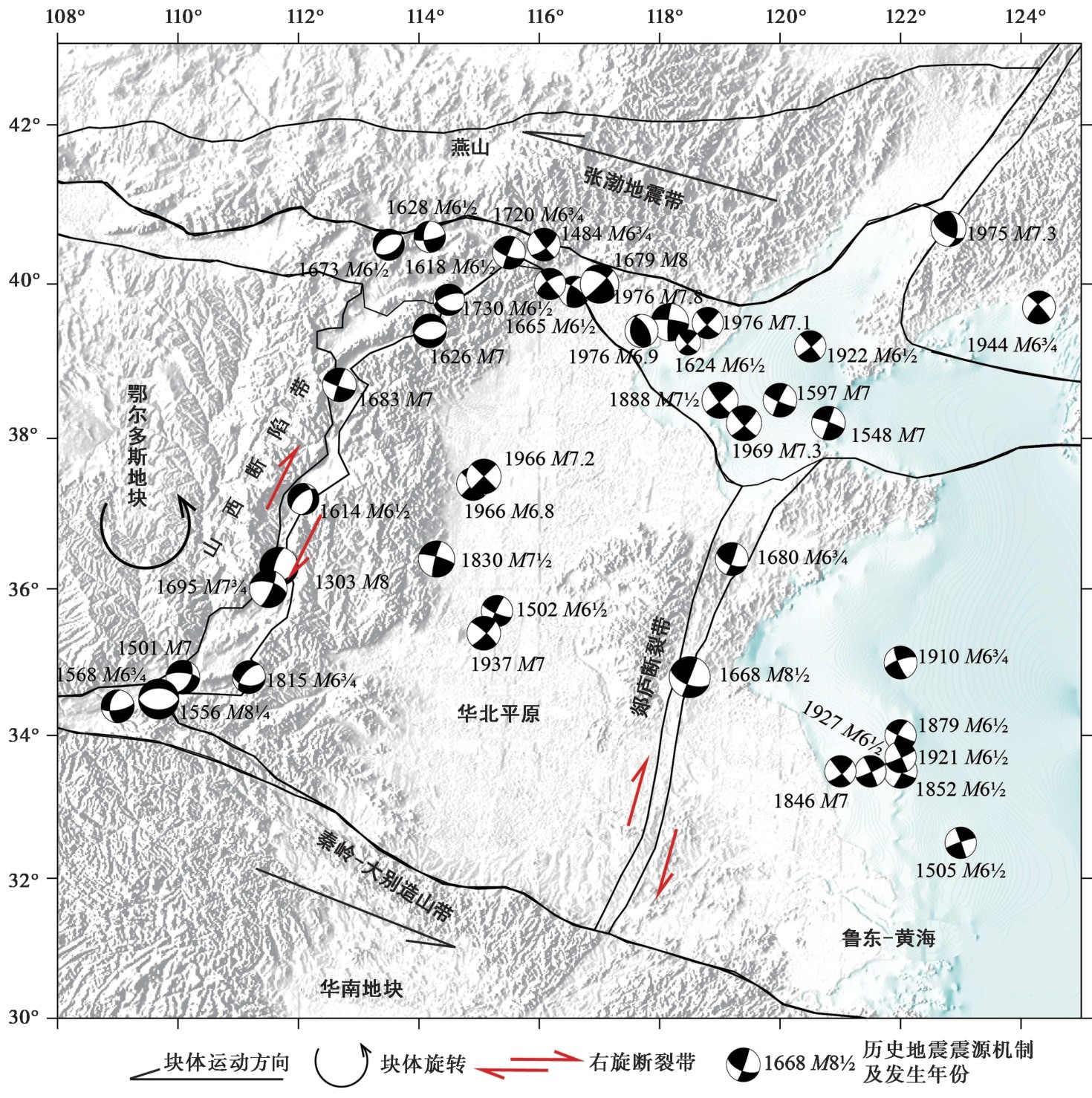
图1 华北地区的构造环境及历史强震活动
Fig. 1 Tectonic setting and historical strong earthquakes in North China.
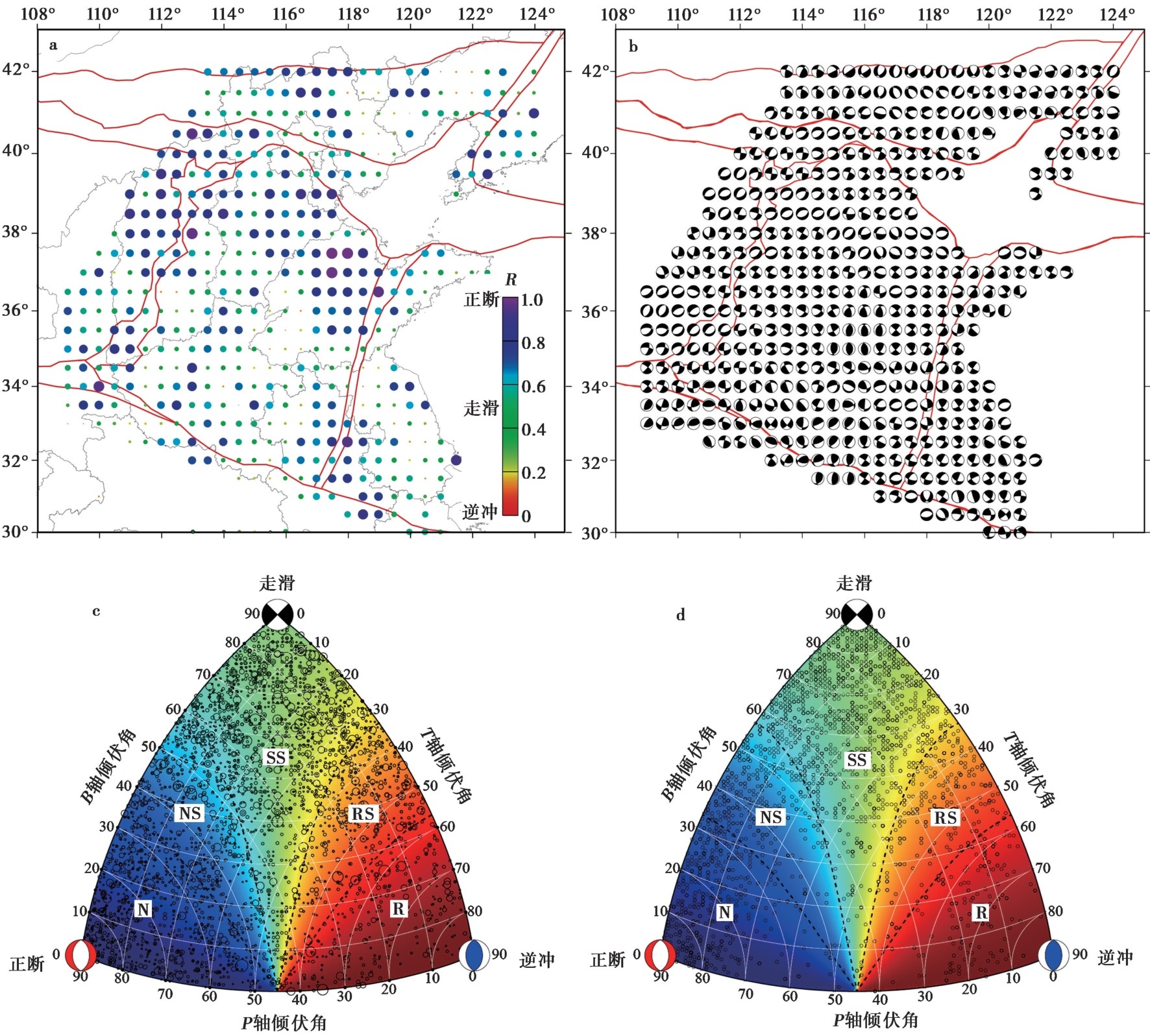
图2 华北地区应力场 图a、b分别为反演给出的0.1°×0.1° 应力场形状因子和网格节面解, 本图抽稀为0.5°; 图c、d分别为反演之前的小地震震源机制和反演后节面解的三元图
Fig. 2 Stress field in North China.
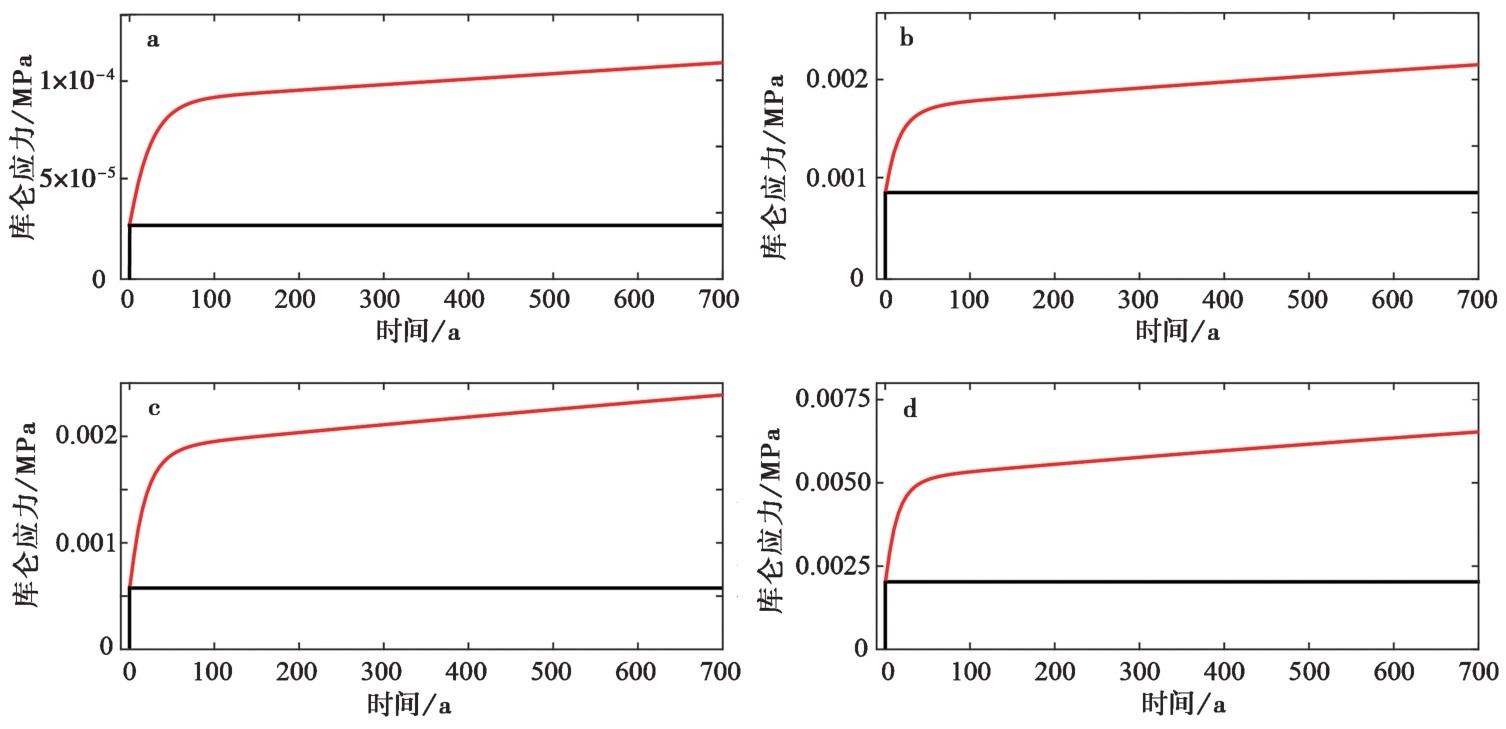
图3 模拟震后与同震库仑应力变化的时间演化 a接收断层走滑, 震中距600km; b接收断层正断, 震中距240km; c接收断层走滑, 震中距320km; d接收断层走滑, 震中距230km
Fig. 3 Temporal evolution of simulated postseismic and coseismic Coulomb stress changes in different cases.
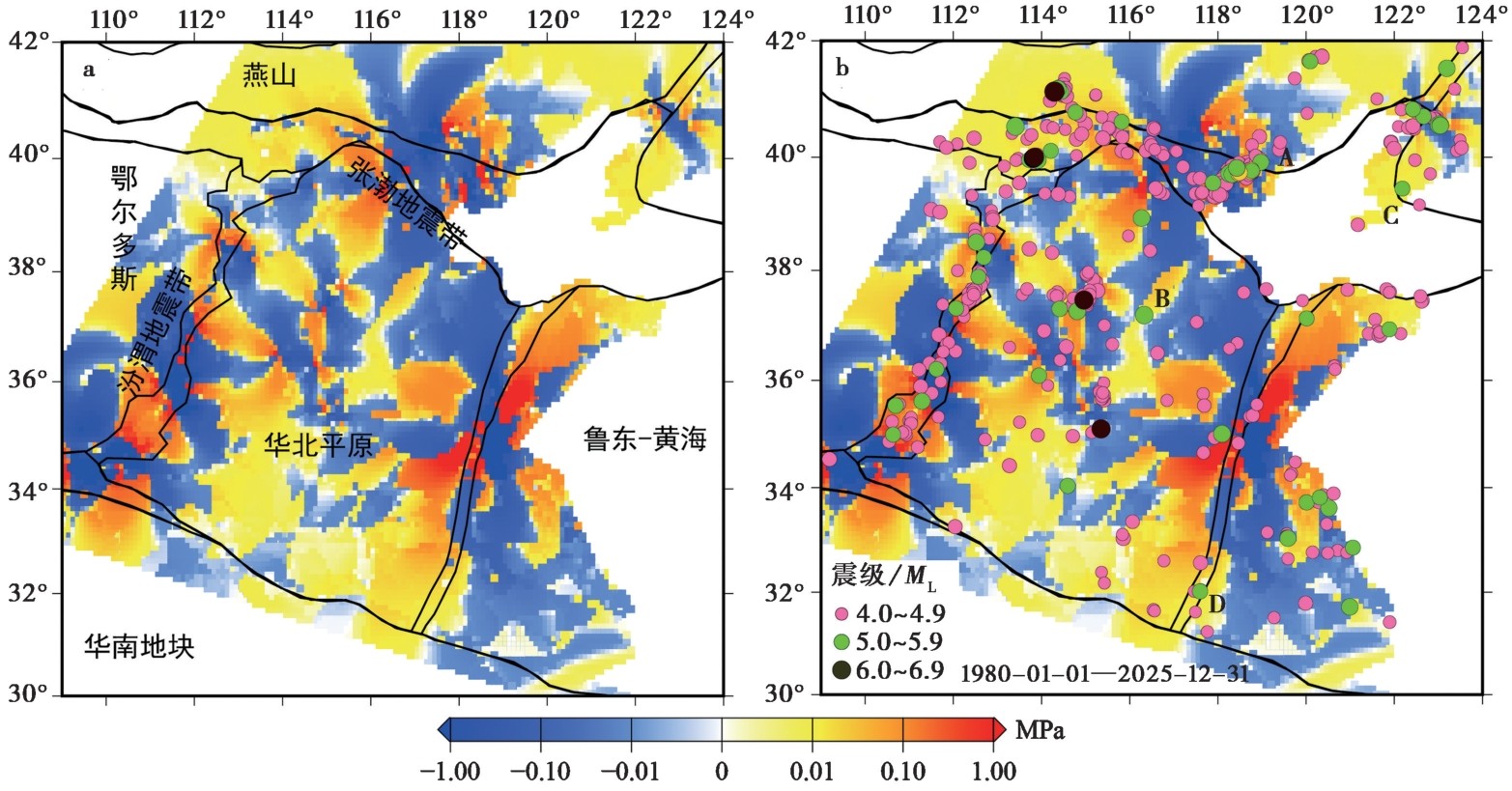
图4 模拟给出的华北地区同震和震后累积库仑应力变化(a)及其与现今中强地震活动空间对比(b) 地震目录来自中国地震台网中心, A、B、C、D分别代表2020年古冶5.1级、2023年平原5.5级、2023年普兰店4.6级和2024年肥东4.7级地震。虚线圆所示地震为处于应力加载区地震
Fig. 4 The cumulated coseismic and postseismic Coulomb stress changes in North China that calculated in this study(a) and its spatial correlation with seismicity of ML≥4.0 earthquakes.
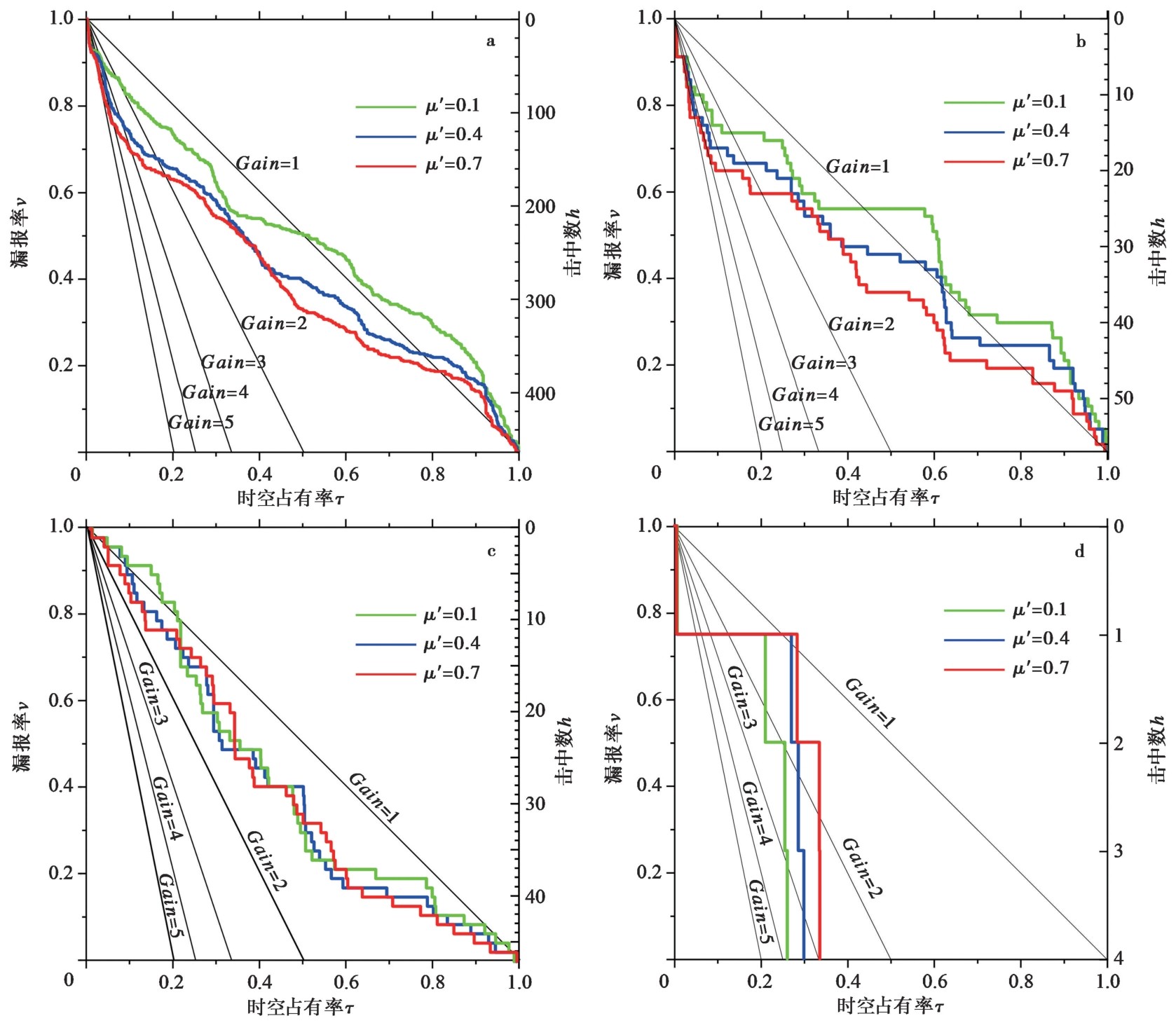
图5 库仑应力对华北地区地震预测能力的Molchan检验 a、b模拟结果对华北1980-2019年ML4.0以上地震和ML5.0以上地震的预测检验; c、d模拟结果对华北2020-2025年ML4.0以上地震和ML5.0以上地震预测检验
Fig. 5 Molchan test of the predictive capability of Coulomb stress for earthquakes in North China.
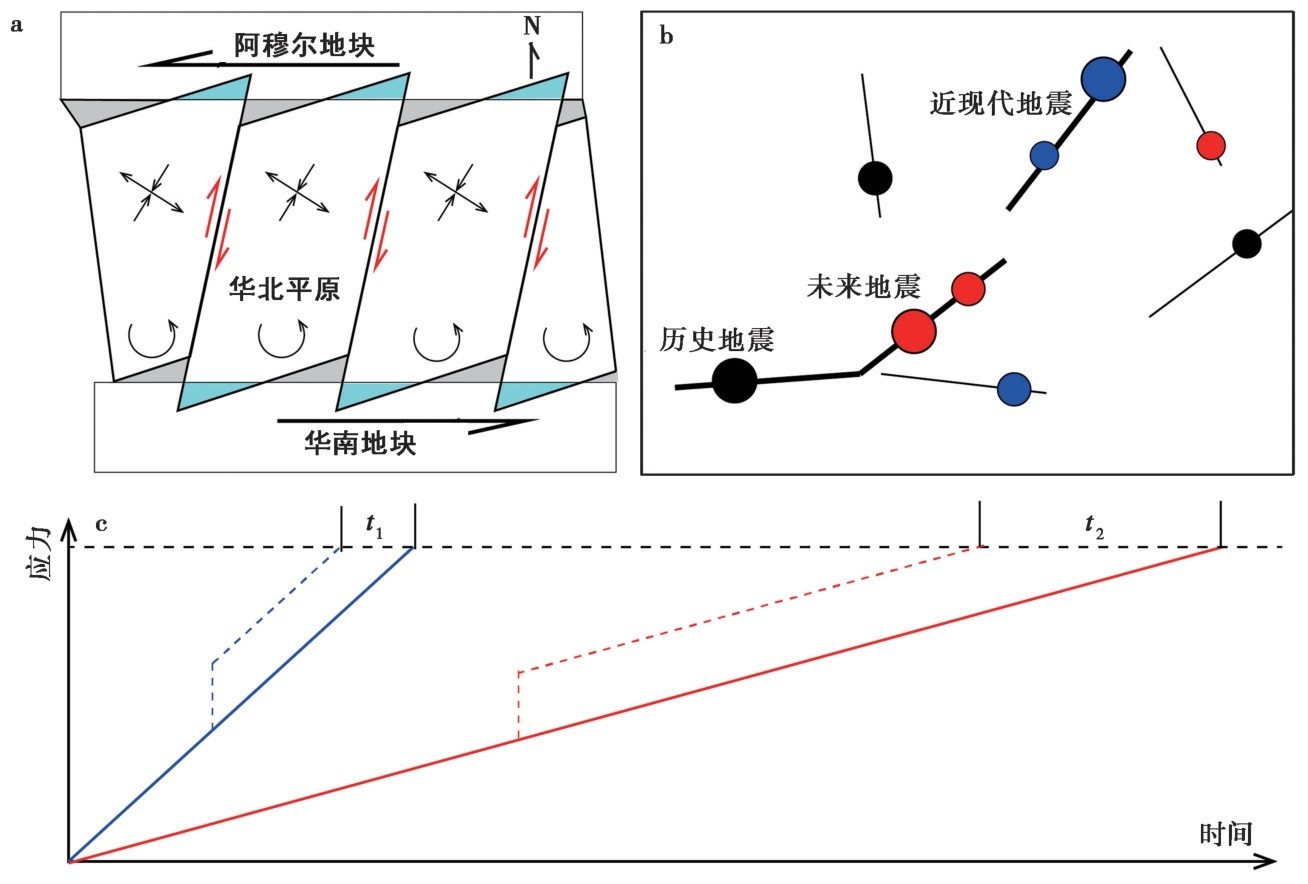
图6 华北地区孕震动力环境 a块体运动变形模式(根据Zhang等(2018)修改); b地震空间跳迁示意图(根据Liu等(2011)修改); c震间应力积累速率影响库仑应力扰动持续时间示意图
Fig. 6 Seismogenic dynamic model of the North China Plain.
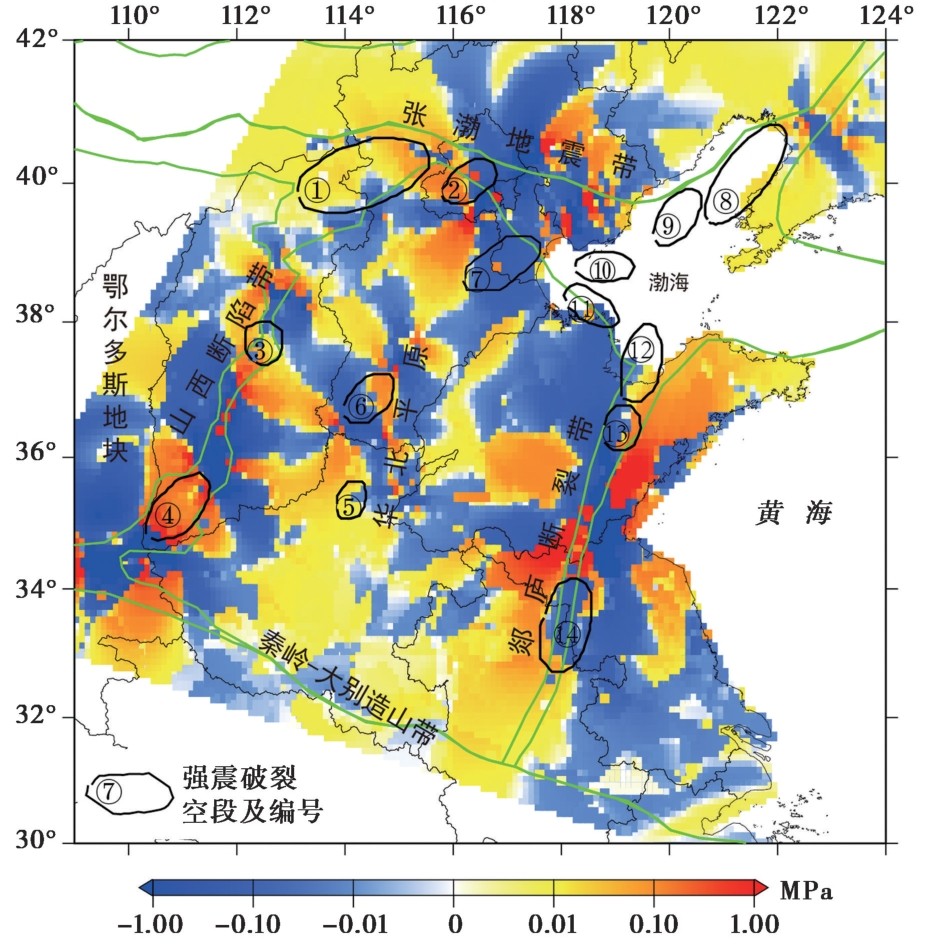
图7 华北地区最大累积库仑应力变化及其对潜在强震的指示 黑线封闭区为地震地质研究给出的潜在强震破裂空段(徐锡伟等, 2017; 郑文俊等, 2024)
Fig. 7 Maximum cumulative Coulomb stress changes in North China and their implications for potential strong earthquakes.
| [1] |
曹筠, 冉勇康, 许汉刚, 等. 2018. 郯庐断裂带江苏段安丘-莒县断裂全新世活动及其构造意义[J]. 地球物理学报, 61(7): 2828-2844.
DOI |
|
|
|
| [2] |
崔效锋, 谢富仁, 张红艳. 2006. 川滇地区现代构造应力场分区及动力学意义[J]. 地震学报, 28(5): 451-461.
|
|
|
|
| [3] |
高孟潭. 2015. 《中国地震动参数区划图(GB 18306-2015)》宣贯教材[M]. 北京: 中国质检出版社, 中国标准出版社.
|
|
|
|
| [4] |
胡幸平, 俞春泉, 陶开, 等. 2008. 利用P波初动资料求解汶川地震及其强余震震源机制解[J]. 地球物理学报, 51(6): 1711-1718.
|
|
|
|
| [5] |
蒋长胜, 张浪平, 韩立波, 等. 2011. 中长期地震危险性概率预测中的统计检验方法I: Molchan图表法[J]. 地震, 31(2): 106-113.
|
|
|
|
| [6] |
李钦祖, 靳雅敏, 于新昌. 1982. 华北地区的震源机制与地壳应力场[J]. 地震学报, 4(1): 55-61.
|
|
|
|
| [7] |
李玉江, 石富强, 张辉, 等. 2020. 川滇地区主要断裂带上的库仑应力变化及其对地震危险性的指示[J]. 地震地质, 42(2): 526-546. doi: 10.3969/j.issn.0253-4967.2020.02.017.
|
|
DOI |
|
| [8] |
林向东, 袁怀玉, 徐平, 等. 2017. 华北地区地震震源机制分区特征[J]. 地球物理学报, 60(12): 4589-4622.
DOI |
|
|
|
| [9] |
刘备, 朱光, 翟明见, 等. 2015. 郯庐断裂带安徽段活断层特征与成因[J]. 地质科学, 50(2): 611-630.
|
|
|
|
| [10] |
刘广英, 梁宽, 李志鹏, 等. 2024. 华北平原中南部聊城-兰考断裂的第四纪晚期活动性探测: 兼论1937年菏泽7.0级地震发震机制[J]. 地质力学学报, 30(2): 242-259.
|
|
|
|
| [11] |
刘西林. 1996. 菏泽5.9级地震的发震构造及其前兆构造活动[J]. 地震学刊, (2): 1-6.
|
|
|
|
| [12] |
马冀, 冯希杰, 李高阳, 等. 2016. 1556年华县地震地表破裂带同震垂直位移[J]. 地震地质, 38(1): 22-30. doi: 10.3969/j.issn.0253-4967.2016.01.002.
|
|
DOI |
|
| [13] |
马瑾, 郭彦双. 2014. 失稳前断层加速协同化的实验室证据和地震实例[J]. 地震地质, 36(3): 547-561. doi: 10.3969/j.issn.0253-4967.2014.03.001.
|
|
|
|
| [14] |
邵志刚, 傅容珊, 薛霆虓, 等. 2007. 以Burgers体模型模拟震后黏弹性松弛效应[J]. 大地测量与地球动力学, 27(5): 31-37.
|
|
|
|
| [15] |
沈正康, 万永革, 甘卫军, 等. 2004. 华北地区700年来地壳应力场演化与地震的关系研究[J]. 中国地震, 20(3): 211-228.
|
|
|
|
| [16] |
盛书中, 万永革, 黄骥超, 等. 2015. 应用综合震源机制解法推断鄂尔多斯块体周缘现今地壳应力场的初步结果[J]. 地球物理学报, 58(2): 436-452.
DOI |
|
DOI URL |
|
| [17] |
石富强, 张辉, 邵志刚, 等. 2020. 华北地区库仑应力演化与强震活动关系[J]. 地球物理学报, 63(9): 3338-3354.
DOI |
|
|
|
| [18] |
万永革. 2024. 震源机制水平应变花面应变的地震震源机制分类方法及序列震源机制总体特征分析[J]. 地球科学, 49(7): 2675-2684.
|
|
|
|
| [19] |
王继, 高战武, 刘芳晓, 等. 2020. 用浅层人工地震方法探测唐山-河间-磁县地震构造带内的活动断裂[J]. 地震地质, 42(4): 866-880. doi: 10.3969/j.issn.0253-4967.2020.04.006.
|
|
DOI |
|
| [20] |
武敏捷, 林向东, 徐平. 2011. 华北北部地区震源机制解及构造应力场特征分析[J]. 大地测量与地球动力学, 31(5): 39-43.
|
|
|
|
| [21] |
武艳强, 江在森, 杨国华, 等. 2009. 利用最小二乘配置在球面上整体解算GPS应变场的方法及应用[J]. 地球物理学报, 52(7): 1707-1714.
|
|
|
|
| [22] |
徐锡伟, 李峰, 程佳, 等. 2023. 活动断层研究进展及其科学前沿问题讨论[J]. 煤田地质与勘探, 51(12): 1-16.
|
|
|
|
| [23] |
徐锡伟, 吴熙彦, 于贵华, 等. 2017. 中国大陆高震级地震危险区判定的地震地质学标志及其应用[J]. 地震地质, 39(2): 219-275. doi: 10.3969/j.issn.0253-4967.2017.02.001.
|
|
DOI |
|
| [24] |
杨晓平, 蒋溥, 宋方敏, 等. 1999. 龙门山断裂带南段错断晚更新世以来地层的证据[J]. 地震地质, 21(4): 341-345.
|
|
|
|
| [25] |
张诚. 1990. 中国地震震源机制[M]. 北京: 学术书刊出版社.
|
|
|
|
| [26] |
张群伟, 朱守彪. 2019. 华北地区主要断裂带上的库仑应力变化及地震活动性分析[J]. 地震地质, 41(3): 649-669. doi: 10.3969/j.issn.0253-4967.2019.03.008.
|
|
DOI |
|
| [27] |
郑建常, 王鹏, 李冬梅, 等. 2013. 使用小震震源机制解研究山东地区背景应力场[J]. 地震学报, 35(6): 773-784.
|
|
|
|
| [28] |
郑建常, 徐长朋, 李冬梅, 等. 2018. 利用台站综合节面解研究华北地区应力场的变化[J]. 国际地震动态, (4): 48-57.
|
|
|
|
| [29] |
郑文俊, 彭慧, 刘兴旺, 等. 2024. 鄂尔多斯活动地块边界带15 000年以来强震活动与现今大地震空区[J]. 科学通报, 69(18): 2632-2647.
|
|
|
|
| [30] |
钟继茂, 程万正. 2006. 由多个地震震源机制解求川滇地区平均应力场方向[J]. 地震学报, 28(4): 337-346.
|
|
|
|
| [31] |
|
| [32] |
|
| [33] |
DOI |
| [34] |
DOI URL |
| [35] |
DOI URL |
| [36] |
DOI URL |
| [37] |
|
| [38] |
DOI |
| [39] |
DOI PMID |
| [40] |
|
| [41] |
DOI URL |
| [42] |
DOI URL |
| [43] |
|
| [44] |
DOI URL |
| [45] |
DOI URL |
| [46] |
DOI URL |
| [47] |
DOI URL |
| [48] |
|
| [49] |
DOI URL |
| [50] |
DOI URL |
| [51] |
DOI URL |
| [52] |
DOI URL |
| [53] |
|
| [54] |
DOI URL |
| [55] |
|
| [56] |
DOI URL |
| [57] |
DOI URL |
| [58] |
DOI |
| [59] |
DOI URL |
| [60] |
DOI URL |
| [61] |
DOI URL |
| [62] |
|
| [63] |
DOI URL |
| [64] |
DOI URL |
| [65] |
DOI URL |
| [66] |
DOI URL |
| [67] |
DOI URL |
| [68] |
DOI URL |
| [69] |
DOI URL |
| [70] |
|
| [71] |
DOI URL |
| [1] | 常玉巧, 张会平, 赵旭东. 青藏高原东南缘小江断裂带晚第四纪活动性研究进展[J]. 地震地质, 2026, 48(2): 279-313. |
| [2] | 李子鸿, 卓燕群, 陈顺云, 陈浩, 卢丽莉. 断层非均匀接触对地震活动性影响的实验[J]. 地震地质, 2026, 48(2): 329-350. |
| [3] | 钱婷, 陈昊, 何奕成, 江昊琳, 杜航, 倪昊琦. 郯庐断裂带中南段高分辨率地壳速度结构与地震活动空间差异特征分析[J]. 地震地质, 2026, 48(2): 442-459. |
| [4] | 李岩, 陈俊磊, 吕思宇, 王宇栋, 傅磊. 景谷地震序列触发关系及应力场反演[J]. 地震地质, 2026, 48(2): 561-581. |
| [5] | 刘月, 吕晓健. 华北地区6次大地震的余震持续时间[J]. 地震地质, 2026, 48(1): 142-161. |
| [6] | 李晨, 邢会林, 姚琪, 钟祯祥. 华北地区活动地块运动变形的动力学模拟[J]. 地震地质, 2026, 48(1): 233-256. |
| [7] | 蒋海昆, 宋金. 2024年1月23日乌什MS7.1地震序列MS≥4.0余震活动的潮汐触发特征[J]. 地震地质, 2025, 47(6): 1526-1545. |
| [8] | 高曙德, 吴小平, 罗维斌, 杨晓鹏, 王文才, 姚赛赛, 陈双贵, 刘君. 门源 MS6.9 地震前兆现象总结及对亚失稳研究的启示[J]. 地震地质, 2025, 47(6): 1546-1565. |
| [9] | 戴梦雪, 徐荣荣, 赵斐宇, 裴军令. 基于球坐标系重力反演的伊朗高原地壳结构与强震活动分析[J]. 地震地质, 2025, 47(5): 1326-1342. |
| [10] | 杨建文, 金明培, 李庆, 黎朕灵, 叶泵, 李见, 张迎峰. 2024年1月23日新疆乌什 MS7.1 地震同震形变场和震源滑动模型反演[J]. 地震地质, 2025, 47(5): 1382-1395. |
| [11] | 杨莹辉, 谢丽媛, 许强, 王运生, 赵晶晶, 王道明, 陈强. 2023年积石山MW6.1 地震InSAR同震形变与震间断裂运动机制[J]. 地震地质, 2025, 47(5): 1416-1437. |
| [12] | 周本伟, 房立华, 张丽芬, 王杰, 王世广, 刘骅标. 利用PALM构建三峡地震台网完整的地震目录及2017—2018年巴东震群的成因机理[J]. 地震地质, 2025, 47(4): 1152-1166. |
| [13] | 董春丽, 郭文峰, 刘瑞春, 丁大业. 山西中南部中小地震震源机制应力特征和地震活动相关性分析[J]. 地震地质, 2025, 47(4): 1222-1243. |
| [14] | 郭钊吾, 鲁人齐, 张金玉, 房立华, 刘冠伸, 吴熙彦, 孙晓, 祁诗淼. 2025年1月7日西藏定日MS6.8强震发震断层三维模型与地震构造环境[J]. 地震地质, 2025, 47(3): 671-688. |
| [15] | 杨思源, 胡岩. 2024年日向滩 MW7.1 地震的同震滑移分布及其库仑应力分布[J]. 地震地质, 2025, 47(2): 597-609. |
| 阅读次数 | ||||||
|
全文 |
|
|||||
|
摘要 |
|
|||||